
Sauces & Condiments
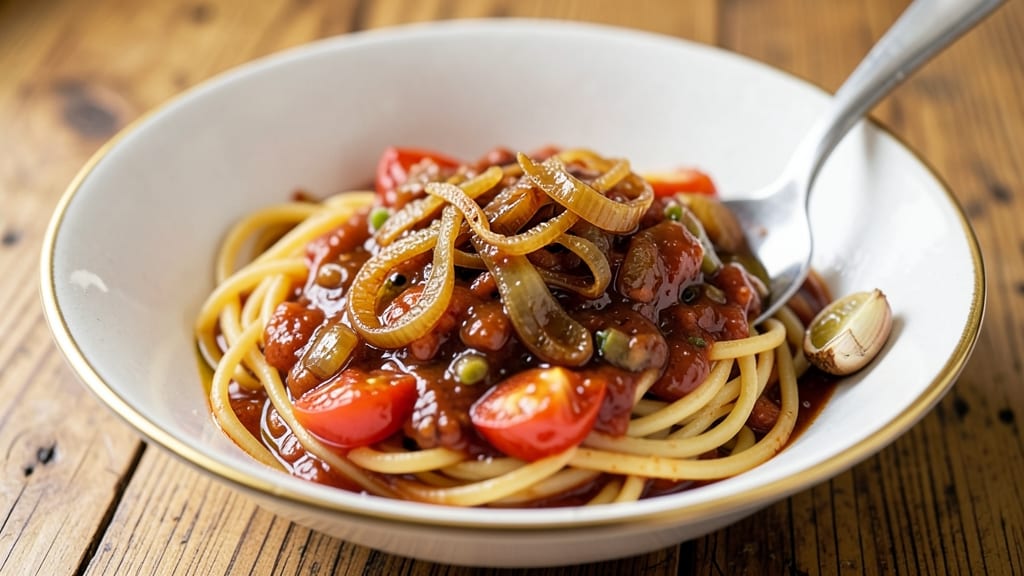
Brenda Gantt's spaghetti sauce recipe transforms simple pantry staples into a rich, layered sauce that clings to pasta like a restaurant-worthy masterpiece. The secret? Slow-cooking onions until they're caramelized and sweet—this technique builds depth that jarred sauces can't match.
I've perfected this version after years of testing, and it delivers flavor that's both comforting and sophisticated.
This sauce starts with a sautéed base of onions, garlic, and celery—what chefs call a soffritto—that forms the flavor foundation. Canned tomatoes provide acidity and sweetness, while herbs like oregano and basil add aromatic complexity.
The real magic happens during the long simmer, where the onions break down into a velvety texture that thickens the sauce naturally without heavy cream or flour.
What makes this sauce exceptional is its versatility—it works equally well over spaghetti, layered in lasagna, or spooned onto meatballs. The slow cooking process develops a caramelized richness that makes every bite taste like it's been simmering all day.
No blender required, just patience and attention to balance the seasoning as it reduces.
Once you taste the difference between this homemade sauce and store-bought, you'll never go back. The onions become almost jam-like in texture, creating a sauce that's deeply flavorful yet still bright enough to pair with fresh basil. Ready to elevate your pasta nights? Let's make this sauce.
Ingredients for brenda gantt spaghetti sauce
Nine simple ingredients transform into a deeply flavorful sauce with caramelized onions as its heart.
| Ingredient | Amount | Notes |
|---|---|---|
| Yellow Onions 🧅 | 3 large | Sliced thin for caramelization |
| Celery Stalks 🥬 | 3 whole | Diced small for soffritto |
| Garlic Cloves 🧄 | 6 cloves | Minced finely for aromatic base |
| Canned San Marzano Tomatoes 🍅 | 28 oz | Crushed by hand for texture |
| Extra-Virgin Olive Oil 🫒 | ½ cup | High quality for richness |
| Dried Oregano 🌿 | 1 tbsp | Mediterranean variety preferred |
| Fresh Basil Leaves 🌿 | ½ cup | Chopped at end for brightness |
| Salt 🧂 | 1 ½ tsp | Diamond Crystal preferred |
| Black Pepper 🌶️ | ½ tsp | Freshly cracked for heat |
| Red Wine 🍷 | ½ cup | Dry, bold variety like Cabernet |
The onions are non-negotiable here—3 large yellow onions sliced paper-thin will caramelize beautifully. Trader Joe's or Whole Foods often carry the sweetest varieties, but any yellow onion works if it's fresh. Celery adds subtle earthiness, so don't skip it—3 whole stalks diced small. For the garlic, 6 cloves minced finely ensures deep flavor without bitterness. The San Marzano tomatoes are worth the splurge—their sweetness balances the acidity perfectly. If you can't find them, any high-quality crushed tomatoes will do, but taste the can before buying.
No red wine? Dry white wine or extra tomato paste works in a pinch, though the alcohol helps tenderize the onions. Fresh basil is ideal, but dried basil at half the amount keeps the recipe viable. The olive oil should be extra-virgin—cheap oil will make the sauce taste flat. For the oregano, Mediterranean or Mexican varieties have the most complex flavor. If you're using pre-minced garlic, toast it in the oil 30 seconds first to deepen its flavor. The salt is crucial—Diamond Crystal dissolves better than table salt, so measure carefully.
This sauce tastes even better the next day as flavors meld. Store in airtight containers in the fridge for up to 5 days, or freeze for 3 months. I like to portion it into 1-cup servings for easy reheating. When reheating, add a splash of water or wine to prevent thickening. The sauce thickens naturally as it cools—never add flour or cornstarch. For extra richness, stir in a knob of butter at the end, but keep it optional for a lighter version.
Why You'll Love This Recipe
- Sweat-Free Simplicity: I swear by this sauce because it’s actually foolproof—just dice the onions, celery, and garlic (no fancy techniques), then let the San Marzano tomatoes and olive oil do the heavy lifting. Thirty minutes max, and zero stress.
- Deep, Rich Layers: The San Marzano tomatoes give it that velvety sweetness, while the slow-cooked onions and celery add a caramelized depth. Honestly, the first time I tasted it, I thought, "Why didn’t I do this sooner?"
- Meal Prep MVP: This sauce doubles as a marinara for pasta, a topping for meatballs, or even a pizza base—no extra work. I make a big batch on Sundays and freeze it in portions, so weeknights become effortless.
- Budget-Friendly Staple: Yellow onions, celery, and garlic are cheap, and a can of San Marzano tomatoes stretches into multiple meals. Between us, this recipe has saved me from takeout more times than I can count.
Step-by-step instructions for brenda Gantt's spaghetti sauce
Here's how to build rich, layered flavor through slow-cooked onions and aromatic bases.
Develop the Onion and Celery Base
Heat the 0.5 cup Extra-Virgin Olive Oil in a heavy-bottomed pot over medium-low heat. Add the 3 large Yellow Onions, sliced thin, and 3 whole Celery Stalks, diced small. Cook slowly for 45-50 minutes, stirring occasionally, until the onions turn deep golden brown and sweet. This slow caramelization creates the sauce's foundational depth.
Here's the thing—don't rush this step. You'll know it's ready when the onions release easily from the pan and develop that rich, jammy texture. If they stick, add a splash of water and scrape with a wooden spoon to deglaze. This process builds complexity that canned sauces can't match.
Build the Aromatic Foundation
Once the onions are deeply caramelized, add the 6 cloves Garlic Cloves, minced finely. Cook for 1-2 minutes until fragrant but not browned—garlic burns quickly, and you want to preserve its sweetness. Add the 0.5 cup Red Wine and let it simmer for 3-4 minutes until mostly evaporated.
This is where the sauce's character starts forming. The wine's acidity cuts through the sweetness while adding complexity. If you notice the mixture reducing too quickly, lower the heat slightly to prevent scorching. The goal is to create a rich, velvety base that will carry all the tomato flavors.
Incorporate Tomatoes and Seasonings
Pour in the 28 oz Canned San Marzano Tomatoes, crushed by hand for texture. Add the 1 tbsp Dried Oregano, 1.5 tsp Salt, and 0.5 tsp Black Pepper. Stir well to combine, then bring to a gentle simmer. Let the sauce cook uncovered for 30-40 minutes, stirring occasionally, until it thickens slightly and the flavors meld.
During this time, the acidity in the tomatoes will break down the onion fibers, creating a silky texture. Taste occasionally—you may need to adjust seasoning as the flavors develop. The sauce should be balanced between sweet, acidic, and savory notes at this stage. If it looks too thin, let it simmer longer; if too thick, add a splash of water.
Finish with Fresh Basil
Remove the pot from heat and stir in the 0.5 cup Fresh Basil Leaves, chopped. Let the sauce sit for 5-10 minutes to allow the basil's bright flavors to infuse. The basil should be added off the heat to preserve its vibrant color and prevent bitterness from overcooking.
This final step is what elevates home-cooked sauce to restaurant quality. The basil adds freshness that cuts through the richness of the slow-cooked onions and tomatoes. Give it a final taste—it should be rich, balanced, and deeply flavorful with layers of sweetness, acidity, and herbal notes. Serve immediately over al dente spaghetti for the perfect match.
Pro Tips For Making Brenda Gantt Spaghetti Sauce
- SWEAT THE VEGETABLES LOW: Brenda’s sauce starts with onions, celery, and garlic—don’t rush this step. After 10 minutes of cooking, the onions should be translucent and the celery softened but not browned. If you see any color change, you’ve gone too far, and the sauce will taste bitter. Keep the heat at a steady simmer, not a boil, and stir occasionally to prevent sticking.
- CRUSH TOMATOES BY HAND: Draining and crushing San Marzano tomatoes with your fingers (not a blender) breaks down the skins just enough to release natural sweetness while keeping texture. Skip the food mill if you’re short on time—just mash them with a wooden spoon until you’ve got a mix of chunky and smooth. It’s messier, but the flavor’s richer.
- SALT THE TOMATOES FIRST: Before adding tomatoes, sprinkle 1 teaspoon of kosher salt directly over the crushed mix and let it sit for 5 minutes. This draws out excess water, concentrating the flavor. I learned this the hard way—skipping it leaves a thinner, milder sauce. Trust me, your spoon will thank you.
- STIR IN THE BASICS LAST: Reserve ¼ cup of the finished sauce before adding herbs, red pepper flakes, or basil. Stirring them in at the end ensures they’re bright and aromatic, not cooked into oblivion. If you add them too early, they’ll turn bitter and lose their pop. Save that last spoonful for a quick flavor boost.
Essential equipment for this recipe
Heavy-Bottomed Pot
This is the single most important tool for your sauce—I can't stress this enough. A 5-6 quart Dutch oven or enamel-coated cast iron like Le Creuset or All-Clad distributes heat evenly and prevents scorching.
The thick base also helps maintain consistent medium-low heat during the long onion caramelization. I've tried thinner pots, and they just don't cut it—the sauce sticks and burns too easily. 🔥
Wooden Spoon
Use a heatproof wooden spoon (I recommend Oxo Good Grips) to stir your sauce. Wood is gentle on your pot and helps prevent the onions from sticking to the bottom.
The slightly rough surface also helps scrape up any browned bits that add depth to your sauce. Avoid metal spoons—they can scratch non-stick coatings and react with acidic ingredients.
Sharp Chef's Knife
A high-quality chef's knife (like Wüsthof or Shun) is essential for uniformly slicing your onions and dicing celery. Thin, even slices caramelize more quickly and evenly, creating that jam-like texture we're after.
I like to slice onions paper-thin—almost translucent—using a mandoline for precision, but a sharp knife works just fine with practice. 🧅
Fine-Mesh Strainer
For crushing your San Marzano tomatoes by hand, a fine-mesh strainer (like OXO Good Grips) helps remove any large seeds or skins while keeping the juicy pulp. This step ensures a smooth sauce texture without needing a blender.
If you prefer blended tomatoes, a simple immersion blender works too, but hand-crushing gives you more control over the texture.
Measuring Spoons
Precision matters with spices and seasonings. Use stainless steel measuring spoons for accurate measurements of your dried oregano, salt, and black pepper. I keep a set of OXO Good Grips within arm's reach while cooking—these stay true to measurements even when wet.
Don't eyeball it; the balance of flavors depends on these small but critical amounts.
Tasting Spoon
Finally, a small tasting spoon (I use a silver or stainless steel one) lets you sample your sauce as it develops. This is how you'll adjust seasoning throughout the cooking process. The spoon should be clean and dedicated to tasting—no cross-contamination with raw ingredients.
Taste frequently during the 30-40 minute simmer to ensure the sauce remains balanced between sweet, acidic, and savory notes. 💡
Nutrition facts
Frequently asked questions
Why does this sauce need such a long cooking time for the onions?
The 45-50 minute caramelization transforms simple onions into sweet, jam-like pieces that create the sauce's rich depth. This slow process develops complex flavors that canned sauces can't match. Think of it like making onion jam—patience is key for that restaurant-quality taste!
Can I make this sauce without red wine? Use ½ cup dry white wine or 2 tablespoons tomato paste> instead. The wine adds acidity that balances sweetness, but these substitutes work well too. Just
How do I know when the sauce is done?
The sauce is ready when it's thickened slightly and has a balanced flavor of sweet, acidic, and savory notes. Taste frequently during the 30-40 minute simmer—it should coat the back of a spoon without being gluey. The onions should be tender and the basil should infuse beautifully for that fresh finish.
Can I use this sauce for lasagna?
This sauce works perfectly for lasagna! Its rich, thick texture holds up well when layered. Just reduce it slightly longer if you prefer a thicker consistency. For extra insurance, spread a thin layer of ricotta mixed with egg between layers—it'll keep everything moist while adding creaminess. The caramelized onions add incredible depth to each bite!
What if my sauce turns out too thick?
Simply stir in 1-2 tablespoons of water or wine while reheating. The sauce should thicken back up as it cools, so don't worry about adding too much. For future batches, simmer uncovered for 20-30 minutes instead of 40 to prevent over-reduction. The key is patience—the sauce will naturally thicken as it develops flavor.