
Sauces & Condiments
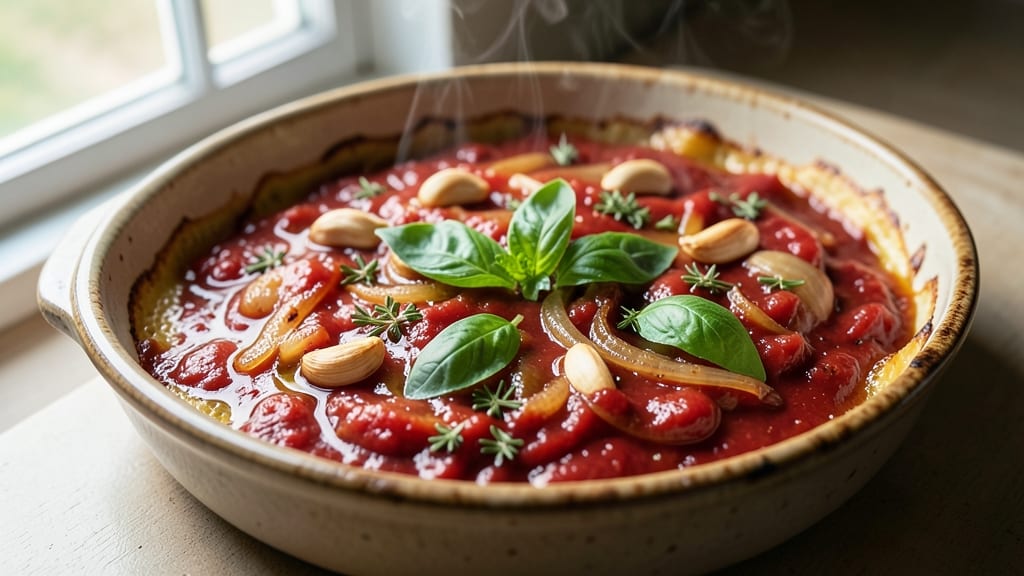
This baked spaghetti sauce recipe delivers deep, concentrated flavor without the stove-top vigilance—perfect for meal prep or Sunday dinners. The slow-baked method transforms simple ingredients into a rich, velvety sauce with caramelized edges and layers of umami.
I’ve perfected this version to work seamlessly with pasta, lasagna, or as a hearty marinara, all while cutting down on cleanup.
The secret lies in balancing fresh tomatoes with canned for acidity and depth, then letting it reduce uncovered in the oven. This creates a sauce that’s thicker, more flavorful, and foolproof—no stirring required after the initial setup.
The aromatics (garlic, onion, herbs) infuse deeply, while the baking process intensifies the tomato sweetness naturally. It’s the kind of sauce that tastes even better the next day.
What you’ll end up with is a restaurant-quality spaghetti sauce that’s rich, slightly smoky, and effortlessly versatile. The texture is perfect for clinging to noodles or layering in casseroles, and the concentrated flavor means you’ll use less per serving.
Best of all, it keeps beautifully in the fridge for up to 5 days or freezes for months—ideal for batch cooking.
Whether you’re prepping for the week or planning a family dinner, this sauce delivers foolproof results with minimal effort. The instructions are straightforward, and the ingredients are simple, but the difference in flavor compared to quick jarred sauces is night and day.
Let’s get started on creating your new go-to sauce.
Ingredients for baked spaghetti sauce
Twelve ingredients transform into a restaurant-quality sauce with minimal effort—rich, smoky, and foolproof.
| Ingredient | Amount | Notes |
|---|---|---|
| Extra-Virgin Olive Oil 🫒 | ½ cup | High-quality, fruity variety |
| Yellow Onion 🧅 | 1 whole | Diced finely for even cooking |
| Garlic Cloves 🧄 | 6 cloves | Minced for deep aromatic infusion |
| Fresh Basil Leaves 🌿 | ½ cup | Packed, stems removed |
| Fresh Oregano Leaves 🌿 | ¼ cup | Chopped, or 1 tbsp dried |
| Canned San Marzano Tomatoes 🍅 | 28 oz | Crushed by hand for texture |
| Fresh Roma Tomatoes 🍅 | 2 whole | Diced for bright acidity |
| Tomato Paste 🍅 | ½ cup | Squeeze tube preferred |
| Dry Red Wine 🍷 | ½ cup | Bold Cabernet or Merlot |
| Kosher Salt 🧂 | 1 ½ tsp | Diamond Crystal preferred |
| Freshly Ground Black Pepper 🌶️ | ½ tsp | Adjust to taste |
| Red Pepper Flakes 🌶️ | ½ tsp | Optional for subtle heat |
| Balsamic Vinegar 🍶 | 1 tbsp | For depth and balance |
The tomatoes are the heart of this sauce, so San Marzano cans are worth the splurge—they're sweeter and less acidic than regular canned tomatoes. For the fresh Roma tomatoes, look for ones that are firm and vibrant red at your local farmers market or grocery store produce section. The red wine adds depth, but any bold, dry red will work—Cabernet or Merlot are my go-tos. Fresh basil and oregano should be bright green with no wilting, and if you're using dried herbs, make sure they're labeled as culinary-grade. The tomato paste? Trader Joe's squeeze tubes are perfect—they're convenient and keep well in your pantry.
No red wine? Substitute with beef broth plus a splash of balsamic vinegar—it adds a similar depth. Short on fresh basil? Dried basil at one-third the amount works in a pinch, though it won't have the same vibrant flavor. The Roma tomatoes can be swapped for canned diced tomatoes in a bind, but you'll lose that bright acidity. For the tomato paste, if you don't have squeeze tubes, a small San Marzano tomato paste can from the Italian section of the grocery store is ideal. The balsamic vinegar can be omitted if you're sensitive to acidity, but it's what gives this sauce that restaurant-quality finish. If you want extra richness, add a tablespoon of grated Parmesan at the end.
This sauce gets better with time, so make a double batch and store it in airtight containers. In the fridge, it keeps for up to 5 days, and it freezes beautifully for up to 3 months. When reheating, add a splash of water or broth to loosen it up if it's thickened. I love using this sauce for meal prep—portion it into containers with cooked pasta for a quick lunch. The flavors meld even more overnight, so if you can, let it sit at room temperature for an hour before serving. It's the kind of sauce that tastes even better the next day, so don't hesitate to make extra.
Why You'll Love This Recipe
- Minimal Chopping Required: I swear by this recipe because you only need to dice one onion and mince a few garlic cloves. That’s it—no endless prep, just 10 minutes of actual work before you pop it in the oven.
- Herb-Packed Punch: The fresh basil and oregano baked right into the sauce? It’s like a flavor explosion—bright, aromatic, and way more vibrant than jarred versions. I’ll take that crispy garlic aroma over anything store-bought.
- Weeknight & Meal Prep: Make a double batch on Sunday, bake it all at once, and you’ve got dinner covered for days. Reheats like a dream—no soggy pasta here, just rich, concentrated flavor every time.
- Budget-Friendly Luxury: Extra-virgin olive oil and fresh herbs might sound fancy, but they stretch this sauce into three or four meals without breaking the bank. Honestly, it’s the kind of dish that makes cheap ingredients feel special.
Step-by-step instructions for baked spaghetti sauce
This method delivers restaurant-quality sauce with deep flavor and minimal effort—no stirring required!
Sauté Aromatics Until Fragrant
Heat the 0.5 cup extra-virgin olive oil in a large Dutch oven over medium heat. Add the 1 whole yellow onion and cook for 5-6 minutes until softened and translucent. Here's the thing—you want to see the onions turn a pale golden color without browning.
Add the 6 cloves minced garlic and cook for 30 seconds until fragrant. The garlic should sizzle gently but not burn—watch it like a hawk. This aromatic base forms the flavor foundation for your entire sauce. If you smell something bitter, you've gone too far. Lower the heat if needed and keep the aromatics moving in the pan.
Build the Tomato Base
Pour in the 0.5 cup dry red wine and scrape up any browned bits from the bottom of the pot. Let it simmer for 3-4 minutes until the alcohol smell dissipates completely. Add the 0.5 cup tomato paste and stir vigorously to combine, cooking for 2 minutes until it darkens slightly.
Now add the 28 oz canned San Marzano tomatoes (crushed by hand) and 2 whole fresh Roma tomatoes (diced). Stir in the 1.5 tsp kosher salt, 0.5 tsp freshly ground black pepper, and 0.5 tsp red pepper flakes. Bring to a gentle boil, then reduce heat to medium-low and let it simmer uncovered for 15 minutes, stirring occasionally. This step develops the sauce's depth and allows the flavors to meld together beautifully.
Layer and Bake for Richness
Preheat your oven to 350°F. Transfer the simmering tomato mixture to a 9x13-inch baking dish. Spread it evenly, then sprinkle the 0.5 cup fresh basil leaves and 0.25 cup fresh oregano leaves over the top. Drizzle with the 1 tbsp balsamic vinegar and give it a gentle stir to distribute everything.
Cover the baking dish tightly with aluminum foil and bake for 1 hour. This slow cooking process allows the flavors to develop and intensify. After 1 hour, remove the foil and continue baking for another 15-20 minutes until the sauce has thickened and the edges are slightly caramelized. The sauce should be glossy and reduced by about 25%.
Finish and Serve
Remove the baking dish from the oven and let it rest for 10 minutes. This resting period allows the flavors to settle and the sauce to thicken further. Give it one final taste and adjust the seasoning if needed—perhaps a pinch more salt or a crack of black pepper to balance the flavors.
Serve the baked spaghetti sauce immediately over your choice of pasta, or store it in an airtight container in the refrigerator for up to 5 days. The sauce will only get better as it sits, developing even more complex flavors. This method guarantees a sauce so rich and flavorful, you'll never go back to basic simmering again!
Pro Tips For Making Baked Spaghetti Sauce
- Sweat the Onion Low: I used to blast the onions on high heat, and they’d turn bitter before softening. For baked spaghetti sauce, cook them at medium-low with a splash of water—just enough to keep them glossy and sweet. The goal is a silky texture, not a charred mess.
- Crush Garlic, Don’t Mince: Fine minced garlic burns in seconds. Roughly crush the cloves with the flat side of your knife first, then add them whole to the sauce. They’ll soften and infuse flavor without turning acrid—no need to babysit the pan.
- Salt the Oil First: This isn’t just a rule—it’s the thing that matters most for balanced flavor. Toss in a pinch of salt with the olive oil before adding onions. It seasons the oil, which then carries flavor into every layer of the sauce as it cooks.
- Add Herbs Late: Fresh basil and oregano wilt fast in heat. Stir them in only in the last 10 minutes of baking, or they’ll turn to mush. If you’re prepping ahead, keep them separate and fold them in right before serving—bright, not sad.
Best sauces and condiments for this dish
Classic Fresh Herbs
Fresh basil and oregano are the stars here, but don’t underestimate their impact. I always use 0.5 cup packed fresh basil leaves and 0.25 cup chopped oregano—the bright, aromatic notes cut through the richness of the tomatoes beautifully.
For extra depth, add 1 tbsp fresh thyme alongside them. If you’re short on fresh herbs, dried oregano (at 1 tbsp) works in a pinch, but fresh is non-negotiable for that vibrant flavor. 🌿
Umami Boosters
This sauce gets its restaurant-quality depth from a few key umami ingredients. The 0.5 cup dry red wine (like a bold Cabernet) adds complexity, while the 0.5 cup tomato paste caramelizes into a rich, concentrated base.
For an extra layer, stir in 1 tbsp soy sauce or 1 tsp fish sauce at the end—just a whisper enhances the savory notes. If you’re vegetarian, 1 tbsp nutritional yeast works wonders too. 🍷
Acidity Balance
Balancing acidity is everything in tomato sauce. The 2 fresh Roma tomatoes provide bright, fresh acidity, while the 1 tbsp balsamic vinegar adds a tangy sweetness at the end. For a sharper kick, add 1 tsp lemon zest or a splash of white wine vinegar before baking.
If your sauce tastes too flat, a pinch of citric acid (just ¼ tsp) can wake it up. Trust me, this is where the magic happens. 🍋
Smoky Depth
For a smoky twist, add ½ tsp smoked paprika or 1 tsp liquid smoke to the tomato mixture before baking. If you love charred flavors, toast the garlic cloves in the olive oil until lightly browned—this adds a nutty, smoky depth.
For a bolder effect, char the onion and garlic in a dry skillet before sautéing. The result? A sauce with layers of complexity that’ll impress even the pickiest eaters. 🔥
Richness Enhancers
Want a creamier texture? Stir in 2 tbsp heavy cream or ¼ cup ricotta cheese at the end for a velvety finish. For a meatier flavor, add ½ cup finely chopped mushrooms or 1 tbsp miso paste to the tomato base.
If you’re feeling adventurous, a handful of sun-dried tomatoes (chopped) adds a chewy, concentrated sweetness. These tweaks take your sauce from good to unforgettable. 💛
Finishing Touches
Before serving, top with fresh basil leaves, a drizzle of high-quality olive oil, or a sprinkle of flaky sea salt. For a spicy kick, add red pepper flakes or a pinch of cayenne.
If you love texture, fold in toasted pine nuts or crispy fried shallots at the end. These final touches elevate the sauce from homemade to restaurant-worthy in seconds. ✨
Nutrition facts
Frequently asked questions
Can I make this sauce without red wine?
Replace the 0.5 cup dry red wine with 0.5 cup beef broth plus 1 tbsp balsamic vinegar for similar depth. The wine adds complexity, but this combo delivers rich flavor without alcohol. For a vegetarian version, use vegetable broth with an extra 1 tsp soy sauce.
How do I adjust the thickness of the sauce?
If your sauce is too thin after baking, simmer uncovered for 10-15 extra minutes to reduce it further. For a thicker texture right away, reduce the canned tomatoes to 14 oz and add 1 tbsp cornstarch mixed with water at the end. The baking process naturally thickens the sauce, but these tweaks help customize consistency.
Can I use this sauce for lasagna?
This sauce is perfect for lasagna! Use it as-is for a classic marinara layer, or thin it slightly with a splash of water or broth if you prefer a looser consistency. The rich, concentrated flavor works beautifully between noodles or as a topping for baked pasta dishes.
Why does my baked sauce taste bland?
Blandness usually means insufficient acidity or umami. Boost flavor by adding 1 tbsp balsamic vinegar or lemon juice before baking, or stir in 1 tsp soy sauce or ½ tsp fish sauce at the end. Fresh herbs (especially basil) also make a huge difference—don't skip them!
How long can I store this sauce?
Store in an airtight container in the fridge for up to 5 days, or freeze for 3 months for maximum freshness. The flavor actually improves over time! When reheating, add a splash of water or broth to restore texture if needed.