
Sauces & Condiments
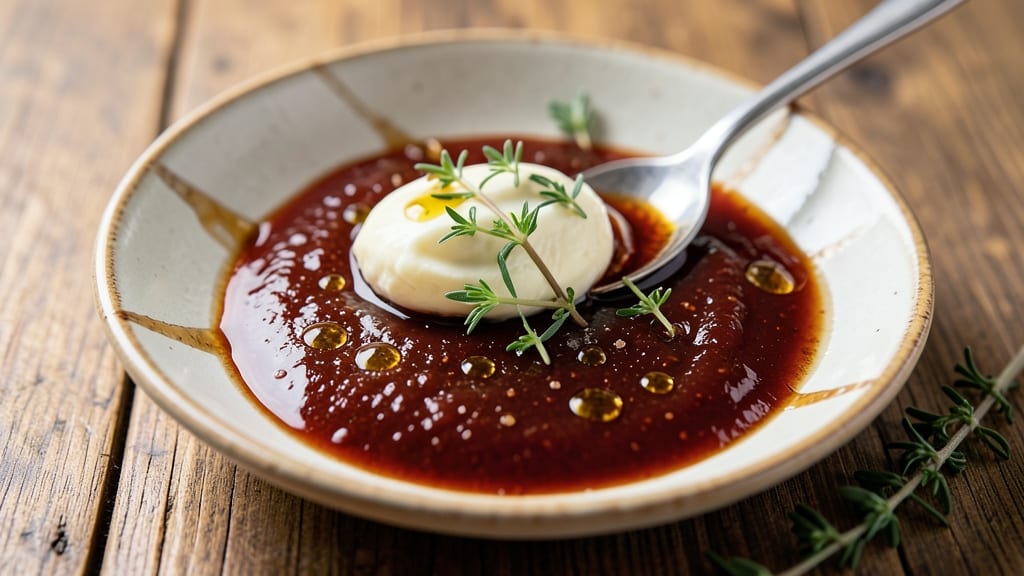
This balsamic vinegar reduction sauce transforms simple dishes into restaurant-worthy meals with just a few minutes of simmering. The secret lies in reducing high-quality balsamic vinegar with sugar until it becomes a glossy, syrupy glaze—intensely flavorful with deep caramel notes and a perfect balance of sweetness and acidity.
I developed this recipe after years of perfecting the art of reduction, ensuring every batch delivers that signature velvety texture and complex flavor profile.
The process couldn’t be simpler: combine balsamic vinegar and sugar in a saucepan, then simmer gently until reduced by half. This concentrated sauce clings beautifully to proteins, vegetables, and cheeses, adding depth without overpowering. The key is patience—rushing the reduction results in a thinner, less flavorful sauce.
For extra complexity, consider adding a splash of red wine or a pinch of fresh thyme during the reduction process, though these remain optional.
What you’ll end up with is a glossy, amber-colored sauce that elevates everything from grilled steaks to roasted vegetables. Its versatility makes it a pantry staple: drizzle over caprese salads, glaze seared scallops, or use as a finishing touch for pasta.
The sauce thickens as it cools, making it ideal for storing in the refrigerator for up to two weeks or freezing for longer shelf life.
This reduction sauce is the kind of game-changer that turns ordinary meals into memorable ones. Whether you’re preparing a weeknight dinner or hosting a dinner party, it’s a foolproof technique that delivers professional results with minimal effort. Let’s get started on creating your own batch of this indispensable kitchen staple.
Ingredients for balsamic vinegar reduction sauce
Five core ingredients transform simple vinegar into a restaurant-quality glaze.
| Ingredient | Amount | Notes |
|---|---|---|
| High-Quality Balsamic Vinegar 🍷 | 2 cups | Aged at least 12 years preferred |
| Granulated White Sugar 🍚 | ½ cup | Light brown sugar for deeper caramel |
| Red Wine 🍷 | ¼ cup | Bold Cabernet Sauvignon recommended |
| Fresh Thyme Leaves 🌿 | ¼ cup | Or 1 tbsp dried thyme |
| Unsalted Butter 🧈 | 2 tbsp | Full-fat for richness |
| Extra-Virgin Olive Oil 🫒 | ½ tbsp | For glossy finish |
| Diamond Crystal Kosher Salt 🧂 | ¼ tsp | Adjust to taste |
| Freshly Ground Black Pepper 🌶️ | ⅛ tsp | Freshly cracked preferred |
The balsamic vinegar is non-negotiable here—skip the cheap stuff. Giovanni Rossi or San Giusto are my go-tos, but any aged 12+ years works. The sugar should be fine granulated, but light brown sugar adds subtle caramel depth. For the wine, Cabernet Sauvignon or Merlot bring the right tannic structure, though any bold red will do. Fresh thyme is ideal, but dried works at one-third the amount—just crush it between your fingers first to wake up the flavor. The butter and olive oil are your emulsifiers, so don't skimp on quality. European-style unsalted butter melts smoother, and a fruity, peppery olive oil adds complexity.
No red wine? Substitute with extra balsamic vinegar—just reduce it longer. Short on thyme? Fresh rosemary at half the amount gives a different but equally elegant profile. The sugar can be swapped for honey or maple syrup, though it will reduce faster. For a vegetarian-friendly version, skip the butter entirely and use avocado oil instead. The salt and pepper are final adjustments—taste as you go, but remember this sauce intensifies as it cools. If you're making this ahead, reduce it slightly more than called for—it'll thicken beautifully when reheated.
This sauce keeps indefinitely in the fridge, but it gets better with age—up to 3 weeks in an airtight jar. For longer storage, freeze it in 1-tbsp portions for easy use. Reheat gently over low heat, stirring occasionally. The sauce thickens as it cools, so if it's too stiff, add a splash of warm water or vinegar. I always make extra—it disappears fast on grilled chicken, roasted Brussels sprouts, or even drizzled over vanilla ice cream for a sophisticated dessert. The key to success? Patience during reduction. Rushing gives you a thin, vinegary mess instead of that luxurious glaze.
Why You'll Love This Recipe
- Here’s what sold me: this sauce thickens into a keepable treasure. Store it in the fridge for up to a week, and it only gets better as the flavors meld. Thin it with a splash of water or broth when you’re ready to use it—no waste, all win.
- Five-Ingredient Magic: I swear, this sauce is the kind of recipe that makes me feel like a chef—even when I’m just stirring a pot. Just balsamic, sugar, wine, thyme, and butter? That’s it. No chopping, no fuss, and honestly, the balance of sweet, tangy, and herbal hits every time.
- Rich Without Effort: Between us, this reduction is ridiculously flavorful but takes zero skill. The wine and sugar caramelize into a glossy, syrupy depth, while the thyme adds this earthy whisper that makes it taste like you simmered it for hours. (Spoiler: It’s ready in 20 minutes.)
- Dresses Up Everything: I’ve drizzled this over grilled chicken, tossed it with roasted veggies, and even spooned it onto toast with goat cheese. It’s the kind of sauce that turns a simple weeknight meal into something that feels special—no last-minute grocery runs needed.
Step-by-step instructions for balsamic vinegar reduction sauce
Transform simple ingredients into a luxurious glaze with this refined technique.
Combine Ingredients and Simmer Gently
In a heavy-bottomed saucepan, combine the 2 cups high-quality balsamic vinegar, 0.5 cup granulated white sugar, 0.25 cup red wine, 0.25 cup fresh thyme leaves, 0.25 tsp diamond crystal kosher salt, and 0.125 tsp freshly ground black pepper. Stir until the sugar fully dissolves, then place the pan over medium-low heat.
This gentle heat is crucial—it prevents the vinegar from splattering while allowing the sugar to caramelize gradually. You'll notice tiny bubbles forming at the edges after about 5 minutes, signaling the sauce is beginning to reduce. Keep the heat consistent; too high will cause the vinegar to evaporate too quickly and lose its depth of flavor.
Reduce Until Syrupy and Glossy
Simmer uncovered for 30-40 minutes, stirring occasionally with a wooden spoon, until the mixture reduces to about 1 cup—roughly half its original volume. The sauce will darken to a deep amber color and thicken noticeably. You're aiming for a consistency that coats the back of a spoon smoothly, like a glossy syrup.
Here's where patience pays off: resist the urge to rush. The longer it simmers, the more concentrated and complex the flavors become. When you reach the 1-cup mark, the sauce should coat a spoon with a satiny sheen, not drip. If it reduces too quickly, lower the heat slightly to maintain control.
Finish with Butter and Olive Oil
Remove the pan from heat and let it cool for 2 minutes. Then, whisk in the 2 tbsp unsalted butter and 0.5 tbsp extra-virgin olive oil until fully melted and emulsified. The butter adds richness while the olive oil enhances the gloss and balances the acidity.
Strain the sauce through a fine-mesh sieve into a clean bowl to remove the thyme leaves, if desired. This step ensures a silky texture without any herb bits—though some chefs prefer to leave them in for added aroma. Taste and adjust seasoning with additional salt or pepper if needed.
Cool and Store Properly
Let the sauce cool to room temperature, then transfer it to an airtight container. It will continue to thicken as it cools, so don't be alarmed if it appears slightly too thin while warm. The sauce keeps in the refrigerator for up to 2 weeks or can be frozen for 3 months—though I recommend using it fresh for the best flavor.
This reduction sauce is incredibly versatile. Drizzle it over roasted meats, toss it with pasta, or use it as a marinade for vegetables. Its glossy finish and balanced sweet-tart profile will elevate any dish you pair it with.
Pro Tips For Making Balsamic Vinegar Reduction Sauce
- Simmer Slow and Steady: I learned this the hard way—rushing the reduction turns it bitter. Start on medium-high heat to kick off the evaporation, then drop to a gentle simmer (just a few bubbles, nothing frantic). If you’re using 1 cup of balsamic vinegar, count on 20-25 minutes minimum—skipping this step means a sauce that tastes more like vinegar than caramelized richness.
- Whisk in the Butter Last: Adding butter too early will make your sauce split like a bad salad dressing. Wait until the vinegar-wine mixture has thickened to a syrupy consistency (it should coat the back of a spoon) before whisking in the butter. If it looks curdled, strain it—no one wants to serve lumpy balsamic.
- Toast the Thyme First: Fresh thyme leaves pack more flavor if you give them a quick 30-second toast in a dry pan before adding to the sauce. The aroma hits the pot immediately, and the leaves soften just enough to release their oils without turning to mush. Skip this, and you’re basically using dried thyme’s sad cousin.
- Use White Wine, Not Red: Red wine adds tannins that can overpower the delicate balance of balsamic and sugar. Stick to dry white wine (like Sauvignon Blanc) for a cleaner, brighter base—it’ll let the vinegar’s sweetness and thyme’s herbal notes shine without fighting for attention. Trust me, your sauce will thank you.
Creative variations of this dish
Sweet & Spicy Twist
Add 1 tsp chili flakes and ½ tsp smoked paprika to the simmering vinegar for a smoky kick. I love this variation on grilled pork chops—it balances the sweetness with a subtle heat. For extra depth, stir in 1 tbsp balsamic glaze at the end. 🌶️
Herb-Infused Variations
Swap thyme for 1 tbsp fresh rosemary or 1 sprig fresh sage for a Mediterranean twist. The rosemary adds piney notes that pair beautifully with lamb, while sage works wonders on roasted squash. Always use fresh herbs—they release more aroma during reduction.
Citrus Brightening
Finish with 1 tbsp freshly squeezed orange juice or lemon zest for a refreshing contrast. This works especially well with seafood like grilled shrimp or salmon. The citrus cuts through the richness of the butter and adds a bright, tangy finish. 🍊
Nutty Crunch Addition
Stir in 1 tbsp toasted walnuts or pecans at the end for texture. I like this variation on caprese salads—it adds crunch without overpowering. For extra elegance, pulse the nuts in a food processor until finely chopped. Store the sauce separately and mix just before serving.
Dessert-Friendly Version
Reduce the sugar to ¼ cup and add 1 tsp vanilla extract or ½ tsp cinnamon for a dessert sauce. Drizzle over vanilla ice cream, pound cake, or fresh berries. The reduced vinegar adds complexity that complements sweet treats beautifully. 🍰
Umami Boost
Add 1 tsp soy sauce or ½ tsp fish sauce during reduction for an Asian-inspired twist. This works amazingly with grilled chicken or tofu. The umami depth enhances the sauce's complexity while keeping the sweet-tart balance. Taste carefully—these additions intensify during reduction.
Nutrition facts
Frequently asked questions
Can I make this balsamic reduction without wine?
Simply replace the 0.25 cup red wine with an extra 0.25 cup high-quality balsamic vinegar. The flavor will be slightly more concentrated, but the reduction process remains the same. For a different twist, try 1 tbsp balsamic glaze instead—it adds a sweeter depth without altering the technique.
How do I know when the reduction is done?
The sauce is ready when it reduces to about 1 cup (half the original volume) and coats the back of a spoon with a glossy sheen. It should darken to a deep amber color and thicken noticeably. Test by dipping a spoon in—if the sauce clings without dripping, it's perfect. Patience is key: rushing causes uneven reduction and a thinner texture.
Can I use this sauce on seafood?
Yes, but with caution! The acidity in balsamic pairs beautifully with fish and shellfish, but avoid overpowering delicate flavors. Drizzle lightly over grilled shrimp or salmon, or use it as a marinade (reduced to 2 tbsp for 1 lb of fish). For extra brightness, finish with lemon zest or orange juice to balance the sweetness.
Why did my sauce crystallize when it cooled?
Crystallization happens when sugar separates during cooling—it’s normal! Gently reheat the sauce over low heat, stirring constantly until smooth. To prevent it, avoid stirring too vigorously while reducing, and ensure the sugar dissolves completely at the start. For extra insurance, whisk in the butter while the sauce is still warm.
How can I use this sauce in vegetarian dishes?
This glaze elevates everything from roasted vegetables to plant-based proteins! Toss it with grilled eggplant, drizzle over mushroom risotto, or glaze tofu before baking. For extra richness, swap the butter for avocado oil or nut butter (like almond butter). The umami notes in mushrooms or tempeh pair perfectly with the sweet-tart balance.