
Sauces & Condiments
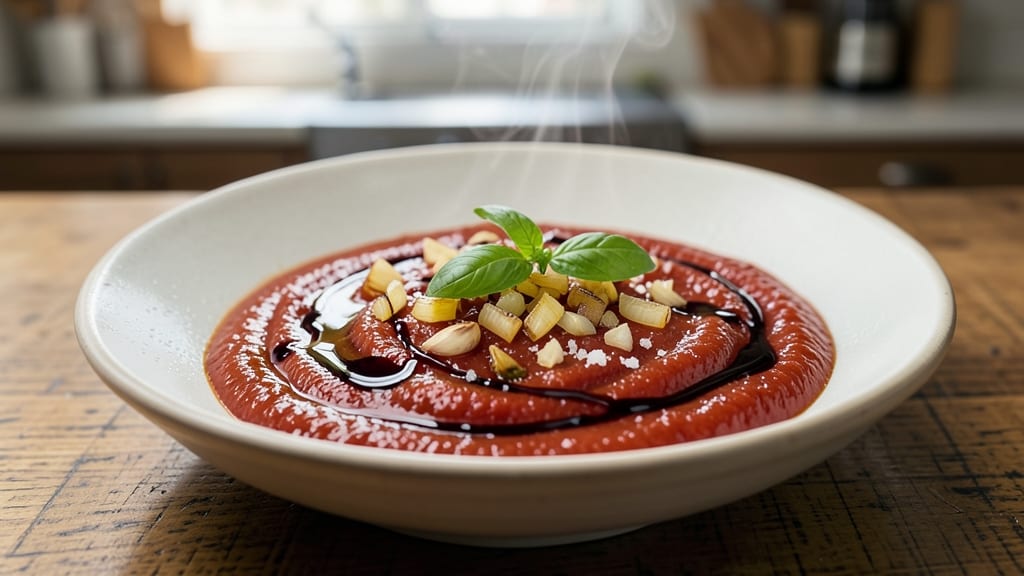
This ball seasoned tomato sauce recipe transforms simple canned tomatoes into a rich, herb-infused base that elevates every pasta dish and pizza crust. The secret lies in slow simmering—where garlic, onions, and aromatic herbs meld into a deep, smoky flavor that builds complexity layer by layer.
I developed this sauce after realizing store-bought versions lacked that homemade depth, so I simplified the process without sacrificing restaurant-quality taste.
The beauty of this sauce is its versatility—it works as a quick weeknight dinner foundation or a flavorful base for slow-cooked dishes. A splash of red wine and a pinch of smoked paprika add depth, while tomato paste thickens it just enough to cling to noodles or crusts.
The result? A sauce that’s bold enough to stand alone but subtle enough to let other ingredients shine.
What makes this recipe truly special is how simple ingredients create professional results. No fancy techniques—just a pot, a stove, and patience as the flavors develop. The herbs (basil, oregano, thyme) release their oils gradually, while the garlic softens into sweetness.
By the time you’re done, you’ll have a sauce that’s rich, balanced, and impossible to resist—perfect for freezing or using immediately.
Whether you’re tossing it with al dente pasta, drizzling over grilled meats, or using it as a pizza sauce, this recipe delivers consistent, restaurant-worthy flavor every time. The best part? It tastes even better the next day as the flavors meld further. Let’s get started!
Ingredients for ball seasoned tomato sauce
Simple ingredients transform into a restaurant-worthy tomato sauce with smoky depth and aromatic complexity.
| Ingredient | Amount | Notes |
|---|---|---|
| Canned San Marzano Tomatoes 🍅 | 28 oz | Crushed by hand or blender |
| Tomato Paste 🍅 | 2 tbsp | Squeeze tube preferred for convenience |
| Yellow Onion 🧅 | 1 whole | Medium size, finely diced |
| Garlic Cloves 🧄 | 4 cloves | Fresh, minced for aromatic depth |
| Extra-Virgin Olive Oil 🫒 | ½ cup | High-quality, fruity variety |
| Dry Red Wine 🍷 | ½ cup | Bold Cabernet Sauvignon preferred |
| Smoked Paprika 🌶️ | 1 tsp | For authentic smoky flavor |
| Dried Oregano 🍃 | 1 tsp | Mediterranean variety preferred |
| Fresh Basil Leaves 🌿 | ¼ cup | Packed, chopped for freshness |
| Fresh Thyme Leaves 🌿 | 1 tbsp | Or 1 tsp dried thyme |
| Salt 🧂 | 1 tsp | Diamond Crystal kosher preferred |
| Ground Black Pepper 🌶️ | ½ tsp | Freshly ground for best flavor |
The foundation starts with San Marzano tomatoes—their natural sweetness and low acidity create the ideal base. Trader Joe's or Whole Foods carry these premium cans, but any high-quality crushed tomatoes work if labeled 'whole peeled' (crush them yourself). For the onion, yellow onions provide the best balance of sweetness and bite; avoid red or white varieties, which can turn bitter. The garlic should be freshly minced (not pre-minced jars) to release its full aromatic potential. If you're using dried herbs, Penzeys or bulk bins at natural grocery stores offer the most potent varieties. The smoked paprika is non-negotiable for that authentic, slightly charred flavor—Penzeys or Goya brands deliver consistent quality.
No red wine? Substitute with 0.5 cup beef broth plus 1 tsp balsamic vinegar—it mimics the depth without the alcohol. Fresh basil is ideal, but dried basil at one-third the amount works in a pinch (though the flavor won't be as bright). For thyme, fresh leaves are preferable, but if you're using dried, measure carefully—too much can overpower. The tomato paste can be replaced with an extra 4 oz of crushed tomatoes if you prefer a thinner consistency. If you're short on time, pre-minced garlic from a jar is acceptable, though freshly minced adds significantly more flavor. For the olive oil, avoid light or refined varieties—they lack the fruity notes that elevate the sauce.
This sauce develops deeper flavor over time, so let it sit at room temperature for 10-15 minutes before serving to allow the aromas to meld. For storage, transfer to an airtight container and refrigerate for up to 5 days. For longer storage, freeze in 1-cup portions—it reheats beautifully and tastes even better the next day. If you're prepping for a crowd, double the recipe; the sauce keeps well and can be reheated gently on the stove or in the microwave. Always bring it to a simmer before serving to reactivate the flavors. The sauce will thicken slightly as it cools, so adjust consistency with a splash of water or broth if needed.
Why You'll Love This Recipe
- No Chopping Needed: I swear by this—just one onion and a few garlic cloves, finely minced (or even pre-diced if you're lazy). The San Marzanos do all the heavy lifting while you stir.
- Sweet-Savory Magic: That tomato paste caramelizes into a velvety base, and the San Marzanos? They’re the star—juicy, bright, and just sweet enough to balance the garlic’s punch. Honestly, it’s the kind of sauce that makes you pause mid-spoon.
- Pasta’s Best Friend: Slap it on spaghetti for a weeknight win, or use it as a pizza base—it’s thick enough to cling but light enough to let other flavors shine. I’ve even dumped it over grilled chicken for a dinner that feels fancy but takes 10 minutes.
- Budget-Buster Leftovers: A single can of tomatoes and a tiny jar of paste stretch to feed four (or more, if you’re me). The flavor actually deepens the next day—perfect for reheating with a sprinkle of basil or a crack of black pepper. My wallet thanks me every time.
Step-by-step instructions for smoky herb-infused tomato sauce
This professional method builds rich, aromatic tomato sauce with perfect balance and depth.
Sauté Aromatics in Olive Oil
Heat the 0.5 cup extra-virgin olive oil in a heavy-bottomed saucepan over medium heat until shimmering but not smoking. Add the finely diced whole yellow onion and cook for 8-10 minutes until completely translucent and sweet-smelling, stirring occasionally to prevent browning.
I press down gently on the onions with a wooden spoon during the first 2 minutes—this prevents them from cooking too quickly and losing their sweetness. You'll know they're ready when they release easily from the pan and have softened completely. Add the 4 cloves minced garlic cloves and cook for 30 seconds until fragrant, being careful not to let it burn.
Build the Sauce Base with Wine and Spices
Pour in the 0.5 cup dry red wine and scrape up any browned bits from the bottom of the pan with a wooden spoon. This deglazing step captures all the flavor you've built so far. Let the wine simmer for 3-4 minutes until reduced by about half and slightly thickened.
Add the 2 tbsp tomato paste and stir vigorously to distribute evenly. Cook for 2 minutes until the paste darkens slightly and the raw flavor disappears. Sprinkle in the 1 tsp smoked paprika, 1 tsp dried oregano, 1 tsp salt, and 0.5 tsp ground black pepper, stirring constantly to incorporate the spices completely.
Simmer with San Marzano Tomatoes
Pour in the 28 oz canned San Marzano tomatoes, crushing them by hand or blending briefly for a smoother texture. Stir well to combine with the spiced base. Bring the mixture to a gentle boil over medium-high heat, then immediately reduce to low heat and let it simmer uncovered for 45-50 minutes.
During this time, stir occasionally to prevent skin from forming on the surface. The sauce is ready when it has thickened noticeably and the flavors have melded together. You should be able to draw the back of a spoon through the sauce and leave a visible trail. Taste and adjust seasoning if needed—this is when you'll truly appreciate the quality of the San Marzano tomatoes.
Finish with Fresh Herbs
Remove the sauce from heat and stir in the 0.25 cup chopped fresh basil leaves and 1 tbsp fresh thyme leaves. Let the sauce sit for 5 minutes to allow the herbs to infuse their bright flavors. I like to taste the sauce at this point—you should detect layers of sweet tomato, smoky paprika, herbal notes, and a touch of wine acidity.
For the best texture, transfer the sauce to a blender or use an immersion blender to achieve your desired consistency. If you prefer a chunkier sauce, simply stir well and leave it as is. The sauce will continue to thicken slightly as it cools, so don't over-blend if you want to maintain some texture. Serve warm over pasta, with pizza, or as a base for other Italian dishes.
Pro Tips For Making Ball Seasoned Tomato Sauce
- CRUSH THE ONIONS: Dice them small—think 1/4-inch pieces, not rough chunks. I used to leave them big, and they’d just sit there like stubborn rocks. Tiny onions melt into the sauce faster and dissolve completely, so you’re left with flavor, not texture.
- SWIM THE PASTE FIRST: Heat the olive oil until it shimmers, then toss in the tomato paste before the onions. Let it sizzle for 30 seconds—it’ll darken slightly and smell like a campfire. This deepens the flavor way more than just stirring it in cold. (Yes, even if you’re impatient like me.)
- SIMMER, DON’T BOIL: Once the tomatoes go in, keep the heat low. A gentle simmer—tiny bubbles at the edges—means the sauce thickens without splitting or turning pasty. I learned this the hard way after making a lumpy mess that looked like tomato soup.
- SALT IN LAYERS: Add half the salt when you add the tomatoes, then taste again after 20 minutes. The acidity mellows over time, so you’ll need to adjust. Skipping this step means your sauce might taste flat or one-note by the end. (Your future self will notice.)
Essential equipment for this recipe
Heavy-Bottomed Saucepan
This is my non-negotiable tool for making tomato sauce—it prevents scorching and ensures even heat distribution. I use a 5-quart enameled cast iron Dutch oven from Le Creuset (or a All-Clad Stainless Steel if you prefer stainless).
The thick base prevents hot spots that can burn your sauce. For budget-friendly options, a Calphalon nonstick saucepan works well, though I avoid nonstick for long simmering due to potential leaching.
Wooden Spoon & Spatula
A long-handled wooden spoon (I love OXO Good Grips) is essential for stirring without scratching your pan. For deglazing, a heat-resistant silicone spatula helps scrape up those flavorful browned bits from the bottom.
I keep both within arm's reach while cooking—switching between them keeps the sauce smooth and prevents sticking.
Immersion Blender
This game-changer eliminates the need to transfer hot sauce to a blender. My go-to is the Ninja Foodi Immersion Blender—it handles up to 4 cups of sauce at once and has multiple speed settings.
For chunkier sauces, I skip blending entirely, but when I want that silky texture, this tool saves cleanup time and prevents burns from transferring hot liquid.
Fine-Mesh Strainer
If you prefer a completely smooth sauce, strain it through a fine-mesh sieve (like OXO Good Grips) after simmering. This removes any seeds or herb stems while keeping the sauce's body intact.
I use this technique when making sauce for delicate dishes like risotto or creamy pasta where texture matters. For most uses, though, I skip straining to preserve the sauce's natural depth.
Measuring Spoons & Scale
Precision matters with spices and liquids. My OXO stainless steel measuring spoons ensure accurate measurements for the smoked paprika and oregano, while a digital kitchen scale (like Escali Primo) helps when doubling recipes.
For the San Marzano tomatoes, I measure by weight—28 oz is about 1 can (28 oz), but if using fresh tomatoes, aim for 3 cups of crushed fruit for consistency.
Air-Tight Storage Containers
For leftovers or freezing, glass mason jars (like Ball or Le Parfait) are ideal—they’re microwave-safe and stack neatly in the fridge. For larger batches, silicone-free plastic containers (such as Rubbermaid) work well for freezing.
Always leave 1-inch headspace to prevent expansion cracks when frozen. Label containers with the date—this sauce tastes best within 3 months in the freezer.
Nutrition facts
Frequently asked questions
Can I use fresh tomatoes instead of canned San Marzano?
Yes, but you'll need to adjust the process. Use about 3 cups of crushed fresh tomatoes (peeled and seeded) and simmer for 30-40 minutes longer to reduce the liquid. Fresh tomatoes have more water content, so you may need to add 1 tbsp tomato paste to help thicken the sauce. For best results, choose ripe, flavorful tomatoes like Roma or vine-ripened varieties.
How do I prevent the sauce from getting too thick?
If your sauce thickens faster than expected, simply stir in 1-2 tablespoons of water or broth while simmering. For a smoother texture, use an immersion blender after cooking. The sauce will naturally thicken as it cools, so don't worry if it looks slightly runny while hot. This recipe is designed to be versatile—adjust to your preferred consistency!
What's the best way to store this sauce?
Transfer to an airtight container and refrigerate for up to 5 days. For longer storage, freeze in 1-cup portions—it reheats beautifully and tastes even better the next day. When reheating, warm over low heat on the stove, stirring occasionally, until hot. Avoid microwaving directly from frozen to prevent uneven heating.
Can I make this sauce in a slow cooker?
Sauté the onions and garlic first, then add all ingredients except fresh herbs. Cook on low for 6-8 hours or high for 3-4 hours. Stir occasionally and add water if needed to reach your desired consistency. Finish with fresh herbs just before serving, as they'll lose flavor during long cooking times. The slow cooker method works especially well for hands-off meal prep.
Why does my sauce taste bitter?
Bitterness usually comes from overcooking the onions or garlic, or using too much smoked paprika. To fix it, add 1 tsp sugar or 1 tbsp tomato paste to balance the flavors. For future batches, reduce the paprika to ½ tsp and cook onions at medium-low heat to prevent burning. Always taste as you go—this sauce should be bright and well-balanced, not overpowering.