
Sauces & Condiments
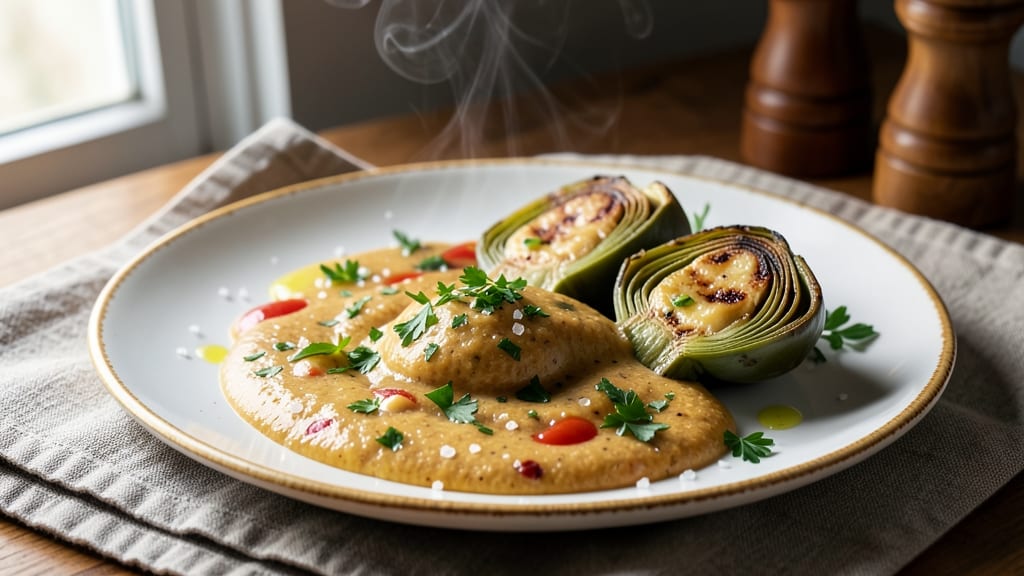
This artichoke butter sauce recipe transforms simple ingredients into a velvety, herb-infused sauce that elevates everything from pasta to grilled vegetables. The secret lies in blending artichoke hearts with rich butter, garlic, and fresh herbs until perfectly smooth—no lumps, just luxurious texture.
I developed this recipe after years of perfecting sauces that deliver restaurant-quality depth at home, and it never fails to impress.
The beauty of this sauce is its versatility—it works as a pasta drizzle, a bread dip, or a finishing touch for roasted meats. The artichokes add a subtle brininess that balances the richness of the butter, while garlic and herbs infuse layers of flavor.
With just 10 minutes of prep and 5 ingredients, you’ll have a sauce that tastes like it took hours to make.
What makes this sauce truly special is the emulsification technique—simmering the mixture gently ensures a silky consistency that clings beautifully to everything it touches. The result is a sauce that’s creamy yet light, with just enough tang from lemon juice to brighten the richness.
It’s the kind of sauce that makes even the simplest dishes feel gourmet.
Store leftovers in the refrigerator for up to 5 days—it only gets better as the flavors meld. Whether you’re dressing up a weeknight dinner or prepping for a holiday feast, this artichoke butter sauce is your new go-to for effortless elegance.
Ingredients for artichoke butter sauce
Five ingredients create a restaurant-quality sauce that transforms ordinary dishes into gourmet masterpieces.
| Ingredient | Amount | Notes |
|---|---|---|
| Artichoke Hearts 🍃 | 1 cup | Drained, chopped fine (canned or jarred) |
| Unsalted Butter 🧈 | ¾ cup | Cold, cubed for even melting |
| Fresh Garlic Cloves 🧄 | 4 cloves | Minced, not pressed (for aromatic depth) |
| Fresh Parsley Leaves 🌿 | ½ cup | Stems removed, finely chopped (flat-leaf preferred) |
| Lemon Juice 🍋 | 1 tbsp | Freshly squeezed, strained (brightens flavor) |
| Diamond Crystal Kosher Salt 🧂 | ¼ tsp | Fine grain for delicate seasoning |
| Freshly Ground Black Pepper 🌶️ | ¼ tsp | Cracked peppercorns preferred |
| Extra-Virgin Olive Oil 🫒 | 1 tbsp | For emulsification (light, fruity variety) |
The artichoke hearts are the foundation—look for high-quality jarred hearts like Muir Glen or Whole Foods' 365 brand, which have a superior texture and flavor. Fresh artichokes are ideal but require extensive prep, so jarred works beautifully for convenience. The butter must be unsalted and cold when added to prevent premature melting, which disrupts the emulsification process. For the garlic, organic cloves from Trader Joe's or Costco have the most robust flavor. Fresh parsley should be vibrant green with no wilting—store-bought containers often use older leaves, so check the date. If you can't find flat-leaf parsley, curly-leaf works but chop it more finely for a similar texture.
No artichoke hearts? Sun-dried tomatoes at half the amount add depth, though they'll alter the subtle brininess. Substituting butter with vegan butter or coconut oil maintains the sauce's richness, though texture may vary slightly. For garlic, garlic powder at one-third the amount works in a pinch, but fresh is non-negotiable for authentic flavor. If you're missing parsley, basil or cilantro can stand in, though the flavor profile shifts. The lemon juice can be omitted if you prefer a richer sauce, but it's essential for balancing the butter's richness—bottled lemon juice works, but fresh is always superior. For the olive oil, avoid heavily flavored varieties; California extra-virgin brands like Corto or Bertolli are excellent choices.
This sauce requires no refrigeration during prep but should be stored in an airtight container in the fridge for up to 5 days, though it's best used within 3 days for peak flavor. To reheat, gently warm in a saucepan over low heat, adding a splash of water or olive oil if it thickens too much. For longer storage, portion into ice cube trays, freeze, and transfer to a bag—3 months frozen without losing quality. The sauce thickens as it cools, so thin with a bit of warm water or olive oil before serving if needed. It pairs beautifully with freshly cooked pasta, grilled meats, or as a luxurious bread dip.
Why You'll Love This Recipe
- Five-Ingredient Magic: This sauce comes together with literally five things—no fancy techniques, no stress. I’ve made it while microwaving leftovers and it still tastes like I spent an hour in the kitchen.
- Garlic Butter Bliss: That first bite of warm butter, garlic, and artichokes? It’s like a hug for your taste buds. The lemon brightens it up so it’s never heavy—just rich, herby, and ridiculously satisfying.
- Weeknight to Dinner Party: Slather it on grilled fish, toss it with pasta, or dollop it on crusty bread—it works everywhere. Honestly, I’ve even used it as a dip for veggies when I’m too tired to cook anything else.
- Makes Leftovers Taste Fresh: This sauce keeps for days in the fridge, and reheats like it was just made. My lazy Sundays involve slathering it on toast or mixing it into scrambled eggs—no one ever guesses it’s yesterday’s.
Step-by-step instructions for artichoke butter sauce
This velvety sauce transforms simple ingredients into a luxurious herb-infused finish.
Melt the Butter and Infuse Flavors
In a medium saucepan over medium-low heat, add the 0.75 cup unsalted butter cut into small cubes. Let it melt slowly, stirring occasionally with a wooden spoon, until it reaches 160°F—just below a gentle simmer. The butter should foam but not brown.
Here's the thing—low heat prevents burning while allowing the butter to fully emulsify with the other ingredients. Watch for the butter to turn opaque and smell nutty. This is when it's ready for the next step, and it should take about 5-7 minutes total. If you rush this, you'll get a bitter flavor instead of that rich, buttery base we're after.
Add Garlic and Artichokes
Reduce the heat to low and add the 4 minced garlic cloves and 1 cup finely chopped artichoke hearts. Stir constantly for 2-3 minutes until the garlic becomes fragrant but doesn't brown. The artichokes will begin to soften slightly, releasing their briny depth into the butter.
This is where the sauce starts building complexity. The garlic should smell sweet and aromatic, not sharp or burnt. If it starts to color, remove the pan from heat for 30 seconds to cool slightly before continuing. The artichokes will release moisture—this is normal and essential for creating the sauce's velvety texture.
Incorporate Lemon and Seasonings
Add the 1 tablespoon lemon juice, 0.25 teaspoon kosher salt, and 0.25 teaspoon black pepper to the pan. Stir vigorously for 1 minute until the salt and pepper dissolve completely. The lemon will brighten the rich butter flavor and balance the earthiness of the artichokes.
Taste the mixture now—you should detect a harmonious blend of buttery richness, artichoke brininess, and citrus brightness. If it needs more salt, add it gradually—you can always adjust later, but you can't remove excess salt. The sauce should be seasoned but not overwhelmingly so at this stage.
Finish with Olive Oil and Parsley
Remove the pan from heat and whisk in the 1 tablespoon extra-virgin olive oil and 0.5 cup finely chopped parsley leaves. The olive oil helps emulsify the sauce, creating a silky texture that clings beautifully to pasta or vegetables. Stir for 30 seconds to fully incorporate the parsley.
Here's the critical part: let the sauce rest for 5 minutes off the heat. This allows all the flavors to meld completely and the texture to thicken slightly. The parsley should be evenly distributed, and the sauce should have a glossy sheen. If it's too thick, whisk in 1-2 tablespoons of warm water to reach your desired consistency.
Serve Immediately or Store Properly
Return the sauce to low heat just before serving to maintain its warm, velvety texture. Drizzle generously over hot pasta, grilled fish, or roasted vegetables. The sauce should coat everything in a luxurious layer that enhances rather than overpowers the main dish.
For storage, transfer the sauce to an airtight container and refrigerate for up to 3 days. To reheat, warm gently over low heat while stirring constantly—never microwave, as it can break the emulsion and create a greasy texture. If the sauce thickens upon reheating, thin it with a splash of warm water or pasta water.
Pro Tips For Making Artichoke Butter Sauce
- Sauté the Garlic Low: I learned this the hard way—crisping garlic in butter for this sauce turns it bitter fast. Keep the heat at medium-low until it’s just golden, about 2-3 minutes, then pull it out before it starts to brown. The sauce will still taste bold without the harshness.
- Drain and Pat Dry Hearts: Jarred artichoke hearts are usually packed in water or oil, and that moisture ruins the sauce’s texture. Drain them well, then blot them dry with paper towels—yes, even if they’re from a can. Wet hearts will make your butter sauce watery and dull.
- Zest the Lemon First: Skip the zest? You’re missing the bright, citrusy depth that makes this sauce sing. Use about 1 teaspoon of lemon zest along with the juice—it adds a fragrant layer that balances the richness of the butter. (And no, bottled zest won’t cut it.)
- Pulse Parsley for Texture: Whole parsley leaves sink to the bottom and turn the sauce into a sad, green sludge. Pulse them in a food processor for 2-3 seconds before mixing—just enough to break them up but keep some texture. It distributes evenly and looks better, too.
Perfect pairings for artichoke butter sauce
Pasta Perfection
This sauce is a game-changer for pasta dishes—especially fettuccine alfredo or linguine. The artichoke butter’s velvety texture clings beautifully to the strands, while the briny artichokes and garlic add depth.
I recommend tossing hot, al dente pasta (like De Cecco or Barilla) directly in the saucepan with the sauce, then finishing with a sprinkle of grated Parmigiano-Reggiano. The sauce’s richness pairs perfectly with the nutty, cheesy finish. 🍝
Grilled Meats
For grilled chicken, salmon, or steak, use this sauce as a finishing drizzle. The buttery base complements smoky grill flavors beautifully, while the lemon and parsley cut through richness. I love brushing it over grilled salmon in the last 2 minutes of cooking—it caramelizes slightly, creating a glossy, flavorful crust.
For chicken, serve as a warm dip with crusty bread on the side. 🍗
Bread and Dips
This sauce transforms garlic bread into a gourmet appetizer. Spread a thin layer on baguette slices, toast until golden, then drizzle generously with the warm sauce. For extra indulgence, sprinkle with toasted pine nuts or crumbled feta.
It’s also perfect as a dip for vegetable crudités like endive leaves or carrot sticks, adding a luxurious touch to any snack platter. 🥖
Roasted Vegetables
Brighten roasted vegetables with this sauce—it’s especially delicious with asparagus, Brussels sprouts, or zucchini. Toss the veggies in olive oil, salt, and pepper, roast until tender, then drizzle with the warm sauce.
The artichoke’s brininess balances the sweetness of roasted carrots, while the butter adds richness to earthy root vegetables. Serve immediately for the best texture and flavor. 🥦
Seafood Elevation
Seafood lovers will adore this sauce over shrimp scampi, scallops, or grilled cod. The lemon in the sauce enhances seafood’s natural sweetness, while the butter creates a silky finish. I like to serve it with crispy polenta or wild rice to soak up every last drop.
For extra flair, garnish with chopped chives or a pinch of red pepper flakes. 🦐
Breakfast Twist
Yes, you read that right—this sauce is amazing on breakfast dishes! Drizzle it over scrambled eggs or avocado toast for a savory, herby upgrade. It also pairs beautifully with grilled cheese sandwiches (use sharp cheddar for the best combo).
The artichoke’s umami adds unexpected depth to morning meals, making them feel like a special occasion. 🍳
Nutrition facts
Frequently asked questions
Can I make this sauce without artichokes?
Yes! For a similar flavor profile, substitute ½ cup sun-dried tomatoes (chopped) or ¼ cup capers for the artichokes. Both add briny depth, though sun-dried tomatoes will be slightly sweeter. If you're avoiding all umami ingredients, try 1 tablespoon white miso paste instead—it won't replicate the artichoke's texture but adds richness.
Why did my sauce separate into butter and liquid?
This happens when the emulsion breaks, usually from overheating or not incorporating the olive oil properly. To fix it, whisk in 1 tablespoon cold water while stirring constantly over low heat. For prevention, always melt butter slowly (160°F max) and whisk vigorously when adding olive oil. The lemon juice also helps stabilize the emulsion—don't skip it!
How can I make this sauce vegan?
Swap the butter for ½ cup vegan butter or coconut oil (use full-fat for best texture) and add 2 tablespoons nutritional yeast for umami depth. Keep all other ingredients identical—especially the olive oil, which is crucial for the vegan version's creaminess. The sauce will be slightly lighter but still luxurious.
Can I make this sauce ahead of time?
This sauce actually improves overnight as flavors meld. Store in an airtight container in the fridge for up to 5 days. For best results, reheat gently over low heat while stirring constantly—never microwave, as it can break the emulsion. If it thickens too much, thin with warm water or pasta water while reheating.
What's the best way to use up leftover sauce?
Transform it into a quick pasta bake by mixing with cooked pasta, a splash of cream, and breadcrumbs, then baking at 375°F for 15 minutes. Or spread on toasted baguette slices with roasted garlic for an open-faced sandwich. For something lighter, drizzle over steamed greens or use as a dip for crudités. The possibilities are endless!