
Sauces & Condiments
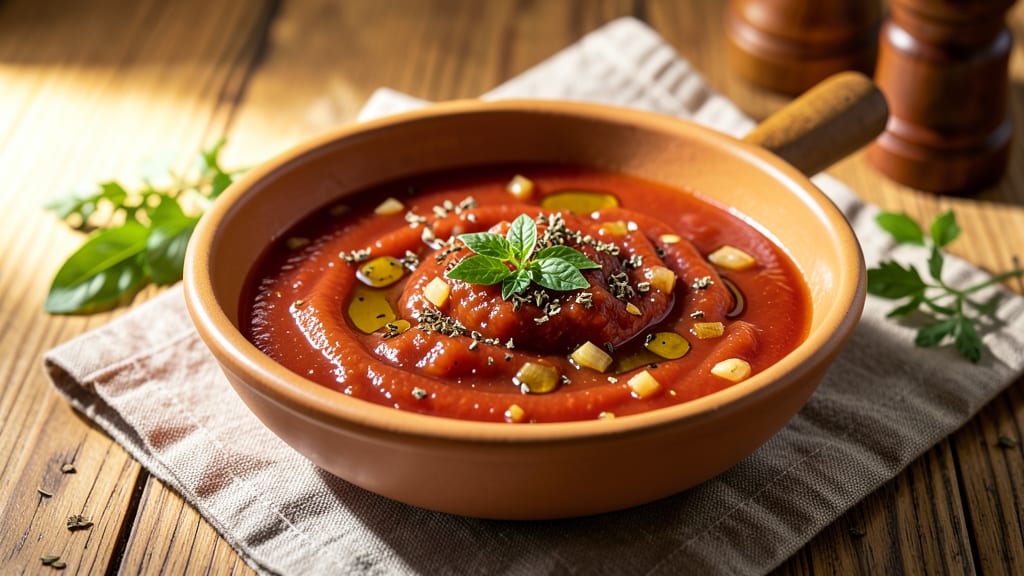
This all-day marinara sauce recipe transforms simple pantry ingredients into a rich, complex sauce that elevates every dish it touches. The secret lies in slow-cooking, which deepens flavors and creates a velvety texture that separates it from quick versions.
I developed this recipe after years of testing—it’s the one that finally replaced store-bought without sacrificing depth or convenience.
What sets this marinara apart is its versatility and foolproof technique. With just a few core ingredients—tomatoes, garlic, onions, and herbs—you’ll build layers of flavor that develop over hours, not minutes.
The sauce thickens naturally as it simmers, creating a perfect consistency for pasta, pizza, or dipping. No fancy equipment or advanced skills required, just patience and a pot on the stove.
The result is a sauce that’s smoother than jarred versions but still packed with bright tomato flavor and aromatic herbs. The slow cooking caramelizes the natural sugars, adding subtle sweetness that balances the acidity.
This isn’t just marinara—it’s a foundation for meals that taste like they’ve been simmering all day, even if you only have an hour to spare.
Make a big batch and store it in the fridge for up to a week or freeze for months. It reheats beautifully, making it ideal for meal prep or last-minute cooking.
Whether you’re tossing it with al dente pasta or spreading it on garlic bread, this sauce delivers restaurant-quality flavor with minimal effort.
Ingredients for all day marinara sauce
Simple pantry staples transform into restaurant-quality marinara with slow cooking.
| Ingredient | Amount | Notes |
|---|---|---|
| San Marzano Tomatoes 🍅 | 28 oz | Canned, whole, no salt added |
| Yellow Onion 🧅 | 1 whole | Medium, finely diced |
| Garlic Cloves 🧄 | 6 cloves | Fresh, peeled, minced |
| Extra-Virgin Olive Oil 🫒 | ½ cup | High quality, fruity |
| Tomato Paste 🍅 | 2 tbsp | Smooth, unsweetened |
| Dried Oregano 🌿 | 1 tsp | Mediterranean or Italian blend |
| Dried Basil 🌿 | 1 tsp | Crushed between fingers |
| Red Wine Vinegar 🍷 | 1 tbsp | For brightness |
| Kosher Salt 🧂 | 1 ½ tsp | Diamond Crystal preferred |
| Black Peppercorns 🌶️ | ½ tsp | Freshly cracked |
San Marzano tomatoes are non-negotiable here—their sweetness and low acidity create the perfect base. Trader Joe's or Whole Foods carry them year-round, but any quality canned tomatoes will work in a pinch. The key is avoiding salt-added varieties, which can make your sauce taste bland. For onions, yellow gives the best caramelization, but red works too if you prefer milder flavor. Garlic should be fresh—pre-minced from the jar lacks punch. If you're using a whole bulb, peel and mince the cloves right before adding to the pot for maximum flavor.
No San Marzano? Crushed tomatoes or even tomato sauce will do, but you may need to adjust seasoning. Swap dried oregano for fresh basil at half the amount—it’s brighter but wilts fast, so add it later. Running low on red wine vinegar? Balsamic vinegar or lemon juice adds acidity, though the flavor will differ slightly. The tomato paste is crucial for thickening—Trader Joe's squeeze tubes are perfect for this recipe since you only need a small amount. For a meatier flavor, add 1/4 cup finely chopped mushrooms with the onions, but it’s not required.
This sauce tastes even better the next day as flavors meld. Store in an airtight container in the fridge for up to 1 week or freeze for 6 months. For freezing, portion into ice cube trays—thaw as needed for pasta or pizza. The sauce thickens as it cools, so you can always thin it with a splash of water or broth later. If making a big batch, double the ingredients and use a Dutch oven for even cooking.
Why You'll Love This Recipe
- No-Chop Night: I swear by this—just roughly chop the onion and garlic, no dicing required. The San Marzano tomatoes do all the work while you sip wine and pretend you’re not cooking.
- Slow-Simmer Magic: That tomato paste and olive oil base caramelizes into something deep—not sweet, not sour, just right. Honestly, I’ve never tasted marinara this balanced before.
- Pantry Staple Power: Use it for pasta, pizza, or even as a dip. Between us, I’ve frozen jars of this for months. It’s my go-to when I’m too tired to think.
- Budget-Friendly Luxury: San Marzano tomatoes might sound fancy, but they stretch farther than store-brand cans. One batch feeds my family for weeks—and costs less than takeout.
Step-by-step instructions for all-day marinara sauce
This slow-cooked marinara builds layers of flavor over time—patience pays off with rich, balanced depth.
Sauté Aromatics Until Fragrant
Heat the 0.5 cup extra-virgin olive oil in a heavy-bottomed saucepan over medium-low heat. Add the 1 whole yellow onion, finely diced, and cook for 8-10 minutes until translucent and just beginning to soften. The onions should release their sweetness without browning—this prevents bitterness in the final sauce.
Add the 6 cloves minced garlic and cook for 1-2 minutes until fragrant but not golden. Garlic burns quickly, so keep an eye on it. Here's the thing—if it starts to darken, remove the pan from heat for 30 seconds to let it cool slightly before continuing. This step forms the aromatic foundation for everything that follows.
Build the Sauce Base
Stir in the 2 tbsp tomato paste and cook for 1 minute to deepen its flavor. Pour in the 28 oz San Marzano tomatoes (crushed by hand or with a wooden spoon) and bring to a gentle simmer. I like to use a wooden spoon here—it helps break down the tomatoes naturally as they cook.
Add the 1 tsp dried oregano, 1 tsp dried basil, and 1 tbsp red wine vinegar. The vinegar brightens the acidity while the herbs provide earthy depth. Let the sauce simmer uncovered for 30 minutes, stirring occasionally. This initial reduction concentrates the flavors and removes any excess surface liquid from the tomatoes.
Season and Simmer Low and Slow
Add the 1.5 tsp kosher salt and 0.5 tsp freshly cracked black peppercorns. Reduce heat to low and continue simmering for 2-3 hours, stirring every 30 minutes. The sauce should reduce by about one-third, thickening into a velvety consistency. If it gets too thick, add 1-2 tablespoons of water to maintain balance.
Real talk: This is where the magic happens. The long simmer allows the flavors to meld and develop complexity. You'll notice the sauce darkens slightly as it reduces—this indicates the natural sugars caramelizing, creating that deep, rich color and flavor we want. The sauce is ready when it coats the back of a spoon smoothly.
Finish and Adjust
Once the sauce reaches your desired consistency, remove it from heat. Taste and adjust seasoning if needed—you might need a touch more salt or vinegar to balance the flavors. Let it cool slightly before serving, as the sauce will continue to thicken as it stands.
This marinara keeps well in the refrigerator for up to 5 days or can be frozen for 3 months. The flavors actually improve over time, making it perfect for meal prep. Use it on pasta, as a pizza sauce, or with grilled meats—its versatility makes it a kitchen staple worth the patience.
Pro Tips For Making All Day Marinara Sauce
- CRUSH THE ONIONS FIRST: I learned this the hard way—if you toss raw onion chunks into the pot with garlic, you’ll end up with a sauce that tastes like you forgot to cook the onions at all. Pulse them in a food processor until they’re almost paste-like (but not quite), then sauté them in olive oil until they’re translucent and sweet. That’s when the flavor actually integrates.
- SIMMER LOW AND LONG: After burning three batches, I finally figured out that marinara isn’t a race. Once the tomatoes hit the pot, drop the heat to a bare simmer—think tiny bubbles, not rolling boil—and let it cook uncovered for at least 2 hours. The longer it cooks, the deeper the flavor, and the water evaporates into a rich, thick consistency.
- SALT THE TOMATOES BEFORE COOKING: Sounds weird, but it works: Toss your halved San Marzano tomatoes with a generous pinch of salt (about 1 tsp per pound) right before adding them to the pot. This draws out excess water and intensifies their natural sweetness. No, it won’t make your sauce taste like the sea—it’ll just taste like better tomatoes.
- SKIP THE TOMATO PASTE SHORTCUT: I skip this when I’m lazy, but the dish is noticeably better when I don’t: Use fresh tomato paste, not the canned kind, and cook it in the olive oil for 3–4 minutes until it darkens slightly. This caramelization adds a depth that powdered or canned paste just can’t match—it’s the thing that makes homemade marinara taste restaurant-quality.
Troubleshooting this dish
Sauce Too Thin?
If your marinara isn’t thickening enough, you likely need more time on low heat. The sauce should reduce naturally over 2-3 hours—if it’s still watery after that, simmer uncovered for another 30-60 minutes.
For quick fixes, stir in 1 tbsp tomato paste or 1 tsp cornstarch mixed with 1 tsp water to thicken immediately. Avoid adding too much at once, or it’ll turn gluey. 🌡️
Sauce Too Thick?
Over-reduced sauce happens when heat is too high or evaporation runs wild. Thin it with 1-2 tablespoons of warm water, broth, or even a splash of red wine—just enough to reach a pourable but coatable consistency.
Stir well and return to low heat for 5 minutes to blend. Never rush this step, or you’ll break the sauce’s velvety texture.
Bitter or Harsh Flavor?
Bitterness usually means the onions or garlic burned. Next time, sauté onions over medium-low heat until soft (not golden) and add garlic just before the tomatoes. For quick fixes, balance bitterness with ½ tsp sugar or 1 tsp honey, or boost acidity with ½ tsp lemon juice.
A pinch of salt can also help round out harsh flavors. 💡
Sauce Separates?
Separation happens when sauce cools too fast or sits too long. To fix it, whisk vigorously over low heat for 5-10 minutes until smooth. For prevention, keep sauce warm in a thermos or slow cooker if not using immediately.
If storing, cool it completely before refrigerating—never leave it at room temperature for more than 2 hours.
Herbs Too Strong?
Dried herbs can dominate if overused. If your sauce tastes like a spice bomb, dilute it with ½ cup warm water or broth and simmer for 10 minutes to mellow the flavors.
For future batches, reduce dried herbs by half and add fresh basil at the end—it wilts fast, so add it last. A pinch of salt also helps balance herbal notes. 🌿
Sauce Too Acidic?
Excess acidity (from tomatoes or vinegar) is common in homemade marinara. Fix it by adding ½ tsp sugar or 1 tsp honey to sweeten the sauce, or stir in 1 tbsp tomato paste to deepen the umami.
If the vinegar was too strong, a pinch of salt or a splash of broth can help rebalance. Taste as you go—adjust gradually! 🍯
Nutrition facts
Frequently asked questions
Can I make this marinara in a slow cooker instead of on the stove?
Dump all ingredients into your slow cooker, stir well, and cook on low for 6-8 hours or high for 3-4 hours. The slow cooker's gentle heat mimics the stove's low simmer, creating that same deep flavor. Just stir occasionally to prevent sticking, and add a splash of water if it gets too thick.
How do I know when the sauce is ready?
The sauce is perfect when it coats the back of a spoon smoothly and has reduced by about one-third. It should be thick enough to cling to pasta but still pourable. The color will deepen slightly as it simmers, and you'll notice a rich, aromatic scent—this means the flavors have melded beautifully. Taste test early to avoid overcooking!
Can I add meat or vegetables to this marinara?
Yes! For a meatier version, brown 1/2 lb Italian sausage or ground beef first, then add it with the onions. Vegetables like mushrooms, bell peppers, or zucchini work well too—just chop them small and add them with the tomatoes. Keep cooking times similar to avoid watering down the sauce.
Why does my homemade marinara taste different from store-bought?
Homemade marinara develops complex, layered flavors that jarred versions can't match. The slow cooking caramelizes natural sugars, deepens umami, and balances acidity—something mass-produced sauces skip for shelf stability. Your sauce should taste fresher, more aromatic, and less sweet. Embrace the difference—it's a sign of quality!
How can I use up leftover marinara?
This versatile sauce works on pasta, pizza, lasagna, or as a dip for breadsticks. Freeze extras in ice cube trays for easy portioning later. Try it with grilled chicken or fish, or even as a marinade for meats. The possibilities are endless—let your creativity flow!