
Sauces & Condiments
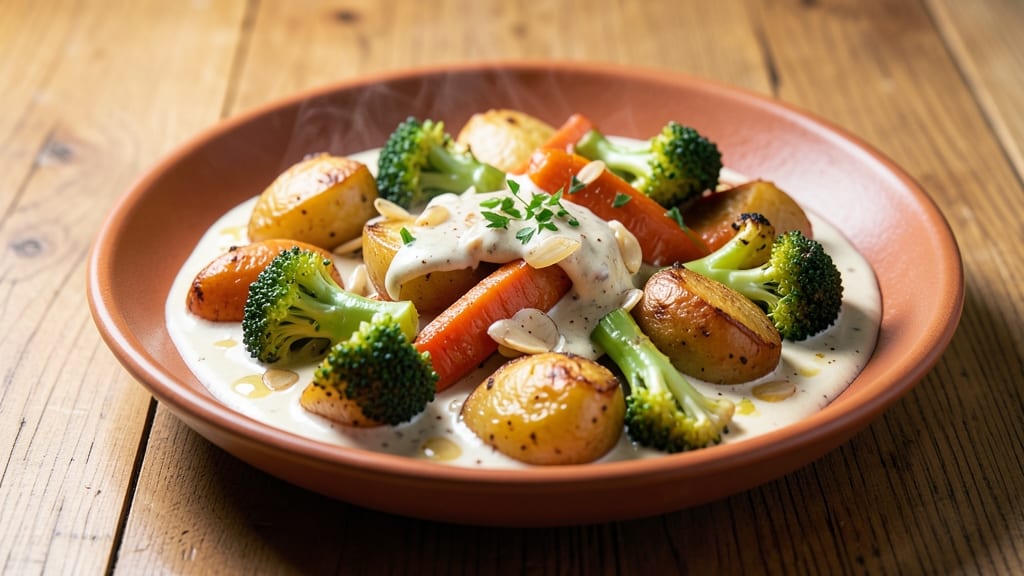
This baked vegetables in white sauce recipe delivers restaurant-quality comfort with crispy-tipped veggies and velvety béchamel in just one pan. The secret lies in roasting vegetables until caramelized before smothering them in a foolproof white sauce that turns ordinary veggies into a showstopping side dish.
I developed this technique after years of testing—it never fails to impress, even with picky eaters.
What sets this recipe apart is the two-stage cooking method: first roasting vegetables at high heat to develop deep caramel flavors, then finishing in the oven with sauce to create those coveted crispy edges.
The white sauce—made with simple pantry staples—adds richness without overpowering the natural sweetness of the vegetables. This method works with almost any combination of root vegetables, broccoli, or even Brussels sprouts.
By the time it emerges from the oven, you'll have a dish that's golden, bubbling, and irresistibly crispy on top with tender vegetables beneath a blanket of creamy sauce. The aroma alone will have everyone heading to the table, and the texture contrast—crispy tops meeting creamy sauce—makes every bite satisfying.
It's the kind of side dish that elevates even the simplest meal.
Perfect for family dinners, holiday gatherings, or meal prep—this recipe scales beautifully and reheats well. The sauce can be made ahead, so you can focus on prepping the vegetables without stress. Let's create this comforting, crispy-topped masterpiece that's sure to become a regular on your dinner table.
Ingredients for baked vegetables in white sauce
Simple vegetables and pantry staples transform into a restaurant-worthy side dish with crispy edges and velvety sauce.
| Ingredient | Amount | Notes |
|---|---|---|
| Assorted Vegetables (e.g., Potatoes, Carrots, Broccoli) 🥔🥕🥦 | 3 lbs | Cut into even-sized pieces |
| Unsalted Butter 🧈 | ½ cup | Cold, cubed for roasting |
| All-Purpose Flour 🌾 | ¼ cup | For white sauce roux |
| Whole Milk 🥛 | 1 ½ cups | Full-fat for creaminess |
| Garlic Cloves 🧄 | 4 cloves | Minced for sauce |
| Shallots 🧅 | 2 whole | Finely diced for flavor |
| Dry White Wine 🍷 | ½ cup | Substitute with vegetable broth |
| Vegetable Broth 💧 | 1 cup | Low-sodium preferred |
| Grated Gruyère Cheese 🧀 | ½ cup | Aged, for depth |
| Fresh Thyme Leaves 🌿 | 1 tbsp | Or dried thyme (1 tsp) |
| Ground Nutmeg 🌶️ | ¼ tsp | Freshly grated preferred |
| Kosher Salt 🧂 | 1 ½ tsp | Diamond Crystal preferred |
| Black Pepper 🌶️ | ½ tsp | Freshly cracked |
| Extra-Virgin Olive Oil 🫒 | 1 tbsp | For tossing vegetables |
The vegetables are the foundation—potatoes, carrots, and broccoli work perfectly, but swap in Brussels sprouts or parsnips if you prefer. Look for firm, fresh vegetables with vibrant colors at your local market—Whole Foods or Trader Joe's carry excellent organic options. Even-sized pieces ensure even cooking, so cut them uniformly. The butter should be cold and cubed for roasting—this creates the crispy edges that make this dish special. If you're short on time, pre-cut frozen vegetables work in a pinch, though fresh yields the best texture.
No white wine? Vegetable broth with a splash of lemon juice mimics the acidity beautifully. The Gruyère adds richness, but Parmesan or sharp cheddar work well if you're avoiding dairy. Fresh thyme is ideal, but dried thyme at one-third the amount suffices. For the roux, keep the heat low—burnt flour will make the sauce bitter. If you're watching calories, reduce the butter to 3 tbsp and add an extra splash of broth. The sauce can be made ahead and reheated gently before adding to the vegetables.
This dish reheats beautifully—just cover with foil and warm in the oven for 10-15 minutes at 375°F. Store leftovers in an airtight container for up to 4 days in the fridge, or freeze for 3 months. The sauce thickens as it cools, so add a splash of milk when reheating if needed. For meal prep, assemble the dish in a baking dish, refrigerate overnight, then bake straight from the fridge—this ensures even cooking and crispy tops.
Why You'll Love This Recipe
- One-Pan Magic: I swear by this for nights when I’d rather not wash a million dishes. Toss everything—carrots, potatoes, broccoli—onto one sheet pan, bake until golden, then just pour that velvety white sauce over the top. Minimal chopping, zero stress.
- Garlic Butter Bliss: That moment when you fold in minced garlic and a pat of butter into the white sauce? Pure satisfaction. The sauce clings to the veggies like a warm hug, making even the simplest potatoes taste like you slaved over them.
- Leftover Reinvention: Between us, this dish begs to be reheated. Cold or warmed, it’s still good—perfect for packing lunches or turning into a quick hash the next day. The sauce stays creamy, and the veggies hold their shape. (Yes, even on a Tuesday night.)
- Budget-Friendly Comfort: Potatoes, carrots, and broccoli stretch across meals, and this recipe uses pantry staples—flour, milk, butter—that don’t break the bank. Honestly, it’s the kind of dish that makes grocery shopping feel less painful. Plus, it feeds four for under $10.
Step-by-step instructions for baked vegetables in white sauce
Master this one-pan technique for restaurant-quality vegetables with golden crusts and creamy sauce.
Prep and Roast the Vegetables for Crispy Edges
Preheat your oven to 425°F with a rack positioned in the lower third. Toss the 3 lbs assorted vegetables (cut into even-sized pieces) with 1 tablespoon extra-virgin olive oil, 1 teaspoon kosher salt, and ¼ teaspoon black pepper. Spread them in a single layer on a large baking sheet.
Roast for 25-30 minutes, stirring once halfway, until the edges are deep golden brown and tender when pierced with a fork. This high-heat roasting creates the crispy texture that makes this dish special. If using potatoes, flip them halfway through for even browning.
Build the White Sauce Foundation
While the vegetables roast, melt ½ cup unsalted butter in a medium saucepan over medium heat. Add ¼ cup all-purpose flour and whisk constantly for 1-2 minutes until the mixture forms a smooth, pale roux with no floury taste. This is your sauce base—don't let it brown or it'll develop a bitter flavor.
Gradually whisk in 1½ cups whole milk, about ¼ cup at a time, allowing each addition to be fully incorporated before adding more. The sauce should thicken to a velvety consistency that coats the back of a spoon. Keep the heat at medium-low to prevent curdling.
Enhance the Sauce with Aromatics
Add the 2 finely diced shallots and 4 minced garlic cloves to the sauce, stirring for 2-3 minutes until fragrant. Pour in the ½ cup dry white wine (or substitute with ½ cup vegetable broth), scraping up any browned bits from the bottom of the pan with a wooden spoon. This deglazing captures all the flavor.
Stir in the 1 cup vegetable broth, 1 tablespoon fresh thyme leaves, ¼ teaspoon ground nutmeg, and remaining ½ teaspoon kosher salt. Bring to a gentle simmer and cook for 5-7 minutes until the sauce thickens slightly. Taste and adjust seasoning—this is where the magic happens.
Combine and Finish with Cheese
Remove the roasted vegetables from the oven and pour the white sauce directly over them, tossing gently to coat evenly. Return to the oven and bake for an additional 10 minutes to let the sauce meld with the vegetables. Sprinkle the ½ cup grated Gruyère cheese evenly over the top and broil for 2-3 minutes until the cheese melts and turns light golden brown.
Watch the broiler closely—you want the cheese to bubble and develop a crispy crust, not burn. The vegetables should be perfectly tender with a creamy sauce clinging to every piece. Serve immediately while the cheese is still bubbly and the vegetables are piping hot.
Pro Tips For Making Baked Vegetables In White Sauce
- PARBOIL VEGETABLES FIRST: The white sauce clings better when veggies aren’t raw—give potatoes, carrots, and broccoli a 5-minute blanch in salted boiling water before baking. I learned this the hard way when my sauce slid right off undercooked chunks (yes, even with flour roux).
- USE COLD BUTTER: Whisk cold unsalted butter into the flour-milk roux—it prevents lumps and gives a smoother sauce. I was skeptical until I tried it; now I never melt the butter first.
- DON’T OVERMIX THE SAUCE: Stir the roux just until it thickens, then stop—overworking it turns it gluey. A few small lumps won’t ruin the dish, but a gummy sauce will. (Your future self will thank you.)
- BAKE UNTIL GOLDEN, NOT DRY: Cover the dish with foil for the first 20 minutes, then uncover and crank the oven to 400°F (200°C) to brown the sauce. Skipping this step leaves you with sad, pale veggies instead of rich, caramelized edges.
Pro cooking tips for this recipe
Roasting for Crispy Edges
High heat is your secret weapon for crispy-tipped vegetables. Roast at 425°F for 25-30 minutes, stirring once halfway through. The key is spreading vegetables in a single layer so they brown evenly.
I use a half-sheet pan for maximum airflow—this creates those coveted crispy edges that make the dish irresistible. 🔥
Roux Perfection
Your white sauce starts with a proper roux—keep the heat at medium and whisk constantly for 1-2 minutes until it's pale golden. If it darkens even slightly, you'll taste bitterness in the sauce.
I recommend using all-purpose flour for this recipe—it creates a silky texture that works beautifully with vegetables. Add milk gradually to prevent lumps.
Sauce Thickness Control
The sauce should coat the back of a spoon but still be pourable. If it's too thick, whisk in 1 tablespoon milk at a time. For extra richness, I sometimes add 1 tablespoon heavy cream at the end.
The sauce will thicken further as it sits, so don't over-thicken it initially. Taste as you go—seasoning builds throughout the cooking process.
Cheese Melting Magic
Use Gruyère cheese for its nutty depth, but Parmesan or sharp cheddar work well too. Sprinkle it evenly over the vegetables just before broiling. Watch closely—the cheese should bubble and turn golden in 2-3 minutes.
For extra crispiness, I sometimes broil for an additional 30 seconds after the cheese melts.
Broiler Watch
Broiling is where many home cooks go wrong. Keep the broiler on high and position the rack about 4 inches from the heat source. The cheese should bubble but not brown too darkly.
If your oven runs hot, reduce to medium-high broiler setting. I find a 9x13-inch baking dish works best for even browning.
Make-Ahead Sauce
Prepare the white sauce up to 2 days ahead and store it in an airtight container in the refrigerator. When ready to use, reheat gently over low heat, adding a splash of milk if it thickens too much.
This time-saving tip lets you focus on prepping the vegetables fresh. The sauce reheats beautifully and maintains its creamy texture. ✨
Nutrition facts
Frequently asked questions
Can I use frozen vegetables instead of fresh?
Yes, but with adjustments! Use thawed frozen vegetables (don't skip thawing) and increase roasting time by 5-7 minutes since they start colder. For best texture, pat them completely dry before roasting to prevent excess moisture from steaming instead of browning.
How do I make this dish dairy-free?
Replace butter with olive oil or vegan butter, flour with cornstarch or gluten-free flour, and milk with unsweetened almond or oat milk. For richness, add 1 tablespoon nutritional yeast to the sauce. Skip the Gruyère and use vegan cheese if needed—just reduce broiling time by 1 minute to prevent burning.
Why did my sauce turn grainy?
Grainy sauce usually means lumps from adding milk too quickly or not whisking enough. Next time, melt butter first, whisk flour into a smooth paste before adding, and incorporate milk very gradually while whisking constantly. If it happens, strain the sauce through a fine-mesh sieve for instant smoothness.
Can I make this ahead of time?
Assemble the dish completely (vegetables + sauce) up to 24 hours ahead, cover tightly, and refrigerate. Bake straight from the fridge at 375°F for 45-50 minutes, adding 5 extra minutes under the broiler at the end. The sauce may thicken more when cold—thin with 1-2 tablespoons milk when reheating.
What's the best way to reheat leftovers?
For crispy results, cover with foil and warm in a 375°F oven for 15-20 minutes. To restore crispy edges, broil for 2-3 minutes at the end. Microwave reheating works but loses texture—cover with a damp paper towel and heat in 30-second bursts, stirring between each. Add a splash of milk if the sauce seems too thick.