
Sauces & Condiments
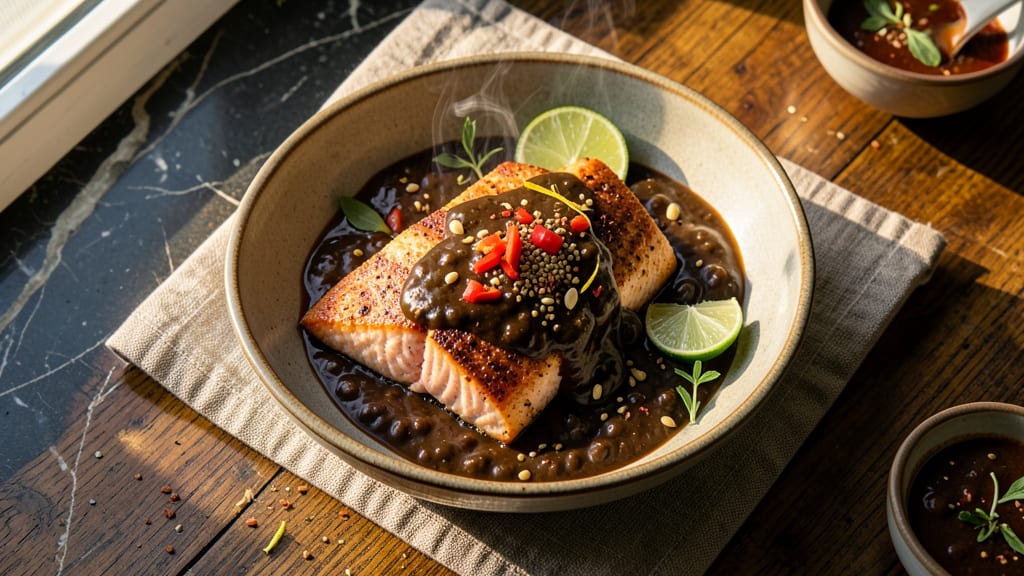
This baked salmon with black bean sauce transforms simple weeknight dinner into a restaurant-worthy meal with just 20 minutes of active prep. The secret lies in the sauce—a rich, smoky blend of black beans, cumin, and lime—that caramelizes beautifully while the salmon bakes to perfect flaky tenderness.
I developed this recipe after craving bold flavors without complicated techniques, and it’s become my go-to for quick yet impressive dinners.
The black bean sauce does double duty here: it bastes the salmon as it bakes, infusing every bite with deep umami and subtle heat. Unlike store-bought sauces, this version builds flavor through slow simmering, creating a velvety texture that clings to the fish.
The recipe uses pantry staples—black beans, garlic, and spices—so you won’t need to hunt for specialty ingredients.
What you’ll end up with is salmon with crisp edges and moist centers, topped with a glossy, caramelized sauce that’s both savory and slightly sweet. The dish pairs effortlessly with steamed jasmine rice or a simple arugula salad, making it versatile for any meal.
The best part? The sauce tastes even better the next day, so leftovers are just as delicious.
Perfect for feeding two or scaling up for a crowd, this recipe proves that elevated dinners don’t require hours in the kitchen. Let’s get started—your taste buds will thank you for the smoky-spiced umami in every bite.
Ingredients for baked salmon with black bean sauce
Pantry staples meet restaurant-worthy flavors in this smoky-spiced salmon dish.
| Ingredient | Amount | Notes |
|---|---|---|
| Salmon Fillets 🐟 | 2 whole | Skin-on, 6-8 oz each |
| Canned Black Beans 🫘 | 1 can | Drained, rinsed, low-sodium preferred |
| Garlic Cloves 🧄 | 3 cloves | Minced, fresh preferred |
| Lime 🍋 | 1 whole | Juiced, seeds strained out |
| Ground Cumin 🌿 | 1 tbsp | Toasted for deeper flavor |
| Smoked Paprika 🌶️ | 1 tsp | For smoky depth |
| Olive Oil 🫒 | ½ cup | Extra-virgin for richness |
| Honey 🍯 | 1 tbsp | For subtle sweetness |
| Red Bell Pepper 🌶️ | 1 whole | Diced, any color works |
| Fresh Cilantro 🌿 | ¼ cup | Chopped, for garnish |
| Salt 🧂 | 1 tsp | Kosher or sea salt |
| Black Pepper 🌶️ | ½ tsp | Freshly ground preferred |
| Jasmine Rice 🍚 | 1 cup | Uncooked, for serving |
The salmon makes this dish shine—look for fresh, skin-on fillets with vibrant color and no fishy smell. Trader Joe's and Whole Foods carry excellent options, but any grocery store with a good seafood counter works. If you can't find skin-on, pat dry and season well—the crispy skin is what makes this dish special. The black beans? Low-sodium canned saves time, but rinse them well to cut down on sodium. For the garlic, fresh is non-negotiable—jarred garlic just doesn't bring the same punch.
No smoked paprika? Regular paprika plus a pinch of liquid smoke works in a pinch. Fresh cilantro missing? Dried cilantro or parsley at half the amount gets you close. The honey adds just enough sweetness to balance the smoky flavors—substitute maple syrup if you're avoiding it. For the bell pepper, any color works, but red has the best natural sweetness. The lime juice is key for brightness, so don't skip it—frozen lime juice works if you're in a hurry.
This dish reheats beautifully—actually tastes better the next day as the flavors meld. Store leftovers in an airtight container for up to 3 days in the fridge. The sauce can be made ahead and reheated separately, then spooned over the salmon when serving. For extra convenience, prep the rice in advance—it keeps well in the fridge for days, so you can focus on the salmon when you're ready to cook.
Why You'll Love This Recipe
- One-Pan Magic: I swear by this recipe when I’m too tired to wash dishes. Just toss the salmon and black beans on a sheet pan with garlic, cumin, and lime, then bake—no pots, no pans, no stress.
- Umami Bomb: That black bean sauce? It’s where the magic happens. The deep, earthy beans marry perfectly with the bright lime and smoky cumin, while the garlic adds a punch that makes every bite feel like a little flavor party.
- Leftover Hero: Between us, this dish tastes better the next day. The salmon stays moist, the sauce thickens just enough, and it reheats like a dream—so I always make extra for lunches or to freeze for those "I can’t decide what to eat" nights.
- Budget-Friendly Protein: Fresh salmon can be pricey, but this recipe stretches it further than ever. The black beans bulk it up, and the pantry staples (cumin, garlic, lime) keep costs low—without sacrificing that restaurant-worthy taste.
Step-by-step instructions for baked salmon with black bean sauce
Here's how to create a restaurant-worthy dish with rich, smoky flavors and tender salmon.
Prepare the Black Bean Sauce Foundation
In a medium bowl, combine the drained and rinsed canned black beans, minced garlic cloves, diced red bell pepper, and the toasted ground cumin. I like to press the garlic cloves through a garlic press for even distribution—this prevents any large chunks that might remain uncooked. Add the smoked paprika, salt, and black pepper, then mix thoroughly with a fork until all ingredients are evenly distributed.
Next, pour in the olive oil and honey, then add the freshly juiced lime. Stir well to create a smooth, vibrant sauce. The lime juice brightens the earthy flavors of the black beans while the honey adds just enough sweetness to balance the smokiness. Let this mixture sit at room temperature for 10 minutes—this allows the flavors to meld together before they hit the oven.
Season and Prep the Salmon
While the sauce rests, pat the salmon fillets dry with paper towels—this is crucial for achieving crispy skin. I press down firmly all over, especially on the skin side, to remove any excess moisture. Place the fillets on a parchment-lined baking sheet, skin-side down, and rub each fillet with about 1 tablespoon of the black bean sauce mixture. This ensures the salmon absorbs some of the smoky, spiced flavors while baking.
Sprinkle the remaining sauce evenly over the top of the salmon fillets, pressing gently so it adheres. The sauce should coat the fillets but not pool excessively on the baking sheet. This step guarantees that every bite of salmon will be infused with the rich black bean flavor while maintaining its delicate texture.
Bake the Salmon to Perfect Doneness
Preheat your oven to 375°F. Bake the salmon for 12-15 minutes, depending on thickness. You'll know it's done when the internal temperature reaches 145°F and the edges begin to flake slightly when gently pressed with a fork. The skin should be golden brown and crispy, while the flesh remains tender and moist.
During the last 2 minutes of baking, I like to broil the salmon for 1-2 minutes to intensify the color and add extra crispiness to the skin. Keep a close eye on it during this time—broiling can happen quickly, and you don't want to overcook the delicate fish. When you see the skin turn a beautiful golden-brown, remove it immediately from the oven.
Cook the Jasmine Rice
While the salmon bakes, prepare the jasmine rice according to package instructions. I use a 1:1.5 ratio of rice to water, which gives perfectly fluffy grains. Bring the water to a boil in a pot, add the rice, then reduce heat to low, cover, and simmer for 15 minutes. Don't peek or stir during cooking—this ensures even cooking and prevents the rice from becoming mushy.
Once the rice is cooked, fluff it gently with a fork and let it sit covered for 5 minutes. This resting period allows the steam to redistribute, resulting in individual, separate grains. The rice should be light and fluffy, with no excess moisture clinging to the grains. This simple step makes all the difference in the final texture of your dish.
Assemble and Garnish
Transfer the baked salmon to serving plates, spooning any remaining sauce from the baking sheet over the top. The sauce should be slightly thickened from the baking process, clinging beautifully to the salmon. Divide the cooked jasmine rice between plates, creating a bed for the salmon fillets.
Garnish each serving with the chopped fresh cilantro, adding a pop of color and freshness to balance the rich, smoky flavors. The cilantro brightens the dish and adds a subtle herbal note that complements the black bean sauce perfectly. Serve immediately while the salmon is still warm and the rice is at its fluffiest. This dish comes together beautifully and delivers that perfect balance of textures and flavors in every bite.
Pro Tips For Making Baked Salmon With Black Bean Sauce
- Dry the salmon well: Pat those fillets thoroughly with paper towels before baking—wet skin means steam instead of crisp edges. I used to skip this and ended up with sad, soggy salmon that clung to the pan like a wet sock.
- Sauté the beans first: Drain and fry the black beans in a dry pan for 5-7 minutes until they darken slightly—this deepens their flavor and thickens the sauce. Yes, it’s an extra step, but your sauce will taste like it came from a restaurant, not a can.
- Don’t overmix the sauce: Once you add lime juice and cumin to the beans, give it one quick stir and let it sit. Overworking it turns it into a paste; let the garlic and spices meld while you prep the salmon. Trust me, your sauce will thank you.
- Bake at 400°F, not higher: Salmon cooks fast, but cranking the oven to 425°F+ will dry it out before the sauce caramelizes. Stick to 400°F for 12-15 minutes—enough time for the salmon to flake and the sauce to cling without turning to rubber. (Your thermometer should hit 145°F.)
Best sauces and condiments for this dish
Black Bean Sauce
The star of this dish is the black bean sauce, a rich, smoky blend that caramelizes beautifully while baking. I start by simmering 1 can of black beans with 3 minced garlic cloves, 1 tbsp toasted cumin, and 1 tsp smoked paprika until thickened.
The honey and lime juice balance the earthy flavors perfectly. For extra depth, I add ½ cup olive oil and simmer for 5-7 minutes to create a glossy, velvety texture that clings to the salmon. 🌶️
This sauce isn’t just a topping—it bastes the salmon as it bakes, infusing every bite with umami and subtle heat. The black beans provide a creamy, protein-rich base, while the spices add complexity.
I like to blend it lightly with an immersion blender for a smoother finish, but leaving it slightly chunky adds texture. The sauce tastes even better the next day as the flavors meld further.
Creamy Avocado Lime Dressing
For a lighter contrast, I often serve this dish with a creamy avocado lime dressing on the side. Blend 1 ripe avocado, ¼ cup Greek yogurt, 2 tbsp lime juice, 1 tbsp olive oil, and salt until smooth.
This dressing cuts through the richness of the salmon and sauce while adding a cool, refreshing element. Drizzle it over a simple arugula salad or use it as a dip for extra flavor. 🍋
Spicy Sriracha Mayo
If you love heat, a spicy Sriracha mayo is a game-changer. Mix 2 tbsp mayonnaise with 1 tsp Sriracha, ½ tsp lime juice, and a pinch of salt. Spread it on toasted sourdough or drizzle it over the salmon for a bold, tangy kick.
The mayo adds creaminess, while the Sriracha brings a fiery contrast to the smoky black bean sauce. This is especially great for serving with crispy rice crackers or as a dipping sauce. 🔥
Cilantro-Lime Crema
A cilantro-lime crema elevates the dish with its bright, herby notes. Blend ½ cup sour cream, ¼ cup chopped cilantro, 2 tbsp lime juice, 1 tbsp olive oil, and ½ tsp salt until smooth.
This creamy, zesty sauce pairs perfectly with the salmon and black bean sauce, adding a refreshing finish. I love drizzling it over the top of the dish just before serving for a pop of color and freshness. ✨
Honey-Glazed Carrots
For a sweet and savory side, try honey-glazed carrots. Toss 1 lb baby carrots with 1 tbsp olive oil, 1 tbsp honey, ½ tsp smoked paprika, and salt. Roast at 400°F for 20 minutes until tender and caramelized.
The sweetness complements the smoky flavors of the salmon and sauce, creating a balanced bite. These carrots also make a great addition to grain bowls or as a standalone side. 🥕
Nutrition facts
Frequently asked questions
Can I use frozen salmon for this recipe?
Thaw frozen salmon in the fridge overnight for best results. Pat it completely dry before seasoning to ensure crispy skin. Never thaw at room temperature, as this can promote bacterial growth. If you're short on time, you can use the quick thaw method: seal the salmon in a bag and submerge it in cold water for 30 minutes, changing the water every 10 minutes.
How do I make the black bean sauce thicker?
Simmer the sauce uncovered for an extra 3-5 minutes to reduce the liquid. For instant thickening, mix 1 teaspoon cornstarch with 2 tablespoons water, stir into the sauce, and simmer for 1 minute until it reaches your desired consistency. Avoid adding flour directly—it can make the sauce grainy.
What's the best way to reheat leftovers?
Reheat the salmon and sauce together in a skillet over medium-low heat for 2-3 minutes, adding a splash of water to prevent drying. For the rice, use the microwave with a damp paper towel for 1 minute. Never reheat salmon above 165°F—this ensures food safety while keeping it moist. The sauce actually improves overnight as flavors meld!
Can I substitute white beans for black beans?
While possible, black beans provide deeper earthiness that complements salmon perfectly. If using white beans, add ½ teaspoon smoked paprika extra and 1 teaspoon soy sauce to boost umami. The texture will be slightly less creamy, but still delicious. For best results, stick with black beans—they're the star of this dish!
How do I know when the salmon is fully cooked?
The salmon is done when it reaches an internal temperature of 145°F and flakes easily with a fork. The edges should be opaque, not translucent, and the skin crispy. For skin-on fillets, check the thickest part—it should be just cooked through without being dry. If unsure, err on the side of slightly undercooked; salmon continues cooking slightly after removal from heat.