
Sauces & Condiments
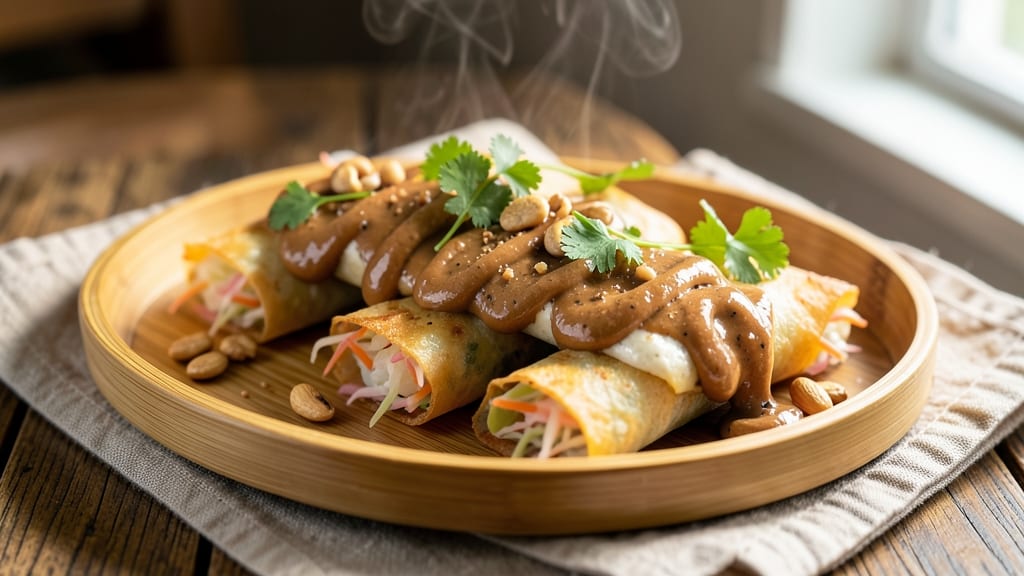
This authentic Thai peanut sauce transforms ordinary spring rolls into a restaurant-worthy masterpiece with its perfect balance of nutty richness, tangy brightness, and subtle umami depth.
The secret lies in toasting peanuts until fragrant and blending them with coconut milk, tamarind, and a touch of fish sauce—creating a sauce that clings beautifully to crispy spring roll wrappers.
What sets this apart is the careful sweet-savory harmony, where palm sugar caramelizes just enough to complement the smoky garlic and lime zest without overpowering the dish.
The sauce’s velvety texture comes from simmering the peanut mixture until thick and glossy, ensuring every bite delivers that signature Thai peanut crunch without grit. Unlike store-bought versions, this recipe uses real ingredients—no artificial stabilizers or excessive sugar—to deliver a flavor profile that’s both complex and approachable.
The result? A sauce that’s equally at home as a dipping companion for spring rolls, a glaze for grilled meats, or a drizzle over noodle bowls.
What makes this authentic Thai peanut sauce truly special is its versatility—it’s ready in under 30 minutes and keeps well in the fridge for up to a week, making it a pantry staple for anyone who loves bold, balanced flavors.
The key steps—roasting the peanuts, blending the sauce smooth, and balancing the sweet, sour, and salty notes—are simple but critical for achieving that signature Thai taste. Once you try this, you’ll never settle for anything less.
Perfect for spring roll nights, takeout cravings, or as a quick weeknight sauce, this recipe delivers restaurant-quality results with minimal effort. The sauce’s nutty aroma alone will have everyone asking for seconds, proving that authentic Thai flavors are within reach for any home cook.
Let’s get started on creating this crowd-pleaser.
Ingredients for authentic thai peanut sauce recipe for spring rolls
Nine essential ingredients crafting restaurant-quality Thai peanut sauce, perfect for spring rolls or any dish needing nutty-sweet depth.
| Ingredient | Amount | Notes |
|---|---|---|
| Raw Peanuts 🥜 | 1 cup | Unsalted, skin-on preferred |
| Coconut Milk 🥥 | 1 can | Full-fat, 13.5 oz can |
| Palm Sugar 🍯 | ¼ cup | Or sub light brown sugar |
| Fish Sauce 🍜 | 1 tbsp | Vegetarian alternative: soy sauce |
| Tamarind Paste 🍈 | 2 tbsp | Unsweetened, 5 oz jar |
| Garlic Cloves 🧄 | 4 cloves | Fresh, minced finely |
| Lime Zest 🍋 | 1 tbsp | From 1 large lime |
| Lime Juice 🍋 | 1 tbsp | Freshly squeezed |
| Red Chili Flakes 🌶️ | 1 tsp | Adjust for heat preference |
| Vegetable Oil 🫒 | 1 tbsp | For roasting peanuts |
| Salt 🧂 | ½ tsp | Kosher or sea salt |
The peanuts are the heart of this sauce—raw, skin-on varieties from Asian markets deliver the most authentic flavor, though store-bought unsalted peanuts work fine. Toast them in a dry pan with vegetable oil until fragrant and golden (about 5-7 minutes), never letting them burn. Palm sugar is ideal for that signature caramelized sweetness, but light brown sugar works in a pinch. For tamarind, Thai Kitchen brand is widely available and reliable, though fresh tamarind pulp offers superior depth. The coconut milk should be full-fat for that creamy texture—Thai Kitchen or Native Forest brands are excellent choices.
No fish sauce? Soy sauce or coconut aminos provide a similar umami base, though the flavor will differ slightly. If you can't find palm sugar, light brown sugar plus a pinch of molasses mimics the depth. For extra authenticity, roast the garlic until golden before mincing—this adds a smoky note that elevates the sauce. The lime zest and juice should be freshly zested and squeezed; bottled lime juice lacks the bright acidity needed. Red chili flakes can be adjusted to taste, but a light hand ensures the sauce remains versatile for both spring rolls and grilled meats.
This sauce thickens as it cools, so blend it until completely smooth before transferring to storage containers. It keeps for up to 1 week in the refrigerator, though the texture may separate slightly—simply stir before using. For longer storage, freeze in ice cube trays and transfer to a bag; thaw overnight in the fridge. The sauce pairs beautifully with spring rolls but also works as a glaze for tofu or a drizzle over noodle bowls—its versatility makes it a true pantry staple.
Why You'll Love This Recipe
- No Blender Needed: I swear by this—just toast the peanuts in a dry pan until they’re fragrant and golden, then crush them with the flat side of a knife. That nutty aroma alone tells you it’s going to be good, and the texture? Chef’s kiss. No fancy equipment, just elbow grease.
- Sweet-Savory Magic: The tamarind paste cuts through the richness of the coconut milk while palm sugar balances the fish sauce’s saltiness—it’s the kind of harmony that makes you pause mid-bite. Honestly, I’ve tried store-bought versions, but this? It’s the real deal, with that deep, umami-packed punch.
- Dips & Dishes: This sauce isn’t just for spring rolls—drizzle it over noodles, toss it with grilled chicken, or serve it as a dip for fresh veggies. Between us, I’ve even used the leftovers to glaze roasted tofu. One batch stretches further than you’d think, and it’s always a crowd-pleaser.
- Pantry Staple Power: Fish sauce and peanuts are cheap, and coconut milk lasts forever if you freeze it. I make a big batch when I spot a sale, then store it in the fridge for up to two weeks. Not the prettiest in a jar, but every time I pull it out, it’s like a flavor bomb waiting to happen—no last-minute grocery runs needed.
Step-by-step instructions for authentic Thai peanut sauce
This method delivers the perfect balance of nutty richness and tangy brightness for spring rolls.
Toast the Peanuts for Maximum Flavor
Preheat your oven to 350°F and line a baking sheet with parchment paper. Spread the 1 cup raw peanuts in a single layer on the sheet, ensuring they don't overlap. Toast for 8-10 minutes until they turn a rich golden brown and release an intoxicating aroma.
This step is non-negotiable for authentic flavor. The toasted peanuts will develop a deep, toasty aroma that forms the sauce's foundation. Watch them closely—they burn quickly once they reach the right color. Once toasted, transfer the peanuts to a clean bowl and let them cool completely before grinding.
Grind the Peanuts to a Fine Powder
Using a food processor or high-powered blender, pulse the cooled peanuts until they form a fine powder. You're aiming for a consistency similar to peanut butter but much finer, with no visible peanut pieces. This texture ensures the sauce will be smooth and velvety when combined with other ingredients.
I like to work in batches if needed, but don't overfill your processor—this makes it harder to achieve that perfect powdery texture. If any oil separates, simply wipe it away as it won't be needed in the sauce. The peanut powder should be completely dry and free of any moisture before proceeding to the next step.
Build the Sauce Base with Coconut Milk and Tamarind
In a medium saucepan over medium heat, combine the 1 can coconut milk, 2 tablespoons tamarind paste, 0.25 cup palm sugar, and 1 tablespoon fish sauce. Stir gently to dissolve the tamarind completely—it should create a smooth, slightly tangy mixture with no lumps.
Bring the mixture to a gentle simmer, then reduce heat to low and let it cook for 5-7 minutes until slightly thickened. This base creates the perfect balance of sweetness and acidity that defines authentic Thai peanut sauce. Taste occasionally—you want the flavors to meld without burning the sugar.
Incorporate Aromatics and Seasonings
Add the 4 cloves minced garlic, 1 tablespoon lime zest, 1 tablespoon lime juice, 1 teaspoon red chili flakes, and 0.5 teaspoon salt to the saucepan. Stir well to combine, then simmer for another 2-3 minutes until the garlic is fragrant but not browned.
Here's where the sauce comes together. The lime zest and juice add brightness that cuts through the richness, while the chili flakes provide just the right amount of heat. The garlic should infuse the sauce with its aromatic qualities without becoming bitter. If the mixture looks too thick, add 1-2 tablespoons water to achieve a smooth, pourable consistency.
Finish with Toasted Peanut Powder
Remove the saucepan from heat and gradually whisk in the peanut powder until completely incorporated. The sauce will thicken noticeably as the peanuts absorb the liquid. If it becomes too thick, thin it with 1 tablespoon water at a time until you achieve a glossy, spoonable consistency.
For the perfect texture, the sauce should coat the back of a spoon but still be pourable. Taste and adjust seasoning if needed—you might need a touch more fish sauce for saltiness or lime juice for acidity. Transfer to a serving bowl and let it cool slightly before using. This sauce will keep in the refrigerator for up to 5 days, making it perfect for meal prep.
Pro Tips For Making Authentic Thai Peanut Sauce Recipe For Spring Rolls
- Toast Peanuts Dry: Skip the oil—raw peanuts need direct dry heat to avoid greasiness. Spread them on a baking sheet at 350°F (175°C) for 8–10 minutes, shaking halfway, until golden and fragrant. Overcrowding steams them instead of toasting, and that’s when the sauce tastes flat.
- Whisk Tamarind Paste: Tamarind paste clumps like glue, and nothing ruins the sauce faster than lumps in your sauce. Mix it with 1–2 tablespoons of warm water first, then whisk it into the coconut milk before adding anything else. I learned this the hard way—my first batch had a gritty texture that ruined the smoothness.
- Simmer Low and Slow: The sauce will split if you rush it. After combining all ingredients, reduce heat to a bare simmer and let it cook uncovered for 10–12 minutes. Watch for tiny bubbles breaking the surface—this means it’s thickening properly. High heat turns it into scrambled eggs, not peanut sauce.
- Balance Fish Sauce Gradually: Fish sauce is the flavor bomb, but too much kills the tamarind’s tang. Start with 1 teaspoon, taste, then add another ½ teaspoon at a time. The sauce should taste sour-sweet-salty all at once, not just salty. I’ve had to salvage batches where I overdid it—trust your tongue, not the recipe.
Storing and reheating this recipe
Fridge Storage Tips
Transfer your finished peanut sauce to an airtight glass container—I prefer mason jars or silicone-lidded bowls—and let it cool completely before sealing. The sauce will thicken slightly in the fridge, so I recommend stirring vigorously before each use.
Store it for up to 7 days in the refrigerator, where it maintains its vibrant color and rich flavor. If you notice any separation, simply whisk it back to a smooth consistency before using. 🥫
Freezer Prep
For longer storage, portion the sauce into ice cube trays or small silicone molds—this makes it easy to thaw just what you need. Once frozen solid, transfer the cubes to a freezer-safe bag and flatten to save space.
The sauce keeps for up to 3 months in the freezer, though the texture may become slightly grainy. To use, thaw overnight in the fridge or quickly in a bowl of warm water for 5-10 minutes. 🧊
Reheating Methods
For best results, reheat the sauce gently on the stovetop. Pour it into a small saucepan and warm over low heat with 1-2 tablespoons of water to prevent burning. Stir constantly until it reaches 160°F—this ensures the peanut oil doesn’t separate.
Avoid microwaving, as it can make the sauce too thin and lose its glossy finish. If the sauce thickens too much, thin it with a splash of coconut milk or water. 🔥
Reviving Texture
If your refrigerated sauce separates, don’t toss it! Blend it again for 10-15 seconds with a splash of warm water or coconut milk to restore its silky texture. For extra richness, add ½ teaspoon of peanut butter while blending—this helps bind the sauce back together.
If the flavor seems muted after storage, brighten it with a pinch of salt or a squeeze of fresh lime juice. 💫
Spring Roll Prep
When using stored peanut sauce for spring rolls, warm it slightly before dipping or drizzling—room temperature sauce clings better to the crispy wrappers. For extra crunch, sprinkle toasted peanuts or crushed roasted cashews over the sauce before serving.
If you’re making a large batch of spring rolls, assemble them first, then dip each one individually in the warm sauce for even coating. This keeps the filling warm while the sauce stays vibrant. 🥟
Flavor Boosts
Need to revive a sauce that’s lost its punch? Add ½ teaspoon of fish sauce or soy sauce for umami depth, or a dash of tamarind paste for tang. For extra heat, stir in ¼ teaspoon of fresh chili oil or crushed dried chilies.
If the sauce tastes too sweet, balance it with a squeeze of lime juice or a pinch of salt. These tweaks work wonders for bringing back that restaurant-quality taste. 🌶️
Nutrition facts
Frequently asked questions
Can I make this Thai peanut sauce without coconut milk?
Yes, but the texture will be thinner and less creamy. Substitute with ½ cup full-fat Greek yogurt or ½ cup heavy cream for richness, or use ¼ cup peanut butter (unsweetened) for a nutty depth. Reduce the liquid slightly by 2 tablespoons to compensate for the extra moisture in substitutes.
How do I adjust the sweetness level for picky eaters?
Start by reducing the palm sugar to 0.125 cup and taste as you go. For extra sweetness control, add 1 teaspoon of honey or maple syrup at the end—this lets you fine-tune without altering the sauce's base. The tamarind already provides natural sweetness, so adjust gradually.
What's the best way to use leftover peanut sauce?
This versatile sauce works beyond spring rolls! Drizzle it over grilled tofu or shrimp skewers, mix into stir-fries, or use as a dip for fresh spring vegetables. For extra flair, top with crushed peanuts or fresh cilantro. It also makes a fantastic glaze for baked chicken wings.
Can I make this sauce nut-free?
Replace the peanuts with ½ cup sunflower seeds (toasted and ground) or ¼ cup tahini for a seed-based version. The texture will be slightly thinner, so add 1 tablespoon cornstarch to the coconut milk mixture to thicken it properly. Adjust the fish sauce to taste, as sunflower seeds have a milder flavor.
Why did my sauce turn out too thick?
This usually happens when peanuts absorb too much liquid during blending. Thin with 1-2 tablespoons of warm water or coconut milk while whisking. For future batches, blend the peanut powder with 2 tablespoons of coconut milk first to pre-emulsify it before adding to the saucepan.