
Sauces & Condiments
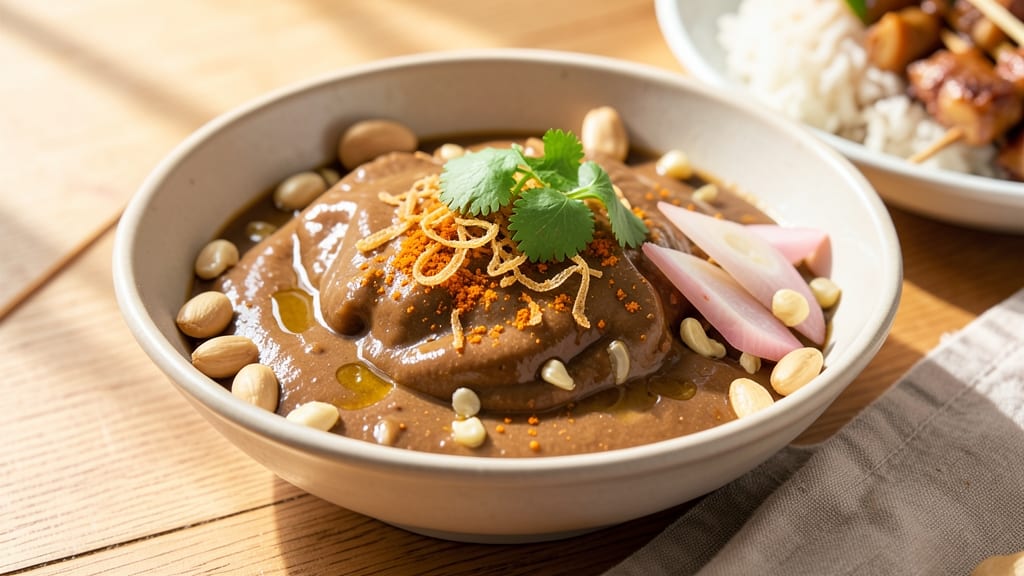
This authentic Indonesian peanut sauce transforms ordinary dishes into flavor-packed masterpieces with its rich, nutty depth and bright tamarind tang. 💛 The secret lies in slow-toasting whole peanuts for maximum aroma and simmering them with traditional spices until the sauce thickens to a velvety consistency.
Unlike store-bought versions, this recipe captures the complex balance of sweet, savory, and umami that makes it indispensable in Indonesian cuisine.
The foundation begins with garlic, shallots, and galangal—classic aromatics that build flavor as they caramelize in coconut oil. Turmeric adds warmth while tamarind brings that signature tang that cuts through the richness.
Fresh lime juice at the end ensures brightness, preventing the sauce from tasting flat. The result is a versatile condiment that elevates everything from grilled satay to stir-fried rice.
What sets this sauce apart is its authentic texture—thick enough to cling to noodles and meat but smooth enough to drizzle over vegetables. The peanuts aren’t just blended; they’re toasted until fragrant, creating layers of nuttiness that deepen with each bite.
No artificial additives here—just whole ingredients working together to deliver restaurant-quality flavor at home.
Use it as a marinade for chicken skewers, a dip for spring rolls, or a finishing sauce for nasi goreng. The possibilities are endless, but the technique remains the same: patience in simmering and precision in balancing sweetness and acidity.
Once you try this, store-bought peanut sauce won’t stand a chance.
Ingredients for authentic indonesian peanut sauce
Transform ordinary dishes with this restaurant-quality Indonesian peanut sauce featuring authentic aromatics and nutty depth.
| Ingredient | Amount | Notes |
|---|---|---|
| Whole Unsalted Peanuts 🥜 | 1 cup | Toasted until fragrant |
| Coconut Oil 🫒 | ½ cup | Refined or virgin preferred |
| Garlic Cloves 🧄 | 6 cloves | Peeled, roughly chopped |
| Shallots 🧅 | 4 whole | Peeled, thinly sliced |
| Fresh Galangal | 2 inches | Peeled, sliced thinly |
| Ground Turmeric 🌿 | 1 tsp | Freshly ground preferred |
| Tamarind Paste 🍯 | ¼ cup | Unsweetened, high quality |
| Brown Sugar 🍯 | ¼ cup | Packed, light brown preferred |
| Soy Sauce 🥢 | 2 tbsp | Dark soy sauce preferred |
| Fresh Lime Juice 🍋 | 2 tbsp | Strained, no pulp |
| Salt 🧂 | ½ tsp | Diamond Crystal preferred |
| Water 💧 | ½ cup | Room temperature preferred |
The peanut quality makes or breaks this sauce. Whole unsalted peanuts are essential—skip the salted or pre-ground versions, which lack the clean nuttiness. Toast them in a dry skillet until golden and fragrant (about 5-7 minutes), then grind them to a coarse powder. Trader Joe's and Asian markets carry the best varieties. Galangal should be fresh, with a citrusy aroma and pale yellow flesh—it's the aromatic backbone alongside garlic and shallots. If unavailable, substitute with a mix of ginger and turmeric at half the amount, though authenticity suffers slightly. The tamarind paste must be unsweetened; Thai Kitchen brand is reliable, but check for added sugar.
No tamarind? Lemon juice plus 1 tbsp maple syrup approximates the tang, though it won't replicate the depth. Dark soy sauce can be swapped for regular soy sauce, but the color will be less vibrant. Fresh galangal unavailable? Ginger plus turmeric works in a pinch (1 tbsp ginger + 1 tsp turmeric per 2-inch galangal), though the flavor profile shifts. For the peanut grinding, a food processor yields the finest texture, but a mortar and pestle creates more surface area for flavor extraction. The brown sugar adds caramelized richness—light brown has better moisture content than dark, which can make the sauce too dense. Always strain the lime juice to avoid grittiness.
This sauce thickens as it cools, so don't over-blend—slight texture is ideal. Store airtight in the fridge for 1 week or freeze for 3 months. For best results, let it sit at room temperature for 10 minutes before using—this allows the flavors to meld fully. The sauce reheats beautifully; simply warm it gently on the stove with a splash of water if it thickens too much. Portion into ice cube trays for easy single-use servings—perfect for satay dipping or stir-fry finishing touches.
Why You'll Love This Recipe
- No-Fuss Base: I swear by this sauce—just toast the peanuts in coconut oil until they’re golden and nutty, then pulse with garlic, shallots, and galangal. No blender? No problem. A mortar and pestle works just as well, and honestly, the texture’s richer that way.
- Umami Bomb: Between the toasted peanuts, fresh galangal’s citrusy kick, and that slow-simmered garlic-shallot paste, every bite is ridiculously balanced. It’s the kind of flavor that lingers—perfect for when you want something that tastes like it took hours (but didn’t).
- Dress-Up Champion: This sauce turns a simple grilled chicken thigh into a restaurant-worthy dish, or slathers over noodles like a dream. I’ve even drizzled it on rice paper rolls for a quick lunch—works every time, no matter the occasion.
- Pantry Goldmine: A jar of this keeps for weeks in the fridge, and the peanuts make it budget-friendly without sacrificing depth. (Yes, even on a Tuesday night.) Plus, the galangal’s zing cuts through richness, so you won’t overdo it—no waste, just flavor.
Step-by-step instructions for authentic Indonesian peanut sauce
Master this vibrant sauce with traditional techniques and precise measurements.
🔥 Step 1: Toast Peanuts and Render Coconut Oil
Heat a dry skillet over medium heat and add the 1 cup whole unsalted peanuts. Toast them for 5-7 minutes until they turn golden brown and release an intense nutty aroma. Be patient—they should smell deeply fragrant, not burnt. Transfer the toasted peanuts to a plate and set aside.
In the same skillet, reduce the heat to low and add the 0.5 cup coconut oil. Let it warm gently for 2 minutes until it shimmers but doesn't smoke. This step infuses the oil with peanut flavor, creating the sauce's rich foundation. Keep the oil warm for the next step—don't let it cool completely.
🍳 Step 2: Sauté Aromatics Until Golden
Add the 4 whole shallots and 2 inches fresh galangal to the warm coconut oil. Sauté over medium heat for 8-10 minutes until the shallots turn deep golden brown and the galangal softens. Stir occasionally to prevent burning—galangal releases a citrusy aroma that's essential for authentic flavor.
Add the 6 cloves garlic cloves and 1 tsp ground turmeric, stirring for 1 minute until fragrant. The turmeric will deepen the sauce's golden hue while adding earthy warmth. Remove the skillet from heat and let the aromatics cool slightly—this prevents the sauce from curdling when combined with other ingredients later.
🥘 Step 3: Blend Ingredients to Smooth Perfection
Transfer the sautéed aromatics to a blender or food processor. Add the toasted peanuts, 0.25 cup tamarind paste, 0.25 cup brown sugar, 2 tbsp soy sauce, 2 tbsp fresh lime juice, and 0.5 tsp salt. Blend on high speed for 2-3 minutes until completely smooth, scraping down the sides as needed. The sauce should be thick but pourable.
With the blender running, slowly pour in the 0.5 cup water through the feed tube. This gradual addition prevents splattering and ensures even consistency. Taste and adjust seasoning—you may need a touch more tamarind for tang or sugar for sweetness. The sauce should balance nutty richness, citrus brightness, and subtle spice.
🔥 Step 4: Simmer for Balanced Flavor
Return the blended sauce to the skillet over medium-low heat. Simmer gently for 5-7 minutes, stirring occasionally, until it thickens slightly and coats the back of a spoon. The sauce should reduce just enough to intensify flavors without becoming gluey. If it thickens too much, whisk in 1-2 tablespoons water to reach your desired consistency.
This simmering step is crucial—it allows the tamarind to mellow and the peanut oil to fully emulsify. The sauce should have a glossy sheen and coat the spoon smoothly. Remove from heat immediately to prevent over-reduction. Let it cool slightly before serving to allow flavors to meld completely.
Pro Tips For Making Authentic Indonesian Peanut Sauce
- TOAST PEANUTS LOW AND SLOW: Skip the high-heat blitz—roast whole peanuts at 300°F (150°C) for 15-20 minutes until golden and fragrant. I learned this the hard way: burning them turns the sauce bitter, and you’ll taste it no matter how much coconut milk you add.
- GRATE GALANGAL FRESH, NOT SHREDDED: Use a box grater or mandoline for thin, even strips—shredding leaves fibrous chunks that won’t dissolve. My grandmother swore by this: "It’s the thing that matters most for that smooth, aromatic base." No, you can’t just chop it fine.
- PRESSURE-COOK SHALLOTS FOR DEPTH: After frying shallots until caramelized, add 2 tablespoons water and cover with a lid for 3 minutes. The steam breaks them down into a silky paste—no blender needed. I was skeptical until I tried it; the sauce tastes richer without extra effort.
- STRAIN THE SAUCE TWICE: First through a fine-mesh sieve to catch peanut skins, then a cheesecloth for ultra-smoothness. Yes, it’s extra work, but that velvety texture is what separates home-cooked from takeout. (Your future self will thank you.)
Creative variations of these flavors
Spicy Sambal Twist
For a fiery kick, add 1-2 tbsp sambal oelek (adjust to taste) when blending the sauce. This Indonesian chili paste introduces heat while preserving the peanut's nutty depth. I recommend starting with 1 tbsp and tasting—you can always add more.
The sambal's tangy-spicy profile cuts through the richness, making it perfect for grilled meats or noodle dishes. 🌶️
Coconut Milk Creaminess
Replace 0.25 cup water with 0.25 cup light coconut milk during blending for a velvety texture. This variation works beautifully as a dipping sauce for spring rolls or as a marinade for tofu.
The coconut milk adds subtle sweetness while keeping the sauce lusciously smooth. For extra richness, use full-fat coconut milk instead.
Sweet Chili Glaze
Swap out 0.25 cup brown sugar for 0.25 cup sweet chili sauce (like Sriracha Sweet Chili) and reduce tamarind to 0.125 cup. This fusion-style sauce pairs perfectly with grilled pork or chicken skewers.
The sweet-chili balance creates a sticky, glaze-like consistency that caramelizes beautifully when brushed on meats. 🔥
Herb-Infused Version
Add 2 tbsp chopped fresh cilantro and 1 tbsp chopped Thai basil to the blender before processing. These herbs add bright, aromatic notes that complement the peanut's nuttiness. For an extra layer of complexity, include 1 tsp lemongrass paste (or 2 tbsp finely chopped lemongrass) during the sautéing step.
This variation shines as a drizzle for summer rolls or as a dip for fresh vegetables.
Smoky Chipotle Depth
Infuse the coconut oil with 1 chipotle pepper in adobo sauce (minced) while warming it. Remove the pepper after 2 minutes to prevent overpowering heat. This smoky-sweet variation elevates the sauce for tacos or as a glaze for grilled corn.
The chipotle's smoldering flavor pairs surprisingly well with the peanut's earthiness, creating a complex profile that's both familiar and exciting. ✨
Sweet Potato Mash
Blend in 0.5 cup cooked mashed sweet potato with the peanuts for a rustic, chunkier texture. This variation works wonderfully as a dip for roasted vegetables or as a spread for sandwiches. The sweet potato adds natural sweetness and a creamy, almost pudding-like consistency.
For extra richness, fold in 1 tbsp tahini at the end. This version feels heartier and more substantial, perfect for cold weather meals.
Nutrition facts
Frequently asked questions
Why does this peanut sauce need to simmer?
The simmering step is essential to develop the sauce's depth and balance flavors. It allows the tamarind's tang to mellow while letting the peanut oil fully emulsify, creating a velvety texture. Skipping this step can leave the sauce flat or overly acidic.
Can I use peanut butter instead of whole peanuts?
While it's possible, whole peanuts create a richer, more aromatic sauce. Peanut butter lacks the toasted depth and may make the sauce greasier. If you must use it, choose natural, unsweetened peanut butter with no added oils or sugars.
How do I adjust the sauce for spicier dishes?
Add 1-2 tbsp sambal oelek when blending for heat without overpowering the peanut flavor. For extra depth, infuse the coconut oil with minced chipotle pepper (remove after 2 minutes). Always taste first—you can add more, but you can't remove excess spice.
What's the best way to store leftover sauce?
Transfer to an airtight container and refrigerate for up to 1 week. For longer storage, freeze in ice cube trays (perfect for single servings) for 3 months. Thaw overnight in the fridge—never microwave directly from frozen.
Can I make this sauce dairy-free?
This recipe is naturally dairy-free as it uses coconut oil and no dairy products. The peanut base provides all the richness needed. Just ensure your tamarind paste and soy sauce are also dairy-free.