
Sauces & Condiments
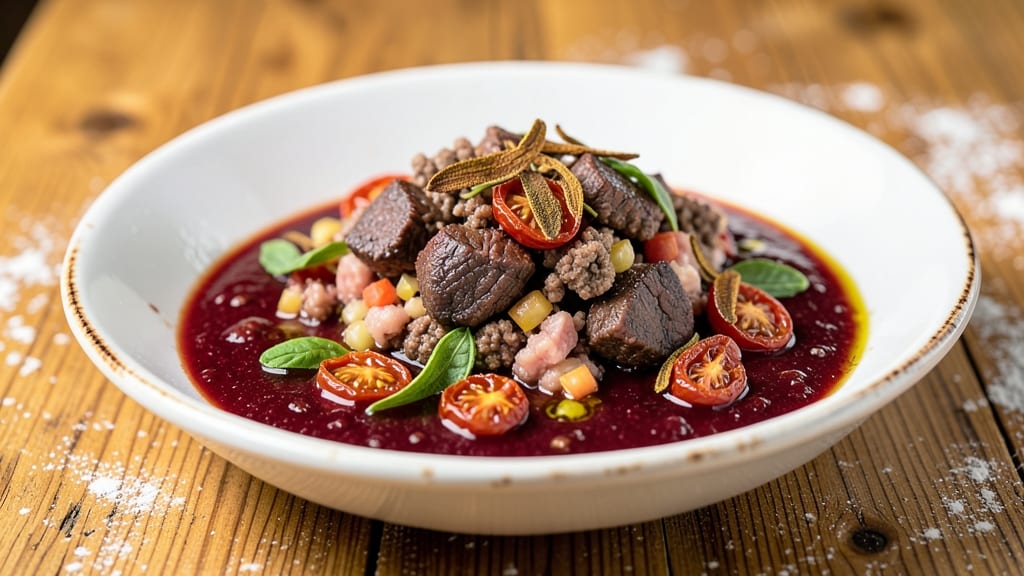
This authentic Italian red meat sauce transforms simple ingredients into a rich, slow-simmered masterpiece perfect for twirling around pasta. The secret lies in hours of gentle cooking, where beef and pork break down into tender chunks while developing layers of deep umami flavor.
Every bite delivers the complex, savory essence of Italian tradition—no shortcuts, just time-honored technique.
The foundation begins with a soffritto of onions and celery, slowly caramelized before adding ground meat and wine to deglaze the pot. Tomatoes join later, their acidity balanced by herbs and a touch of sugar, while the sauce simmers until it thickens to a luxurious consistency.
This isn't an instant sauce—it's a labor of love that rewards patience with restaurant-quality depth.
What you'll achieve is a sauce with bold, meaty richness and a velvety texture that clings to every strand of pasta. The aroma alone—warm spices, caramelized meat, and simmering tomatoes—will transport you to a trattoria in Bologna.
Perfect for freezing and reheating, this sauce gets better with time as flavors meld.
Use it on tagliatelle, fettuccine, or even lasagna layers—just be sure to reserve some for seconds. The instructions ahead will guide you through each step with precision, ensuring your sauce achieves that authentic Italian soul that makes it unforgettable.
Ingredients for authentic italian red meat sauce
Simple ingredients, slow cooking, and Italian tradition create this legendary red meat sauce.
| Ingredient | Amount | Notes |
|---|---|---|
| Ground Beef (Chuck) 🥩 | 1 ½ lb | 80/20 fat ratio preferred |
| Ground Pork 🐷 | ½ lb | Freshly ground for best flavor |
| Yellow Onion 🧅 | 1 whole | Finely chopped, about 2 cups |
| Celery Stalk 🧅 | 2 whole | Finely chopped, about 1 cup |
| Carrot 🥕 | 1 whole | Finely chopped, about 0.5 cup |
| Dry Red Wine 🍷 | ½ cup | Bold variety like Chianti or Sangiovese |
| San Marzano Crushed Tomatoes 🍅 | 28 oz | High-quality canned tomatoes |
| Tomato Paste 🍅 | 2 tbsp | Smooth, not chunky |
| Garlic Cloves 🧄 | 4 cloves | Minced for even distribution |
| Fresh Rosemary 🌿 | ¼ cup | Chopped, or 1 tbsp dried |
| Fresh Thyme 🌿 | ¼ cup | Chopped, or 1 tsp dried |
| Extra-Virgin Olive Oil 🫒 | ¼ cup | For sautéing soffritto |
| Granulated Sugar 🍚 | 1 tsp | Balances acidity |
| Diamond Crystal Kosher Salt 🧂 | 1 ½ tsp | Adjust to taste |
| Freshly Ground Black Pepper 🌶️ | ½ tsp | For finishing |
The meat is non-negotiable here. Chuck roast ground for beef gives that deep, beefy flavor—sirloin stays too lean. Whole Foods or your local butcher often carry freshly ground pork and beef blends. For the soffritto, organic celery and onions from the grocery store's produce section work perfectly, but avoid pre-chopped mixes—they're often watered down. The San Marzano tomatoes are worth the splurge; their natural sweetness cuts through the wine's acidity beautifully. If you can't find them, Muir Glen is a solid backup.
No red wine? Substitute with beef broth plus 1 tbsp balsamic vinegar—it mimics the depth. Fresh herbs are ideal, but dried rosemary and thyme at one-third the amount work in a pinch. The tomato paste can be skipped if you're using extra tomatoes, but it's what gives that rich, concentrated umami you taste in authentic trattoria sauces. For the sugar, honey works too, but it adds floral notes that might clash with the meaty flavors. And if you're short on time, pre-minced garlic from the jar is fine—just rinse it well first.
This sauce is a marathon, not a sprint. Start with the soffritto and let it caramelize for at least 30 minutes—that's where the flavor builds. Once assembled, it needs 3-4 hours of simmering uncovered, with occasional stirring. The longer it cooks, the deeper the flavor. For storage, cool completely before refrigerating—it keeps for 5 days or 3 months frozen. I like to freeze it in 1-cup portions for easy pasta nights. Reheat gently on the stove with a splash of water or wine to restore its silky texture.
Why You'll Love This Recipe
- Same sauce, endless uses: toss it with pasta, spoon it over polenta, or stuff it into ravioli. I’ve served it at family dinners and potlucks—no one ever asks how I made it, just when they can have more.
- Minimal Chopping Required: I swear by that quick onion-carrot-celery mix (sofrito) because it’s just three ingredients, one knife, and five minutes of work. The pork and chuck blend so fast, you’ll have time to grab a glass of wine while it simmers.
- Umami Bomb Combo: That pork-beef mix? It’s the secret weapon—rich, deep, and never dry. The carrot and celery add sweetness that balances the meat, and honestly? It’s the kind of sauce that makes you want to eat it straight from the pot.
- Weeknight to Dinner Party: Same sauce, endless uses: toss it with pasta, spoon it over polenta, or stuff it into ravioli. I’ve served it at family dinners and potlucks—no one ever asks how I made it, just when they can have more.
Step-by-step instructions for authentic Italian red meat sauce
This isn't just any meat sauce—it's the kind Nonnas make with love and patience.
Build the Soffritto Foundation
Heat the 0.25 cup extra-virgin olive oil in a large Dutch oven over medium-low heat. Add the finely chopped yellow onion, celery, and carrot—this trio forms the aromatic base called soffritto. Cook gently for 15-20 minutes, stirring occasionally, until the vegetables soften and their moisture evaporates completely. You're not looking for color here, just complete breakdown of the vegetables into the oil.
Here's the thing—don't rush this step. The slow cooking allows the vegetables to melt into the oil, creating a flavorful foundation that will permeate your entire sauce. If you see the oil starting to darken or smell burnt, you've gone too far. Remove from heat and let cool slightly before proceeding.
Brown the Meat Mixture
Increase heat to medium-high and add the 1.5 lb ground beef (chuck) and 0.5 lb ground pork to the Dutch oven. Using a wooden spoon, break up the meat and spread it evenly across the bottom of the pan. Let it cook undisturbed for 5-7 minutes until the meat begins to brown and release its juices.
This is where the magic happens. The browning creates deep, caramelized flavors through the Maillard reaction. Don't stir constantly—let the meat form a crust. Once well-browned on one side, gently break it up and repeat on the other side. You want deep brown spots throughout the meat mixture, not just pink centers. If the meat releases easily from the pan, it's ready to move to the next step.
Deglaze and Develop the Sauce
Pour in the 0.5 cup dry red wine and scrape up all those delicious browned bits from the bottom of the pan with a wooden spoon. This deglazing step captures all the concentrated flavor that would otherwise stick to your pot. Let the wine simmer for 3-4 minutes until it reduces by about half and the alcohol smell dissipates completely.
Now add the 2 tbsp tomato paste and stir to combine. This paste will thicken your sauce and add a rich, concentrated tomato flavor. Cook for another 2 minutes, stirring constantly, until the paste is fully incorporated and the mixture smells like a true Italian kitchen. This is your flavor anchor—don't skip it.
Add Tomatoes and Herbs
Pour in the 28 oz San Marzano crushed tomatoes, then add the 1 tsp granulated sugar, 1.5 tsp diamond crystal kosher salt, and 0.5 tsp freshly ground black pepper. Stir well to combine, then add the 4 minced garlic cloves, 0.25 cup chopped fresh rosemary, and 0.25 cup chopped fresh thyme. The herbs should be distributed evenly throughout the sauce.
Bring the sauce to a gentle simmer over medium-low heat. Here's where patience pays off—let it cook uncovered for 1.5 to 2 hours, stirring occasionally. You're looking for a sauce that thickens naturally as the moisture evaporates. The sauce should reduce until it coats the back of a spoon and has a thick, syrupy consistency. If it gets too thick before reaching the proper depth of flavor, add 1-2 tablespoons of water to loosen it.
Finish and Rest
Once the sauce has reached your desired consistency and depth of flavor—typically after 1.5 to 2 hours—remove it from heat. Taste and adjust the seasoning if needed. The sauce should be rich, slightly sweet from the sugar, and well-balanced in acidity.
Let the sauce rest for 15-20 minutes before serving. This resting period allows the flavors to meld and the sauce to thicken slightly more. The result should be a deep red sauce with complex layers of umami from the meat, brightness from the tomatoes, and herbal notes from the rosemary and thyme. Serve immediately over your choice of pasta for an authentic Italian experience that will transport you to a trattoria in Rome.
Pro Tips For Making Authentic Italian Red Meat Sauce
- SWEAT THE SOFFRITTO LOW: I learned this the hard way—rushing the onion, celery, and carrot (the soffritto) means your sauce will taste raw and bitter. Cook them over medium-low heat for at least 15 minutes, stirring occasionally, until the onion is translucent and the carrot and celery are soft enough to mash between your fingers. The longer you let them break down, the deeper the flavor.
- USE CHUCK, NOT GROUND CHUCK: The difference between "ground chuck" and "chuck" isn’t just marketing—it’s texture. Chuck roast is leaner and more flavorful when ground yourself (or buy it pre-ground from a butcher). If you’re using pre-packaged ground chuck, look for at least 80% lean; anything fattier will make your sauce greasy. And for the love of all things holy, don’t skip the pork—it adds richness and fat that beef alone can’t match.
- BREAK UP THE MEAT GENTLY: I used to shred the beef and pork with a spoon like I was angry at it. Wrong move. Use your fingers or a fork to tease the meat apart—you want it to stay in chunks, not turn into paste. If it’s sticking, add a splash of red wine or broth to loosen it up. The goal is tender, meaty bits, not a gluey mess.
- SAVE THE WINE FOR LATER: Pouring the wine in at the start just boils it off, leaving you with sad, flat flavor. Instead, let the meat brown first, then deglaze the pan with half the wine, scraping up every last bit of fond. Once that’s mostly evaporated, add the rest. This two-step process ensures the alcohol cooks off properly and the sauce builds layers of depth. (Yes, even if you’re impatient like me.)
Perfect pairings for this authentic italian red meat sauce
Pasta Pairings
This rich sauce pairs beautifully with tagliatelle or pappardelle—wide, flat noodles that catch every velvety strand. I always use Bronze Die pasta from De Cecco because its texture holds up to the sauce's weight.
For a rustic touch, try homemade pici or orecchiette—the irregular shapes create perfect sauce pockets. 🍝
Bread and Polenta
Serve alongside crusty Italian bread like focaccia or ciabatta for dipping. The bread's chewiness contrasts the sauce's richness perfectly. For a heartier option, creamy polenta made with butter and Parmigiano-Reggiano adds a comforting texture that balances the meaty depth.
I like to make a big batch and reheat portions in the microwave with a splash of water.
Cheese Enhancements
Finish with grated Parmigiano-Reggiano or Pecorino Romano—about ¼ cup per serving—to add nutty depth. For extra richness, stir in ½ cup heavy cream during the last 10 minutes of simmering.
If you love spice, sprinkle with crushed red pepper flakes or fresh basil leaves right before serving. A dollop of burrata on the side adds luxurious creaminess. 🧀
Wine Pairings
A bold Chianti Classico or Barolo complements the sauce's meaty intensity. For something lighter, Pinot Noir from Piedmont offers bright acidity. I always open a bottle 30 minutes before serving to let it breathe. Avoid oaky whites—they'll clash with the sauce's depth. 🍷
Vegetable Sides
Balance the richness with roasted seasonal vegetables like zucchini or eggplant. Toss them with olive oil, salt, and rosemary before roasting at 400°F for 20 minutes.
A simple arugula salad with lemon vinaigrette adds freshness. For a winter meal, braised greens like kale or Swiss chard work beautifully. 🥦
Storage and Reheating
Store leftovers in an airtight container for up to 5 days in the fridge or 3 months in the freezer. To reheat, warm over low heat with 2 tablespoons of water or pasta water to restore moisture.
For frozen portions, thaw overnight in the fridge before reheating. Never microwave directly from frozen—it ruins the texture. 🔥
Nutrition facts
Frequently asked questions
Why does authentic Italian meat sauce need so much simmering time?
The long simmer—3-4 hours—is essential for developing deep, complex flavors. This slow cooking breaks down the meat's connective tissue, creating a luxurious texture while allowing the wine and herbs to meld into a harmonious blend. Rushing this step results in a thin, one-dimensional sauce rather than the rich, umami-packed masterpiece you crave.
Can I substitute beef with another meat for this sauce?
While beef (especially chuck) is traditional, you can use 80% lean ground lamb or Italian sausage for variety. For a vegetarian version, swap the meat for mushrooms and lentils, but reduce the cooking time to 1.5 hours since plant-based proteins break down faster. The pork portion remains key for fat content and flavor.
What's the secret to preventing a thin sauce?
Never cover the pot while simmering—this traps steam and prevents proper reduction. If the sauce gets too thick too soon, add 1-2 tablespoons of water or wine to maintain balance. The key is patience: let it reduce naturally over 2+ hours on low heat. Stirring occasionally helps build body through the Maillard reaction.
How do I know when the sauce is done?
The sauce is ready when it coats the back of a spoon with a thick, syrupy consistency and has reduced by about 1/3 of its original volume. It should smell deeply aromatic with notes of caramelized meat, herbs, and tomatoes. Taste it—it should be rich, slightly sweet from the sugar, and well-balanced in acidity. If it's still too liquidy, return it to low heat for another 30 minutes uncovered.
Can I make this sauce in a slow cooker?
Yes, but with adjustments: Brown the meat first in a skillet, then transfer everything to the slow cooker. Cook on low for 6-8 hours (high would make it too thin). The texture will be slightly different—more liquid—but still flavorful. For best results, reduce it on the stovetop afterward by simmering uncovered for 30-45 minutes to achieve the proper consistency.