
Sauces & Condiments
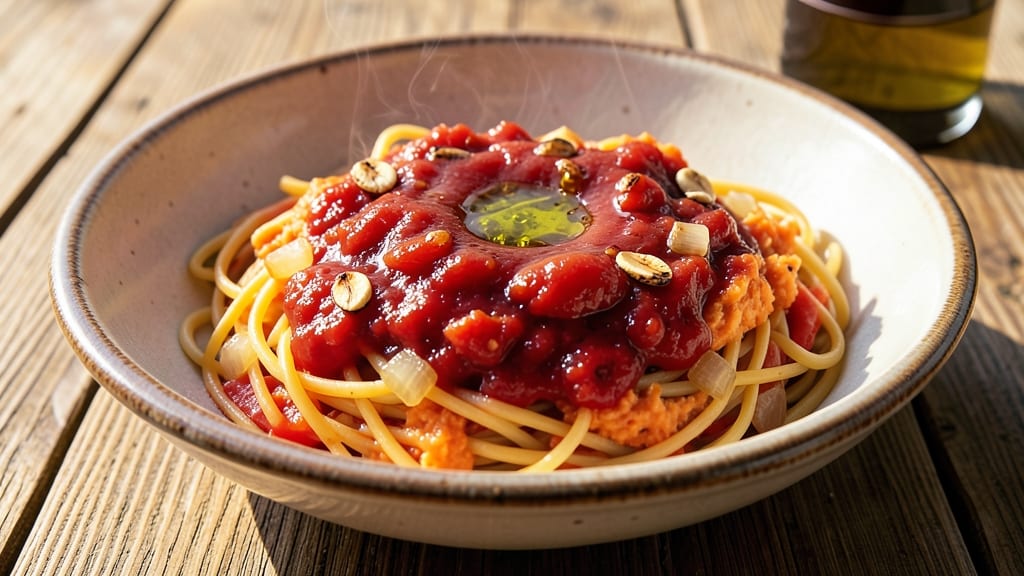
This authentic Italian homemade spaghetti sauce transforms simple ingredients into a rich, complex sauce that tastes even better the next day. The secret lies in slow-simmering—letting flavors meld over hours rather than minutes—while balancing acidity with a splash of red wine and a pinch of sugar.
I've perfected this recipe after years of testing, and it delivers the deep umami and vibrant herbs that define Italian cooking.
The foundation starts with fresh tomatoes—either crushed by hand or high-quality canned—cooked down with aromatic garlic, onions, and carrot for natural sweetness. A blend of dried and fresh herbs (oregano, basil, and thyme) adds layers of flavor, while a touch of olive oil keeps the sauce velvety.
Optional ground meat (beef or pork) deepens the richness, but this sauce shines even without it.
What you'll end up with is a sauce that's thick enough to cling to every strand of spaghetti yet still silky-smooth. The slow simmer develops a complex flavor profile—savory, slightly sweet, and bright with acidity—that keeps improving over time.
This is the kind of sauce that makes homemade pasta taste like it came from a trattoria in Rome.
Best of all, it freezes beautifully for up to six months, so you can make a big batch and enjoy restaurant-quality sauce all year. Ready to create something that tastes even better tomorrow than it does today? Let's get started.
Ingredients for authentic italian homemade spaghetti sauce
Fresh tomatoes, aromatic vegetables, and a splash of wine create this restaurant-quality sauce.
| Ingredient | Amount | Notes |
|---|---|---|
| San Marzano Tomato Crushed 🍅 | 28 oz | High-quality canned tomatoes |
| Yellow Onion 🧅 | 1 whole | Finely diced for base |
| Carrot 🥕 | 1 whole | Finely diced for sweetness |
| Garlic Cloves 🧄 | 4 cloves | Minced for aromatic depth |
| Extra-Virgin Olive Oil 🫒 | ½ cup | For velvety texture |
| Dry Red Wine 🍷 | ½ cup | Bold, dry variety |
| Dried Oregano 🌿 | 1 tbsp | Italian variety preferred |
| Fresh Basil Leaves 🌿 | ¼ cup | Packed, chopped |
| Fresh Thyme Leaves 🌿 | 1 tbsp | Or 1 tsp dried thyme |
| Granulated Sugar 🍚 | 1 tsp | Balances acidity |
| Salt 🧂 | 1 ½ tsp | Diamond Crystal preferred |
| Ground Black Pepper 🌶️ | ½ tsp | Freshly cracked |
The tomatoes are the heart of this sauce—San Marzano is ideal, but any high-quality canned tomatoes work. Trader Joe's and Whole Foods carry great options. Look for cans that aren't dented or bulging. Carrots add natural sweetness, but if you're short on time, 1 tbsp tomato paste works in a pinch. Garlic should be fresh—none of that pre-minced jar stuff. For the wine, any bold, dry red works here—Cabernet Sauvignon, Merlot, whatever's open. The olive oil matters too; California extra-virgin has the best fruity notes for this dish.
No red wine? Substitute with beef broth and a splash of balsamic vinegar—it won't be identical, but it'll get you close. Fresh herbs are ideal, but dried oregano at half the amount works if you're out. The sugar might seem odd, but it's essential for balancing the acidity from the tomatoes. If you're making a big batch, double the herbs—they'll mellow out as the sauce simmers. For extra richness, add 1/2 lb ground beef or pork, but the sauce is delicious without it too.
This sauce tastes even better the next day—plan ahead. Store it in an airtight container in the fridge for up to 5 days, or freeze for 6 months. I like to portion it into ziplock bags so I can grab just what I need. When reheating, add a splash of water or broth to keep it from thickening too much. The longer it simmers, the deeper the flavors get—don't rush it. Trust the process, and you'll have sauce that tastes like it came from a trattoria.
Why You'll Love This Recipe
- No-Chop Struggle: I swear by this sauce because you can literally toss in diced onion, carrot, and garlic—no fancy julienne skills required. The San Marzano tomatoes do all the heavy lifting while you sip wine and pretend you’re in a Tuscan kitchen.
- Umami Bomb: That slow-simmered carrot and onion base? It turns into a sweet, deep flavor that clings to every strand of pasta. Honestly, the first time I tasted it, I nearly dropped my fork—it’s that good.
- Weeknight to Party: Same sauce, endless uses. Slap it on spaghetti for a Tuesday night, or dress it up with fresh basil and Parmesan for company. Between us, I’ve even used it in lasagna and stuffed shells—no judgment if you do too.
- Fridge Goldmine: Make a big batch, and you’ll thank me later. This sauce tastes even better the next day as it melds into something richer and deeper. I keep a jar in my fridge for those nights when I just want to open a can of tomatoes and call it a meal.
Step-by-step instructions for slow-simmered Italian spaghetti sauce
Here's how to build deep, layered flavor through careful technique and patience.
Sauté the Vegetable Base
Heat the 0.5 cup extra-virgin olive oil in a heavy-bottomed pot over medium-low heat. Add the 1 whole yellow onion and 1 whole carrot, both finely diced, and cook for 8-10 minutes until the onion becomes translucent and the carrot softens. Stir occasionally to prevent burning.
This slow cooking draws out natural sweetness from the vegetables, which forms the flavor foundation. You'll know it's ready when the mixture smells sweet and the vegetables lose their raw edge. Add the 4 cloves minced garlic and cook for another 1 minute until fragrant—don't let it brown or it'll turn bitter.
Deglaze with Wine and Add Tomatoes
Pour in the 0.5 cup dry red wine and stir vigorously, scraping up any browned bits from the bottom of the pot. Let it simmer for 3-4 minutes until the wine reduces by half and its alcohol smell dissipates. This step concentrates the flavors and removes the harshness of raw wine.
Add the 28 oz crushed San Marzano tomatoes, 1 tbsp dried oregano, 1.5 tsp salt, 0.5 tsp ground black pepper, and 1 tsp granulated sugar. Stir well to combine. The sugar helps balance the acidity of the tomatoes while enhancing their natural sweetness. Bring the mixture to a gentle simmer.
Slow Simmer for Deep Flavor Development
Reduce heat to low and let the sauce simmer uncovered for 45-60 minutes, stirring occasionally. This long cooking time allows the flavors to meld and intensify. You'll notice the sauce gradually thickens as moisture evaporates and the tomatoes break down.
Here's the key: the sauce should reduce until it coats the back of a spoon when you lift it. If it's too thin, simmer uncovered longer. If it's too thick, add 1-2 tablespoons of water at a time. The texture should be velvety but still spoonable—not watery, not glue-like. Taste and adjust seasoning if needed.
Finish with Fresh Herbs
Once the sauce reaches your desired consistency, remove it from heat. Stir in the 0.25 cup chopped fresh basil leaves and 1 tbsp fresh thyme leaves. These herbs add bright, fresh notes that complement the deep, slow-cooked flavors. Let the sauce sit off heat for 10 minutes to allow the herbs to infuse.
This is where the magic happens—the fresh herbs brighten the sauce without overpowering it. The basil should be finely chopped so it distributes evenly throughout. Taste one last time and adjust seasoning if needed. The sauce should be balanced—sweet from the carrot and sugar, acidic from the tomatoes, and herby from the fresh basil and thyme.
Rest and Serve
Let the sauce rest at room temperature for 15-20 minutes before serving. This resting period allows the flavors to fully meld and the sauce to reach its perfect consistency. The longer it rests, the more complex the flavors become.
Serve the sauce immediately over freshly cooked spaghetti, tossing it gently to coat each strand. The sauce should cling beautifully to the pasta, creating a rich, flavorful bite with every mouthful. If you're not serving it right away, store it in an airtight container in the refrigerator for up to 5 days or freeze for up to 3 months. The flavors actually improve with time!
Pro Tips For Making Authentic Italian Homemade Spaghetti Sauce
- Sweat the Veggies Slow: I learned this the hard way—when I rush the onion and carrot, the sauce tastes raw. Cook them over medium-low heat until the onion’s edges turn translucent and the carrot softens into the pot (about 10-12 minutes). That’s when their sweetness melds into the sauce instead of fighting for flavor.
- Crush Tomatoes by Hand: Skip the blender—San Marzanos are worth the effort. Use your fingers to break them open, then crush them with a wooden spoon. This keeps the skins intact longer, which means more body and less mess. (Yes, it takes 2 minutes longer, but the texture is noticeably smoother.)
- Salt the Water Twice: Add a pinch of salt to the crushed tomatoes while they simmer, then adjust at the end. This balances acidity early and lets you taste the sauce properly before final seasoning. I used to forget, and the sauce always needed more salt—this fixes that.
- Let It Simmer Long: Walk away for 30 minutes after the tomatoes hit the pot. Low and slow (barely bubbling) deepens the flavor more than high heat ever will. I know, I know—you’re eager to eat, but this is where the magic happens. Trust me, the sauce will taste richer if you resist the urge to stir-check every five minutes.
Storing and reheating your authentic italian homemade spaghetti sauce
Refrigerator Storage
Let your sauce cool to room temperature before transferring it to an airtight glass container—I love using Pyrex with snap-on lids. Store it in the fridge for up to 5 days, but honestly, it tastes even better the second day as the flavors meld.
The sauce thickens slightly when chilled, so add 1-2 tablespoons of water or pasta water when reheating to restore its velvety texture. 💫
Freezer Prep
For long-term storage, portion the sauce into ziplock freezer bags or glass jars, leaving 1-inch headspace for expansion. Freeze for up to 6 months—the acidity from the tomatoes and wine preserves it beautifully.
When ready to use, thaw overnight in the fridge or quickly in a microwave-safe bowl on 50% power for 2-3 minutes, stirring occasionally. Never refreeze thawed sauce.
Reheating Like a Pro
My preferred method is stovetop reheating—it prevents splitting and maintains texture. Pour sauce into a heavy-bottomed pot, add 2-3 tablespoons of water or broth, and simmer over medium-low heat for 10-15 minutes, stirring occasionally.
For microwave reheating, cover with a damp paper towel and heat in 30-second intervals, stirring between each. Always check the internal temperature reaches 165°F for safety. 🔥
Texture Adjustments
If your reheated sauce is too thick, thin it with pasta water or broth—never water, as it can dilute flavors. If it's too thin, simmer uncovered for 5-10 minutes to reduce.
For extra richness, stir in 1 tablespoon of olive oil or a pat of butter at the end. The goal is a silky, spoonable consistency that clings perfectly to pasta.
Flavor Boosts
After reheating, finish with fresh basil or a pinch of red pepper flakes to revive the sauce. For a restaurant-style touch, drizzle with high-quality olive oil or sprinkle with grated Parmesan.
The sauce's depth comes from slow cooking—never rush it! Patience is key to that trattoria-quality taste. ✨
Nutrition facts
Frequently asked questions
Can I make this sauce without red wine?
For a non-alcoholic version, substitute the 0.5 cup red wine with 0.5 cup beef broth plus 1 tablespoon balsamic vinegar. This combo mimics the acidity and depth of flavor. If you prefer a sweeter profile, use 0.5 cup apple juice instead. The key is balancing acidity—just taste and adjust with a pinch of sugar if needed.
Why does my homemade sauce taste different from store-bought?
Store-bought sauces often contain artificial flavors, preservatives, and added sugars to mimic depth. This recipe builds real flavor through slow simmering (45-60 minutes) and fresh ingredients. The carrot adds natural sweetness, wine balances acidity, and fresh herbs brighten the sauce—none of which you'll find in canned versions. Patience is everything!
How do I prevent my sauce from getting too thick?
If your sauce thickens too much during cooking, simply add 1-2 tablespoons of water or broth at a time while simmering. For reheating, thin with pasta water or broth—never regular water, as it can dilute flavors. The ideal consistency should coat the back of a spoon but still be spoonable. Remember, the sauce will thicken further when chilled.
Can I add meat to this recipe?
Yes! For a meat version, brown ½ lb ground beef or pork in olive oil before adding the onions and carrots. Drain excess fat, then proceed with the recipe. If using pork, add ½ teaspoon fennel seeds for an Italian-inspired touch. For extra richness, try a mix of both meats. The meat adds depth but isn't essential—this sauce is delicious as-is!
What's the best way to use leftover sauce?
Leftover sauce is perfect for lasagna layers, pasta bakes, or even stuffed shells. Freeze portions in ziplock bags for up to 6 months. For quick meals, toss with pappardelle or fettuccine. The flavors actually improve over time—this is why Italian nonnas make sauce on Sundays! The longer it rests, the more complex it becomes.