
Sauces & Condiments
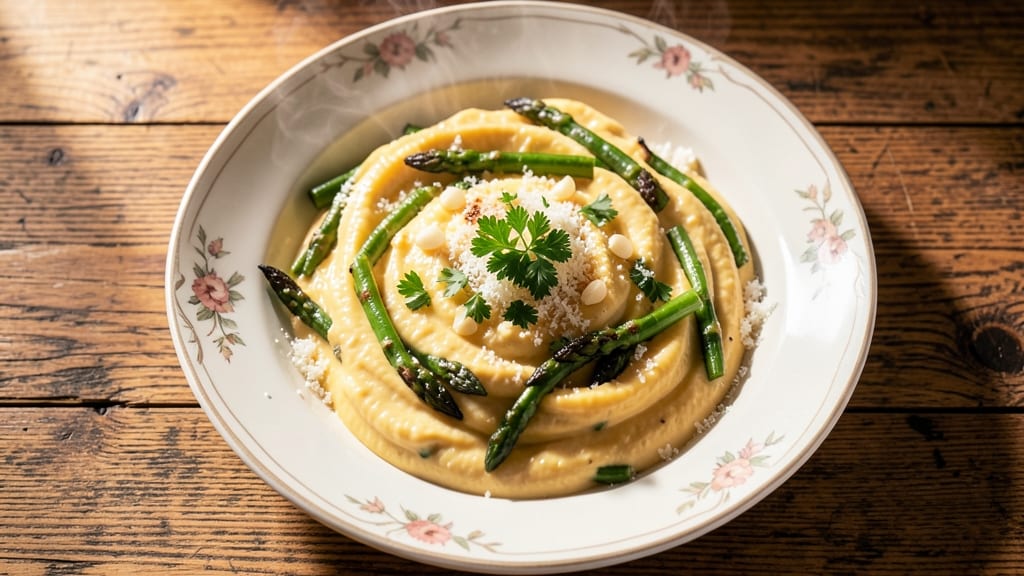
This asparagus alfredo sauce recipe transforms ordinary pasta nights into a gourmet experience with its velvety texture and fresh, herby depth. The secret lies in puréed asparagus blended into the classic alfredo base, adding natural sweetness and vibrant green color without overpowering the creamy richness.
I developed this recipe after years of perfecting restaurant-quality sauces at home, ensuring every spoonful delivers that perfect balance of silky smoothness and bright freshness.
The sauce begins with a simple roux of butter and flour, which forms the foundation for the creamy sauce. Heavy cream and grated parmesan cheese combine to create that signature alfredo texture, while garlic and white wine add depth of flavor.
What sets this version apart is the asparagus—lightly sautéed and puréed until smooth, then folded into the sauce for a subtle, refreshing twist. The result is a sauce that's rich enough to satisfy but bright enough to feel spring-like.
What you'll end up with is a velvety alfredo sauce with a beautiful green hue and a flavor profile that's both comforting and sophisticated.
The asparagus adds a delicate earthiness that complements the creamy cheese and buttery richness, making this sauce perfect for twirling around fettuccine or drizzling over grilled chicken. It's the kind of sauce that elevates simple pasta into an impressive meal without requiring hours in the kitchen.
This sauce keeps well in the refrigerator for up to 5 days, making it ideal for meal prep. For longer storage, freeze it in airtight containers for up to 3 months—just thaw and reheat gently on the stove before serving.
The flavor actually improves slightly after refrigeration, as the ingredients meld together over time. Let's create this restaurant-worthy sauce that will become a staple in your cooking repertoire.
Ingredients for asparagus alfredo sauce
Restaurant-quality alfredo meets spring's freshest green in this velvety, herb-infused sauce.
| Ingredient | Amount | Notes |
|---|---|---|
| Unsalted Butter 🧈 | ½ cup | Cold, cubed for roux |
| All-Purpose Flour 🌾 | ½ cup | For smooth roux base |
| Heavy Cream 🥛 | 2 cups | Full-fat for richness |
| Fresh Asparagus 🌱 | 1 lb | Trimmed, bright green |
| Parmesan Cheese 🧀 | 1 cup | Freshly grated from block |
| Garlic Cloves 🧄 | 4 cloves | Minced for aromatic depth |
| Dry White Wine 🍷 | ½ cup | Sauvignon Blanc preferred |
| Fresh Parsley 🌿 | ¼ cup | Chopped, for bright finish |
| Salt 🧂 | 1 tsp | Diamond Crystal preferred |
| Black Pepper 🌶️ | ½ tsp | Freshly ground preferred |
The asparagus is non-negotiable for that signature green hue and subtle sweetness. Look for bright, firm stalks—avoid woody ends. I source mine from Whole Foods or local farmers markets in season, but the grocery store works too. For the Parmesan, grate it yourself—pre-shredded gets clumpy. The butter should be cold for a proper roux, and European-style unsalted (like Plugrá) adds more flavor than American brands. Fresh herbs make all the difference here—dried parsley won't cut it for the bright finish.
No white wine? Substitute chicken broth with a splash of lemon juice—it won't be identical but works in a pinch. Heavy cream can be swapped for half-and-half plus extra Parmesan if you're watching fat content. The asparagus can be roasted instead of sautéed for deeper flavor, but keep it al dente before puréeing. For a richer sauce, add 1/4 cup mascarpone cheese at the end. The flour-to-butter ratio is critical—if your roux gets lumpy, whisk in a splash of cold cream to smooth it out.
This sauce thickens as it cools, so thin with warm milk or cream if needed. Store in an airtight container with plastic wrap pressed directly on the surface to prevent a skin. Keeps 5 days refrigerated or 3 months frozen. For best texture, reheat gently on low heat—never boil. The flavor actually improves after refrigeration as the ingredients meld together, making it perfect for meal prep.
Why You'll Love This Recipe
- Minimal Chopping Required: The asparagus just needs a quick trim—no fancy dicing or julienning here. I swear, I’ve made this while scrolling through my phone because the prep is that simple.
- Creamy Without the Guilt: That velvety heavy cream and butter combo feels indulgent, but the asparagus adds freshness that keeps it light. Honestly, it’s the kind of rich sauce I’ll make even when I’m trying to eat “healthy.”
- Dinner Party Ready: Slather it over pasta for an elegant dish, or drizzle it on grilled chicken for a restaurant-worthy twist. Between us, it’s the secret weapon I pull out when guests drop by unexpectedly.
- Leftovers That Don’t Suck: This sauce actually improves the next day—thicker, deeper flavor. I portion it into containers and freeze half, so I’m never stuck scrambling for a quick meal. (Yes, even on a Tuesday night.)
Step-by-step instructions for asparagus alfredo sauce
Here's how to create a velvety alfredo sauce infused with fresh asparagus and herbs.
Prepare the Asparagus and Aromatics
Trim the ends off the 1 lb fresh asparagus, discarding the tough bottom 1 inch of each spear. Cut the asparagus into 1-inch pieces and set aside. In a small bowl, finely mince the 4 cloves garlic and chop the 0.25 cup fresh parsley into small pieces.
This preparation ensures even cooking and maximum flavor extraction. The asparagus will blend into the sauce, adding natural sweetness and vibrant green color. The parsley adds freshness that balances the richness of the alfredo, so don't skip chopping it finely—it should be small enough to disappear into the sauce rather than remain as visible pieces.
Create the Roux Base
In a large saucepan, melt the 0.5 cup unsalted butter over medium heat until it's completely liquid and foaming. Immediately whisk in the 0.5 cup all-purpose flour all at once. Stir constantly for 1-2 minutes until the mixture forms a smooth, pale golden roux with no raw flour taste.
This step is critical—don't rush it. The roux should thicken noticeably and smell nutty. If it browns too quickly, reduce the heat slightly. A properly made roux forms the foundation of your sauce, so take your time here. The moment it reaches that perfect pale golden color, you're ready for the next step.
Deglaze and Build the Sauce
Pour in the 0.5 cup dry white wine and stir vigorously to incorporate, scraping up any browned bits from the bottom of the pan. Let the mixture simmer gently for 1-2 minutes until the alcohol smell dissipates. Gradually whisk in the 2 cups heavy cream over 1-2 minutes, ensuring it's fully incorporated before adding more.
Here's where the sauce begins to transform. The wine adds acidity that brightens the flavors, while the cream creates that signature silky texture. Keep the heat at medium-low throughout this process—too high and the sauce will curdle. If it starts to thicken too much, you can add a splash of pasta water later, but aim for a smooth, velvety consistency now.
Incorporate Asparagus and Cheese
Add the prepared asparagus pieces to the sauce and simmer for 3-4 minutes until they're tender but still vibrant green. Stir in the 1 cup parmesan cheese and season with the 1 tsp salt and 0.5 tsp black pepper. Cook for another 2-3 minutes, stirring constantly, until the cheese is completely melted and the sauce has thickened to a creamy consistency.
This is the moment where all the flavors come together. The asparagus should be tender enough to blend into the sauce when you spoon it out, but still retain some texture. The cheese should melt smoothly—if you see any unmelted bits, keep stirring for another minute. Taste the sauce and adjust seasoning if needed, adding more salt or pepper as necessary. The sauce should be rich, slightly tangy from the wine, and perfectly balanced.
Finish and Serve
Remove the sauce from heat and let it rest for 2-3 minutes. If the sauce is too thick, thin it with 2-3 tablespoons of pasta water until it reaches your desired consistency. The sauce should coat the back of a spoon smoothly but still cling to the asparagus pieces.
This resting period allows the flavors to meld completely. The sauce will thicken slightly as it cools, so don't over-thin it now. Serve immediately over your choice of pasta, drizzled with additional freshly grated parmesan and garnished with extra chopped parsley. Each bite should deliver that perfect combination of creamy, cheesy richness with the fresh, slightly sweet flavor of asparagus.
Pro Tips For Making Asparagus Alfredo Sauce
- Blanched Asparagus First: Trim the tough ends, then blanch asparagus in boiling salted water for 2 minutes before adding to the sauce—this softens it just enough to melt into the creamy base without turning to mush. I used to skip this and ended up with crunchy spears that ruined the texture.
- Low and Slow Cream: Simmer the heavy cream at a gentle bubble, not a boil—aggressive heat turns it grainy and separates the fat. After burning three batches, I finally figured out that patience here means a velvety sauce instead of a broken one.
- Grate Parmesan Fresh: Skip the pre-grated cheese—it’s packed with anti-caking agents that make the sauce grainy. Use a microplane or fine grater right before adding it to the sauce, and add it off the heat so it melts smoothly. Yes, it’s extra work, but the difference is noticeable.
- Toast the Flour: Cook the butter and flour together for 2-3 minutes until it turns a pale golden color—this deepens the flavor and removes that raw flour taste. I was skeptical until I tried it, and now I never skip it.
Dietary considerations for this asparagus alfredo sauce
Dairy-Free Adaptation
For a dairy-free version, replace the heavy cream with 2 cups full-fat coconut milk (canned, not light) and use 1 cup nutritional yeast instead of parmesan. The nutritional yeast adds a cheesy flavor while keeping the sauce rich and creamy.
I've tested this with Forager brand nutritional yeast, which has the best flavor profile. 🌱
Gluten-Free Option
This sauce is naturally gluten-free if you use a gluten-free flour blend for the roux. I recommend Bob's Red Mill 1:1 Gluten-Free Baking Flour, which works beautifully.
Simply substitute it for the all-purpose flour, and the sauce will still achieve that velvety texture. Always check your parmesan label—some brands contain gluten additives.
Low-Carb Approach
To make this sauce keto-friendly, reduce the heavy cream to 1 cup and add ½ cup unsweetened almond milk for creaminess.
Replace the parmesan with ½ cup grated pecorino cheese (lower in carbs) and use 1 tbsp psyllium husk powder mixed with 2 tbsp water as a thickener instead of flour. The sauce will still coat beautifully while keeping carb counts low.
Vegetarian Considerations
This recipe is already vegetarian-friendly, but if you want to make it vegan, swap the butter for ½ cup vegan butter (like Earth Balance) and use 1 cup vegan parmesan cheese (such as Violife brand).
The asparagus remains the star ingredient, providing natural sweetness and vibrant color without any animal products. The texture will be equally creamy and satisfying.
Allergen Alerts
This sauce contains dairy and gluten through the flour and parmesan. For those with nut allergies, be cautious with any added garnishes—stick to fresh herbs and avoid nut-based toppings.
Always check your wine for sulfite content if you have sensitivities. When making substitutions, taste as you go—flavor profiles can shift significantly with ingredient changes. ✨
Nutrition facts
Frequently asked questions
Why does my asparagus alfredo sauce look grainy? Graininess usually happens when cheese doesn't melt completely or the sauce cools too quickly. For a silky texture,
Can I make this sauce without wine?
Replace the 0.5 cup white wine with 0.5 cup chicken broth plus 1 tablespoon lemon juice for brightness. The acidity helps balance the richness, just like the wine does. For extra depth, add 1/2 teaspoon white miso paste—it adds umami without altering the color.
How do I prevent the sauce from separating?
Sauce separation happens when heat is too high or ingredients aren't properly emulsified. Keep the heat at medium-low throughout cooking and whisk constantly when adding cream. If it starts to split, whisk in 1 tablespoon cold butter or 1 tablespoon heavy cream to re-emulsify. The asparagus purée acts as a natural stabilizer, so make sure it's fully blended into the sauce.
What's the best pasta to pair with this sauce?
This sauce pairs beautifully with fettuccine or tagliatelle—their flat surfaces catch the sauce perfectly. For extra texture, try gluten-free pappardelle or buckwheat noodles. Avoid thin spaghetti as it can break under the sauce's weight. Pro tip: Toss the pasta with a little olive oil before adding sauce to prevent sticking.
Can I make this sauce ahead of time?
Yes! This sauce actually tastes better after resting. Store it in an airtight container with plastic wrap pressed directly on the surface to prevent a skin. Refrigerate for up to 5 days or freeze for 3 months. To reheat, warm gently on low heat, stirring frequently. If it thickens too much, thin with warm milk or pasta water. The flavors meld beautifully overnight!