
Sauces & Condiments
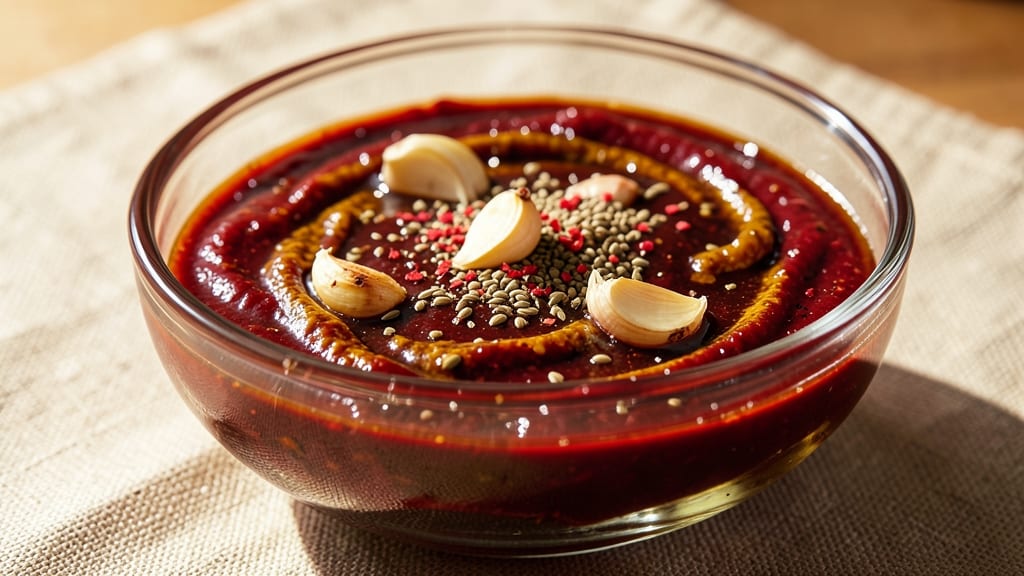
This Arabic hot sauce recipe delivers the perfect balance of smoky harissa heat and bright, fresh herbs—ideal for adding depth to grilled meats, roasted vegetables, or even drizzled over hummus.
The secret lies in blending roasted red peppers with fiery chili flakes and a touch of sumac, creating a sauce that’s complex yet approachable for home cooks. Unlike store-bought versions, this recipe builds flavor through slow simmering and fresh herbs, ensuring every drop tastes vibrant and authentic.
The foundation of this sauce is a harissa base, traditionally made from roasted red peppers, garlic, and spices like cumin and coriander. I add a splash of apple cider vinegar to brighten the flavors and extend shelf life, while fresh cilantro and parsley lend a zesty, herbaceous finish.
The result is a sauce that’s shelf-stable for months when stored properly, making it perfect for stocking your pantry or gifting.
What sets this recipe apart is its versatility—use it as a dip for pita, a marinade for kebabs, or a finishing touch for soups and stews.
The smoky, slightly sweet harissa base pairs beautifully with the sharpness of vinegar and the freshness of herbs, creating a sauce that’s bold yet balanced. Whether you’re a seasoned cook or just starting, this recipe delivers restaurant-quality flavor with minimal effort.
The process is straightforward: roast the peppers, blend the ingredients, and let the sauce simmer until the flavors meld. No fermentation required—just a few hours of simmering ensures a smooth, well-rounded texture.
Store it in a clean glass jar, and you’ll have a pantry staple that elevates every dish it touches. Let’s get started!
Ingredients for arabic hot sauce
Twelve ingredients blend smoky heat with vibrant herbs for a sauce that elevates everything from grilled meats to hummus dips.
| Ingredient | Amount | Notes |
|---|---|---|
| Roasted Red Peppers 🍅 | 1 ½ cups | Jarred or homemade, no added salt |
| Harissa Paste 🌶️ | ½ cup | High-quality, spicy variety |
| Garlic Cloves 🧄 | 6 cloves | Freshly peeled, rough chopped |
| Ground Cumin 🌿 | 1 tbsp | Toasted for deeper flavor |
| Ground Coriander 🌿 | 1 tbsp | Freshly ground preferred |
| Sumac 🍃 | 1 tbsp | Finely ground, for tangy brightness |
| Apple Cider Vinegar 🍏 | ¼ cup | Unfiltered for extra tang |
| Fresh Cilantro 🌿 | ½ cup | Stems included for extra flavor |
| Fresh Parsley 🌿 | ¼ cup | Flat-leaf preferred |
| Olive Oil 🫒 | ½ cup | Extra-virgin for richness |
| Red Chili Flakes 🌶️ | 1 tsp | Adjust for heat preference |
| Salt 🧂 | ½ tsp | Kosher or sea salt |
The harissa paste is the heart of this sauce, so look for a high-quality, spicy variety—none of that watered-down stuff. Penzeys or Middle Eastern markets carry the best, but even the grocery store aisle has decent options if you check the ingredient list for minimal fillers. Roasted red peppers? Jarred works in a pinch, but homemade (roasted over an open flame or under the broiler) adds depth. Toast your cumin and coriander in a dry pan for 30 seconds before grinding—that extra step makes all the difference. Sumac should be finely ground; if you find it in whole berries, pulse it quickly in a spice grinder. Fresh herbs are non-negotiable here—they bring that bright, herbaceous finish that sets this sauce apart from store-bought versions.
No harissa paste? Mix 2 tbsp chili powder with 1 tbsp smoked paprika and 1 tsp cayenne for a close substitute. Short on sumac? Lemon zest at half the amount adds brightness, though it won’t replicate that tangy depth. The apple cider vinegar can be swapped for white vinegar, but unfiltered has more complexity. If you’re sensitive to heat, reduce the chili flakes to ½ tsp or omit entirely—this sauce is still bold without them. For the herbs, dried cilantro or parsley at one-third the amount works in a bind, but fresh is ideal. The olive oil matters here too—use something fruity and peppery, not the bland stuff you’d use for frying.
This sauce keeps beautifully—up to 6 months in a clean glass jar in the pantry, or 3 months in the fridge once opened. The vinegar and sumac act as natural preservatives, so no need for additional stabilizers. For gifting, use small amber glass bottles—they protect the color and flavor better than clear jars. Double the batch if you can; you’ll use it faster than you think. The sauce thickens as it sits, so add a splash of water or vinegar if it becomes too stiff before using.
Why You'll Love This Recipe
- No Blender Needed: I swear by this—just a food processor or even a sturdy fork handles the job. The roasted peppers and harissa blend into a silky, vibrant sauce with zero fuss, and honestly? That’s my kind of magic.
- Smoky-Spicy Magic: The cumin and coriander groundwork is where it happens—warm, earthy, with just enough heat to linger. Add the roasted peppers, and suddenly you’ve got that deep, charred-sweet balance that makes every bite want another.
- Game for Any Meal: This sauce turns dull dishes into showstoppers—drizzle it over grilled chicken, fold it into hummus, or toss it with pasta. (Yes, even on a Tuesday night.) The harissa gives it that bold punch, while the peppers keep it bright and approachable.
Step-by-step instructions for Arabic hot sauce
This smoky, vibrant sauce comes together in minutes with bold flavors that balance heat and freshness.
Blend the Base Ingredients
In a high-speed blender, combine the 1.5 cups roasted red peppers, 0.5 cup harissa paste, 6 cloves garlic cloves, 1 tbsp ground cumin, 1 tbsp ground coriander, and 1 tbsp sumac. The harissa paste will add deep, smoky heat while the spices create a warm, earthy foundation. Pulse until everything is finely chopped but not completely smooth—you want some texture to maintain complexity.
Add the 0.25 cup apple cider vinegar and blend again. The acidity will brighten the sauce and cut through the richness of the roasted peppers. Taste at this stage—you should feel the heat building but not overpowering. If the mixture is too thick, add 1-2 tablespoons of water to help it blend smoothly.
Incorporate the Fresh Herbs and Oil
Transfer the blended mixture to a medium bowl. Stir in the 0.5 cup fresh cilantro and 0.25 cup fresh parsley, including stems for extra flavor. Chop them roughly with a knife before adding to ensure even distribution. The herbs will add a bright, fresh contrast to the smoky, spicy base.
Slowly drizzle in the 0.5 cup olive oil while whisking continuously. This gradual addition prevents the sauce from separating. You're aiming for a thick, pourable consistency—similar to a loose paste. If it's too thin, reduce it over low heat in a saucepan for 3-5 minutes, stirring constantly, until it thickens slightly. Let it cool completely before proceeding.
Adjust Seasoning and Heat
Taste the sauce and adjust the seasoning. Add 1 tsp red chili flakes if you want more heat, or a pinch of salt if it needs balance. The sumac and vinegar should already provide tanginess, but if it tastes flat, add another ½ teaspoon of vinegar. Stir well to distribute all the flavors evenly.
For a smoother texture, strain the sauce through a fine-mesh sieve into a clean jar. This removes any remaining herb stems or garlic pieces, giving you a refined finish. If you prefer a rustic texture, skip straining—just whisk vigorously to combine. The sauce will keep in the refrigerator for up to 2 weeks, so store it in an airtight container.
Rest and Serve
Let the sauce sit at room temperature for 10-15 minutes before serving. This allows the flavors to meld fully, deepening the smoky, spicy notes. The heat should mellow slightly, making it more approachable while retaining its vibrant character.
Use this sauce as a dip for grilled meats, a drizzle over roasted vegetables, or a finishing touch for soups and stews. A few drops can elevate a simple dish into something extraordinary. For extra heat, serve it alongside pickled vegetables or fresh flatbread—its complexity shines when paired with contrasting textures.
Pro Tips For Making Arabic Hot Sauce
- Blend in Stages: Start with half the roasted red peppers and harissa paste—this prevents the sauce from turning into a thick, unblendable paste right away. After 30 seconds, add the garlic, cumin, and coriander, then pulse until smooth. I learned this the hard way after trying to force-blend everything at once and ending up with a gloppy mess.
- Toast the Spices: Dry-toast your ground cumin and coriander in a small pan over medium heat for 30 seconds before adding them to the sauce. This deepens their flavor and prevents that raw, bitter aftertaste that ruins the balance. (Yes, even if you’re impatient like me.)
- Strain for Smoothness: After blending, press the mixture through a fine-mesh sieve or cheesecloth to remove any lingering seeds or skin bits. This step is especially important if you’re using jarred roasted peppers—they often hide grit that makes the sauce grainy. (Your future self will thank you.)
- Simmer, Don’t Boil: If you’re thinning the sauce with water or broth, keep it at a gentle simmer—not a rolling boil—for 5-7 minutes. Boiling burns the harissa’s smoky depth and makes the garlic taste sharp. Low and slow keeps the flavors layered, not harsh.
Make-ahead tips for this recipe
Batch Prep Strategy
Double or triple the recipe when making ahead—this sauce keeps beautifully for 6 months in a clean glass jar in your pantry. I always make at least 3 cups at once because it disappears quickly.
Use amber glass bottles for gifting or quart-sized mason jars for home storage—they preserve flavor better than plastic. Label with the date to track freshness. 📅
Fridge vs Pantry Storage
For short-term use (2 weeks), store in the fridge in an airtight container. The sauce will thicken slightly, so stir before using. If you prefer it pourable, add 1-2 teaspoons of water or vinegar to thin it out.
For long-term storage, keep it in the pantry—no refrigeration needed thanks to the vinegar and sumac. The flavors actually deepen over time, becoming more complex. ❄️
Freezing for Later
Portion the sauce into ice cube trays or small jars for easy single-use servings. Freeze for up to 3 months. Thaw overnight in the fridge before using—never microwave directly from frozen, as it can break the emulsion.
The texture remains stable, though the herbs may soften slightly. Perfect for meal prep when you know you’ll need a quick flavor boost. ❄️
Reviving Stored Sauce
If your sauce has thickened too much after storage, simply whisk in 1 teaspoon of water or vinegar at a time until it reaches your desired consistency. For extra vibrancy, add a pinch of freshly ground sumac or a splash of lemon juice to brighten flavors.
Stir well and let it sit for 10 minutes before using—this helps the ingredients rebalance. 💫
Gift-Worthy Packaging
For gifting, use small amber glass bottles with screw-top lids to preserve color and flavor. Attach a handwritten tag with the recipe and storage instructions. I like to include a spoon or small brush> for easy application.
The sauce makes a fantastic hostess gift—especially during holiday seasons or for foodie friends. 🎁
Flavor Evolution Tips
Let the sauce sit at room temperature for 15-20 minutes before tasting after storage. This allows the flavors to fully wake up and meld again. If it tastes flat, add a pinch of salt or a drop of vinegar to refresh it.
The longer it sits, the more complex it becomes—almost like a fine wine! Trust the process and enjoy the depth. 💡
Nutrition facts
Frequently asked questions
Can I adjust the heat level in this Arabic hot sauce?
Start with the 1 tsp red chili flakes as written, but add more (up to 2 tsp) for extra heat. For a milder version, reduce to ½ tsp or omit entirely. The harissa paste already provides significant heat, so adjust gradually while tasting. If you love spice, try adding ½ tsp cayenne pepper or a dash of hot sauce at the end.
What can I substitute if I don't have harissa paste?
Mix 2 tbsp chili powder with 1 tbsp smoked paprika and 1 tsp cayenne for a close substitute. For extra depth, add ½ tsp ground cumin and ½ tsp coriander to mimic harissa's complexity. The sauce will still taste great, though it'll lack harissa's signature smoky roasted flavor.
How long does this sauce keep, and can I make it ahead?
This sauce stays fresh for 6 months in a clean glass jar in your pantry—no refrigeration needed thanks to the vinegar and sumac. For short-term use (2 weeks), store it in the fridge. Double the recipe when making ahead; it disappears quickly! The flavors actually improve with time, developing more complexity like fine wine.
Can I use dried herbs instead of fresh?
Yes, but use only ⅓ the amount of dried herbs (e.g., 1 tbsp dried cilantro instead of ½ cup fresh). Dried herbs lose moisture during processing, so they're less potent. Fresh herbs provide that bright, vibrant finish that makes this sauce special. If you must use dried, crush them between your palms before adding to release more flavor.
What's the best way to use up leftover sauce?
Drizzle it over grilled meats, roasted vegetables, or fresh flatbread for instant flavor. Mix 1 tbsp into hummus or yogurt dips, or use it as a marinade for kebabs. For extra heat, serve it alongside pickled vegetables or as a finishing sauce for soups and stews. A little goes a long way—this sauce packs serious flavor!