
Sauces & Condiments
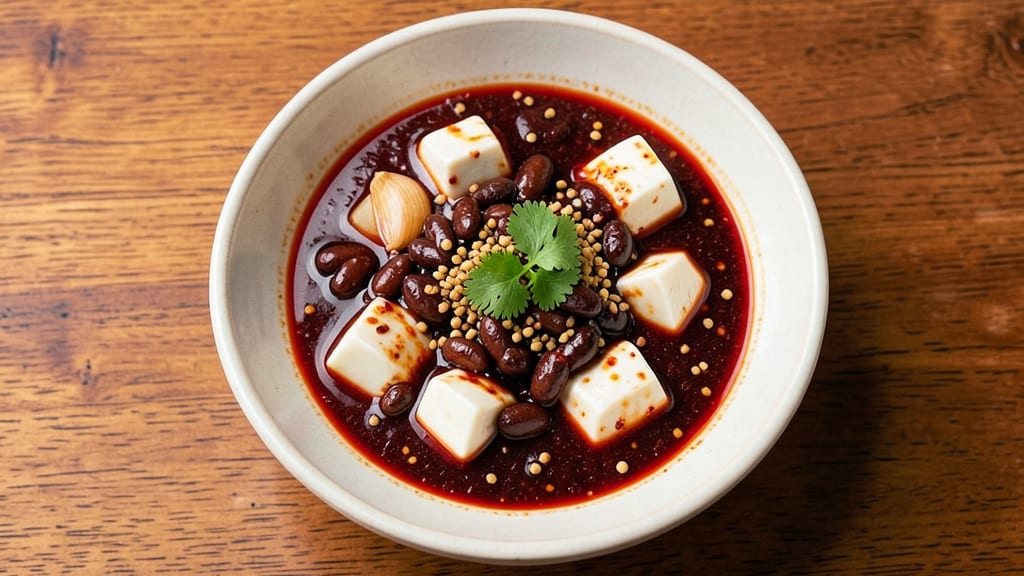
This Amoy mapo tofu sauce recipe unlocks the bold, fermented depth that makes Sichuan cuisine unforgettable. The combination of fermented black beans, Sichuan peppercorns, and black vinegar creates a sauce with layers of umami, spice, and tang that elevates every dish it touches.
I developed this version after years of refining restaurant-style techniques at home, ensuring every element contributes to that signature complex flavor profile.
The foundation of this sauce lies in its key components: chili oil for heat, doubanjiang for fermented depth, and black vinegar for bright acidity. Unlike traditional mapo tofu sauces, this version builds flavor through slow simmering rather than quick frying, allowing the ingredients to meld into a cohesive, aromatic base.
The result is a sauce that works beautifully as a standalone condiment or as the star of mapo tofu and stir-fries.
What sets this recipe apart is its balance of texture and flavor—smooth yet slightly textured from the fermented ingredients, with just the right amount of heat to linger on the palate. The sauce thickens naturally as it cooks, creating a glossy finish that clings perfectly to tofu, noodles, or meats.
With proper storage, it keeps for weeks in the refrigerator, deepening in flavor with each passing day.
Perfect for adding to your Sichuan cooking repertoire or as a unique condiment for rice bowls and noodle dishes. The technique is straightforward but requires attention to detail to achieve that restaurant-quality depth. Let's create this flavor-packed sauce that will transform your meals.
Ingredients for amoy mapo tofu sauce
Ten ingredients unlocking Sichuan's signature fermented complexity in every spoonful.
| Ingredient | Amount | Notes |
|---|---|---|
| Fermented Black Beans 🫘 | ½ cup | Rinsed to remove excess salt |
| Doubanjiang 🌶️ | ¼ cup | Fermented chili bean paste |
| Sichuan Peppercorns 🌶️ | 1 tbsp | Toasted and crushed |
| Black Vinegar 🍶 | ¼ cup | For authentic tang |
| Chili Oil 🫒 | ¼ cup | Homemade or store-bought |
| Garlic Cloves 🧄 | 6 cloves | Minced for aromatic depth |
| Ginger 🧅 | 1 tbsp | Freshly grated |
| Soy Sauce 🍶 | 2 tbsp | Dark soy preferred |
| Sesame Oil 🌰 | 1 tsp | Toasted for nutty aroma |
| Sugar 🍬 | 1 tbsp | Balances acidity |
The fermented black beans and doubanjiang are non-negotiable for authentic depth—Lao Gan Ma or Lee Kum Kee brands deliver consistent quality. Sichuan peppercorns must be toasted and crushed to release their signature numbing aroma, a process that takes about 2 minutes in a dry skillet. Black vinegar, available at Asian markets or online, provides the bright acidity that cuts through the sauce's richness. For chili oil, homemade versions using dried chilies and neutral oil offer superior control over heat levels, though quality store-bought options like Huy Fong work in a pinch. The garlic and ginger should be freshly minced just before cooking to maximize their aromatic compounds.
No fermented black beans? Substitute 1/4 cup soy sauce plus 1 tsp miso paste for umami, though the texture will differ. Doubanjiang unavailable? Mix 2 tbsp gochujang with 1 tbsp soy sauce as a rough approximation. Sichuan peppercorns can be omitted entirely if you prefer no numbing effect, but the sauce will lose its signature complexity. For the vinegar, balsamic vinegar at half the amount provides acidity, though it lacks the fermented depth. The sesame oil is optional but recommended—toasted sesame oil adds nutty warmth that complements the fermented flavors beautifully. All ingredients should be measured precisely; this sauce builds flavor through careful balance rather than quantity.
This sauce thickens as it cools, so store it in an airtight container with a thin layer of oil on top to preserve freshness. Keeps for 2-3 weeks in the refrigerator, with flavor deepening over time. For longer storage, portion into ice cube trays and freeze—perfect for adding to dishes without thawing. The sauce can be reheated gently on the stove or microwaved, though it's best used at room temperature. When using, start with small amounts and adjust to taste; the flavors develop further as it sits on food. The sauce pairs exceptionally well with tofu, noodles, and grilled meats, elevating each dish with its complex fermented profile.
Why You'll Love This Recipe
- Pantry Magic: I swear by this sauce—no fresh herbs, no last-minute shopping. Just fermented black beans, a spoonful of doubanjiang, and a quick toast of Sichuan peppercorns. That’s it. The umami hits instantly, no fancy prep.
- Umami Bomb: Between us, the black vinegar and chili oil combo is chef’s kiss—tangy, spicy, and deep all at once. The doubanjiang adds this smoky richness that makes you want to dunk every bite of rice in it. (Yes, even on a Tuesday night.)
- Leftovers That Shine: This sauce keeps for weeks in the fridge, and it only gets better. Toss it with stir-fried veggies, drizzle it over noodles, or even mix it into a quick egg scramble. It’s my lazy Sunday secret weapon.
- Budget Flex: Doubanjiang and fermented black beans are cheap staples, and you’ll use them up fast. A little goes a long way—enough for two meals, or one very happy takeout night at home. Honestly, it’s the most cost-effective flavor upgrade I know.
Step-by-step instructions for Amoy mapo tofu sauce
This sauce builds flavor through precise technique and layered components. Follow these steps for authentic depth.
Toast and Prepare the Base Ingredients
Heat a dry skillet over medium-low heat and add the 1 tbsp Sichuan peppercorns. Toast them for 1-2 minutes until fragrant and slightly darkened—this releases their numbing aroma. Immediately transfer to a mortar or small bowl and crush them coarsely with a pestle or rolling pin. The texture should resemble coarse sand, not powder.
In the same skillet, add the 6 cloves garlic cloves and 1 tbsp ginger, mincing them directly in the pan as they cook. Sauté for 1-2 minutes until the garlic turns golden and the ginger loses its raw bite. Remove from heat and set aside—these aromatics form the sauce's foundational flavor.
Bloom the Doubanjiang and Fermented Black Beans
Return the skillet to medium heat and add 2 tbsp oil (neutral like vegetable or peanut). Swirl to coat, then add the 0.25 cup Doubanjiang. Cook for 1 minute until the paste darkens and its raw aroma dissipates. This step deepens the umami while removing any bitterness.
Add the 0.5 cup rinsed fermented black beans and stir for 2 minutes until they soften slightly. The beans should release their fermented essence into the oil. If the mixture sticks, add 1 tbsp water to loosen it. Remove from heat and set aside—this combination creates the sauce's signature complexity.
Build the Sauce Foundation
In a clean saucepan, combine the cooked bean mixture with 0.25 cup black vinegar, 2 tbsp soy sauce, and 1 tbsp sugar. Bring to a gentle simmer over medium heat, then reduce to the lowest setting possible while maintaining a steady bubble. Let it cook uncovered for 10 minutes, stirring occasionally.
During this time, the vinegar will mellow while the sugar caramelizes slightly, creating a glossy, balanced sauce. You'll notice the color deepen to a rich mahogany hue—this indicates proper reduction. Taste and adjust seasoning: if too sharp, add ½ tsp sugar; if too mild, add ½ tbsp soy sauce.
Finish with Chili Oil and Sesame Oil
Return the saucepan to medium heat and stir in the 0.25 cup chili oil and 1 tsp sesame oil. Simmer for 2-3 minutes until the oils are fully incorporated and the sauce reaches a smooth, velvety consistency. The chili oil should disperse evenly, creating a marbled effect rather than floating on top.
Remove from heat and let the sauce rest for 5 minutes—this allows the flavors to meld completely. The final texture should coat the back of a spoon without being syrupy. For best results, use the sauce immediately or store it in an airtight container in the refrigerator for up to 5 days.
Pro Tips For Making Amoy Mapo Tofu Sauce
- Bloom the Fermented Black Beans: Toss them in hot water for 30 seconds first—just enough to wake up those deep flavors without cooking them. I learned this the hard way after making a sauce that tasted flat; the beans need a quick shock to release their funk.
- Cook the Doubanjiang Low and Slow: Start on medium heat and don’t rush. Stirring constantly for 2-3 minutes until it’s fragrant but not burnt—this is where the umami magic happens. After burning three batches, I finally figured out patience pays off here.
- Toast Sichuan Peppercorns Until Aromatic: Dry-toast them whole in a separate pan for 30 seconds until you smell that citrusy, piney aroma. Crush them after topping the sauce—this keeps the heat balanced and prevents bitterness. (Yes, even if you’re impatient like me.)
- Balance the Heat with Black Vinegar Last: Add it at the very end—just a splash—to brighten the sauce without overpowering the doubanjiang’s depth. Too early, and the acidity dulls the fermented flavors. My grandmother swore by this, and she was right.
Wine and beer pairings for these flavors
Sichuan Peppercorn Infusion
The signature numbing heat of Sichuan cuisine comes from properly toasted and crushed Sichuan peppercorns. I recommend using Penzeys Spices brand for consistent quality—these peppercorns develop their signature málà (numbing-spicy) sensation when toasted at medium-low heat for 1-2 minutes until fragrant.
For wine pairings, this peppercorn intensity pairs beautifully with dry Riesling—the wine's crisp acidity cuts through the sauce's richness while the peppercorns' citrusy notes complement the Riesling's own herbal profile. 🍷
Fermented Depth with Red Wine
The fermented black beans and doubanjiang in this sauce create a complex umami profile that demands a bold red wine. A Syrah from the Northern Rhône works exceptionally well—the wine's dark fruit and peppery notes mirror the sauce's fermented depth.
The tannins in Syrah also help cleanse the palate between bites of spicy mapo tofu. For beer lovers, a German wheat beer (like Weihenstephaner Hefeweissbier) provides a refreshing contrast with its banana and clove notes.
Tangy Balance with White Wine
The black vinegar in this sauce creates a bright, tangy acidity that pairs wonderfully with dry white wines. I love Gewürztraminer from Alsace—its lychee and rose notes complement the sauce's fermented complexity while the wine's slight sweetness balances the heat.
For a lighter option, a dry Viognier from California offers floral aromas that harmonize beautifully with the Sichuan peppercorns' citrusy undertones.
Spicy Heat with Malbec
The chili oil in this sauce demands a wine with enough body to stand up to the heat. A Malbec from Mendoza is my go-to choice—the wine's dark fruit and velvety texture provide a luxurious contrast to the sauce's spicy fermented notes.
The Malbec's natural acidity also helps refresh your palate between bites. For a local option, a Zinfandel from California delivers similar bold fruit flavors with a touch of spice that echoes the sauce's chili oil.
Beer Pairing: IPA or Pilsner
For beer enthusiasts, a hazy IPA with its juicy hop aromas provides a refreshing contrast to the sauce's fermented depth. Look for a West Coast-style IPA like Stone Ruination—the citrusy hops complement the Sichuan peppercorns while the malt backbone balances the sauce's tang.
Alternatively, a crisp Pilsner like Sierra Nevada Pale Ale offers a clean, refreshing palate cleanser that lets the sauce's complex flavors shine. 🍺
Non-Alcoholic Options
Don't drink alcohol? No problem. A sparkling yuzu soda provides a bright, citrusy contrast that mirrors the Sichuan peppercorns' citrusy notes. For something more substantial, try a ginger beer like Fever-Tree—the ginger's warmth complements the sauce's spicy fermented profile.
Both options refresh your palate between bites while enhancing the dish's overall complexity.
Nutrition facts
Frequently asked questions
Can I make this sauce without Sichuan peppercorns?
The Sichuan peppercorns add that signature málà (numbing-spicy) sensation, but you can omit them if you prefer. Simply reduce the sesame oil to ½ tsp and increase the chili oil to ⅓ cup to maintain heat. The sauce will still have deep umami from the fermented black beans and doubanjiang, though it'll lack the citrusy aroma that makes authentic Amoy mapo tofu sauce special.
How long should I simmer the sauce to get the right consistency?
Simmer the sauce for 10-12 minutes for a balanced texture—it should coat the back of a spoon but remain pourable. If it thickens too quickly, add 1 tbsp water and simmer another 2 minutes. The sauce will thicken further as it cools, so don't over-reduce it. For a glossier finish, stir in ½ tsp cornstarch mixed with 1 tsp water at the end.
Can I substitute black vinegar with something else?
Black vinegar is essential for that fermented tang, but you can use ½ cup balsamic vinegar in a pinch. For extra depth, add ½ tsp soy sauce to mimic the umami. Avoid white vinegar—it lacks the complexity. If you can't find black vinegar, try red wine vinegar with ½ tsp molasses for a darker hue and richer flavor.
How do I store leftover sauce to keep it fresh?
Transfer the sauce to an airtight container and refrigerate for up to 2 weeks. For longer storage, freeze in ice cube trays—each cube makes a perfect single-serving addition to dishes. When reheating, warm gently on the stove over low heat (never microwave) to preserve texture. The sauce actually improves over time as flavors meld!
What's the best way to adjust the spice level?
Start with the ¼ cup chili oil called for, then adjust to taste. For milder heat, reduce chili oil to 2 tbsp and add ½ tsp sugar to balance. For extra spice, increase chili oil to ⅓ cup and add ½ tsp doubanjiang. Always taste as you go—you can't easily remove excess heat once added!