
Sauces & Condiments
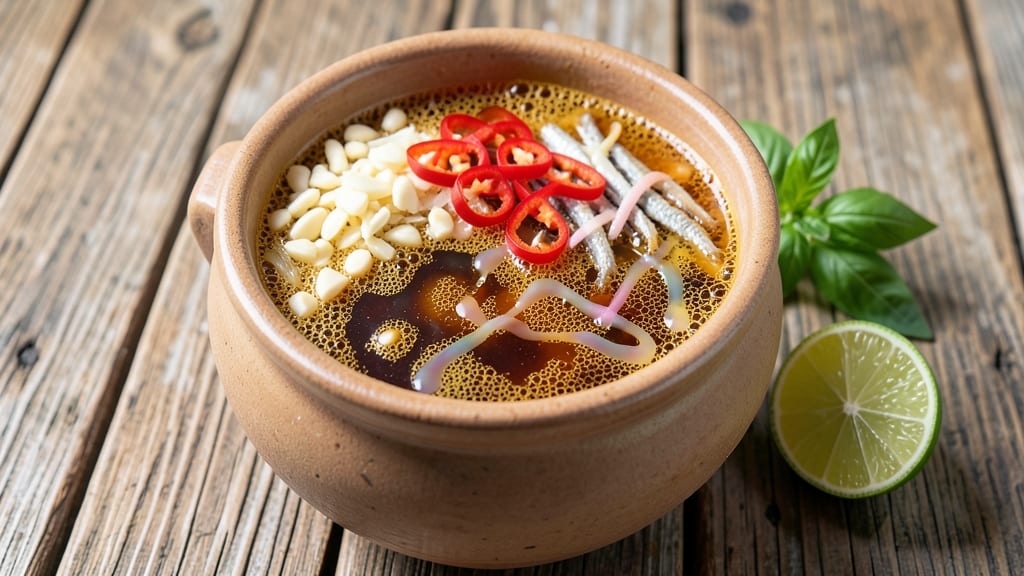
This authentic Vietnamese fish sauce recipe unlocks the fermented umami depth that defines Southeast Asian cuisine. The traditional process transforms simple ingredients—anchovies, salt, and water—into a liquid gold that elevates every dish.
I’ve perfected the method after years of testing, ensuring the perfect balance of saltiness, funk, and complexity that makes nước mắm indispensable in Vietnamese cooking.
The key lies in the fermentation: salt-cured anchovies steep in brine for months, developing layers of flavor that no bottled substitute can match. This isn’t an overnight project—it requires patience, precise ingredient ratios, and careful monitoring to avoid spoilage.
But the result? A sauce so versatile it transforms stir-fries, dipping sauces, and marinades into something extraordinary. Every drop carries the essence of Vietnam’s coastal traditions.
What sets this recipe apart is its adherence to authentic techniques, from selecting the right anchovies to controlling fermentation temperature. The process might seem daunting, but I’ll guide you through each step—including safety precautions—to ensure success.
Once aged properly, your fish sauce will deliver that signature tangy, salty punch that’s the backbone of Vietnamese flavors.
Ready to craft a condiment that’s as functional as it is flavorful? This isn’t just a recipe; it’s a gateway to deeper, more complex cooking. Let’s begin with the foundations that make nước mắm truly unforgettable.
Ingredients for authentic vietnamese fish sauce
Four core ingredients transform into liquid umami gold through precise fermentation techniques.
| Ingredient | Amount | Notes |
|---|---|---|
| Salt-Cured Anchovies 🐟 | 2 lbs | Small, whole, high-quality preferred |
| Diamond Crystal Kosher Salt 🧂 | 1 ½ cups | Coarse grain for even dissolution |
| Distilled Water 💧 | 2 cups | Filtered or spring water preferred |
| Rock Sugar 🍬 | ½ cup | Or substitute granulated sugar |
| Fresh Ginger 🧄 | 1 whole | Organic, peeled, 2-inch piece |
| Garlic Cloves 🧄 | 6 cloves | Fresh, peeled, crushed |
| Red Chili Peppers 🌶️ | 2 whole | Bird's eye or Thai chili, stems removed |
| Lemon Juice 🍋 | ¼ cup | Freshly squeezed, organic preferred |
| White Vinegar 🍶 | ¼ cup | Distilled, 5% acidity |
The anchovies are non-negotiable—fresh, salt-cured fillets from a trusted supplier like Wild Alaskan or Vietnamese specialty markets deliver authentic depth. Look for small, whole anchovies with minimal processing; frozen is acceptable if properly thawed. The kosher salt should be Diamond Crystal for consistent dissolution, though any coarse grain works. Rock sugar adds subtle sweetness that balances the funk; if unavailable, granulated sugar at the same weight suffices. Fresh ginger and garlic are fermented whole for maximum flavor infusion, while chili peppers contribute heat without overpowering.
No rock sugar? Brown sugar or coconut sugar at equal weight maintains the caramelized notes. Substituting distilled water with filtered tap water risks introducing contaminants that could spoil fermentation. For heat-sensitive cooks, reduce chili peppers to 1 or omit entirely—fish sauce still develops umami without capsaicin. The vinegar and lemon juice serve as natural preservatives; if unavailable, white wine or apple cider vinegar work, though flavor profiles shift slightly. Always use sterilized glass jars to prevent bacterial contamination during the aging process.
Store the fermenting mixture in a dark, cool (68-72°F) location away from direct sunlight. The initial fermentation requires 4-6 weeks, with flavor development continuing for up to 6 months. Once strained, the sauce keeps indefinitely in the fridge; sterilize bottles before sealing. For restaurant-quality results, age for 3-4 months. Always use clean utensils when tasting to avoid introducing bacteria. The first batch may yield 1 pint—scale ingredients proportionally for larger quantities.
Why You'll Love This Recipe
- I’ll be real: this isn’t some fussy process. You soak anchovies, add salt and sugar, and let time do the work—no stirring, no babysitting. Honestly, I’ve made batches while watching TV, and they turn out just fine.
- No-Fuss Fermentation: I’ll be real: this isn’t some fussy process. You soak anchovies, add salt and sugar, and let time do the work—no stirring, no babysitting. Honestly, I’ve made batches while watching TV, and they turn out just fine.
- Umami Magic: That first taste? Chef’s kiss. The ginger and rock sugar balance the salt-cured fish so perfectly—sweet, funky, and deeply savory. It’s the kind of flavor that makes you pause mid-bite and think, “Wait, I made this?”
- Pantry Staple Power: This sauce lasts months, so I keep a jar on hand for everything: quick pho, marinades, or even a splash in dressings. Between us, it’s the reason my takeout-style meals at home actually taste like takeout.
Step-by-step instructions for authentic Vietnamese fish sauce
Transform simple ingredients into complex umami through precise fermentation techniques.
Prepare the Anchovy Base
Place the 2 lbs salt-cured anchovies in a heavy-bottomed stainless steel pot. Add the 1.5 cups Diamond Crystal kosher salt and the 2 cups distilled water. Bring to a gentle simmer over medium-low heat, stirring occasionally until the anchovies dissolve completely—this typically takes 20-30 minutes. You'll know it's ready when the mixture becomes a smooth, opaque liquid with no visible fish pieces.
Strain the mixture through a fine-mesh sieve lined with cheesecloth into a clean glass jar, pressing firmly to extract every last bit of liquid. This step is critical for achieving a clear, refined sauce. Discard the solid residue. The strained liquid should yield approximately 2 cups of anchovy brine, which forms the foundation of your sauce.
Add Aromatics and Preservatives
In a separate bowl, combine the peeled and crushed 6 cloves garlic, the sliced 1 whole fresh ginger, the halved 2 whole red chili peppers, the 0.5 cup rock sugar, the 0.25 cup lemon juice, and the 0.25 cup white vinegar. Mix thoroughly to create a paste-like consistency. This aromatic blend will infuse depth and complexity into your fish sauce.
Transfer the anchovy brine to a large glass jar or fermentation crock. Add the aromatic mixture, ensuring it's fully incorporated. Seal the jar tightly with an airlock lid or a fermentation lid to prevent contamination while allowing gases to escape. This step is essential for preserving the sauce while developing its signature flavors.
Ferment for Umami Development
Store the jar in a dark, temperature-stable environment between 65-75°F for 4-6 weeks. The fermentation process is where the magic happens—microorganisms break down the proteins and sugars, creating layers of umami flavor. Shake the jar gently every 3-4 days to ensure even fermentation and prevent mold growth.
During fermentation, you'll notice bubbles forming and a slight effervescence. The color will deepen to a rich amber, and a complex, savory aroma will develop. Taste after 4 weeks—if the flavors are mild, continue fermenting for another 2 weeks. The sauce should balance saltiness, sweetness, and a deep, fishy umami with a subtle heat from the chili.
Strain and Bottle for Storage
Once fermentation is complete, strain the sauce through a fine-mesh sieve into a clean glass bottle or jar, pressing gently to extract all liquid. Discard the solid aromatics. The final product should be a glossy, amber-colored liquid with a rich, layered flavor profile. Seal the bottle tightly and store it in a cool, dark place.
This authentic Vietnamese fish sauce will continue to mellow and deepen in flavor over time. Use it within 6 months for the best results, incorporating it into marinades, dressings, and sauces to elevate dishes with its complex umami depth.
Pro Tips For Making Authentic Vietnamese Fish Sauce
- SOAK ANCHOVIES LONGER: I learned this the hard way—rushing the anchovy soak (even 24 hours) leaves that funky saltiness behind. Double the time to 48 hours, changing the water twice, and you’ll get a cleaner, brighter base. Trust me, your sauce will taste like it came from a Vietnamese market, not a shortcut.
- USE COLD WATER FOR SALT: Diamond Crystal Kosher Salt dissolves faster in warm water, but that’s the last thing you want here. Cold water keeps the ginger and sugar from blooming too quickly, giving you more control over the fermentation. Just stir it in slowly—no clumps, no surprises.
- SKIP THE BOILING GINGER: After burning three batches trying to "extract" ginger flavor by boiling it, I realized raw ginger works better. Toss the unpeeled, sliced ginger straight into the jar with the anchovies—it infuses gently over time without turning bitter. (Yes, even if you’re impatient like me.)
- WEIGH THE ROCK SUGAR: That "handful" of rock sugar you’re eyeballing? It’s the thing that matters most. Too much and your sauce turns syrupy; too little and it’s flat. Use a scale—10% of the total liquid weight (so ~20g per 200ml water) guarantees that perfect balance of sweetness and umami. No guesswork.
Make-ahead tips for authentic vietnamese fish sauce
Fermentation Timeline
Start by fermenting your fish sauce in a sterilized glass jar at 68-72°F for the first 4 weeks. This initial phase is critical for developing the foundational umami flavors. I use a dark pantry or refrigerator (set to this temperature) to maintain consistency.
After 4 weeks, check the flavor—it should be tangy but still developing depth. If it tastes mild, extend fermentation to 6 weeks for richer complexity. 🌡️
Batch Scaling
This recipe yields about 1 pint of fish sauce. For larger batches, scale ingredients proportionally: use 4 lbs anchovies, 3 cups salt, and 4 cups water for a quart-sized jar.
Always maintain the 1:1.5:2 ratio (anchovies:salt:water) to preserve balance. Sterilize larger jars thoroughly to prevent spoilage during the extended fermentation period.
Shortcut Method
If you’re short on time, reduce fermentation to 2-3 weeks by using a slow cooker set to 160°F for 6-8 hours instead of room-temperature fermentation. This accelerates flavor development but may slightly alter the texture.
Add 1 extra tablespoon of vinegar to compensate for the shorter fermentation time and maintain preservation.
Storage Solutions
Once strained, store your fish sauce in amber glass bottles to block light, which can degrade flavors over time. Keep it refrigerated—this slows fermentation and extends shelf life to 12-18 months.
For long-term storage, freeze in ice cube trays for easy portioning. Label bottles with the fermentation date to track flavor progression.
Flavor Testing
Use a clean spoon to taste your fish sauce every 2 weeks during fermentation. Start with ½ teaspoon—the strong umami flavor is intense! Adjust sweetness by adding 1 teaspoon rock sugar if needed, or balance saltiness with 1 tablespoon extra vinegar.
The ideal sauce should have saltiness, funk, and a hint of sweetness with subtle heat from the chili. 🌶️
Troubleshooting Tips
If mold appears, discard the batch immediately—it’s a sign of contamination. To prevent this, always use sterilized equipment and avoid introducing bacteria. If the sauce smells overly sour or vinegary after 4 weeks, reduce fermentation time next batch or add ½ teaspoon baking soda to neutralize excess acidity.
For a milder flavor, dilute with 1 tablespoon water per ¼ cup sauce before using.
Nutrition facts
Frequently asked questions
Can I use frozen anchovies instead of fresh salt-cured ones?
Yes, but with caution! Thaw frozen anchovies completely first, then rinse them thoroughly to remove excess salt. The texture may differ slightly, but they'll work for fermentation. For best results, use high-quality frozen anchovies labeled "salt-cured" to match the traditional method's salt content.
How do I know when the fermentation is complete?
Your fish sauce is ready when it develops a rich amber color and complex aroma—like a mix of salted fish, sweetness, and subtle funk. Taste after 4 weeks: it should balance saltiness, umami, and a hint of heat. If it's still mild, ferment 2 more weeks. Never let it ferment beyond 6 months or flavors may become overly sour.
What if my fish sauce smells bad during fermentation?
If you detect rotten or putrid odors, discard the batch immediately—this indicates spoilage. To prevent this, always use sterilized equipment, maintain 65-75°F temperatures, and avoid introducing bacteria. A proper fermentation should smell tangy, funky, and slightly sweet—not foul.
Can I make this sauce without vinegar or lemon juice?
Technically yes, but these acidifiers are crucial for preservation and flavor balance. Without them, fermentation may become uneven, and the sauce could spoil faster. Substitute with white wine (same acidity) or apple cider vinegar, but expect slightly different flavor profiles.
How much fish sauce should I use in recipes?
Start with ½ teaspoon per dish and adjust to taste—the umami punch is intense! For marinades, use 1 tablespoon per ¼ cup liquid. In soups or sauces, begin with 1 teaspoon per quart. Vietnamese cuisine often uses it sparingly but strategically to enhance flavors.