
Sauces & Condiments
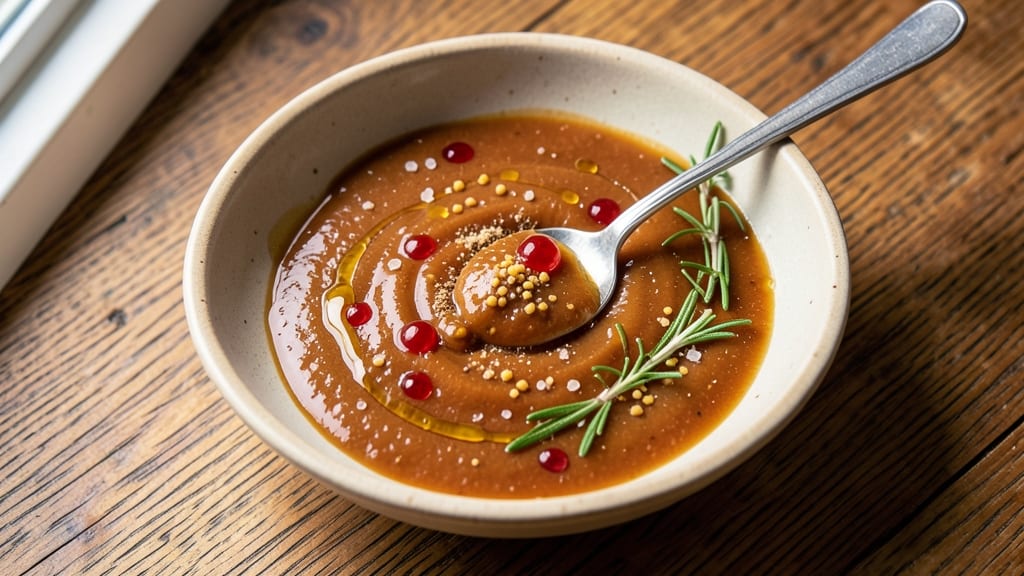
This apple cider vinegar sauce recipe transforms simple ingredients into a bright, tangy condiment that elevates everything from salads to roasted vegetables. The secret lies in balancing sharp vinegar with honey and spices, creating a sauce that's complex yet effortless to make.
I developed this after craving something zesty to cut through rich dishes—now it's my go-to for adding depth without overpowering flavors.
The sauce comes together in minutes with just five ingredients: apple cider vinegar, honey, Dijon mustard, garlic powder, and a pinch of salt. The Dijon mustard adds subtle heat and thickness, while the honey rounds out the acidity for a smooth finish.
This versatile sauce works as a salad dressing, meat marinade, or glaze for roasted vegetables, making it a pantry staple worth keeping on hand.
What you'll end up with is a glossy, tangy sauce that clings beautifully to greens, enhances grilled meats, and caramelizes into a sticky glaze on roasted vegetables. The garlic and mustard notes linger just enough to satisfy, while the honey keeps it from being too harsh.
Store it in the fridge for up to two weeks, or freeze for longer shelf life.
Use it immediately on a crisp green salad with mixed greens and nuts, or let it marinate chicken or pork for hours before grilling. For roasted vegetables, brush it on during the last five minutes of cooking for a caramelized finish.
The possibilities are endless, but the technique stays simple—just mix, taste, and adjust.
Ingredients for apple cider vinegar sauce
Six simple ingredients balance sharp tang with sweet depth for a versatile sauce.
| Ingredient | Amount | Notes |
|---|---|---|
| Apple Cider Vinegar 🍏 | ½ cup | Raw, unfiltered preferred |
| Honey 🍯 | ¼ cup | Raw or wildflower variety |
| Dijon Mustard 🥫 | 1 tbsp | High-quality, smooth texture |
| Garlic Powder 🧄 | 1 tsp | Freshly ground preferred |
| Sea Salt 🧂 | ½ tsp | Fine grain preferred |
| Extra-Virgin Olive Oil 🫒 | ¼ cup | For glossy finish |
The apple cider vinegar is the heart of this sauce—Bragg or Texas Pete are my go-tos for that authentic tang. Look for raw, unfiltered vinegar if you can find it; it has more flavor complexity. Honey should be raw or wildflower for subtle floral notes that cut through the acidity. Local honey works beautifully too. The Dijon mustard adds both thickness and subtle heat—avoid the cheap, watery brands. Maille or Whole Foods 365 are solid choices. For garlic powder, Penzeys or any fresh-ground variety will give you the most flavor punch.
No honey? Maple syrup or agave nectar work in a pinch, though the flavor will be slightly different. Short on olive oil? Avocado oil or toasted sesame oil add their own unique notes. The garlic powder can be swapped for fresh minced garlic at double the amount, but it’ll have a different texture. For a sweeter glaze, add 1 tsp vanilla extract to the mix. Always taste as you go—this sauce is all about balance. The salt is key; don’t skip it even if your vinegar is already salty.
This sauce keeps beautifully in the fridge for up to 2 weeks in a sealed jar. For longer storage, freeze in ice cube trays—perfect for single-use portions. The flavors actually improve over time as everything melds together. I like to keep a small jar on hand at all times for quick salad dressings or last-minute marinades. If it thickens too much, just whisk in a splash of water or vinegar to loosen it up.
Why You'll Love This Recipe
- Five-Ingredient Magic: I swear by this combo—just vinegar, honey, mustard, garlic powder, and salt. No fancy gadgets, no waiting for anything to bloom. Stir, taste, adjust. Done. My lazy Sundays just got a whole lot easier.
- Tangy-Sweet Balance: That first bite? The vinegar cuts through the honey’s richness while the mustard adds depth—like a hug for your taste buds. Honestly, it’s the kind of sauce that makes you pause mid-bite just to savor it.
- Dresses Up Everything: Slather it on grilled chicken, drizzle over roasted veggies, or toss with pasta—it’s my go-to for weeknight dinners. Even my picky teen licks the plate clean. (Yes, even on a Tuesday night.)
- Lasts All Week: Make a big batch and store it in the fridge. The flavors only get better as the days pass—perfect for meal prep. I’ve had mine last 10 days, and it’s still spot-on. Budget-friendly? Absolutely.
Step-by-step instructions for apple cider vinegar sauce
This tangy, balanced sauce comes together in minutes with simple technique and bold flavors.
Whisk Vinegar and Honey Together
In a medium bowl, combine the 0.5 cup apple cider vinegar and 0.25 cup honey. Use a whisk to blend them thoroughly until the honey dissolves completely and the mixture becomes smooth. The vinegar will initially separate the honey, but with gentle whisking, it will integrate into a uniform liquid.
Here's the thing—using raw or unfiltered apple cider vinegar adds subtle complexity to the flavor. You'll notice the mixture has a slightly cloudy appearance at first, but it will clear as you whisk. This is completely normal and actually enhances the sauce's depth. Let the mixture sit for 1 minute to allow the flavors to meld slightly before adding the remaining ingredients.
Incorporate Dijon Mustard and Garlic Powder
Add the 1 tablespoon Dijon mustard and 1 teaspoon garlic powder to the vinegar-honey mixture. Whisk vigorously for 30 seconds until fully combined and smooth. The Dijon mustard will help emulsify the sauce later, while the garlic powder adds subtle warmth that balances the acidity.
Don't skip this whisking step—it's crucial for evenly distributing the mustard and garlic powder. You'll see the mixture thicken slightly as the mustard begins to break down. If you notice any lumps, press them against the side of the bowl with the whisk to fully incorporate them. This ensures every bite of your salad or roasted vegetables gets that perfect balance of tang, sweetness, and savory depth.
Season with Salt and Emulsify with Olive Oil
Add the 0.5 teaspoon sea salt and whisk one final time to distribute it evenly. Then, slowly drizzle in the 0.25 cup extra-virgin olive oil while whisking continuously. This gradual addition is key to creating a stable emulsion that won't separate.
The olive oil should incorporate smoothly, creating a glossy, creamy sauce. If you whisk too aggressively at first, you might create suds—just pause for 10 seconds to let them settle before continuing. The final texture should be velvety with a slight sheen, indicating proper emulsification. This is where the high-quality olive oil makes all the difference—it adds richness without overpowering the bright vinegar flavor.
Taste and Adjust the Balance
Taste the sauce immediately after whisking. You'll likely find it needs adjustment—this is normal. If it tastes too sharp, add another ½ teaspoon honey and whisk again. If it lacks tang, add ½ teaspoon apple cider vinegar. The goal is to achieve a perfect balance where the sweetness, acidity, and savory notes complement each other harmoniously.
Real talk: This sauce is incredibly versatile, so don't be afraid to experiment. You might find you prefer a slightly sweeter version for roasted carrots or a more acidic one for crisp greens. Once you've achieved your desired balance, transfer the sauce to a clean jar or airtight container. It will keep in the refrigerator for up to 2 weeks, making it perfect for meal prep.
Pro Tips For Making Apple Cider Vinegar Sauce
- Start with Cold Ingredients: Dump your honey, Dijon, and garlic powder into the vinegar while it’s still cold—no need to heat anything. I used to warm the vinegar first, thinking it would blend better, but it just thins out the sauce faster than you’d like. Cold ingredients let you control the thickness as you stir.
- Whisk Like You Mean It: Grab a fork or whisk and get aggressive with those clumps. Dijon mustard and honey don’t play nice together at first, and skipping this step leaves you with a grainy sauce. Stir for at least 30 seconds until it’s silky—no one wants to taste texture in their dressing.
- Taste Early, Adjust Slowly: Check the flavor after the first stir, not the last. Vinegar can overpower honey if you’re not careful, and salt disappears fast once you add it. Start with half the salt you think you need, then tweak—you can always add more, but you can’t take it out.
- Use Raw Honey for Depth: Filtered or processed honey loses that rich, complex flavor. Raw honey has subtle floral or herbal notes that make the sauce taste like it was made by someone who actually cares. If you’re in a pinch, swap in maple syrup, but the vinegar’s tang will fight it—balance carefully.
Make-ahead tips for this apple cider vinegar sauce
Batch Prep for Salads
Make a double batch of this sauce when you're prepping for the week. Store it in a glass jar with a tight-sealing lid in your fridge, and you'll have a quick dressing ready for any salad.
I like to keep a small jar in my fridge door for easy access—just grab it, shake it up, and pour it over your greens. For extra convenience, divide it into 4-ounce portions in small containers so you can grab exactly what you need without overcomplicating things. 🥗
Marinate Meats Ahead
This sauce doubles as an amazing marinade for chicken, pork, or even tofu. Toss your protein in a ziplock bag with ½ cup of sauce and refrigerate for 4-6 hours (or overnight for deeper flavor).
The acidity tenderizes the meat while infusing it with that perfect tangy-sweet balance. I often marinate boneless chicken breasts for grilling or roasting—just pat them dry before cooking to ensure a good sear. 🍗
Glaze Veggies in Advance
For roasted vegetables, brush this sauce on during the last 5-10 minutes of cooking for a caramelized finish. But here's the pro tip: Prep your veggies ahead of time, store them in a single-layer tray in the fridge, and keep the sauce in a separate container.
When ready to cook, just toss the veggies with 1-2 tablespoons of sauce and roast as usual. I love using this on carrots, Brussels sprouts, or sweet potatoes—the sauce clings beautifully and adds a glossy sheen. 🥕
Freeze for Later Use
Freeze individual portions in ice cube trays for single-use servings. Once frozen, transfer the cubes to a ziplock bag and store for up to 3 months. This is perfect for when you need just a little sauce for a quick salad or a last-minute marinade.
To use, simply thaw overnight in the fridge or microwave for 10-15 seconds on low power. The texture may thicken slightly after freezing, so whisk in a splash of water or vinegar to restore consistency. ❄️
Customize for Meal Prep
Adjust the sauce to suit your meal prep needs. For a sweeter glaze, add 1 extra tablespoon of honey before freezing. Need more tang? Add ½ teaspoon extra vinegar per batch. I also like to make a spicy version by adding ¼ teaspoon cayenne pepper—perfect for grilled meats.
Label your containers with the date and flavor profile so you can easily identify them later. This way, you always have the perfect sauce ready for whatever you're cooking. 🌶️
Long-Term Storage Tips
If storing for more than 2 weeks, consider freezing the sauce in a glass jar with a tight lid, leaving 1 inch of headspace for expansion. Thaw it in the fridge overnight before using.
The flavors actually deepen over time, making it even more delicious. I keep a backup batch in the freezer during the holidays when I'm roasting veggies daily. Just
Nutrition facts
Frequently asked questions
Can I use white vinegar instead of apple cider vinegar?
Technically yes, but you'll lose the rich, fruity depth that apple cider vinegar provides. White vinegar has a sharper, more acidic flavor that won't have the same complexity. If you must substitute, reduce the amount by 1-2 teaspoons and add ½ teaspoon maple syrup to balance the harshness.
How do I make this sauce thicker for glazing?
For a thicker glaze, simmer the sauce in a small saucepan over low heat for 5-7 minutes until it reduces slightly. Alternatively, stir in 1 teaspoon cornstarch mixed with 1 tablespoon water and cook until thickened. This works especially well for roasted vegetables or as a drizzle for pancakes.
Will this sauce separate if I don't whisk properly?
Yes, but don't worry—it's easily fixable! If separation occurs, simply whisk vigorously for 30 seconds to re-emulsify. The key is adding the olive oil slowly while whisking continuously. For extra insurance, store the sauce in a glass jar and give it a good shake before each use.
Can I make this sauce without honey?
Swap the honey for ¼ cup maple syrup or agave nectar for a vegan version. For a different flavor profile, try 2 tablespoons brown sugar dissolved in 1 tablespoon warm water. The sauce will still balance beautifully—just adjust the sweetness to taste after mixing.
What's the best way to use this sauce on greens?
For salads, use 1-2 tablespoons per serving and toss gently to avoid soggy greens. Try it with arugula, spinach, or mixed greens paired with nuts and cheese for extra crunch. For heartier salads like kale or cabbage, use it as a vinaigrette with 3 tablespoons sauce per 2 cups greens—the acidity helps tenderize the leaves.