
Sauces & Condiments
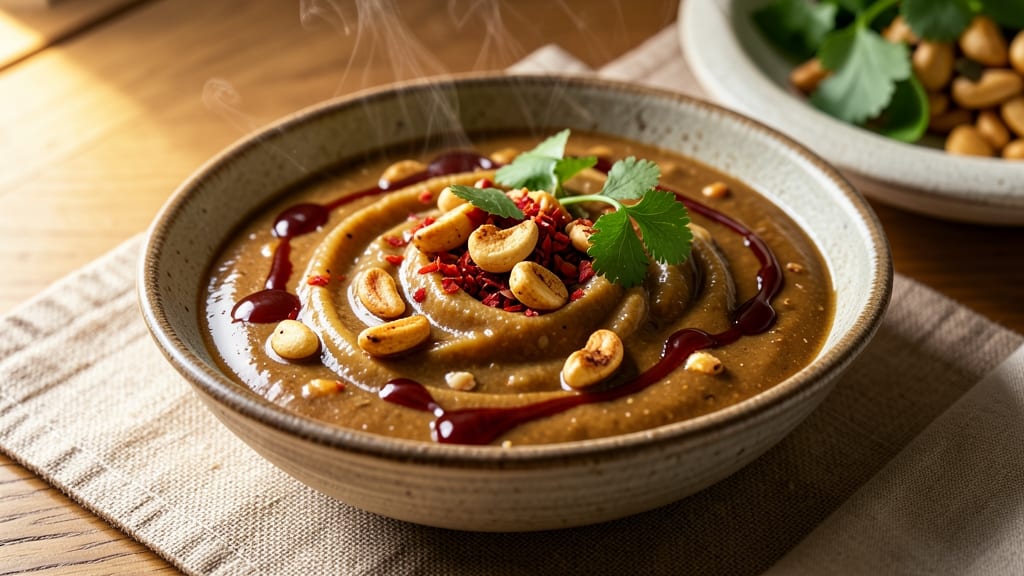
This Balinese peanut sauce transforms simple ingredients into a velvety, aromatic condiment that bridges sweet and savory flavors with tamarind’s bright tang. The secret lies in toasting peanuts and spices until fragrant, then blending them with coconut milk into a silky, slightly chunky sauce that clings to every bite.
I developed this recipe after tasting authentic versions in Bali—where it’s served with grilled satay and steamed rice—and adapted it for home kitchens without sacrificing depth.
The sauce’s magic comes from balancing rich peanut butter with tart tamarind, garlic’s sharp bite, and a whisper of chili for heat. Turmeric adds golden color and earthy warmth, while fresh herbs like cilantro or lemongrass (optional) lift the flavors.
Unlike store-bought versions, this recipe builds layers of complexity through slow simmering, ensuring every spoonful delivers a harmonious blend of nutty, spicy, and tangy notes.
Perfect for drizzling over grilled chicken, fish, or vegetables, this sauce also elevates rice dishes like nasi goreng or even wraps as a dipping sauce.
The texture is smooth yet textured—ideal for spooning or brushing—and it keeps well in the fridge for up to 5 days or freezer for 3 months. Once you taste the difference between homemade and bottled, you’ll never go back.
For extra richness, stir in a splash of coconut cream before serving, or add lime juice for brightness. The key is patience: letting the sauce simmer until the flavors meld creates that restaurant-quality depth. Let’s make this sauce—the one that’ll have everyone asking for seconds.
Ingredients for balinese peanut sauce
Simple pantry staples transform into a fragrant, velvety sauce with deep nutty-spiced notes.
| Ingredient | Amount | Notes |
|---|---|---|
| Peanut Butter 🥜 | ½ cup | Natural, unsweetened preferred |
| Tamarind Paste 🍯 | ¼ cup | Thick, not runny |
| Coconut Milk 🥥 | 1 cup | Full-fat canned, well-shaken |
| Garlic Cloves 🧄 | 4 cloves | Minced, not powdered |
| Red Chili Flakes 🌶️ | 1 tbsp | Adjust for heat preference |
| Ground Turmeric 🌿 | ½ tsp | Freshly ground preferred |
| Raw Peanuts 🥜 | ½ cup | Shelled, unsalted |
| Brown Sugar 🍯 | 2 tbsp | Light or dark preferred |
| Fresh Cilantro 🌿 | ¼ cup | Stems removed, chopped |
| Lime Juice 🍋 | 1 tbsp | Freshly squeezed |
| Salt 🧂 | ½ tsp | Kosher or sea salt |
| Olive Oil 🫒 | 1 tbsp | For toasting peanuts |
The peanuts and spices are the heart of this sauce. Raw, unsalted peanuts from the bulk section at Whole Foods or Trader Joe's deliver the most authentic flavor—skip the salted kind. Look for tamarind paste in the international aisle (or use tamarind pulp if you're feeling adventurous). The coconut milk should be full-fat and shaken well before opening—watery milk won't give you that luxurious texture. Toast your peanuts in a dry pan until fragrant; that nutty aroma is non-negotiable for authentic depth. If you can't find fresh turmeric, ground works fine, but freshly grated adds vibrant color and earthy warmth that powder can't match.
No tamarind paste? Lemon juice plus a pinch of sugar mimics the tang, though it won't be identical. Short on peanuts? Cashews or almonds work in a pinch, but the sauce will have a different texture. The chili flakes can be swapped for fresh red chili or cayenne powder—just adjust to taste. For extra richness, stir in 2 tbsp of coconut cream at the end. The cilantro is optional but adds freshness; if you skip it, boost the lime juice to 2 tbsp instead. And if you're feeling lazy, pre-minced garlic from a jar works—just rinse it first to remove excess oil.
This sauce keeps beautifully—5 days in the fridge sealed in a jar, or 3 months in the freezer if you portion it into ice cube trays first. For reheating, warm gently on the stove with a splash of water to loosen it up. I always make extra because it disappears fast—perfect for drizzling over satay, tossing with noodles, or even spooning into wraps. The flavor actually improves after a day as the spices meld, so make it ahead if you can. Store any leftovers in the freezer for up to 3 months—just thaw overnight in the fridge before using.
Why You'll Love This Recipe
- Five-Ingredient Magic: I swear, this sauce comes together with just a pan, a whisk, and zero stress. The tamarind paste does all the work—no fancy reductions or simmering for hours—just stir, taste, and adjust.
- Tangy, Nutty Bliss: That first bite? The peanut butter’s richness meets the tamarind’s sharp tang, then coconut milk smooths it all out while the chili flakes add a slow burn. Honestly, it’s the kind of flavor that makes you pause mid-bite.
- Dip, Drizzle, Repeat: Slather it on grilled chicken, toss it with noodles, or just eat it with rice—it’s my go-to for lazy weeknights or when friends drop by unexpectedly. (Yes, even on a Tuesday night.)
- Leftovers That Last: This sauce actually improves the next day. Store it in the fridge, and the flavors meld even deeper—perfect for quick stir-fries or as a last-minute glaze. Plus, peanut butter stretches a budget like nothing else.
Step-by-step instructions for Balinese peanut sauce
Here's how to craft this vibrant, aromatic sauce with perfect balance and texture.
Toast the Peanuts and Aromatics
Heat the 1 tablespoon olive oil in a medium saucepan over medium heat. Add the 0.5 cup raw peanuts and toast them for 3-4 minutes until they turn a light golden color and release their nutty aroma. Remove them with a slotted spoon and set aside.
In the same pan, add the 4 cloves minced garlic and cook for 30 seconds until fragrant but not browned. Immediately add the 1 tablespoon red chili flakes and 0.5 teaspoon ground turmeric, stirring for 20 seconds until the spices bloom. This quick cooking preserves their vibrant flavors without burning them.
Build the Sauce Base
Reduce the heat to low and pour in the 0.5 cup peanut butter and 0.25 cup tamarind paste. Stir vigorously for 2-3 minutes until completely smooth. The tamarind will create a slight tanginess that balances the peanut's richness.
Gradually whisk in the 1 cup coconut milk, adding it slowly to prevent curdling. Continue stirring for 3-4 minutes until the mixture thickens slightly and becomes creamy. You'll notice the sauce develop a glossy sheen—this indicates proper emulsification.
Sweeten and Finish the Sauce
Add the 2 tablespoons brown sugar and 0.5 teaspoon salt, stirring until fully dissolved. The sugar helps balance the acidity from the tamarind while adding depth. Taste and adjust the seasoning if needed—you might want to add a pinch more salt or sugar depending on your preference.
Remove the sauce from heat and stir in the 1 tablespoon lime juice. This final step brightens the entire sauce, cutting through the richness. Let it cool for 5 minutes before adding the toasted peanuts and 0.25 cup chopped fresh cilantro, stirring gently to incorporate.
Adjust Consistency and Serve
If the sauce is too thick, thin it with 1-2 tablespoons warm water until it reaches a pourable consistency. For a thicker sauce meant for drizzling, let it sit for 10 minutes at room temperature. The sauce should coat the back of a spoon smoothly.
Serve immediately over grilled meats, noodles, or vegetables. The sauce keeps well in the refrigerator for 5 days in an airtight container. For best results, reheat gently over low heat, stirring occasionally to prevent separation.
Pro Tips For Making Balinese Peanut Sauce
- STIR CONSTANTLY AT FIRST: The peanut butter and coconut milk will fight you like glue—high heat for the first 2 minutes forces them to emulsify instead of curdling. I learned this the hard way after scraping gummy lumps off my pot for the third time.
- USE ROASTED GARLIC: Raw garlic burns easily and turns bitter in this sauce. Lightly char 4-5 cloves in a dry pan until golden (about 5 minutes), then mash them in—it adds depth without overpowering the tangy tamarind.
- DILUTE TAMARIND PASTE: Store-bought tamarind paste is often thick and grainy. Mix 1 tablespoon with 2 tablespoons warm water first, then strain if needed. Skipping this step means you’ll taste the texture more than the flavor.
- ADD CHILI LAST: Toss in the red chili flakes after the sauce simmers for 5 minutes—this keeps their heat sharp and vibrant. If you add them too early, they’ll mellow into a dull background note. (Yes, even if you’re impatient like me.)
Pro cooking tips for this dish
Toast Peanuts Perfectly
Never skip toasting the peanuts—they’re the flavor foundation! Use a dry skillet over medium heat for 3-4 minutes until they’re golden and smell heavenly. I like to spread them out so they don’t clump, and watch closely to avoid burning. The moment they release that nutty aroma, you’re golden. 🥜
For extra depth, add ½ tsp of ground coriander to the pan with the peanuts while toasting. This adds a citrusy warmth that pairs beautifully with the tamarind’s tang. Just stir it in for the last 30 seconds before removing the peanuts.
Control the Tamarind
The tamarind paste can be tricky—too much makes the sauce overly sour. Start with ¼ cup and adjust to taste after simmering. If it’s too tart, balance it with ½ tsp more brown sugar or a splash of lime juice.
I’ve found that Whole Foods’ tamarind paste has the perfect consistency—thick but pourable.
For a smoother sauce, strain it through a fine-mesh sieve after blending. This removes any fibrous bits and gives you that velvety texture we all love. Just don’t skip the tamarind entirely—it’s what makes this sauce uniquely Balinese!
Simmer for Emulsification
Low and slow is key here. After adding the coconut milk, keep the heat at low and stir constantly for 3-4 minutes. You’re looking for that glossy sheen—it means the sauce is emulsifying properly. If it curdles, whisk in 1 tbsp warm water to bring it back together. 🌡️
Pro tip: If your sauce separates later, don’t panic! Just whisk in 1 tsp of coconut milk and warm it gently until smooth again. The secret is patience—rushing this step ruins the texture.
Finish with Freshness
The final touches make all the difference. Stir in the lime juice last—it brightens the sauce and cuts through the richness. For extra freshness, add 1 tbsp of finely chopped lemongrass (if you have it) along with the cilantro. It adds a floral note that elevates the whole dish.
If you’re feeling fancy, garnish with crushed peanuts or a sprinkle of sesame seeds before serving. It adds texture contrast and makes the dish look restaurant-worthy. Trust me, the little details matter!
Nutrition facts
Frequently asked questions
Can I make this sauce without tamarind paste?
Yes, but the flavor will differ. Use 1 tbsp lemon juice plus ½ tsp sugar to mimic the tang, or swap for 1 tbsp soy sauce for umami depth. The sauce will taste more neutral but still delicious—just less authentically Balinese.
How spicy should this sauce be?
The recipe starts with 1 tbsp chili flakes for mild heat. For medium spice, add 1 extra tbsp; for fiery, use 1 tsp fresh chili or cayenne. Always taste before serving—you can always adjust with more chili or a pinch of sugar to balance.
Can I make this sauce ahead of time?
The flavor improves over time. Store in an airtight container in the fridge for 5 days or freeze for 3 months. Reheat gently on low heat, stirring in 1 tbsp water if it thickens too much. The sauce actually tastes better after sitting overnight.
What's the best way to use this sauce?
This versatile sauce shines on grilled meats (like satay), noodles, or steamed veggies. For extra richness, drizzle over nasi goreng or use as a dipping sauce for spring rolls. Try it in curries too—just reduce the coconut milk by half.
Why did my sauce separate?
Sauces separate when cooled too quickly or from temperature changes. Fix it by whisking in 1 tsp coconut milk and warming gently on low heat. Stir constantly until smooth—this restores the emulsified texture. For prevention, let the sauce cool gradually at room temperature.