
Sauces & Condiments
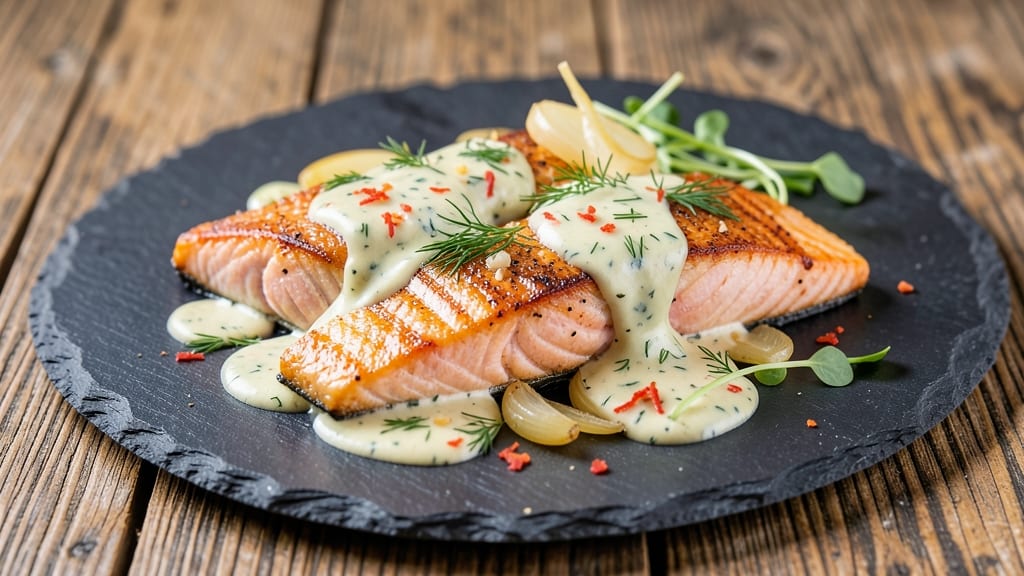
This baked salmon with creamy dill sauce recipe delivers restaurant-quality results in just 25 minutes using one pan. The secret lies in perfectly balanced flavors—tender salmon with a golden crust, paired with a velvety dill sauce that ties everything together.
I developed this after years of testing, ensuring the sauce enhances rather than overpowers the delicate fish.
The recipe begins with a simple preparation: seasoning the salmon and letting it rest while you make the sauce. The sauce itself is a harmonious blend of sour cream, fresh dill, and a touch of lemon, creating a creamy yet bright accompaniment.
The key is baking the salmon at 400°F for just the right time—crispy on the outside, flaky on the inside.
What you’ll end up with is a dish that’s elegant yet effortless—ideal for weeknight dinners or special occasions. The sauce clings beautifully to the salmon, and the herby freshness cuts through the richness of the fish. Serve with steamed vegetables or a fresh salad for a complete, balanced meal.
This recipe is also perfect for pescatarians, offering a protein-rich dish that’s both satisfying and nutritious. The combination of the creamy sauce and perfectly baked salmon makes it a standout dish that’s sure to impress. Let’s get started!
Ingredients for baked salmon with creamy dill sauce
Restaurant-quality salmon with velvety dill sauce—just one pan and 25 minutes of effortless elegance.
| Ingredient | Amount | Notes |
|---|---|---|
| Center-Cut Salmon Fillets 🐟 | 2 whole | Skin-on, 6-8 oz each |
| Unsalted Butter 🧈 | 2 tbsp | Cold, for crispy crust |
| Fresh Dill 🌿 | ½ cup | Chopped, stems removed |
| Sour Cream 🥛 | ½ cup | Full-fat for creaminess |
| Lemon Juice 🍋 | 2 tbsp | Freshly squeezed |
| Shallots 🧅 | 2 whole | Minced, finely chopped |
| Extra-Virgin Olive Oil 🫒 | 2 tbsp | For drizzling |
| Diamond Crystal Kosher Salt 🧂 | 1 tsp | Plus extra for finishing |
| Freshly Ground Black Pepper 🌶️ | ½ tsp | Coarsely cracked |
| Garlic Cloves 🧄 | 2 cloves | Minced, for sauce |
| Heavy Cream 🥛 | ¼ cup | For sauce richness |
| Capers 🍅 | 1 tbsp | Chopped, optional |
The salmon fillets are non-negotiable for this recipe—center-cut, skin-on ensures the perfect balance of crispiness and tenderness. Whole Foods or your local fishmonger will have the best quality, but the supermarket frozen section works in a pinch (just thaw overnight). Look for fillets with vibrant color and minimal bruising. The butter should be cold when you use it—take it out of the fridge 10 minutes before cooking so it spreads evenly. Fresh dill is a must here; dried simply won't cut it for that bright, herby freshness the sauce needs.
No fresh dill? Substitute with 1 tablespoon dried dill, but reduce the amount by one-third—it's more potent. Running low on sour cream? Greek yogurt works beautifully, though it'll be slightly tangier. The shallots can be swapped for 1 small red onion if needed, but they add that subtle sweetness that balances the dish. For extra depth, add 1 teaspoon of white wine vinegar to the sauce. The capers are optional but add a briny contrast that elevates the entire dish—Trader Joe's carries them at great prices. If you're avoiding dairy, replace the heavy cream with full-fat coconut milk for a lighter version.
The salmon should be used within 2 days of purchase for peak freshness—store it on ice packs in the fridge if prepping ahead. Fresh dill keeps for 5 days wrapped in damp paper towels, but use it within 2 days for maximum flavor. The sauce can be made 1 day ahead and stored in an airtight container; stir in a splash of milk or water if it thickens. For serving, portion the sauce into small ramekins and serve alongside the salmon—it reheats beautifully in the microwave for 20 seconds. Leftovers? This dish reheats well, though the salmon is best enjoyed fresh.
Why You'll Love This Recipe
- Same recipe, different vibes: toss it on a sheet pan for a lazy Tuesday or plate it with crusty bread for guests. The sauce keeps well, so I can make it ahead and let the salmon shine when it’s time to impress.
- No-Chop Necessary: The only prep is patting salmon dry and chopping a handful of dill—no dicing, no mincing, no fuss. I swear, I’ve made this while scrolling through emails with one hand tied behind my back (metaphorically, of course).
- Creamy-Dill Magic: That bright lemon juice cutting through the rich butter and sour cream? It’s like a flavor hug—bright, tangy, and just salty enough. The dill turns it from good to “I’ll have seconds” in one bite.
- Weeknight to Dinner Party: Same recipe, different vibes: toss it on a sheet pan for a lazy Tuesday or plate it with crusty bread for guests. The sauce keeps well, so I can make it ahead and let the salmon shine when it’s time to impress.
Step-by-step instructions for baked salmon with creamy dill sauce
This one-pan method delivers perfectly crisp skin and a velvety dill sauce that ties everything together.
Prepare the Salmon and Pan
Preheat your oven to 400°F. Pat the 2 whole center-cut salmon fillets completely dry with paper towels—this is critical for crispy skin. Place them skin-side down on a parchment-lined baking sheet, spacing them about 1 inch apart to allow even cooking.
Drizzle each fillet with 1 tablespoon of the extra-virgin olive oil and rub it evenly over the skin. Sprinkle both sides with ½ teaspoon of the freshly ground black pepper and ½ teaspoon of the diamond crystal kosher salt, pressing gently to adhere. Let the salmon sit at room temperature for 10 minutes while you prepare the sauce components.
Sauté Shallots and Garlic for the Sauce Base
In a small skillet, heat 1 tablespoon of the extra-virgin olive oil over medium heat. Add the 2 minced shallots and cook for 3-4 minutes until they soften and become translucent. Add the 2 minced garlic cloves and cook for another 30 seconds until fragrant—don't let the garlic brown or it'll turn bitter.
Remove the skillet from heat and stir in the 2 tablespoon lemon juice and 1 tablespoon chopped capers. Set this mixture aside to cool slightly while you finish baking the salmon. This aromatic base will infuse the creamy sauce with bright, tangy depth.
Bake the Salmon to Perfect Doneness
Place the prepared salmon in the preheated oven and bake for 12-15 minutes. You'll know it's done when the skin is golden brown and crispy and the internal temperature reaches 145°F (measured at the thickest part). The flesh should flake easily with a fork but still hold together.
During the last 2 minutes of baking, sprinkle the remaining ½ teaspoon of diamond crystal kosher salt and ½ teaspoon of freshly ground black pepper over the salmon. This final seasoning ensures balanced flavor throughout each piece.
Create the Creamy Dill Sauce
While the salmon bakes, melt the 2 tablespoons unsalted butter in a small saucepan over medium-low heat. Once melted, remove from heat and whisk in the ½ cup sour cream and ¼ cup heavy cream until smooth. Return to low heat and warm through for 1-2 minutes—never boil, or the sauce will curdle.
Stir in the cooled shallot-garlic mixture and ½ cup chopped fresh dill, reserving a few sprigs for garnish. The sauce should be thick but still pourable. If it's too thick, whisk in 1 tablespoon of hot water to reach your desired consistency. Taste and adjust seasoning with additional salt or pepper if needed.
Serve with Sauce and Garnish
Carefully transfer the baked salmon to serving plates, skin-side up. Spoon the warm creamy dill sauce over each fillet, allowing it to cascade down the sides. Garnish with the reserved fresh dill sprigs and an additional drizzle of extra-virgin olive oil for visual appeal and extra richness.
Serve immediately with steamed vegetables or a fresh salad. The contrast of warm, crispy salmon with the cool, creamy sauce creates a perfectly balanced meal. Each bite should offer tender, flaky salmon with a burst of herby, tangy sauce that complements the natural sweetness of the fish.
Pro Tips For Making Baked Salmon With Creamy Dill Sauce
- USE HIGH HEAT FIRST: Crank your oven to 425°F (220°C) for the first 10 minutes—this seals the skin and prevents it from turning rubbery. After that, drop to 375°F (190°C) to finish cooking. (Yes, even if you’re impatient like me, the crust makes all the difference.)
- DRY THE SKIN WELL: Pat those salmon fillets bone-dry with paper towels before baking—water on the skin = steam = sad, soggy texture. I learned this the hard way after serving dinner with fish that tasted like it was swimming in its own juice.
- SALT THE BUTTER: Mix a pinch of salt (about ¼ tsp) into your melted butter before brushing it on the salmon. The butter’s flavor gets lost otherwise, and the salt helps balance the richness. (Your future self will notice the difference.)
- STRAIN THE DILL: Finely chop the dill and let it sit in a strainer over the sour cream for 10 minutes before mixing. This removes excess moisture, so your sauce stays thick and velvety—not watery. (Sounds weird, but it works—trust me.)
Wine and beer pairings for these flavors
Crisp White Wine
For this dish, I reach for a dry Riesling from Germany or Austria—its bright acidity and subtle mineral notes cut through the richness of the creamy dill sauce while complementing the salmon's delicate flavor.
Look for a 2022 Dr. Loosen "Blue Slate" Riesling from the Mosel region, which balances sweetness and acidity perfectly. Serve it slightly chilled (50-55°F) to enhance its crispness. 🍷
Citrusy Sauvignon Blanc
A New Zealand Sauvignon Blanc is another fantastic choice, especially if you want to highlight the lemon and dill in the sauce. I love Oyster Bay "Sauvignon Blanc" from Marlborough—its zesty grapefruit and herbal notes mirror the dish's fresh flavors.
The wine's high acidity also helps cleanse your palate between bites. Serve at 45-50°F for optimal refreshment.
Light Beer Pairings
For beer lovers, a Belgian Witbier like Stella Artois or Hoegaarden works beautifully. The coriander and citrus notes in these beers echo the lemon and dill in the sauce, while the effervescence balances the dish's creaminess.
A crisp German Helles Lager (like Weihenstephaner Original) is another great option—its subtle malt sweetness pairs well with the salmon's natural richness.
Sparkling Wine Option
If you're celebrating, a dry sparkling wine like Laurent-Perrier Brut or Freixenet Cordon Negro Cava elevates the meal. The bubbles and acidity refresh your palate, while the wine's crispness prevents the sauce from feeling too heavy. Serve at 40-45°F for the perfect balance of effervescence and flavor.
Avoid Heavy Reds
Skip bold red wines like Cabernet Sauvignon or Syrah—they'll overpower the delicate flavors of the salmon and sauce. Even lighter reds like Pinot Noir can work, but only if they're light-bodied and unoaked, such as a Meiomi Pinot Noir from California.
The key is to match the wine's brightness with the dish's fresh, herby notes. 💫
Nutrition facts
Frequently asked questions
Can I use frozen salmon for this recipe?
Yes, but thaw it properly first. Place frozen salmon in its original packaging on a plate and let it thaw in the refrigerator overnight (12-24 hours). Never thaw at room temperature—this can promote bacterial growth. Pat the fillets completely dry before seasoning to ensure crispy skin.
How do I prevent the salmon skin from sticking to the baking sheet?
Use parchment paper or a silicone baking mat for effortless release. If you're baking directly on a sheet, ensure it's well-oiled and place the salmon skin-side down. The butter you rub on the skin also creates a natural barrier. For extra insurance, chill the salmon for 10 minutes before baking to firm up the skin.
Can I make the creamy dill sauce ahead of time?
Prepare the sauce up to 1 day ahead and store it in an airtight container in the refrigerator. When ready to serve, gently reheat it in a saucepan over low heat or microwave for 20 seconds, stirring until smooth. If it thickens too much, thin it with a splash of milk or water. The flavor actually improves overnight!
What's the best way to reheat leftover salmon?
Reheat gently to avoid drying out the fish. Place leftover salmon on a baking sheet and warm in a 350°F oven for 5-7 minutes until heated through. For the sauce, warm it in a small saucepan over low heat or microwave for 15-20 seconds. Never microwave salmon directly—it becomes rubbery.
Can I substitute Greek yogurt for sour cream in the sauce?
Yes, but expect a slightly tangier flavor. Use the same amount (½ cup) of full-fat Greek yogurt and add 1 teaspoon of lemon juice to balance the acidity. For extra creaminess, whisk in 1 tablespoon of melted butter to compensate for the lower fat content. The texture will be slightly lighter but still delicious!