
Sauces & Condiments
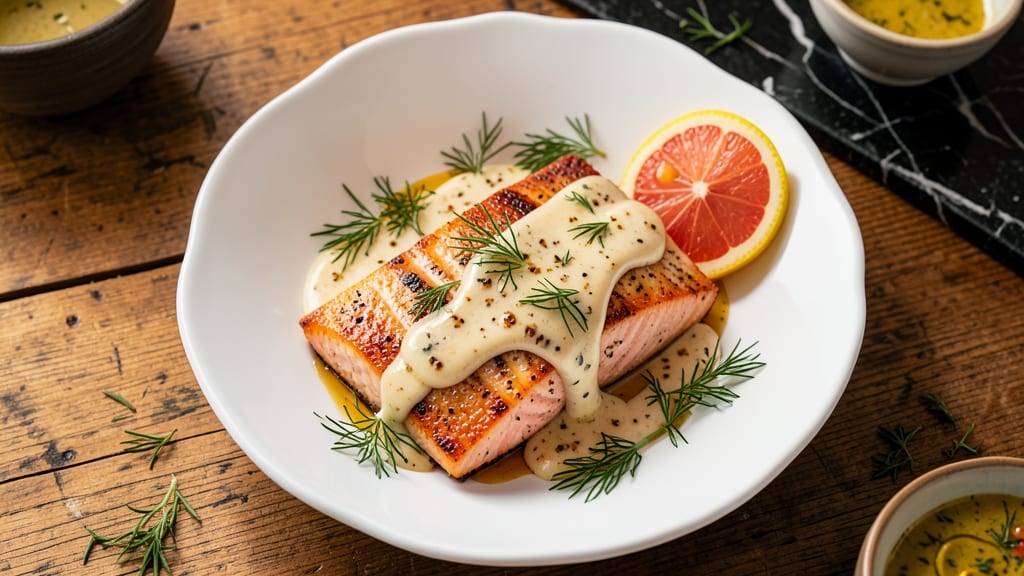
This baked salmon with mustard dill sauce delivers restaurant-quality results in just 30 minutes—crispy skin, tender flesh, and a bright, tangy glaze that locks in every flavor.
The secret lies in the sauce: a perfect balance of Dijon mustard, fresh dill, and Greek yogurt that creates a velvety finish without overpowering the delicate fish. I developed this recipe after years of experimenting with salmon dishes, and it never fails to impress.
The mustard dill sauce is the star here, transforming simple baked salmon into a showstopper. It’s made with just 5 ingredients—Dijon mustard, fresh dill, Greek yogurt, lemon juice, and a touch of honey—for a sauce that’s tangy, creamy, and packed with herbaceous freshness.
The sauce is brushed onto the salmon in the final minutes of baking, ensuring it caramelizes into a glossy, flavorful crust.
What you’ll end up with is perfectly baked salmon with a golden, crispy skin and a tender, flaky interior, all coated in that bright, tangy glaze. The sauce doesn’t just add flavor—it elevates the dish to something special, making it ideal for weeknight dinners or weekend brunches.
Pair it with roasted asparagus, a fresh salad, or some crusty bread to soak up every last drop of that delicious sauce.
This recipe is foolproof, even for beginners, and scales easily for a crowd. The mustard dill sauce can be made ahead of time, so you can focus on baking the salmon without any stress. Let’s get cooking—you’ll never go back to plain baked salmon again.
Ingredients for baked salmon with mustard dill sauce
Five simple ingredients transform plain salmon into restaurant-worthy perfection.
| Ingredient | Amount | Notes |
|---|---|---|
| Center-Cut Salmon Fillets 🐟 | 4 whole | Skin-on, 6-8 oz each |
| Dijon Mustard 🍯 | 2 tbsp | High-quality for tangy flavor |
| Fresh Dill 🌿 | ½ cup | Chopped, stems removed |
| Plain Greek Yogurt 🥛 | ½ cup | Full-fat for creaminess |
| Lemon Juice 🍋 | 1 tbsp | Freshly squeezed |
| Honey 🍯 | 1 tbsp | Light or wildflower |
| Extra-Virgin Olive Oil 🫒 | 2 tbsp | For crispy skin |
| Garlic Cloves 🧄 | 2 cloves | Minced for aroma |
| Salt 🧂 | 1 tsp | Kosher or sea salt |
| Black Pepper 🌶️ | ½ tsp | Freshly ground |
| Asparagus 🌱 | 1 lb | Trimmed, for pairing |
The salmon is everything here—center-cut fillets with skin-on are non-negotiable for that perfect crisp. Trader Joe's or Whole Foods usually have the best selection, but any grocery store's seafood counter will work. Look for fillets that are bright pink with firm flesh—press gently to test. The mustard dill sauce is where the magic happens, so don't skimp on the Dijon (the good stuff, not the cheap jarred kind). Fresh dill is ideal, but if you're using dried, cut the amount to one-third—it's way more potent. The Greek yogurt should be full-fat for that velvety texture that makes this sauce so special.
No fresh dill? Dried dill works at one-third the amount, but honestly, it's worth grabbing a bunch at the store. Running low on Dijon? Substitute with whole-grain mustard—it's got a similar texture but slightly less tang. The honey can be swapped for maple syrup if you're avoiding it, though it changes the flavor profile a bit. For extra richness, add 1 tbsp of sour cream to the sauce. The asparagus is completely optional but pairs beautifully—just trim the ends and roast with olive oil, salt, and pepper at 400°F for 12-15 minutes while the salmon bakes.
This sauce can be made a day ahead—it actually tastes better after the flavors meld. Store it in an airtight container in the fridge for up to 5 days. The salmon itself is best eaten fresh but reheats beautifully—gentle warming in a skillet with a splash of water keeps it moist. If you're prepping for a crowd, double the sauce recipe—it's perfect for drizzling over roasted veggies or even a simple grain bowl. The leftovers keep for 2 days in the fridge, but honestly, you'll eat it all up before then.
Why You'll Love This Recipe
- No-Fuss Prep: I swear by this recipe—just pat the salmon dry, mix the yogurt, mustard, and dill, slap it on, and bake. No chopping, no fuss, and zero cleanup beyond one sheet pan.
- Tangy Zing: That bright lemon and Dijon cut through the richness of the salmon while the yogurt keeps it luscious. The dill? Freshly chopped means instant restaurant-quality flavor without the pretension.
- Weeknight to Dinner Party: Same sauce works for a lazy Tuesday or a fancier spread—just add roasted asparagus and crusty bread for a no-brainer weeknight meal, or swap in a white wine reduction for a dinner guest-worthy dish.
- Leftovers That Don’t Suck: Salmon reheats like a dream, and this sauce stays creamy instead of turning sad. I’ll pack it for lunches or toss it into a grain bowl—never a sad desk lunch here.
Step-by-step instructions for baked salmon with mustard dill sauce
This bright, tangy sauce transforms simple baked salmon into a restaurant-worthy dish.
Prepare the Mustard Dill Sauce
In a small bowl, whisk together the 2 tablespoons Dijon mustard, 0.5 cup chopped fresh dill, 0.5 cup plain Greek yogurt, 1 tablespoon lemon juice, and 1 tablespoon honey until completely smooth. The sauce should be thick but pourable—if it's too stiff, add 1 teaspoon water to loosen it. I like to press the dill through a fine-mesh strainer to remove any tough stems, ensuring a silky texture.
Taste and adjust the seasoning with ½ teaspoon salt and ¼ teaspoon black pepper—this sauce should be bright and tangy, not overly sweet. Cover and set aside while you prepare the salmon. The acidity from the lemon and mustard will cut through the richness of the fish beautifully, while the honey adds just enough depth to balance the flavors.
Season and Prep the Salmon
Preheat your oven to 400°F and line a baking sheet with parchment paper for easy cleanup. Pat the 4 whole center-cut salmon fillets dry with paper towels—this step is crucial for crispy skin. Season both sides generously with the remaining ½ teaspoon black pepper and ½ teaspoon salt, pressing the salt into the flesh so it adheres well.
Place the salmon fillets on the prepared baking sheet, skin-side down. Drizzle each fillet with ½ teaspoon extra-virgin olive oil—just enough to coat the surface lightly. The oil helps create a golden crust while the skin protects the delicate flesh from overcooking. Arrange the fillets in a single layer, leaving about 1 inch of space between each for even heat circulation.
Bake the Salmon to Perfection
Bake the salmon for 12-15 minutes, depending on thickness. You'll know it's done when the flesh flakes easily with a fork and the internal temperature reaches 145°F—the skin should be golden and crispy, while the center remains tender. Don't overcook; salmon continues cooking slightly after removal from the oven due to carryover heat.
While the salmon bakes, trim the 1 pound asparagus by snapping off the woody ends (they'll naturally break where they're tender). Toss the asparagus with 1 teaspoon olive oil, ¼ teaspoon salt, and a pinch of black pepper, then spread it on a separate baking sheet. Roast alongside the salmon for the last 8-10 minutes of baking time until tender-crisp.
Assemble and Serve
Remove the salmon from the oven and transfer it to a serving platter. Spoon the mustard dill sauce evenly over each fillet, letting it pool slightly on top. The sauce should glaze the salmon beautifully, creating a bright contrast against the golden skin. If the sauce is too thick to spread easily, thin it with 1 teaspoon warm water to achieve a glossy finish.
Serve the salmon immediately with the roasted asparagus on the side. The combination of crispy skin, tender flesh, and that bright, tangy sauce makes every bite unforgettable. For extra flair, garnish with an additional sprinkle of chopped fresh dill and a squeeze of lemon over the asparagus—it ties everything together perfectly.
Pro Tips For Making Baked Salmon With Mustard Dill Sauce
- Dry the Salmon First: Salmon sticks to pans like glue when it’s wet. Pat those fillets thoroughly with paper towels—even the skin side—before baking. I learned this the hard way when my first batch slid right off the tray mid-cook.
- Use Full-Fat Yogurt: Skip the non-fat version—it’ll make your sauce thin and watery. Full-fat Greek yogurt (2% or whole) adds richness and thickens the mustard-dill sauce properly. Trust me, the difference is noticeable.
- Don’t Overmix the Sauce: Stir the yogurt, mustard, and lemon just until combined—lumps are fine. Overworking it turns the sauce grainy, and you’ll end up with a sad, clumpy glop instead of a silky dressing.
- Bake Skin-Side Down: Place the salmon skin-side down on the tray first, then flip halfway. The skin crisps up beautifully and protects the flesh from overcooking. If you flip too soon, you’ll end up with dry, flaky salmon instead of tender perfection.
Pro cooking tips for this dish
Skin Perfection
Pat your salmon fillets bone-dry with paper towels before seasoning—this is non-negotiable for crispy skin. I like to use two layers of paper towels for maximum absorption. The secret? Extra-virgin olive oil is your best friend here—drizzle just ½ teaspoon per fillet on the skin-side before baking.
This creates a barrier that promotes even browning without steaming the flesh underneath. 🔥
Sauce Timing
Apply the mustard dill sauce in the last 3-4 minutes of baking to prevent it from burning. The residual heat will create a glossy, caramelized finish.
For extra shine, brush the sauce on in two thin layers—first a light coat, then a second layer right before removing from the oven. If the sauce thickens too much, whisk in 1 teaspoon warm water to restore pourability.
Temperature Control
Use an instant-read thermometer to monitor internal temperature—salmon is perfect at 145°F. If your oven runs hot, reduce the temperature to 375°F and bake for 15-18 minutes. I've found that center-cut fillets (6-8 oz each) cook most evenly.
For thicker cuts, add 2-3 minutes to the baking time. The skin should be golden and crisp, while the flesh should flake effortlessly with a fork.
Dill Freshness
Fresh dill makes all the difference in this sauce—never use dried unless absolutely necessary. I like to roughly chop the stems first, then press the leaves through a fine-mesh strainer to remove any tough fibers.
This ensures a silky, herbaceous texture. For extra flavor, add 1 minced garlic clove to the sauce mixture while whisking. The aroma will infuse beautifully into the yogurt base.
Make-Ahead Sauce
This sauce tastes even better the next day! Prepare it up to 24 hours ahead and store in an airtight container in the fridge. Before using, whisk vigorously to redistribute any separated liquids.
If the sauce thickens too much after refrigeration, thin it with 1 teaspoon warm water or a splash of lemon juice. The flavors meld beautifully overnight, making it perfect for stress-free weeknight cooking. ✨
Asparagus Pairing
Roast the asparagus on a separate tray to avoid overcrowding—this ensures even cooking. Toss it with 1 teaspoon olive oil, ¼ teaspoon salt, and a pinch of black pepper, then roast at 400°F for 8-10 minutes alongside the salmon.
For extra flavor, sprinkle with ½ teaspoon lemon zest before serving. The bright, fresh notes complement the rich salmon perfectly and balance the tangy sauce. 🌱
Nutrition facts
Frequently asked questions
Can I use frozen salmon for this recipe?
Yes, but thaw it properly first! Place frozen salmon in a sealed bag and submerge in cold water for 30 minutes per inch of thickness. Never thaw at room temperature—it can promote bacterial growth. Pat completely dry before seasoning to ensure crispy skin.
What if I don't have fresh dill?
Use 1 tablespoon dried dill instead of ½ cup fresh, but remove the stems first. For extra flavor, add ½ teaspoon dill weed (the dried leaves) to the sauce. The texture won't be as silky, but the herbaceous taste remains.
Can I make this sauce without yogurt?
Replace the Greek yogurt with ¼ cup sour cream or ¼ cup mayonnaise for a similar texture. For a dairy-free option, use ¼ cup coconut yogurt or 2 tablespoons olive oil mixed with 1 tablespoon lemon juice to maintain creaminess. The tangy balance will still shine through.
How do I fix overcooked salmon?
If the salmon is dry, try this: Place it skin-side down in a cold skillet with 1 tablespoon butter and 1 tablespoon lemon juice. Cover and cook on low heat for 2-3 minutes—the residual moisture will help restore tenderness. For extra flavor, add 1 tablespoon white wine to deglaze the pan.
What are the best sides for this dish?
This salmon pairs beautifully with:
- Lemon herb quinoa (bright, fluffy grains)
- Roasted Brussels sprouts (crispy edges, caramelized)
- Creamy mashed potatoes (to soak up the sauce)
- Fresh arugula salad (peppery contrast) The mustard dill sauce works wonders on all of these!