
Sauces & Condiments
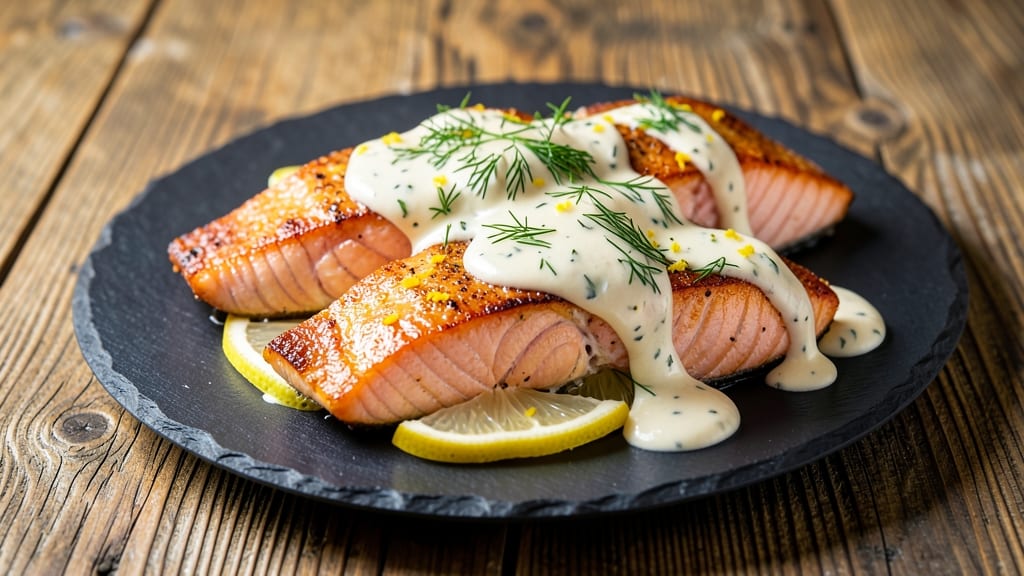
This baked salmon with sour cream dill sauce delivers restaurant-quality results with a crispy skin that shatters at every bite and a velvety herby sauce that blankets the fillet in tangy, fresh flavor.
The secret lies in baking the salmon skin-side down on a high-heat preheated tray, ensuring that perfect golden crust while keeping the inside tender and flaky. This method transforms a simple weeknight dinner into an elegant meal that feels special without requiring advanced techniques.
The sour cream dill sauce is where the magic happens—creamy, tangy, and packed with fresh dill that brightens every bite. Unlike store-bought versions, this homemade sauce uses real sour cream for richness, fresh dill for that signature herbal note, and a touch of lemon to balance the flavors.
It’s light enough to drizzle over the salmon but substantial enough to hold its own as a creamy side or dip.
What you’ll end up with is a dish that’s pescatarian-friendly, protein-packed, and packed with flavor—ideal for a healthy yet indulgent meal. The salmon’s crispy exterior contrasts beautifully with the creamy sauce, while the fresh dill adds a pop of color and brightness.
Serve it with roasted asparagus or a simple side salad to round out the plate, and you’ve got a dinner that’s both impressive and effortless.
This recipe is designed to work for beginners and experienced cooks alike, with clear steps and foolproof techniques. The salmon bakes in just 15 minutes, while the sauce comes together in under 10 minutes, making it perfect for a quick yet satisfying meal.
Whether you’re cooking for a weeknight dinner or a special occasion, this dish delivers on flavor, texture, and ease.
Ingredients for baked salmon with sour cream dill sauce
Four simple ingredients transform into crispy-skinned salmon with velvety herby sauce.
| Ingredient | Amount | Notes |
|---|---|---|
| Salmon Fillets 🐟 | 4 whole | Skin-on, 6-8 oz each |
| Unsalted Butter 🧈 | 2 tbsp | Cold, for crispy skin |
| Lemon Juice 🍋 | 2 tbsp | Freshly squeezed |
| Fresh Dill 🌿 | ½ cup | Chopped, stems removed |
| Sour Cream 🥛 | ½ cup | Full-fat preferred |
| Plain Greek Yogurt 🍶 | ¼ cup | For extra creaminess |
| Garlic Cloves 🧄 | 2 cloves | Minced, for sauce |
| Extra-Virgin Olive Oil 🫒 | 1 tbsp | For drizzling |
| Salt 🧂 | 1 ½ tsp | Kosher or sea salt |
| Black Pepper 🌶️ | ½ tsp | Freshly ground |
| Lemon Zest 🍋 | 1 tsp | For brightness |
| Fresh Chives 🌱 | 2 tbsp | Chopped, for garnish |
The salmon fillets are everything here—look for skin-on pieces at the seafood counter, ideally wild-caught for richer flavor. Trader Joe's or Whole Foods usually have the best quality, but your local fishmonger will know exactly what you need. The skin is key for that perfect crisp, so handle it gently when patting dry. If you can't find skin-on, ask for it—they'll often have it on hand. And trust me, frozen salmon works too—just thaw it overnight in the fridge.
No fresh dill? Dried dill at half the amount gets you close, but the flavor won't be as bright. The sour cream should be full-fat for the best texture—low-fat turns out grainy. For extra tang, add a splash of lemon juice to the sauce. The Greek yogurt keeps the sauce light but creamy, so don't skip it. If you're making this ahead, store the sauce separately—it keeps for 3 days in the fridge, but the salmon is best fresh. The butter for crisping? Cold is crucial—let it sit out for 10 minutes if it's straight from the fridge.
This dish reheats beautifully—just warm the sauce gently and pop the salmon in the oven for 5 minutes at 375°F. The sauce keeps for 3 days in the fridge, but the salmon is best eaten fresh. For meal prep, bake extra salmon and store it in portions, then reheat with fresh sauce. The lemon zest and chives are optional but add serious brightness—worth the extra minute if you've got them. And if you're feeling fancy, serve with a sprinkle of everything bagel seasoning on top.
Why You'll Love This Recipe
- Here’s what sold me: it’s fancy enough for guests but simple enough I won’t panic. The bright dill and tangy sour cream cut through richer sides, and the lemon keeps it light. Bonus? It’s the one dish I never overcook. (My in-laws still ask for the recipe.)
- Five-Ingredient Magic: The butter, lemon, and dill alone make this taste like a restaurant dish—but with zero fuss. I swear, the moment that sour cream dill sauce hits the salmon, it’s like someone handed me a perfectly balanced bite. (Yes, even when I forget to zest the lemon.)
- One-Pan Brilliance: Honestly, this recipe is my lazy-day hero. Salmon fillets on a sheet pan, a quick brush of butter and lemon, then 15 minutes in the oven while I chop veggies or set the table. The sauce? Just mix while it bakes. Done. No pots, no stress.
- Leftover Luxury: Between us, the second night is often the best. The salmon stays moist, the sauce thickens just right, and suddenly you’ve got a 10-minute meal that feels special. I’ll take that over takeout any day—especially when my wallet thanks me.
Step-by-step instructions for baked salmon with sour cream dill sauce
Here's how to get that perfect crispy skin and luscious herby sauce every time.
Prep the Salmon for Maximum Crispiness
Preheat your oven to 400°F with a rack positioned in the lower third. Pat the 4 whole salmon fillets completely dry with paper towels—this is non-negotiable for crispy skin. The skin should feel nearly bone dry when you're done. I like to press down firmly with the paper towels to remove any lingering moisture.
Place the salmon on a parchment-lined baking sheet, skin-side up. Rub each fillet with 1.5 teaspoons salt and 0.5 teaspoon black pepper, focusing on the skin side. Then, gently press the 2 tablespoons cold unsalted butter onto the skin, spreading it evenly. The butter will melt and baste the skin as it bakes, creating that golden crust we're after.
Bake Until Skin is Crispy and Salmon Flakes Easily
Bake the salmon for 12-15 minutes until the skin is deep golden brown and crispy, and the internal temperature reaches 145°F when measured with an instant-read thermometer. You'll know it's ready when the skin releases easily from the baking sheet and the salmon flakes apart with a fork.
I usually check at the 12-minute mark—if the skin isn't crispy enough, return it to the oven for another minute or two. The salmon should be opaque throughout with no translucent areas. Once done, transfer the salmon to a serving platter and tent loosely with foil to keep warm while you make the sauce.
Make the Creamy Dill Sauce
While the salmon bakes, combine the 0.5 cup sour cream, 0.25 cup plain Greek yogurt, 0.5 cup chopped fresh dill, 2 tablespoons lemon juice, 1 teaspoon lemon zest, 2 minced garlic cloves, and 1 tablespoon extra-virgin olive oil in a bowl. Mix until completely smooth—you want no visible chunks of dill or garlic.
Taste and adjust seasoning with additional salt if needed. The sauce should be tangy, creamy, and herby with a bright lemon note. If it's too thick, thin it slightly with a teaspoon or two of water. This sauce is what transforms simple baked salmon into something truly special—don't rush this step.
Assemble and Garnish
Drizzle the creamy dill sauce evenly over the baked salmon, allowing it to pool slightly in the center of each fillet. The heat from the salmon will help the sauce meld beautifully. Then, sprinkle the 2 tablespoons chopped fresh chives over the top for a fresh, bright finish.
Serve immediately while the salmon is still warm and the sauce is silky. The contrast of crispy skin, tender flesh, and cool herby sauce is what makes this dish so irresistible. Pair with steamed asparagus or a simple green salad to complete the meal.
Pro Tips For Making Baked Salmon With Sour Cream Dill Sauce
- Pat the salmon dry: I learned this the hard way—wet salmon steams instead of browning. Grab paper towels and press firmly on both sides before adding butter. The difference in crust is night and day.
- Use room-temperature sour cream: Cold sour cream makes a clumpy sauce. Take it out of the fridge 30 minutes before mixing with dill and lemon. Your sauce will be silky, not lumpy.
- Don’t overbake the dill: Fresh dill turns bitter fast. Add it to the sour cream sauce just before serving, not while it’s still warm. The flavor stays bright, not grassy.
- Salt the butter generously: Unsalted butter needs seasoning. Mix in ½ teaspoon of salt per 2 tablespoons of softened butter before spreading it on the salmon. Trust me, the flavor matters more than you’d think.
Essential equipment for baked salmon with sour cream dill sauce
Must-Have Baking Tools
Start with a high-quality baking sheet—I recommend a half-sheet pan (13x18 inches) for even heat distribution. The All-Clad Stainless Steel line is my go-to for durability and even cooking. For crispy skin, a parchment paper liner prevents sticking and makes cleanup a breeze. 🔥
An instant-read thermometer like the Thermoworks Thermapen is non-negotiable for checking 145°F internal temperature without overcooking. I also keep a small offset spatula (like OXO Good Grips) handy for gently flipping the salmon if needed, though skin-side-up baking usually works perfectly.
Sauce Prep Essentials
For the sauce, a small mixing bowl with a silicone spatula ensures smooth, lump-free blending. I love Le Creuset stoneware bowls for their non-reactive surfaces. A microplane for lemon zest and a sharp chef's knife for chopping fresh dill make prep efficient.
Pre-measure your sour cream and Greek yogurt in a liquid measuring cup to avoid overfilling the bowl.
Optional Upgrades
A wire cooling rack placed over a baking sheet helps crisp the salmon skin even more by allowing air circulation. For extra crispiness, I sometimes use a cast-iron skillet preheated in the oven before transferring the salmon—this adds a smoky depth.
A small whisk comes in handy if you prefer blending the sauce directly in the bowl for extra smoothness. 💡
Budget-Friendly Swaps
No fancy tools? A standard baking dish works fine for salmon, though it may take slightly longer to crisp. For sauce prep, a wooden spoon and glass bowl suffice. A digital kitchen scale (like OXO Good Grips) helps measure ingredients precisely if you don’t have measuring cups.
The key is dry paper towels—they’re the most critical tool for crispy skin, regardless of budget.
Nutrition facts
Frequently asked questions
Can I use frozen salmon for this recipe?
Yes, but thaw it properly first! Place frozen salmon in the fridge overnight for even thawing. Never thaw at room temperature—this can promote bacterial growth. For a quick thaw, submerge the sealed package in cold water (change water every 30 minutes), but plan for at least 3-4 hours. Pat the fillets completely dry before seasoning and baking to ensure crispy skin.
What if my salmon skin isn't crispy?
Check these key factors: First, ensure your salmon was bone-dry before baking. If the skin still feels damp, pat it again with paper towels. Second, verify your oven is fully preheated to 400°F—cold spots can prevent crispiness. Finally, try baking on a wire rack over a baking sheet for better air circulation. If all else fails, broil for 1-2 minutes at the end for extra crisp.
How can I make this dish ahead of time?
Prep smartly: Bake the salmon fresh day-of for best texture, but you can assemble the sauce 1 day ahead and store it in an airtight container. For meal prep, bake extra salmon and refrigerate it (eaten within 2 days). Reheat gently in the oven at 350°F for 5-7 minutes, then drizzle with fresh sauce. The sauce also freezes well for up to 3 months—just thaw overnight before using.
Can I substitute Greek yogurt in the sauce?
For a lighter version, use an extra 2 tablespoons sour cream (total 0.75 cup) and add 1 teaspoon lemon juice for tang. For extra richness, swap with 0.25 cup heavy cream, but reduce the sour cream to 0.375 cup to maintain balance. The yogurt keeps the sauce light and creamy—without it, the texture becomes heavier. If you're dairy-free, use coconut yogurt (add 1 tsp cornstarch to thicken).
What sides pair best with this dish?
This salmon shines with bright, fresh sides: Try roasted asparagus (tossed with olive oil, salt, and lemon) or a simple arugula salad with shaved fennel and lemon vinaigrette. For heartier options, serve with quinoa pilaf or garlic mashed potatoes. The creamy dill sauce also works as a dip for crusty bread or blini. Keep sides light to let the salmon's flavors stand out.