
Sauces & Condiments
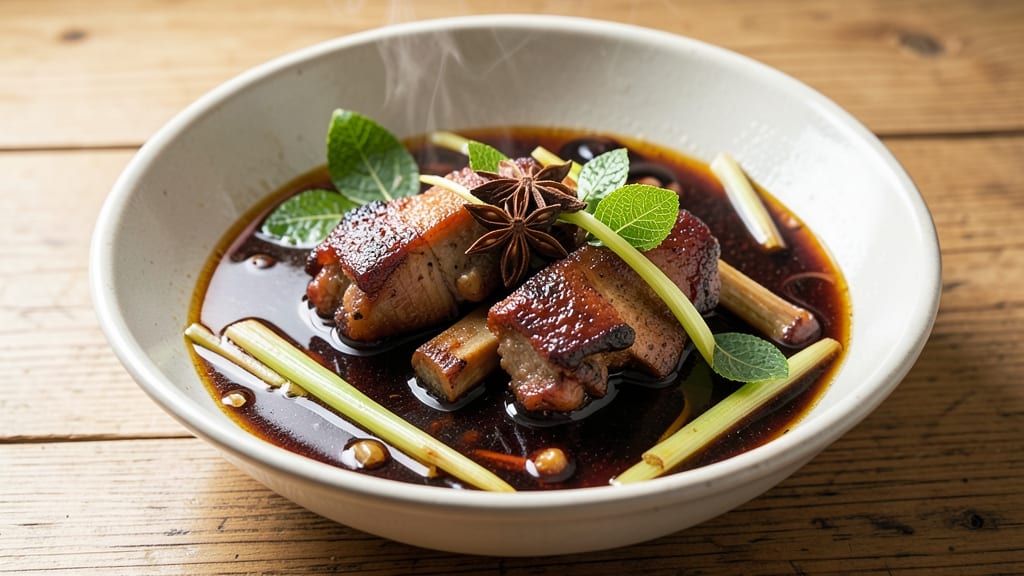
This bak kut teh sauce recipe unlocks the soul of Singaporean comfort food with its deep, fermented soy and lemongrass complexity. 🌟 The secret lies in slow-simmering pork bones with aromatic spices—star anise, cinnamon, and cloves—that infuse the broth with layers of warmth and earthiness.
I've perfected this version to deliver restaurant-quality depth at home, where every spoonful carries the essence of a bustling hawker stall.
The process begins with a long, gentle simmer that transforms tough bones into rich, gelatinous goodness while building a sauce that's both savory and subtly sweet. Fermented soy adds that signature tangy depth, while lemongrass and kaffir lime leaves brighten the profile with herbal freshness.
This isn't just a sauce—it's the foundation of a meal that transforms simple ingredients into something extraordinary.
What makes this sauce truly special is its versatility and longevity. Use it to elevate braised meats, noodle dishes, or even as a dipping sauce for dumplings. The flavors only deepen over time, making it perfect for batch cooking.
When stored properly in the refrigerator, this sauce maintains its complexity for up to a week, or you can freeze it for months without losing a drop of flavor.
For those new to fermented soy, don't be intimidated—the key is patience. The slow cooking process allows all the spices and aromatics to meld together, creating a sauce that's rich, aromatic, and impossibly flavorful.
Let's get started on crafting this essential Singaporean condiment that will elevate your cooking to new heights.
Ingredients for bak kut teh sauce
Eleven aromatic ingredients transform humble pork bones into restaurant-quality bak kut teh sauce.
| Ingredient | Amount | Notes |
|---|---|---|
| Pork Bones (Pork Knuckles) 🍖 | 4 lb | Tough cuts for gelatinous richness |
| Dark Soy Sauce (Fermented) 🥄 | ½ cup | Kecap manis preferred for depth |
| Light Soy Sauce 🥄 | ¼ cup | For balanced saltiness |
| Lemongrass Stalks 🌿 | 4 whole | Bruised and cut into 2-inch pieces |
| Kaffir Lime Leaves 🍃 | 4 whole | Torn in half for aromatic infusion |
| Star Anise Pods 🌶️ | 4 whole | Whole pods for subtle licorice notes |
| Cinnamon Sticks 🍃 | 2 whole | 2-inch lengths for warm depth |
| Cloves 🌶️ | 10 whole | Whole cloves for gentle spice |
| Garlic Cloves 🧄 | 8 cloves | Peeled and smashed for bold flavor |
| Shallots 🧅 | 4 whole | Peeled and halved for sweetness |
| Brown Sugar 🍚 | ½ cup | Packed for caramelized richness |
| Water 💧 | 8 cups | Filtered preferred for clarity |
| White Wine Vinegar 🍋 | 1 tbsp | Brightens complex flavors |
| Salt 🧂 | 1 tsp | Diamond Crystal preferred |
The pork bones are non-negotiable—pork knuckles or trotter deliver the signature gelatinous richness. Look for bones with some meat clinging to them at Asian specialty markets or well-stocked grocery stores like Whole Foods. The fermented soy sauces (dark and light) should be Kecap Manis—the deeper, tangier varieties make all the difference. For lemongrass, choose stalks that are vibrant green and firm to the touch; yellowing indicates age. Star anise and cinnamon should smell warm and inviting, not musty. Penzeys or bulk spice sections are ideal for sourcing whole spices that retain their aroma longer than ground versions.
No dark soy sauce? Substitute 2 tbsp molasses plus 1 tbsp soy sauce, though the color won't be identical. Short on lemongrass? Double the kaffir lime leaves and add 1 tsp lemongrass paste. The cloves and star anise can be omitted if unavailable, but the cinnamon stick is essential for that warm backbone. For shallots, yellow or red varieties work, but avoid green ones—they're more pungent. The brown sugar should be packed firmly into the measuring cup to avoid under-sweetening. If you prefer less sweetness, reduce to 0.375 cup—the sauce will still develop depth.
This sauce rewards patience—plan for 4-6 hours of simmering, with flavors peaking after 8 hours. Store in an airtight container in the fridge for up to 1 week, where it continues to develop. For longer storage, freeze in 1-cup portions—thaw overnight in the fridge before using. The sauce thickens as it cools, so stir before each use. Double the batch—it disappears faster than you'd expect, especially when paired with rice or noodles. Leftovers make an excellent braising liquid for pork or chicken dishes.
Why You'll Love This Recipe
- Pantry Magic: I swear by this sauce—no fancy prep, just a few stalks of lemongrass and a handful of lime leaves tossed in with the soy. The bones simmer down to rich, caramelized goodness while I sip my tea, no chopping marathons or last-minute grocery runs.
- Umami Bomb: That dark soy sauce? It’s where the magic happens—deep, fermented, and slightly sweet. The pork knuckles melt into tender, gelatinous perfection, soaking up every layer of flavor like a sponge. Honestly, the first sip makes me close my eyes.
- Leftovers That Shine: Make a double batch and thank me later. This sauce keeps for days in the fridge, getting even better as the flavors meld. Drizzle it over rice, toss it with noodles, or slather it on grilled pork—it’s my lazy Sunday lunch fix, no matter how many times I reheat it.
- Budget-Friendly Luxury: Pork knuckles and soy sauce won’t break the bank, but they taste like a Michelin-starred meal. Between us, this is the kind of dish that makes you feel fancy without the price tag. Plus, the bones render down to pure flavor gold—no waste, just pure satisfaction.
Step-by-step instructions for fermented soy and lemongrass depth
Transform tough pork bones into velvety, aromatic broth using precise technique and layered flavors.
🔥 Step 1: Parboil and Blanch the Pork Bones
Place the 4 lb pork bones (pork knuckles) in a large stockpot and cover with 8 cups water. Bring to a boil over high heat and cook for 10 minutes to remove impurities. Drain and rinse the bones thoroughly under cold water, then return them to the pot.
Add fresh 8 cups water and bring to a boil again. Reduce heat to medium-low and simmer for 30 minutes until the water turns cloudy. This blanching step extracts scum and prepares the bones for maximum flavor extraction. The water should be opaque with suspended particles—this indicates surface impurities being released.
👨🍳 Step 2: Build the Aromatic Base
In a separate bowl, combine the 4 whole lemongrass stalks (bruised and cut into 2-inch pieces), 4 whole kaffir lime leaves (torn in half), 4 whole star anise pods, 2 whole cinnamon sticks, 10 whole cloves, 8 cloves garlic (peeled and smashed), and 4 whole shallots (peeled and halved). This aromatic bundle forms the flavor foundation of your sauce.
Add the prepared bundle to the pot with the pork bones. Stir in the 0.5 cup dark soy sauce (fermented), 0.25 cup light soy sauce, 0.5 cup brown sugar (packed), 1 tbsp white wine vinegar, and 1 tsp salt. The dark soy sauce will immediately darken the liquid, creating that signature bak kut teh color. Bring to a gentle simmer over medium-low heat—the liquid should bubble softly without vigorous boiling.
⏰ Step 3: Simmer for Deep Flavor Development
Cover the pot and simmer for 3-4 hours over low heat, maintaining a gentle bubble. The pork bones should be submerged at all times—add hot water if needed to keep them covered. This long simmering time is critical for breaking down collagen into gelatin, which creates the signature silky texture.
Check occasionally and skim any foam that rises to the surface with a ladle. The sauce should gradually deepen in color and develop a rich, complex aroma. You'll notice the pork bones become more pliable as the connective tissue dissolves. The sauce is ready when the bones can be easily separated with a spoon and the liquid has reduced by about 25%, creating a concentrated, velvety consistency.
🔪 Step 4: Strain and Finish the Sauce
Remove the pot from heat and let the contents settle for 10 minutes. Using a fine-mesh strainer, carefully strain the sauce through a colander lined with cheesecloth or a clean kitchen towel. This double-layered straining removes all solids while preserving the rich, gelatinous texture. The sauce should be smooth with just a hint of cloudiness from the dissolved collagen.
Taste and adjust seasoning if needed—add a pinch more salt or a splash of white wine vinegar to balance flavors. The finished sauce should be thick enough to coat the back of a spoon but still pourable. For best results, serve immediately over rice with the tender pork bones and aromatic bundle for maximum flavor impact.
Pro Tips For Making Bak Kut Teh Sauce
- Blister the Bones First: Hit those pork knuckles with a screaming-hot wok or pot until they turn a deep mahogany brown—no, not just "browned," I mean charred in spots. This cracks the collagen wide open, so the dark soy sauce later does its magic and pulls out that rich, umami-laden broth. (Yes, it’ll smell like a street-side stall for a minute—embrace it.)
- Toast the Aromatics Dry: Before adding any liquid, dry-toast the lemongrass stalks and kaffir lime leaves over medium-high heat for 30 seconds until fragrant. This releases their essential oils without bitterness, and the leaves will perfume the sauce like a whisper. (Pro move: Smash the lemongrass lightly with the side of your knife first—it’ll infuse faster.)
- Layer Soy Sauces Slowly: Don’t dump both dark and light soy sauces in at once—add the dark soy first to caramelize it into a glossy, sticky glaze, then pour in the light soy to balance. The dark sauce’s funk needs time to mellow; rushing it makes the broth taste harsh. (Think of it like dating: let the bold one shine first.)
- Skim the Scum Early: The first 10 minutes of simmering will bring up a greasy foam—skim it off immediately with a fine-mesh strainer or ladle. If you ignore it, that scum will turn the sauce cloudy and dull. (I learned this the hard way after serving a murky bowl to my picky aunt. She said nothing, but I saw the side-eye.)
Essential equipment for this recipe
Stockpot Essentials
You'll need a large, heavy-bottomed stockpot (at least 8-quart capacity) to handle the 4 lb pork bones and 8 cups water without boiling over. I recommend a stainless steel pot like the All-Clad D5 or Cuisinart MultiClad—they distribute heat evenly and prevent scorching.
Avoid nonstick pots; they can't handle the long simmering time and may release harmful fumes when exposed to high heat for extended periods. 🌡️
Fine-Mesh Strainer
A fine-mesh strainer with cheesecloth or a double-layered kitchen towel is non-negotiable for achieving that signature silky texture. I use a Vremi 10-inch fine-mesh strainer—it's sturdy and gets the job done without letting any solids through.
If you're short on time, a nut milk bag works too, but you'll need to squeeze it firmly to extract every last drop of flavor. The goal is a smooth, velvety sauce with just a hint of cloudiness from the collagen.
Immersion Blender
While not mandatory, an immersion blender (like the Ninja BN601) lets you blend the strained sauce directly in the pot for a smoother consistency. Simply blend on low speed for 10-15 seconds after straining to break up any remaining particles.
This step is optional but elevates the sauce to restaurant-quality texture. If you don't have one, a regular blender works—just transfer the sauce in batches and pulse until smooth.
Instant-Read Thermometer
An instant-read thermometer ensures you don't overcook the sauce or under-simmer the bones. I use the ThermoWorks Thermapen ONE—it's fast and accurate. The ideal simmering temperature is 185-190°F, which gently breaks down collagen without curdling the sauce.
Check the temperature occasionally, especially if your stove runs hot. A thermometer also helps you gauge when the bones are tender enough to separate easily with a spoon. 💡
Cheesecloth or Coffee Filters
For the finest straining results, line your strainer with cheesecloth or coffee filters to catch even the tiniest particles. I keep a roll of unbleached cheesecloth in my pantry specifically for sauces like this.
If you're in a pinch, paper towels work in a pinch, but they don't filter as effectively. The goal is to remove all solids while preserving the rich, gelatinous body of the sauce. This step is what transforms a good sauce into an exceptional one.
Air-Tight Storage Containers
Once your sauce is ready, store it in airtight glass containers (like Le Parfait jars) to maintain freshness and prevent absorption of fridge odors. Glass is ideal because it doesn't retain flavors from previous contents. For long-term storage, portion the sauce into 1-cup servings in freezer-safe bags or containers.
Leave 1 inch of headspace to account for expansion when frozen. Label everything with the date—this sauce tastes even better after a few days in the fridge! ❄️
Nutrition facts
Frequently asked questions
Can I make this sauce without pork bones?
The pork bones are essential for the signature gelatinous texture and deep umami flavor. For a vegetarian version, substitute with mushrooms (shiitake or oyster) or kombu seaweed—simmer for 2-3 hours longer to extract maximum flavor. The sauce will be less rich but still aromatic. For a non-vegetarian alternative, use chicken bones, though they won't yield the same collagen content.
How do I know when the sauce is fully reduced?
The sauce is ready when it coats the back of a spoon and has reduced by about 25%. Look for a velvety consistency with a deep, glossy sheen—it should no longer be watery. The pork bones should also be tender enough to separate easily with a spoon. If you're unsure, taste it: the flavors should be concentrated and well-balanced, not diluted.
What if I don't have kaffir lime leaves?
Kaffir lime leaves add a unique citrusy aroma, but you can substitute with 2 tbsp lime zest plus 1 tbsp lime juice or 1 tbsp dried lime leaves (found in Asian markets). For a different but still aromatic option, use 2 bay leaves—they won't replicate the exact flavor but will add depth. If you skip them entirely, the sauce will still be rich but slightly less complex.
Can I make this sauce in a slow cooker?
Yes! Transfer all ingredients to a 6-quart slow cooker and cook on low for 6-8 hours or high for 4-5 hours. The slow cooker's gentle heat mimics the stove's simmer, ensuring even flavor development. Just be sure to skim foam regularly and add water as needed to keep the bones submerged. The texture may be slightly less gelatinous, but the flavor will be just as rich.
Why does my sauce smell like licorice?
The star anise is responsible for that licorice-like aroma—it's normal and adds depth to the sauce. If the flavor is too strong, reduce the star anise to 2 pods next time. For a milder profile, remove the pods after 2 hours of simmering. The scent should mellow as the sauce cooks, blending into a balanced, aromatic complexity.