
Sauces & Condiments
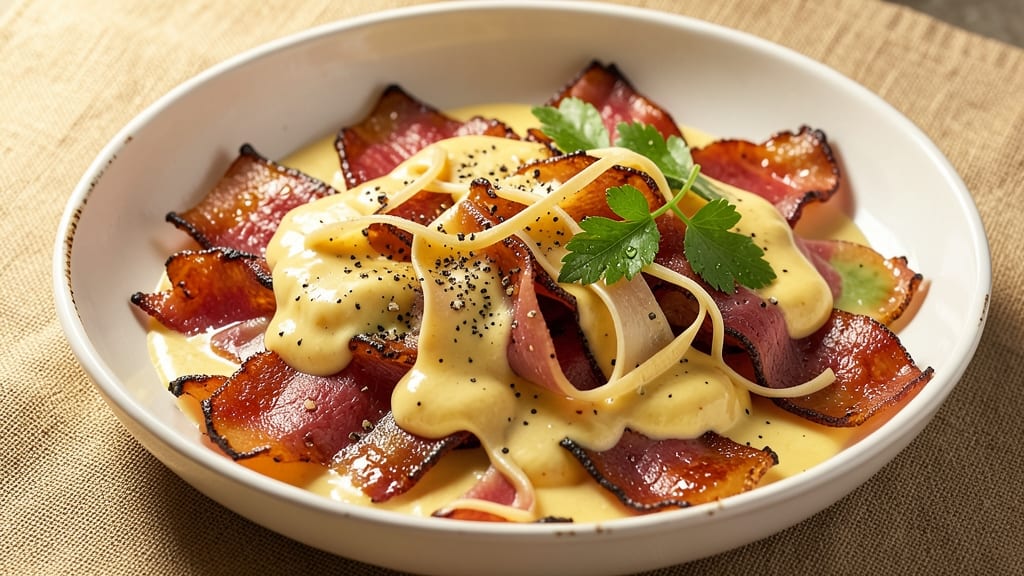
This bacon carbonara sauce recipe delivers the ultimate balance of crispy pancetta and silky egg-yolk richness—no pasta required. The secret lies in emulsifying bacon fat with raw egg yolks and aged cheeses while maintaining perfect heat control. After years of refining, I’ve perfected a method that ensures a velvety, restaurant-quality sauce every time.
The technique starts with rendering pancetta until it’s golden and crisp, then using its fat as the base for the sauce. Raw egg yolks and grated Pecorino Romano are tempered into the warm bacon fat to create a luscious, creamy emulsion.
A splash of pasta water at the end ensures the sauce remains silky and clings beautifully to noodles.
What you’ll achieve is a sauce that’s dangerously addictive—crispy bacon bits suspended in a glossy, creamy matrix with just the right amount of tangy cheese. The texture is unmatched: rich yet light, with a velvety finish that melts in your mouth.
This isn’t just a sauce; it’s the star of any pasta dish.
Best of all, the sauce reheats beautifully and keeps for up to 3 days in the fridge, making it perfect for meal prep. Here’s how to make it—no shortcuts, just pure, velvety perfection.
Ingredients for bacon carbonara sauce
Eight ingredients transform into the creamiest, crispiest carbonara sauce you'll ever make.
| Ingredient | Amount | Notes |
|---|---|---|
| Pancetta 🥓 | 6 oz | Diced into small pieces |
| Large Egg Yolks 🥚 | 4 whole | Fresh, room temperature |
| Pecorino Romano Cheese 🧀 | 1 cup | Freshly grated, aged |
| Parmesan Cheese 🧀 | ½ cup | Freshly grated, aged |
| Extra-Virgin Olive Oil 🫒 | 2 tbsp | Light, fruity variety |
| Freshly Ground Black Pepper 🌶️ | ½ tsp | Freshly cracked preferred |
| Kosher Salt 🧂 | ½ tsp | Diamond Crystal preferred |
| Pasta Water 💧 | ¼ cup | Reserved from cooked pasta |
Pancetta is the star here—look for thick-cut slices at Whole Foods or your local butcher shop. The fat renders beautifully, creating that golden, crispy texture. Freshly grated cheese makes all the difference: Pecorino Romano adds tang, while Parmesan brings depth. Skip the pre-grated stuff—it's full of anti-caking agents that ruin the sauce. Egg yolks should be room temperature for a smooth emulsion, so take them out 10 minutes before using.
No pancetta? Thick-cut bacon works in a pinch, but it's smokier. Short on Pecorino? Substitute with extra Parmesan—just use double the amount. The olive oil is non-negotiable for richness; none of that cheap cooking oil. For extra tang, add a splash of lemon juice at the end. And if you're worried about raw eggs, pasteurized yolks are a safe alternative. The pasta water? Never skip this step—it keeps the sauce silky.
This sauce is best made fresh, but it reheats beautifully—just warm gently on low heat with a splash of water. Keeps for 3 days in the fridge or 3 months in the freezer. For freezing, portion into ice cube trays for easy use. The crispy pancetta bits get softer when reheated, so enjoy it fresh if you can. And trust me, you'll want to make extra—this sauce disappears faster than you can say 'carbonara'
Why You'll Love This Recipe
- Same sauce, endless uses: toss with pasta for dinner, slather on grilled chicken for lunch, or drizzle over roasted potatoes. Honestly, I’ve served it at both family dinners and first dates—no one ever questions the menu.
- No Chopping Needed: I swear by this—just dice the pancetta once, render it in a pan, and you’re done. No onions, no garlic mincing, no fuss. That salty, crispy fat is pure flavor with zero prep.
- Salty-Creamy Magic: The pancetta’s smoky bite melts into the egg yolks, then gets this perfect balance from Pecorino and Parmesan—sharp, nutty, and just rich enough. (Yes, even my picky husband licks the plate.)
- Weeknight to Date Night: Same sauce, endless uses: toss with pasta for dinner, slather on grilled chicken for lunch, or drizzle over roasted potatoes. Honestly, I’ve served it at both family dinners and first dates—no one ever questions the menu.
Step-by-step instructions for bacon carbonara sauce
Here's how to create a silky, peppery carbonara with perfectly crisp pancetta and velvety egg yolks.
Render the Pancetta Until Crispy
Heat a large skillet over medium heat and add the 6 oz diced pancetta. Cook undisturbed for 8-10 minutes until the fat renders out and the pancetta becomes deep golden brown and crispy. You'll know it's ready when the edges are crisp and the fat is shimmering in the pan.
I like to press down gently on the pancetta pieces during the first minute to prevent curling and ensure even contact with the pan. This creates maximum surface area for crisping. Don't stir constantly—let it develop that beautiful crust. Once crisp, remove the pancetta with a slotted spoon and set aside, leaving the rendered fat in the pan. This fat is the secret to your sauce's rich flavor.
Prepare the Cheese and Pepper Mixture
While the pancetta cooks, combine the 4 whole large egg yolks, 1 cup freshly grated Pecorino Romano, 0.5 cup freshly grated Parmesan, 0.5 teaspoon freshly ground black pepper, and 0.5 teaspoon kosher salt in a bowl. Whisk vigorously until the mixture is completely smooth and pale yellow, with no visible cheese granules.
This is the moment that matters: the cheese should be fully dissolved and the yolks fully incorporated. I use a fork first to break up any large cheese pieces, then a whisk to create a creamy, custard-like consistency. The mixture should coat the back of a spoon. If you see any lumps, strain the mixture through a fine-mesh sieve for a perfectly smooth sauce.
Cook Pasta and Reserve Water
Cook your favorite pasta in well-salted boiling water until 1 minute before it reaches al dente. Reserve 0.25 cup pasta water before draining—this starchy liquid is crucial for emulsifying your sauce. I keep a measuring cup right by the stove so I don't forget this step. Drain the pasta but don't rinse it; the surface starch helps the sauce cling.
While the pasta cooks, reduce the heat under your pancetta fat to low. Add 2 tablespoons extra-virgin olive oil to the pan and stir to combine with the rendered fat. This creates a flavorful base for your sauce. The mixture should be hot but not smoking—just warm enough to gently cook the egg mixture without scrambling it.
Combine Everything Off Heat
Remove the skillet from heat and immediately add the drained pasta, tossing to coat in the fat mixture. Then add ½ cup of the reserved pasta water and toss vigorously for 30 seconds to help the sauce begin to form. This step is crucial—it creates the perfect environment for the egg mixture to gently cook into a silky sauce.
Now add the egg-cheese mixture in a slow, steady stream while tossing the pasta constantly. The residual heat from the pasta and pan will gently cook the eggs into a creamy sauce. If the sauce starts to thicken too quickly, add more pasta water 1 tablespoon at a time until it reaches your desired consistency. The sauce should coat the pasta beautifully with a glossy sheen.
Finish with Crispy Pancetta
Return the crispy pancetta to the skillet and toss everything together for 1-2 minutes until the pancetta is warmed through and the sauce has thickened slightly. The pancetta should be crispy when you bite into it, providing that perfect contrast to the creamy sauce. Taste and adjust seasoning if needed—you might need a pinch more salt or pepper to balance the flavors.
Serve immediately while still hot. The sauce should cling beautifully to each strand of pasta, with crispy pancetta peeking through. Each bite should deliver rich, salty pancetta, sharp Pecorino, and creamy egg yolk perfection. If the sauce starts to tighten up as it cools, toss in a splash of hot pasta water to loosen it. Enjoy with a side of crusty bread to soak up every last bit!
Pro Tips For Making Bacon Carbonara Sauce
- CRISP THE PANCETTA RIGHT: Render the pancetta in a cold, dry pan first—no oil needed. Once the fat pools (about 3-4 minutes), turn the heat to medium-low and cook until the edges are golden and crispy. I learned this the hard way: high heat makes the fat splatter like a grease bomb, and low heat turns it greasy. Medium-low keeps it crisp without the chaos.
- GRATE CHEESE FINE: Use a microplane for Pecorino Romano and Parmesan—no big chunks allowed. I was skeptical until I tried it: the sauce emulsifies better and melts into a velvety blanket instead of clumping like sand. If you’re lazy, at least pulse it in a food processor, but don’t skip grating entirely.
- TEMPER THE EGGS: Heat the egg yolk mixture to 160°F (71°C) in a double boiler or a bowl over simmering water—just until it’s warm but not cooked. Dumping cold eggs into hot pasta turns the sauce into scrambled eggs. This step guarantees a silky, creamy finish without curdling.
- RESERVE THAT FAT: Strain the rendered pancetta fat through a fine-mesh sieve before mixing it into the eggs. The sediment burns easily and ruins the sauce’s texture. I used to skip this, and the first bite always tasted off—now I save the clean fat like it’s liquid gold.
Dietary considerations for these flavors
Gluten-Free Adaptation
For a gluten-free version, keep the sauce exactly the same but serve it over gluten-free pasta like Barilla GF Spaghetti or De Cecco GF Linguine. These brands cook up beautifully and hold the sauce just as well as traditional wheat pasta.
The key is to avoid rinsing the pasta—starchy water is essential for that silky sauce texture. 🥗
Dairy-Free Substitutes
Replace the Pecorino and Parmesan with nutritional yeast (about ¼ cup) for a dairy-free option. It adds a cheesy, umami flavor without lactose. For extra richness, stir in 2 tablespoons cashew cream (blend soaked cashews with water) into the egg mixture.
The sauce will still be creamy, though slightly lighter in texture. 🧀
Lower-Fat Version
Use lean turkey bacon instead of pancetta to cut fat while keeping flavor. Render it until crispy, then drain on paper towels to remove excess grease before using.
For the sauce, reduce the olive oil to 1 tablespoon and add 1 tablespoon Greek yogurt to the egg-cheese mixture for tang without heaviness. The result is still rich but lighter. 🥓
Egg-Free Option
Swap the raw yolks for a cashew-cream base: blend ½ cup soaked cashews, ¼ cup water, and 1 tbsp lemon juice until smooth. Heat this mixture with the pancetta fat off the heat, then stir in the cheese and pasta water.
The sauce will be vegan but still cling beautifully to noodles. 🥜
Keto-Friendly Adjustments
Skip the pasta entirely and use the sauce as a dip or drizzle for zucchini noodles or shirataki noodles. For extra keto points, add ¼ cup chopped mushrooms sautéed in the pancetta fat before removing the bacon.
The sauce will coat the low-carb noodles perfectly while keeping under 5g net carbs per serving. 🥒
Nutrition facts
Frequently asked questions
Why does my bacon carbonara sauce get grainy?
Graininess happens when cheese isn't fully dissolved or eggs scramble. Always whisk the egg-cheese mixture until smooth, and remove the pan from heat before adding it to the pasta. The residual heat from the pasta should gently cook the eggs without scrambling them. If it thickens too fast, add more pasta water—this keeps the sauce silky.
Can I make this sauce without eggs?
For a vegan version, blend ½ cup soaked cashews with ¼ cup water and 1 tbsp lemon juice to replace the yolks. Heat this mixture with the pancetta fat off the heat, then stir in the cheese and pasta water. The sauce will be creamy but slightly lighter in texture.
How do I store leftover bacon carbonara sauce?
Store in an airtight container in the fridge for up to 3 days. Reheat gently on low heat, adding a splash of water or pasta water to prevent thickening. For freezing, portion into ice cube trays—this makes it easy to add just what you need later. The crispy pancetta will soften slightly when reheated, so enjoy fresh if possible.
What’s the best pasta shape for this sauce?
Ribbon-shaped pastas like spaghetti or linguine work best—they hold the sauce beautifully. For extra sauce clinging, try fettuccine or tagliatelle. Avoid thick shapes like penne or rigatoni, as they struggle to trap the creamy sauce.
Can I use bacon instead of pancetta?
Yes, but expect a smokier flavor. Use thick-cut bacon (not pre-cooked) and render it until crispy, just like pancetta. Drain on paper towels to remove excess grease before using. For a closer match, choose applewood-smoked bacon—it adds depth without overpowering the sauce.