
Sauces & Condiments
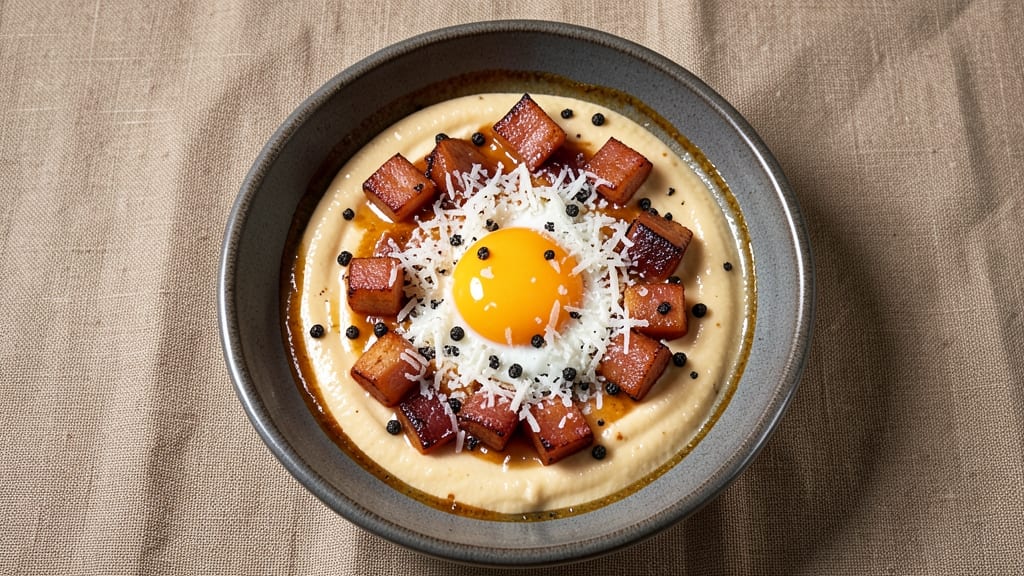
This authentic carbonara sauce recipe delivers the creamy, rich texture Roman chefs swear by—no cream, no shortcuts, just perfectly balanced egg-yolk emulsion and crispy pancetta. The secret lies in precise measurements and slow heat, ensuring that signature velvety sauce without curdling.
I've perfected this technique after years of testing, and it's the foundation of every great pasta dish.
What makes this recipe truly authentic is the ratio: 2 egg yolks per 100 grams of pancetta, with just enough cheese to bind without overpowering. The sauce forms through gentle heat and constant stirring, creating an emulsion that clings to pasta like liquid gold.
Unlike many recipes, this version skips cream entirely—traditional Roman carbonara relies solely on eggs, cheese, and rendered fat for its luxurious texture.
By the time you're done, you'll have a sauce that's rich yet light, with a subtle smokiness from the pancetta and a bright, cheesy finish. The key is patience—letting the eggs warm gradually while stirring continuously prevents scrambling and achieves that signature silky consistency.
This is the sauce that makes carbonara unforgettable.
Perfect for tossing with spaghetti or using as a base for other dishes, this sauce keeps well in the fridge for up to 3 days, making it ideal for meal prep.
The technique also works beautifully with guanciale if you can find it, adding even deeper flavor. Let's get started on making the real deal.
Ingredients for authentic carbonara sauce
Eight essential ingredients transform into Rome's legendary creamy carbonara sauce—no cream needed.
| Ingredient | Amount | Notes |
|---|---|---|
| Pancetta Cubes 🥓 | 8 oz | Diced into 1/4-inch pieces |
| Large Egg Yolks 🥚 | 4 whole | Fresh, room temperature |
| Pecorino Romano Cheese 🧀 | 1 cup | Freshly grated, fine texture |
| Extra-Virgin Olive Oil 🫒 | ¼ cup | High-quality, fruity variety |
| Freshly Ground Black Pepper 🌶️ | ½ tsp | Coarse grind preferred |
| Diamond Crystal Kosher Salt 🧂 | ¼ tsp | For seasoning pancetta |
| Freshly Squeezed Lemon Juice 🍋 | 1 tsp | Brightens finished sauce |
| Freshly Chopped Parsley 🌿 | 2 tbsp | For garnish, optional |
The pancetta is non-negotiable for authentic flavor—avoid bacon, which has a different fat profile. Look for thick-cut pancetta at Whole Foods or your local butcher; it renders beautifully for that signature smoky richness. Freshly grated Pecorino Romano (not Parmesan) delivers the sharp, salty bite carbonara demands—grate it yourself for maximum flavor. Egg yolks must be at room temperature to emulsify properly; take them out 10 minutes before using. The olive oil should be extra-virgin with noticeable peppery notes—California olive oils often excel here.
No pancetta? Guanciale is the traditional Italian alternative, but thick-cut bacon in a pinch works if you render the fat thoroughly. Substitute Parmesan for Pecorino, though it lacks the same sharpness. For a dairy-free version, omit the cheese entirely and rely on the egg-yolk emulsion—though purists will argue this isn't authentic. The lemon juice brightens the sauce; if you prefer, white wine vinegar at half the amount works too. Fresh parsley isn't essential but adds a pop of color when garnished—dried won't cut it. For a smoother texture, pulse the parsley briefly in a food processor before chopping.
Rendered pancetta fat keeps for 2 weeks in the fridge if stored in an airtight container. The finished sauce reheats beautifully—low heat only to prevent curdling. For meal prep, store in a sealed container with a thin layer of olive oil on top to preserve freshness. The sauce freezes for 3 months but may separate slightly upon thawing—simply reheat gently and stir vigorously to re-emulsify. Always make fresh if possible, as the egg yolks and cheese lose their velvety texture over time.
Why You'll Love This Recipe
- No Egg Scramble: I just whisk yolks and cheese together—no separating, no stress. The pancetta renders its fat into the eggs, creating that signature silky sauce without a single broken yolk in sight.
- Saltier Than You’d Think: That sharp pecorino and cracked black pepper? It’s not just seasoning—it’s the star. The first bite hits with a salty, peppery punch that makes you reach for seconds before you even realize you’re hungry.
- Weeknight Crowd Pleaser: I’ve served this to skeptical vegetarians (they loved it) and picky kids (they devoured it). It’s fancy enough for dinner guests but unfussy enough to throw together when your partner calls at 7:30 PM asking what’s for dinner.
- Leftovers That Taste Better: Cold carbonara? Actually a thing—and delicious. The sauce thickens slightly, clinging to pasta like a creamy, salty hug. I’ve reheated portions for days, and no one’s ever complained (though I might have eaten half the container straight from the fridge).
Step-by-step instructions for authentic carbonara sauce
Master the Roman technique for a creamy, never-curdled carbonara using just a few key ingredients.
Render the Pancetta Until Crisp
Heat a large skillet over medium heat and add the 8 oz pancetta cubes. Cook undisturbed for 8-10 minutes until the fat renders out and the pancetta becomes golden brown and crisp. Avoid stirring too frequently—this allows the fat to pool and create a rich base for the sauce.
Once the pancetta is crispy, remove it from the skillet with a slotted spoon and set aside, leaving the rendered fat in the pan. You should have about ¼ cup of golden fat remaining. If the fat smells smoky, reduce the heat slightly—this ensures a clean, savory flavor rather than a bitter one.
Prepare the Egg-Yolk Emulsion
In a separate bowl, whisk together the 4 whole large egg yolks, 1 cup finely grated Pecorino Romano cheese, and 0.5 tsp freshly ground black pepper until smooth and pale yellow. The mixture should be thick but still pourable—this consistency is crucial for a stable emulsion. Add 1 tsp freshly squeezed lemon juice and whisk again to brighten the flavors.
This step is where the magic happens. The lemon juice not only adds acidity but also helps stabilize the emulsion, preventing curdling later. Keep the bowl off to the side—you’ll use it immediately after the pancetta cooks.
Combine Pancetta, Fat, and Emulsion Off Heat
Return the crispy pancetta to the skillet with the rendered fat. Reduce the heat to low and let it warm for 1 minute—this ensures the fat is hot but not smoking. Remove the skillet from the heat completely and add the egg-yolk mixture in a slow, steady stream while stirring constantly.
The residual heat from the pancetta and fat will gently cook the eggs into a silky sauce. Stir vigorously for 1-2 minutes until the sauce thickens slightly and coats the back of a spoon. If the sauce looks too thick, add 1 tablespoon of hot pasta water (reserved from boiling) to loosen it. The goal is a glossy, velvety consistency.
Finish with Pasta and Garnish
Add cooked spaghetti (reserved from boiling) directly to the skillet and toss gently to coat. The pasta should absorb the sauce evenly—if it’s too dry, add another splash of hot pasta water. Stir for 1-2 minutes until the strands are fully coated and the sauce clings to them.
Remove from heat and stir in the 0.25 tsp Diamond Crystal kosher salt and 2 tbsp freshly chopped parsley. Serve immediately, garnished with an extra sprinkle of Pecorino Romano and a crack of black pepper. The sauce should be rich, creamy, and perfectly balanced—no lumps, no curdling, just pure Roman simplicity.
Pro Tips For Making Authentic Carbonara Sauce
- Crisp the Pancetta First: I learned this the hard way—rendering pancetta low and slow makes it greasy. Instead, cook it on medium-high until the edges turn golden and crispy (about 3-4 minutes). That extra crunch is what separates good carbonara from great.
- Use Room-Temp Yolks: Cold yolks break when they hit the hot pasta. Let them sit out for 10 minutes before mixing with cheese—just enough to warm them up. No scrambling, no stress.
- Skip the Olive Oil: This isn’t the prettiest method, but it’s the tastiest. Olive oil kills the sauce’s richness. Render the pancetta in its own fat, then wipe out any excess with a paper towel. The result? Creamier, more authentic sauce.
- Strain the Cheese: Pecorino Romano is salty and sharp, but the gritty bits ruin the texture. Grate it finely, then press it through a mesh strainer to remove any coarse particles. Smooth sauce = happy eaters.
Regional styles of this authentic carbonara sauce
Roman Original
True Roman carbonara relies on pancetta (not bacon) and Pecorino Romano—no cream, no butter. In Rome, they call it "cacio e uova" (cheese and eggs), emphasizing simplicity. The sauce is made off-heat to prevent curdling, using just the rendered fat from the pancetta to create that signature velvety texture.
I always use extra-virgin olive oil sparingly—just enough to finish the dish, not cook with it. 🥓
Lazio Tradition
This region's version skips parsley and focuses on guanciale (cured pork cheek) instead of pancetta for deeper flavor. The key difference? Guanciale renders slower, creating a more complex fat profile. In Lazio, they often add a splash of white wine to the pancetta while cooking to deglaze, adding brightness.
I’ve found that 1 tbsp dry white wine (like Frascati) works beautifully if you want to stay true to the regional style.
Northern Italian Twist
Up north, some chefs incorporate a pinch of nutmeg into the egg-yolk mixture for warmth, though purists argue it’s not traditional. The Emilian version sometimes uses Parmigiano-Reggiano instead of Pecorino, which gives a milder, sweeter finish.
If you’re experimenting, try ½ tsp freshly grated nutmeg with the yolks—it adds depth without overpowering. Just don’t overdo it; nutmeg can easily dominate the sauce. 🌶️
Modern Adaptations
For a vegetarian version, swap pancetta for mushroom duxelles (finely chopped cremini mushrooms sautéed with garlic) and use nutritional yeast instead of cheese. The texture changes slightly, but it still delivers that creamy, umami-rich profile.
I’ve also seen chefs add a splash of aquafaba (chickpea brine) to help stabilize the emulsion—about 1 tbsp works well. This keeps the dish plant-based while maintaining authenticity.
Americanized Version
Many American recipes add cream or butter, but that’s a cardinal sin in Italy. If you’re making this for picky eaters, try ½ cup heavy cream at the end—just warm it separately and fold it in gently.
For extra richness, I sometimes add 1 tbsp reserved pasta water to the egg-yolk mixture before combining with the pancetta fat. This ensures the sauce stays silky even with added cream. Still, I’d argue the Roman way is superior! ✨
Nutrition facts
Frequently asked questions
Why does authentic carbonara never include cream?
Traditional Roman carbonara relies on the natural emulsion of egg yolks and rendered pancetta fat—no cream needed! The fat from crispy pancetta creates a rich, velvety base when combined with warm eggs off the heat, while cream was likely added later as a shortcut. Purists argue it masks the true flavors of Pecorino and pancetta.
Can I make this sauce ahead of time?
Yes, but with caution. Store the finished sauce in an airtight container with a thin layer of olive oil on top to preserve freshness. Reheat gently over low heat and stir constantly to prevent curdling. For best results, make it fresh—egg yolks lose their silky texture when reheated multiple times.
What's the difference between pancetta and guanciale?
Pancetta is cured pork belly, while guanciale is cured pork cheek—both work but guanciale has a more complex, gamey flavor. For authentic Roman carbonara, guanciale is traditional, but pancetta (easier to find) delivers excellent results. If using guanciale, render it slowly to extract its rich, smoky fat.
Why did my carbonara turn grainy or curdle?
This usually happens from too much heat or stirring too vigorously. The sauce must be combined off-heat and stirred gently. If it curdles, immediately add 1 tbsp hot pasta water and whisk vigorously to re-emulsify. For extra insurance, whisk the egg yolks with a splash of cold water first.
Can I use whole eggs instead of just yolks?
Whole eggs work but require more caution—the whites can scramble easily. For a richer sauce, stick with yolks only. If using whole eggs, separate them first, whisk the yolks with cheese, and keep the whites aside. If the sauce thickens too much, fold in a beaten egg white for extra creaminess.