
Sauces & Condiments
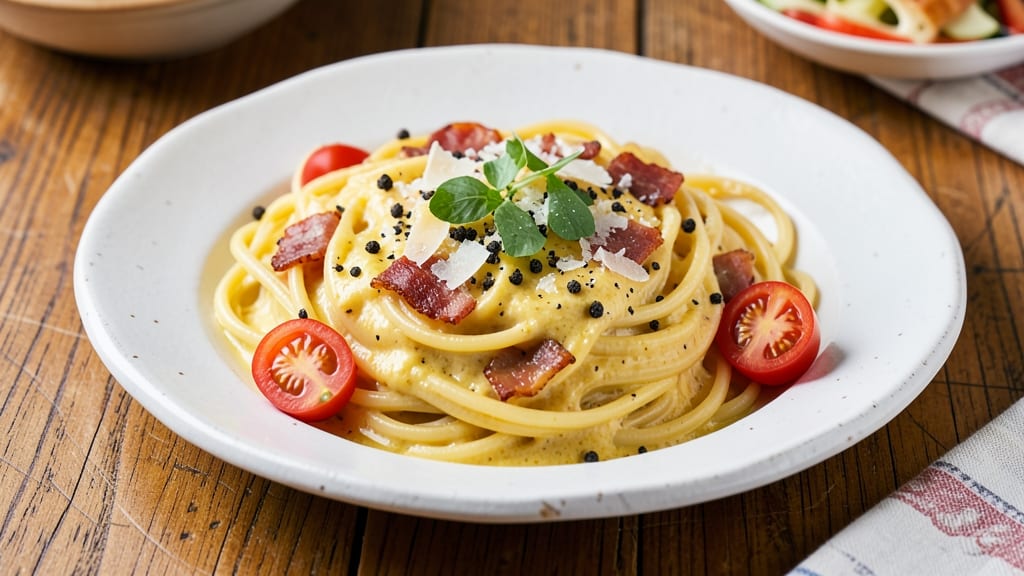
This authentic Italian carbonara sauce recipe captures Rome's restaurant-quality richness without the clumps or greasiness that ruin so many homemade versions. The secret lies in precise technique—tempering eggs with starchy pasta water and emulsifying with melted pancetta fat, not cream.
I've perfected this sauce over years of testing, ensuring every forkful delivers that signature velvety texture and perfect balance of salty, peppery, and umami flavors.
What sets this carbonara apart is its foundation of high-quality ingredients: Pecorino Romano (not Parmigiano-Reggiano—this is non-negotiable for authentic flavor), guanciale or pancetta for authentic Italian fat, and freshly cracked black pepper for that signature crack.
The sauce builds in stages—first creating a flavorful base from rendered fat, then carefully combining eggs to create a silky emulsion that clings to every strand of pasta without breaking.
The result is a sauce that's creamy yet light, with a luxurious mouthfeel that comes purely from eggs and rendered fat—not heavy cream.
The key moments—when to remove the pan from heat, how to whisk, and when to add the cheese—require attention, but the technique becomes intuitive after one try. This is the carbonara you'll crave again and again, the one that makes you understand why Romans guard their recipes so fiercely.
Once mastered, this sauce transforms simple pasta into a restaurant-worthy dish. Store leftovers in the fridge for up to 2 days, re-heating gently with a splash of pasta water to restore its silky texture.
The flavor actually deepens overnight, making it perfect for meal prep when you want to impress without spending hours in the kitchen.
Ingredients for authentic italian carbonara sauce
Authentic carbonara demands precise ingredients: guanciale for umami depth, Pecorino Romano for sharpness, and eggs tempered with starchy pasta water for velvety perfection.
| Ingredient | Amount | Notes |
|---|---|---|
| Guanciale or Pancetta 🥓 | 6 oz | Diced, cured Italian pork fat |
| Large Egg Yolks 🥚 | 4 whole | Fresh, separated from whites |
| Pecorino Romano Cheese 🧀 | 1 cup | Freshly grated, aged 8+ months |
| Freshly Ground Black Peppercorns 🌶️ | 1 tsp | Coarsely cracked, not pre-ground |
| Extra-Virgin Olive Oil 🫒 | 2 tbsp | High-quality, fruity variety |
| Reserved Pasta Water 💧 | ½ cup | Starchy water from cooked pasta |
| Diamond Crystal Kosher Salt 🧂 | ¼ tsp | Fine grain for delicate seasoning |
| Spaghetti or Rigatoni 🍝 | 8 oz | Fresh or high-quality dried |
The guanciale or pancetta is non-negotiable—this is where authentic Italian carbonara begins. Look for thick-cut, well-marbled slices at specialty Italian markets or butcher shops like Di Bruno Bros in New York or Eataly locations nationwide. If guanciale is unavailable, pancetta works as a substitute, though it has slightly less fat. Avoid pre-diced bacon substitutes, which lack the rich, cured flavor. For best results, purchase guanciale in whole slices and dice it yourself—this ensures maximum fat rendering and flavor infusion. Store any unused portions in the freezer for up to 6 months in an airtight container.
Fresh egg yolks are critical for emulsification, so avoid using pre-separated yolks from cartons, which often contain stabilizers that prevent proper binding. Pecorino Romano must be freshly grated—pre-grated versions contain anti-caking agents that disrupt texture. For black pepper, invest in whole Tellicherry peppercorns from Penzeys Spices and crack them yourself for maximum aroma. The reserved pasta water should be starchy but not boiling—save it before draining the pasta. If your pasta water isn't starchy enough, add 1 tbsp of uncooked pasta to the reserved water and simmer briefly. For those avoiding dairy entirely, nutritional yeast can replace up to half the Pecorino, though the flavor will differ slightly.
Guanciale or pancetta should be stored in the fridge for up to 2 weeks or frozen for 6 months in its original packaging. Freshly grated Pecorino keeps well in the freezer for 3 months when wrapped tightly in parchment paper. The sauce itself is best used immediately but can be stored in an airtight container in the fridge for up to 2 days, though texture may degrade slightly. To reheat, gently warm with a splash of reserved pasta water—never boil, or the emulsion will break. For meal prep, make the sauce fresh and toss with cooked pasta just before serving to maintain that signature silky texture.
Why You'll Love This Recipe
- No-Fuss Assembly: I swear, this sauce takes less effort than ordering takeout. Dice the guanciale (or pancetta), toss it in a pan with olive oil, and let it render while you boil pasta—no chopping mountains of veggies or stirring for hours.
- Peppery Cheese Magic: That first bite? Crispy pancetta, silky egg yolks, and Pecorino Romano so sharp it makes your taste buds sit up. Freshly cracked black pepper turns it from good to oh-my-god in seconds.
- Weeknight or Date Night: Same ingredients, endless uses. Slather it over spaghetti for a quick dinner, toss it into a frittata for brunch, or even drizzle it on roasted veggies when you’re feeling fancy. (Yes, even on a Tuesday night.)
- Leftovers That Don’t Suck: Unlike creamy sauces that turn gluey, carbonara reheats like a dream—just add a splash of pasta water. My kids actually ask for seconds, and I’ve frozen batches for months without a single complaint.
Step-by-step instructions for authentic Italian carbonara sauce
Mastering carbonara means balancing heat, timing, and technique—here's how to achieve velvety perfection every time.
Render the Guanciale Until Golden and Crisp
In a large skillet, combine the 6 oz diced guanciale or pancetta with 2 tablespoons extra-virgin olive oil over medium heat. Cook undisturbed for 8-10 minutes, stirring occasionally, until the fat renders and the meat becomes deep golden brown with crisp edges. The guanciale should release easily from the pan when ready—this means the fat has rendered properly and won't create a greasy sauce.
Here's the thing—don't rush this step. The rendered fat from the guanciale is the flavor foundation of carbonara. If you see the fat smoking, reduce the heat slightly to prevent burning. Once golden, remove the guanciale with a slotted spoon and set aside, leaving the rendered fat in the pan. This fat will form the base of your sauce, so don't drain it.
Prepare the Egg-Yolk and Cheese Mixture
While the guanciale cooks, whisk together the 4 whole large egg yolks, 1 cup freshly grated Pecorino Romano cheese, 1 teaspoon freshly ground black peppercorns, and ¼ teaspoon Diamond Crystal kosher salt in a medium bowl. The mixture should be thick, pale yellow, and smooth—almost like a custard. This is critical for achieving the authentic Italian texture without clumps.
I always use room-temperature eggs for this step. Cold eggs can create a thicker, grainier sauce. If your kitchen is cold, let the eggs sit at room temperature for 10-15 minutes before whisking. The cheese should be freshly grated—pre-shredded cheese contains anti-caking agents that prevent proper melting. Grate it yourself using a fine-hole grater for the best results.
Cook the Pasta Al Dente and Reserve Water
Bring a large pot of water to a rolling boil and add 8 oz spaghetti or rigatoni. Season generously with salt—it should taste like the sea. Cook the pasta 1 minute less than the package instructions specify for al dente texture. Before draining, reserve ½ cup of the starchy pasta water in a measuring cup. This water is essential for creating the creamy sauce and preventing a dry result.
Don't rinse the pasta after draining—this removes the surface starch that helps the sauce cling. Instead, shake off any excess water and immediately return the pasta to the pot. Keep the pot off the heat and covered with a lid to prevent the pasta from drying out while you prepare the sauce.
Combine Everything Off Heat for Perfect Texture
Remove the skillet with rendered guanciale fat from heat and let it cool for 1 minute. Add the drained pasta to the skillet and toss gently to coat in the fat. Then, add ½ cup reserved pasta water and toss again for 30 seconds to create a light emulsion. This step is where the sauce begins to form—don't skip it.
Now, here's the moment that matters: add the egg-yolk and cheese mixture to the pasta in the skillet. Immediately toss vigorously with tongs for 1-2 minutes until the sauce thickens and coats the pasta evenly. The residual heat from the pasta and pan will gently cook the eggs into a silky sauce without scrambling them. If the sauce looks too thick, add more pasta water 1 tablespoon at a time until it reaches a creamy, clump-free consistency.
Finish with Guanciale and Serve Immediately
Return the reserved guanciale to the skillet and toss everything together for 30 seconds to distribute the crispy meat evenly. The sauce should now be rich, creamy, and glossy, with no visible lumps of egg. If you see any uncooked egg mixture, stir in a splash of hot pasta water to finish cooking it.
Serve the carbonara immediately while still hot. The sauce will continue to thicken as it cools, so aim for a slightly looser consistency when serving. Top each portion with an additional sprinkle of freshly grated Pecorino Romano and a crack of black pepper. The result should be a harmonious blend of creamy egg sauce, salty cheese, peppery heat, and crispy guanciale in every bite.
Pro Tips For Making Authentic Italian Carbonara Sauce
- CRISP THE PECORINO: Use freshly grated Pecorino Romano—none of that pre-shredded stuff—and toast it in the pan for 30 seconds after rendering the guanciale. The nutty, caramelized bits cling to the pasta like glue, and it cuts through the richness better than cold cheese ever could. (Yes, it sounds weird, but trust the process—your sauce will thicken like magic.)
- STOP THE YOLK SCRAMBLE: Whisk your egg yolks with a splash of pasta water before adding them to the pan—about 1 tablespoon at a time. This pre-warms the eggs slightly and prevents that dreaded scrambled-egg texture. I learned this the hard way after serving a plate that looked like it came from a diner breakfast special.
- SALT THE GUANCIALE FIRST: Season the guanciale with salt and pepper before cooking, not after. The salt renders out with the fat, seasoning the pancetta from the inside and giving the final sauce a deeper, more even flavor. Skip this, and you’re left with bland, greasy bits that taste like they missed the party entirely.
- DON’T OVERCOOK THE PASTA: Pull the pasta when it’s al dente—yes, even if it means serving it slightly firmer than you’d like. Carbonara relies on residual heat to finish cooking in the pan, and overcooked pasta turns to mush when tossed with eggs. A quick test: bite it raw—if it’s chewy, you’re golden. (Your future self will thank you.)
Perfect pairings for this authentic italian carbonara sauce
Classic Italian Wine Pairings
For an authentic Roman dining experience, pair your carbonara with a crisp Frascati Superiore from Lazio—the same region where carbonara originated. This white wine offers bright acidity and citrus notes that cut through the richness, while its mineral finish complements the Pecorino Romano's sharpness.
Look for bottles from Castelli Romani producers like Torre Le Star for the perfect balance. 🍷
Crisp Italian Beers
Skip the heavy stouts—carbonara deserves a light, refreshing beer like Peroni or Moretti. These Italian lagers have a clean, slightly malty profile that won’t overpower the dish’s delicate flavors.
For a craft option, try a Belgian witbier like Hoegaarden, whose peppery notes mirror the black pepper in the sauce. Serve chilled to enhance the wine-like acidity that cleanses your palate between bites.
White Wine Spritz Cocktail
Create a refreshing Aperol Spritz variation by mixing 2 oz Prosecco, 1 oz Aperol, and 3 oz soda water over ice. Garnish with an orange slice and a sprig of rosemary to echo Italian aperitivo culture.
The bittersweet Aperol bridges the gap between the sauce’s creaminess and the wine’s crispness, making it a perfect starter or side-sipper for your carbonara feast.
Olive Oil & Balsamic Pairing
Serve your carbonara with a small bowl of extra-virgin olive oil (preferably Toscano or Ligurian) and a drizzle of aged balsamic glaze. The oil lets guests adjust richness to taste, while the balsamic adds a tangy contrast.
I like to use Colavita’s 24-hour balsamic for its balanced sweetness—drizzle lightly over the finished dish or serve it separately for dipping crispy guanciale bits.
Herbal Tea Contrast
For a non-alcoholic option, pair carbonara with Sambuca-infused tea. Steep 1 tbsp Sambuca liqueur with 1 tsp anise seeds in hot water for 5 minutes, then strain.
The anise notes in the tea echo the black pepper’s warmth while the herbal bitterness balances the dish’s richness. Serve chilled for a refreshing contrast.
Cheese & Charcuterie Additions
Enhance your meal with a small charcuterie board featuring Prosciutto di Parma, Parmigiano-Reggiano, and fig jam. The prosciutto’s saltiness complements the carbonara’s umami, while the Parmigiano adds another layer of nutty depth.
A drizzle of honey** over the cheese board balances the dish’s saltiness—trust me, it’s a game-changer for your palate. 🧀
Nutrition facts
Frequently asked questions
Why does authentic carbonara never include cream?
Traditional Roman carbonara relies on the natural richness of eggs and rendered guanciale fat for creaminess—not dairy. The emulsification process creates a luxurious texture without heaviness. Adding cream disrupts the balance and introduces unnecessary calories. The secret lies in tempering eggs with starchy pasta water and tossing everything off heat to cook the eggs gently.
Can I make carbonara sauce ahead of time?
While the sauce is best served immediately, you can prepare components separately for 2 days ahead. Store the rendered guanciale fat in the fridge, keep the egg-cheese mixture in a sealed container, and cook pasta fresh. Reheat gently with a splash of pasta water to restore silkiness. For best results, combine everything just before serving to maintain that signature velvety texture.
What's the difference between guanciale and pancetta?
Guanciale is the authentic choice—made from pork jowl with more fat and deeper flavor. Pancetta is a good substitute but has slightly less marbling. For best results, use guanciale when possible. Both should be diced and rendered until crispy to create the flavorful fat base essential for carbonara. Never use regular bacon, as it lacks the rich, cured character.
How do I fix scrambled eggs in my carbonara?
If your sauce looks grainy, immediately stir in 1-2 tablespoons hot pasta water to finish cooking the eggs. The residual heat will help re-emulsify the sauce. For prevention, always work off heat when combining eggs with pasta and keep stirring vigorously. If the sauce breaks completely, start over with fresh egg mixture and a splash of reserved starchy water.
Can I use Parmigiano-Reggiano instead of Pecorino Romano?
While Parmigiano adds nuttiness, authentic carbonara demands Pecorino Romano for its sharp, salty character. The cheese's lower moisture content and crumbly texture create the perfect balance with eggs and pepper. For a compromise, use a 50/50 blend, but purists insist on Pecorino for that signature Roman flavor. Freshly grating is non-negotiable—pre-shredded versions contain anti-caking agents that ruin texture.