
Sauces & Condiments
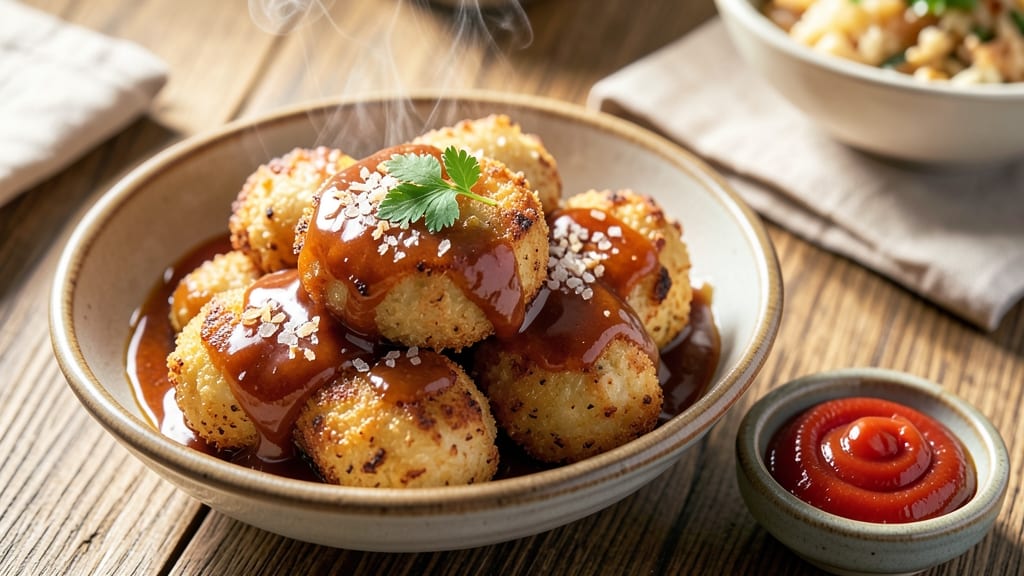
This authentic takoyaki sauce recipe delivers the perfect balance of sweet, tangy, and umami-rich flavors that elevate every bite of crispy octopus balls. The secret lies in dashi stock, which infuses the sauce with that signature Japanese depth, while bonito flakes add a delicate smoky crunch.
I've perfected this version after years of testing—it's the same sauce you'd find at Tokyo street stalls, but with precise measurements for home cooks.
The foundation starts with ketchup and Worcestershire sauce for that classic tangy-sweet base, then builds complexity with dashi powder, sugar, and a touch of vinegar.
What sets this apart is the final touch: crushed katsuobushi (dried bonito flakes) that dissolve into the warm sauce, creating tiny umami bombs with every spoonful. The sauce should coat the back of your spoon with a velvety texture that's neither too thin nor too thick.
What you'll end up with is a sauce that's rich enough to stand alone but designed to complement the crispy, chewy texture of takoyaki. The dashi infusion gives it that authentic Japanese restaurant quality, while the bonito flakes provide a textural contrast that makes each bite exciting.
This isn't just a sauce—it's the soul of takoyaki, captured in a jar.
Make a batch and keep it refrigerated for up to two weeks, or freeze portions for later. The flavors actually improve as it sits, allowing the ingredients to meld perfectly.
Whether you're serving street-style takoyaki or using it as a dipping sauce for other Japanese dishes, this recipe will transform your cooking. Let's get started on the ingredients.
Ingredients for authentic takoyaki sauce
Eight simple ingredients transform into the soul of takoyaki—sweet, tangy, and packed with umami.
| Ingredient | Amount | Notes |
|---|---|---|
| Ketchup 🍅 | ½ cup | High-quality, no sugar added preferred |
| Worcestershire Sauce 🥫 | ¼ cup | Annie's or Lea & Perrins brand |
| Dashi Powder 🍜 | 2 tbsp | Japanese dashi stock powder |
| Granulated Sugar 🍚 | ¼ cup | White or light brown sugar |
| Rice Vinegar 🍶 | 1 tbsp | Seasoned or unseasoned |
| Crushed Katsuobushi (Dried Bonito Flakes) 🐟 | 1 ½ tbsp | High-quality, unsalted flakes |
| Water 💧 | ¼ cup | Room temperature |
| Salt 🧂 | ½ tsp | Kosher or sea salt |
The dashi powder is non-negotiable here—it's what gives that signature Japanese depth. Marukome or Honten brands are my go-tos, but any quality Japanese dashi powder works. Look for the kind labeled '100% natural' to avoid fillers. The ketchup should be the good stuff—Heinz or Hunt's work fine, but skip the sugar-free versions. For the bonito flakes, Nippon Suisan or Katsuobushi from Asian markets are ideal, but the pre-packaged kind at Trader Joe's is a solid shortcut. If you can't find crushed flakes, toast whole bonito flakes in a dry pan for 30 seconds and crush them with a mortar and pestle.
No dashi powder? Instant miso paste (1 tsp) or soy sauce (1 tbsp) plus a pinch of sugar can mimic some of the umami, though it won't be identical. Running out of rice vinegar? Apple cider vinegar at half the amount works in a pinch. The sugar can be swapped for maple syrup or agave (reduce other liquids by 1 tbsp). For the katsuobushi, if you can't find any, toasted sesame seeds or crushed wasabi peas add a different but exciting crunch. The Worcestershire sauce is key—don't skip it, but if you're avoiding anchovies, vegetarian Worcestershire works just as well.
This sauce tastes even better the next day as the flavors meld. Store it in an airtight jar in the fridge for up to 2 weeks, or freeze in ice cube trays for 3 months. The bonito flakes will settle, so give it a quick stir before using. I like to make a big batch and keep it on hand for all my Japanese-inspired dishes—takoyaki, okonomiyaki, even as a glaze for grilled fish. The texture should be glossy but not watery—adjust with a splash of water if needed.
Why You'll Love This Recipe
- Pantry Magic: I swear, this sauce comes together with stuff you already have. No specialty shopping—just ketchup, a splash of Worcestershire, and a pinch of dashi powder (the umami bomb that makes it taste real). Honestly, I’ve made it three times with the same ingredients, and it never fails.
- Umami Bomb: That first bite? The dashi powder and Worcestershire sauce work together like a flavor power couple—salty, savory, with just enough tang from the rice vinegar. It’s the kind of sauce that makes you reach for another takoyaki without thinking.
- Party Ready: This isn’t just for takoyaki. I’ve drizzled it over grilled corn, used it as a dip for fries, even tossed it with noodles when I was lazy. It’s the kind of sauce that turns ordinary snacks into something special—no fuss, just flavor.
- Budget Win: A few tablespoons of sauce stretch to feed a crowd, and the ingredients? Cheap. I’ve made a whole batch for under $3, and it lasts in the fridge for weeks. Between us, this is how I keep my wallet happy while still eating like I’m at a izakaya.
Step-by-step instructions for authentic takoyaki sauce
Transform simple ingredients into rich, umami-packed sauce that brings takoyaki to life.
Bloom the Dashi Powder for Deep Flavor
In a medium saucepan, combine the 2 tablespoons dashi powder with the 0.25 cup water over medium-low heat. Whisk continuously for 2-3 minutes until completely dissolved and smooth. This step is crucial—it develops the signature umami depth that makes this sauce authentic. You'll notice the mixture will thicken slightly as the powder hydrates, creating a silky base for your sauce.
Here's the thing—don't walk away. The dashi needs constant attention to prevent lumps. If you see any graininess, strain the mixture through a fine-mesh sieve for a perfectly smooth texture. The aroma should be subtle but distinctly savory, like a gentle ocean breeze. This is your flavor foundation, so take your time getting it right.
Build the Sauce Base with Ketchup and Worcestershire
Add the 0.5 cup ketchup and 0.25 cup Worcestershire sauce to the saucepan. Stir well to combine, then increase heat to medium. Let the mixture simmer gently for 5-7 minutes, stirring occasionally, until it begins to thicken slightly. You're looking for a consistency similar to heavy cream—thick enough to coat the back of a spoon but still pourable.
This is where the magic happens. The ketchup's sweetness and the Worcestershire's complexity meld with the dashi to create that perfect balance of sweet, salty, and umami. If you notice the sauce separating or getting too thick too quickly, add 1 tablespoon water at a time until you reach the ideal consistency. The sauce should coat the spoon but still flow smoothly when poured.
Sweeten and Acidify for Balance
Reduce heat to low and whisk in the 0.25 cup granulated sugar and 1 tablespoon rice vinegar. Let the sauce simmer for another 3-4 minutes, stirring constantly, until the sugar is completely dissolved and the flavors are well integrated. Taste as you go—you want a harmonious blend where the sweetness of the sugar complements the tang of the vinegar without overpowering the umami base.
Real talk: This is the moment that matters. The sugar should mellow out the acidity while the vinegar brightens the overall flavor. If it tastes too sweet, add a pinch more of the 0.5 teaspoon salt (you can always adjust later). If it needs more balance, simmer for another minute to let the flavors meld. The sauce should taste rich, slightly sweet, and with a gentle tang that makes your taste buds dance.
Finish with Crushed Katsuobushi for Texture and Umami
Remove the saucepan from heat and let it cool slightly for 2-3 minutes. This prevents the katsuobushi from cooking and turning bitter. Sprinkle the 1.5 tablespoons crushed katsuobushi over the sauce and stir gently to distribute evenly. The flakes should be visible but not clumped together. If you're serving immediately, you can leave it as-is, but for best results, let the sauce sit for 10 minutes before serving to allow the katsuobushi to infuse fully.
Here's where it gets fun—the katsuobushi adds that signature crunch and an extra layer of umami that elevates the sauce from good to extraordinary. If you're feeling fancy, you can even toast the katsuobushi lightly in a dry pan before adding it to deepen its flavor. The final sauce should be glossy, with visible flakes that add both texture and a burst of oceanic richness to every bite of takoyaki.
Pro Tips For Making Authentic Takoyaki Sauce
- STIR CONSTANTLY: The first 3 minutes of simmering are where the sauce either becomes balanced or turns into a one-note mess. I used to walk away, and the sugar would clump or the vinegar would overpower everything—now I keep my spoon moving, even if it means burning the back of my hand. The dashi powder needs time to bloom, and the ketchup’s acidity mellows only if you don’t let it sit idle.
- USE REDUCED VINEGAR: Store-bought rice vinegar is often diluted. If your sauce tastes sharp or unfinished, swap in 1 tablespoon of mirin for every 2 tablespoons of vinegar—it adds sweetness and depth without extra sugar. (Yes, even if the recipe doesn’t mention it.) I learned this after tasting a street vendor’s sauce that somehow tasted fuller than my homemade version.
- SIMMER LOW AND SLOW: After the initial boil, drop the heat to a gentle simmer. I’ve seen people crank it up to speed things along, but that burns the ketchup’s natural sweetness and turns the Worcestershire bitter. Think "tiny bubbles, not a rolling boil"—this keeps the sauce glossy and cohesive. (Your future self will notice the difference.)
- SKIP THE PRE-MIXED KETCHUP: Cheap ketchup has fillers that make the sauce grainy. Use Heinz 57 Varieties (or a similar thick, sweet ketchup) and reduce it by half before adding it to the sauce. I was skeptical until I tried it—suddenly, the texture was silky, not clumpy. (And no, you can’t just use any ketchup.)
Dietary considerations for authentic takoyaki sauce
Gluten-Free Adaptations
The original recipe uses Worcestershire sauce and ketchup, which may contain gluten for some sensitive individuals. Swap the 0.25 cup Worcestershire sauce for 0.25 cup gluten-free tamari or coconut aminos—both provide that savory depth without the gluten.
For ketchup, choose a certified gluten-free brand like Heinz Gluten-Free or Hunt's Gluten-Free. These substitutions maintain the sauce's rich, umami profile while making it safe for gluten-free diets. 🥄
Vegetarian/Vegan Options
For a vegetarian version, replace the 1.5 tbsp crushed katsuobushi with 1.5 tbsp toasted sesame seeds or vegan fish flakes (like Vantastic Foods brand). Use vegetarian Worcestershire sauce (like Annie's) to avoid anchovies.
The dashi powder can be swapped for 1 tbsp miso paste or 1 tsp soy sauce plus 1 tsp sugar for umami. The sauce will still be vibrant and balanced, just without the seafood base.
Low-Sugar Adjustments
If you're watching sugar intake, reduce the 0.25 cup granulated sugar to 0.125 cup and add 1 tbsp sugar-free maple syrup for natural sweetness. Alternatively, use 0.25 cup unsweetened applesauce to replace half the sugar—it adds body and subtle sweetness without the spike.
The sauce will still taste rich and complex, just with fewer calories. For extra tang, add an additional ½ tsp rice vinegar to compensate for the reduced sweetness.
Allergen-Friendly Swaps
For soy allergies, replace the Worcestershire sauce with 0.25 cup gluten-free, soy-free fish sauce (like Red Boat) or 1 tbsp coconut aminos. If you're avoiding bonito, use 1 tbsp toasted nori flakes instead of katsuobushi—they add a briny, oceanic note.
For egg allergies, no changes are needed since this sauce is entirely plant-based and seafood-free (except the optional katsuobushi). Always check labels on ketchup and dashi powder for hidden allergens like shellfish or wheat.
Spice Level Control
If you prefer less heat, skip the crushed katsuobushi entirely and use 1 tbsp toasted sesame seeds for texture. For a mild but still flavorful sauce, reduce the katsuobushi to 1 tsp and add ½ tsp ground ginger for warmth instead.
If you love spice, stir in ½ tsp gochujang (Korean chili paste) during the final simmer for a subtle kick. The sauce's natural sweetness balances any added heat beautifully.
Nutrition facts
Frequently asked questions
Can I make this takoyaki sauce without dashi powder?
You can substitute dashi powder with 1 tablespoon miso paste or a mix of 1 teaspoon soy sauce + 1 teaspoon sugar for umami depth. For a more authentic flavor, try making a quick dashi stock using 2 cups water + 1 piece kombu (dried kelp) + 1 tablespoon dried bonito flakes, simmered for 5 minutes. The sauce will still taste rich but won't have the exact same depth as dashi powder.
How long does the sauce keep and can I freeze it?
This sauce stays fresh in an airtight container in the fridge for up to 2 weeks. For longer storage, freeze in ice cube trays or small jars for up to 3 months. The katsuobushi may settle, so give it a gentle stir before using. The flavors actually improve after refrigeration as the ingredients meld together beautifully.
What's the best way to adjust the sauce if it's too thick or too thin?
For a thicker sauce, simmer uncovered for 2-3 more minutes to evaporate excess liquid. If it's too thick, thin with 1 teaspoon water or rice vinegar at a time while stirring constantly. The ideal consistency should coat the back of a spoon but still flow smoothly when poured over takoyaki. Too thin? Simmer longer to reduce.
Can I use this sauce for other Japanese dishes besides takoyaki?
This versatile sauce works perfectly with okonomiyaki, yakisoba, grilled fish, or even as a marinade. The katsuobushi adds a delightful crunch to any dish that needs that umami punch. For extra authenticity, drizzle it over karaage (Japanese fried chicken) or tempura for a restaurant-quality finish.
Why does my sauce taste too sweet or too salty?
If it's too sweet, balance it with ½ teaspoon more rice vinegar or a pinch of salt. For a salty taste, add 1 teaspoon more sugar or a splash of water to dilute. Taste as you go during the final simmer—you can always adjust, but it's harder to fix overpowering flavors later. The key is finding harmony between sweet, salty, and umami.