
Sauces & Condiments
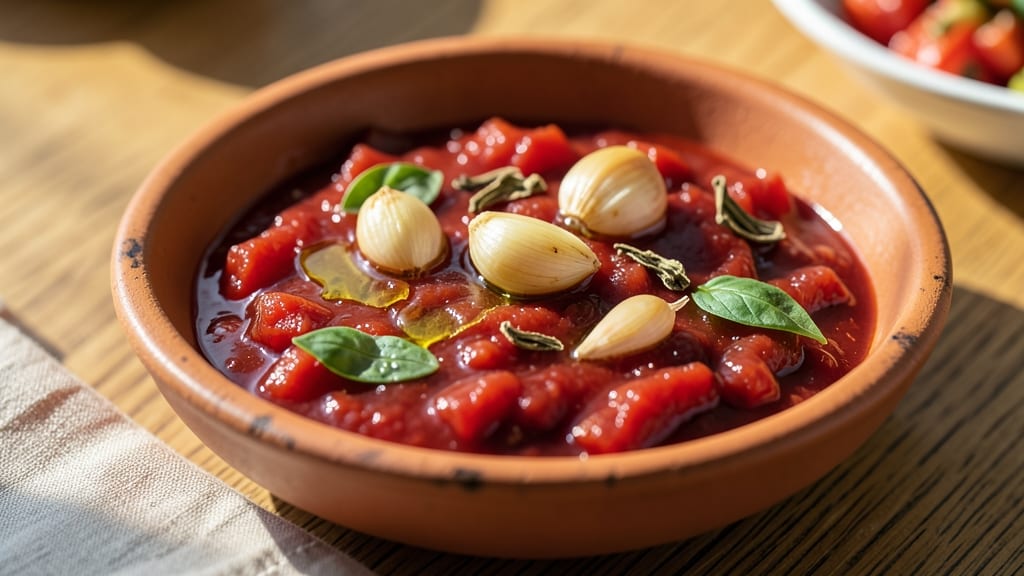
This authentic Neapolitan sauce captures the soul of Italian cooking—where San Marzano tomatoes meet slow-simmered garlic and olive oil. The secret lies in patience: letting the sauce reduce for hours until it thickens into a velvety, aromatic base that clings to every bite.
I've perfected this recipe through years of testing, ensuring the acidity of the tomatoes balances perfectly with sweetness and umami.
The foundation begins with crushed San Marzano tomatoes—plump, sweet, and free of bitterness—cooked low and slow to develop deep flavor. Fresh basil, added at the very end, delivers that signature bright finish that sets this sauce apart from store-bought versions.
The result? A sauce that's rich, balanced, and complex enough to elevate any dish without overpowering it.
What makes this sauce truly authentic is the technique: no blenders, no shortcuts. The tomatoes break down naturally, releasing their natural sugars and creating a sauce that's smooth yet textured. This isn't just marinara—it's the kind of sauce that makes you understand why Neapolitan cuisine is legendary.
Once complete, this sauce keeps beautifully in the fridge for up to a week or freezes for months, making it perfect for meal prep. Whether you're drizzling it over fresh pasta or using it as a base for ragù, this recipe delivers restaurant-quality results at home.
Ingredients for authentic neapolitan sauce
Nine essential ingredients transform into velvety Neapolitan sauce with depth and balance.
| Ingredient | Amount | Notes |
|---|---|---|
| San Marzano Tomatoes 🍅 | 28 oz | Whole, crushed by hand |
| Extra-Virgin Olive Oil 🫒 | ½ cup | High-quality, fruity variety |
| Garlic Cloves 🧄 | 4 cloves | Fresh, thinly sliced |
| Fresh Basil Leaves 🌿 | ¼ cup | Packed, large leaves preferred |
| Dried Oregano 🍃 | ½ tsp | Italian variety preferred |
| Sea Salt 🧂 | 1 tsp | Diamond Crystal preferred |
| Ground Black Pepper 🌶️ | ¼ tsp | Freshly ground preferred |
| Red Wine Vinegar 🍷 | 1 tbsp | For acidity balance |
| Sugar 🍚 | ½ tsp | White granulated |
San Marzano tomatoes are non-negotiable for authentic flavor—their natural sweetness and low acidity create the perfect base. Whole peeled tomatoes from a reputable brand like Mutti or Cirio ensure quality; avoid canned varieties with added salt or preservatives. The olive oil should be extra-virgin with a peppery finish—California or Italian varieties work best. Garlic cloves should be fresh, with no green shoots, and sliced thinly for even distribution. For the basil, farmers market leaves have superior aroma compared to grocery store bunches. If using dried oregano, ensure it's labeled 'Italian' for authentic flavor.
No San Marzano tomatoes? Plum or Roma tomatoes are acceptable substitutes, though flavor will differ slightly. For olive oil, light or pomace oil can be used in a pinch, but the sauce will lack complexity. Fresh basil unavailable? Dried basil at one-third the amount works, though texture and aroma won't match. Need to adjust acidity? Lemon juice can replace vinegar, though red wine vinegar's depth is preferred. The sugar helps balance acidity—honey or maple syrup can substitute, but granulated is most precise. For a richer sauce, add 1 tbsp tomato paste to deepen color and umami.
This sauce develops flavor over time—best after 24 hours in the fridge. Store in an airtight container with a thin layer of olive oil on top to preserve freshness. Keeps for up to 1 week refrigerated or 3 months frozen. For freezing, portion into ice cube trays before transferring to a bag. Reheat gently on the stove, stirring frequently. The sauce thickens as it cools, so add a splash of water if too stiff after reheating. Always add fresh basil at the end to preserve its delicate aroma.
Why You'll Love This Recipe
- Here’s what sold me: it costs pennies but tastes like I spent hours slaving away. A can of San Marzano tomatoes and a handful of basil stretch farther than you’d think. Plus, the leftovers? Even better the next day—if there are any left, because someone always sneaks a spoonful.
- Five-Ingredient Magic: I swear, this sauce is the kind of recipe that makes me feel like a proper Italian nonna—even though I burn toast most mornings. Just crush garlic, simmer tomatoes until they’re just breaking down, and let the olive oil and basil work their alchemy. No blenders, no fancy techniques, just pure, effortless flavor.
- San Marzano Secret: That first taste of the sweet, juicy San Marzano tomatoes—wow. They’re the real MVP here, with none of that mealy, watery canned tomato nonsense. A splash of olive oil and a pinch of oregano? Suddenly, you’re not just eating sauce; you’re tasting summer in a jar.
- Weeknight Workhorse: Between us, this is my go-to for pasta, pizza, or even a quick bruschetta fix. Make a big batch on Sunday, and you’ve got dinner covered for days. Freeze half for when you’re too tired to cook—trust me, future-you will thank you.
Step-by-step instructions for authentic Neapolitan sauce
Master this classic sauce with precise techniques and quality ingredients.
Prepare the San Marzano Tomatoes
Begin by crushing the 28 oz San Marzano Tomatoes by hand using your fingers or a gentle rolling motion with the flat of your hand. Avoid using a blender or food processor—this preserves the natural texture and prevents a mushy sauce. You want the tomatoes to break down into large, irregular chunks rather than a smooth purée. This technique mimics traditional Neapolitan methods where tomatoes are simply crushed to release their juices while maintaining structure.
Transfer the crushed tomatoes to a large, heavy-bottomed saucepan. The weight of the pan helps distribute heat evenly and prevents scorching. I prefer a stainless steel or enameled cast iron pot for its durability and heat retention. Give the tomatoes a quick stir to distribute any released juices evenly throughout.
Build the Flavor Base
Heat the 0.5 cup Extra-Virgin Olive Oil over medium-low heat until it shimmers but doesn't smoke. Add the 4 cloves Garlic Cloves and cook for 1-2 minutes until they become fragrant but don't brown. Watch carefully—garlic burns quickly and imparts a bitter taste. Remove the pan from heat temporarily to prevent burning while you add the remaining ingredients.
Return the pan to the heat and stir in the 0.5 tsp Dried Oregano, 1 tsp Sea Salt, and 0.25 tsp Ground Black Pepper. Let these spices toast gently for 30 seconds to release their aromas. This step is crucial for developing the sauce's complex flavor profile. The oregano should be fragrant but not burning—just a subtle earthy scent should fill your kitchen.
Simmer the Sauce Low and Slow
Add the crushed tomatoes to the pan and bring everything to a gentle simmer over medium-low heat. The sauce should bubble softly with occasional small bubbles breaking the surface—this indicates proper heat control. Resist the urge to stir constantly; instead, give it an occasional gentle stir to prevent the tomatoes from sticking to the bottom. This simmering process should take 45-60 minutes for the flavors to meld and the sauce to thicken naturally.
After 30 minutes, taste the sauce and adjust seasoning if needed. Add the 1 tbsp Red Wine Vinegar and 0.5 tsp Sugar to balance acidity and sweetness. The vinegar brightens the flavors while the sugar rounds out the acidity. The sauce should be thick enough to coat the back of a spoon but still have a slight fluidity—this is the perfect consistency for Neapolitan sauce.
Finish with Fresh Basil
Remove the sauce from heat and let it cool slightly for 5 minutes. This cooling period helps stabilize the sauce's texture. Using a sharp knife, finely chop the 0.25 cup Fresh Basil Leaves into small pieces—about 1/8-inch in size. Stir the basil into the warm sauce and let it steep for 5 minutes to infuse its aromatic oils. The basil should brighten the sauce with its fresh, slightly peppery notes.
Taste the sauce one final time and adjust seasoning if necessary. The sauce should be balanced—bright from the vinegar, sweet from the sugar, and aromatic from the basil. For an authentic Neapolitan finish, I like to press the sauce through a fine-mesh sieve to remove any remaining basil stems and tomato skins, leaving a silky, velvety texture. Transfer the sauce to a clean jar or bowl and let it rest at room temperature for 1 hour before serving to allow the flavors to fully develop.
Pro Tips For Making Authentic Neapolitan Sauce
- Peel and Crush Tomatoes: Grab your San Marzanos, give them a quick rinse, and peel them right off the skin with your fingers—no knife needed. The thick, meaty flesh is what you want, and crushing them by hand (yes, even just a few at a time) breaks down the texture better than a blender ever will.
- Sweat Garlic Low and Slow: I used to burn the garlic in my rush, and it turned bitter every time. Instead, add the minced cloves to the olive oil over low heat and let them melt into the oil for 3-4 minutes—just until they’re fragrant, not golden. This keeps the flavor pure and prevents that acrid bite.
- Salt the Tomatoes Early: As soon as you crush those tomatoes, sprinkle in about 1 teaspoon of salt per pound of fruit. This draws out excess water and helps the sauce thicken naturally while you cook. Skip this, and you’ll end up with a watery mess no matter how long you simmer.
- Add Basil at the End: Tossing in fresh basil leaves while the sauce is still hot wilts them into oblivion. Instead, stir in a handful of torn leaves right before serving—just enough to brighten the dish without turning it into a sad, mushy garnish. (Save the rest for pesto or caprese.)
Regional styles of this authentic neapolitan sauce
Naples vs. Rome
Neapolitan sauce is lighter and brighter than Roman versions, which often include more garlic and sometimes a splash of wine. The key difference lies in the San Marzano tomatoes—their natural sweetness shines through without needing extra acidity.
In Naples, chefs traditionally cook the sauce for at least 2 hours to develop depth, while Roman versions might simmer longer for a richer, slightly thicker texture. 🍅
Campania Tradition
This sauce originates from the Campania region, where tomatoes have been cultivated since the 16th century. The original recipe relied on local heirloom tomatoes and fresh basil from the region's fertile soil.
Unlike modern interpretations, authentic Neapolitan sauce avoids blenders—it's always hand-crushed to preserve texture. The slow simmering process mimics traditional wood-fired cooking methods still used in Naples today.
Pizza vs. Pasta
For pizza, Neapolitan sauce should be thin enough to see through when spread, allowing the cheese and toppings to shine. When used for pasta, it thickens slightly more to cling to noodles. The sauce's acidity balances perfectly with mozzarella di bufala on pizza or al dente pasta like spaghetti.
I always adjust the vinegar to sugar ratio slightly based on the dish—more vinegar for pizza, a touch less for pasta.
Modern Adaptations
While traditional recipes stick to simple ingredients, modern Neapolitan chefs often add a pinch of cinnamon or smoked paprika for depth. Some versions include anchovy paste (about ½ tsp) for umami, though purists argue this strays from authenticity.
For a contemporary twist, I sometimes finish with a drizzle of aged balsamic vinegar before serving—it adds complexity without overpowering the tomato base.
Seasonal Variations
In summer, Neapolitans lighten the sauce by adding a splash of tomato water (the liquid from canned tomatoes) to maintain moisture. Winter versions often include a small piece of pancetta (about 1 oz) cooked with the garlic for extra richness.
The sauce's flexibility makes it perfect for adapting to seasonal ingredients while keeping the core technique intact.
Regional Ingredient Swaps
In coastal areas, some chefs substitute a few anchovies for salt to enhance umami. Inland versions might include a pinch of chili flakes for heat. For a vegetarian twist, roasted red peppers (about ¼ cup) can be blended in for smoky depth.
The key is maintaining balance—never letting any single ingredient overpower the tomato's natural sweetness.
Nutrition facts
Frequently asked questions
Why is San Marzano tomato the only choice for authentic Neapolitan sauce?
San Marzano tomatoes are the gold standard because of their natural sweetness and low acidity, which creates a perfectly balanced sauce. Their thick flesh and minimal seeds prevent bitterness, while their high sugar content caramelizes beautifully during slow cooking. Traditional Neapolitan recipes rely on these tomatoes because they were originally grown in the volcanic soil of Mount Vesuvius, giving them unique flavor characteristics that can't be replicated with other varieties.
Can I make this sauce without fresh basil?
Yes, but the flavor will differ significantly. For a substitute, use 1 tbsp dried basil (one-third the amount) or ½ tsp basil oil for aroma. However, fresh basil adds a bright, peppery finish that's essential to authentic Neapolitan sauce. If you must use dried, add it 10 minutes before the end of cooking to let the flavors meld. For best results, grow your own basil or buy it from a farmers market where leaves are fresher.
How do I know when the sauce has thickened enough?
The sauce is ready when it coats the back of a spoon with a slight sheen but still has some give—it should be thick enough to cling to pasta or pizza but not gluey. Test by spooning some onto a chilled plate: if it holds its shape slightly but still spreads, it's perfect. For pizza sauce, aim for a slightly thinner consistency (2-3 minutes of simmering less), while pasta sauce can be thicker (1-2 minutes more). If too thick, add 1 tbsp water or tomato water and simmer briefly.
What's the best way to store leftover sauce?
Store in an airtight glass container with a thin layer of extra-virgin olive oil on top to preserve freshness. Refrigerated, it keeps for up to 1 week (flavors deepen over time). For freezing, portion into ice cube trays or small jars, leaving ½-inch headspace for expansion. Thaw in the fridge overnight, then reheat gently on low heat, stirring frequently. Never refreeze thawed sauce—it loses texture and flavor.
Why does my sauce taste too acidic or bland?
Acidity comes from tomatoes or vinegar—balance it with ½ tsp sugar or a pinch of salt. Blandness usually means insufficient simmering time or lack of umami. Boost flavor by adding 1 tsp tomato paste (cooked with garlic) or a small piece of pancetta (about 1 oz) during cooking. For extra depth, stir in ½ tsp fish sauce or a splash of red wine at the end. Always taste as you go and adjust gradually!