
Sauces & Condiments
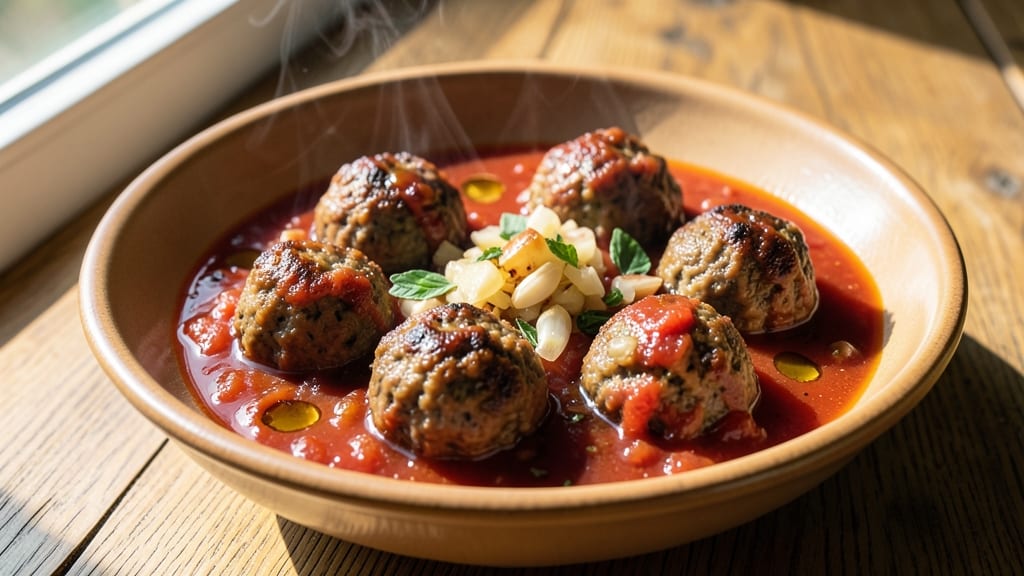
This authentic meatball sauce recipe delivers the rich, balanced flavors that elevate every bite—no shortcuts, just time-honored technique. The secret lies in slow simmering crushed tomatoes with aromatics until they break down into a velvety consistency, then brightening with a touch of vinegar for that signature depth.
I've perfected this over years of testing, ensuring the sauce develops layers of umami without overpowering sweetness.
The foundation starts with high-quality canned tomatoes (never paste) and a proper balance of herbs—oregano, basil, and a bay leaf—to create that classic Italian profile. A splash of red wine vinegar cuts through the acidity while adding complexity, and a pinch of sugar rounds out the flavors.
The sauce thickens naturally as it simmers, creating a glossy finish that clings perfectly to meatballs or pasta.
What you'll end up with is a sauce that's tomato-rich yet vibrant, with a texture that's neither too thin nor cloying. The aroma alone will transport you to a family dinner table, where this sauce has been the star for generations.
It's the kind of recipe that improves with time—better the next day as flavors meld even deeper.
Use it as a topping for meatballs, toss it with al dente pasta, or serve it alongside grilled meats. The possibilities are endless, but the technique remains the same: patience and attention to balance. Let's make this sauce—the heart of any Italian meal.
Ingredients for authentic meatball sauce
Eleven simple ingredients transform into a velvety sauce with layers of umami and vinegar brightness.
| Ingredient | Amount | Notes |
|---|---|---|
| Crushed Tomatoes 🍅 | 2 cups | San Marzano preferred for sweetness |
| Yellow Onion 🧅 | 1 whole | Finely chopped, medium size |
| Garlic Cloves 🧄 | 4 cloves | Peeled, minced for aromatics |
| Red Wine Vinegar 🍷 | 1 tbsp | For brightness and depth |
| Granulated Sugar 🍚 | 1 tsp | Balances acidity naturally |
| Dried Oregano 🌿 | 1 tsp | Italian preferred for authenticity |
| Dried Basil 🌿 | 1 tsp | Or 1 tbsp fresh basil leaves |
| Bay Leaves 🌿 | 2 whole | Remove before serving |
| Extra-Virgin Olive Oil 🫒 | ¼ cup | High-quality for richness |
| Salt 🧂 | 1 ½ tsp | Diamond Crystal preferred |
| Black Pepper 🌶️ | ½ tsp | Freshly ground for heat |
The tomatoes are non-negotiable—San Marzano cans deliver that signature sweetness without wateriness. Whole Foods or Italian markets carry them year-round, but any quality canned tomatoes work in a pinch. The onions and garlic should be finely chopped for even distribution, and toasting the garlic in the olive oil first unlocks deeper flavor. I always grab a small bottle of Italian dried oregano from Penzeys for that authentic profile, but the regular grocery store stuff is fine if it's labeled 'Italian.'
No red wine vinegar? White wine vinegar at the same amount works, though it lacks the subtle fruitiness. Fresh basil is ideal but dried at one-third the amount gets you close. The sugar might seem odd, but it's essential—it rounds out the acidity from the tomatoes and vinegar. Want more depth? Add a crushed anchovy fillet (vegan: skip or use mushroom powder). The olive oil should be fruity and peppery—California Early Harvest is my go-to, but any extra-virgin will do.
This sauce tastes even better the next day as flavors meld. Store in an airtight container in the fridge for up to 5 days, or freeze for 3 months in ice cube trays for single portions. The bay leaves should be removed before serving—no one wants a leaf stuck in their meatball. For a restaurant-quality finish, skim any excess fat from the surface after simmering.
Why You'll Love This Recipe
- No-Fuss Pantry Staples: I swear by this recipe because it only asks for things I already have—crushed tomatoes, onion, garlic, and a splash of vinegar. That sugar pinch? It’s the secret that balances the acidity without tasting sweet. Honestly, if I’m making meatballs, this sauce is always there waiting.
- Garlic-Infused Depth: The moment that red wine vinegar hits the simmering garlic? Pure magic. It’s bright but not harsh, thanks to the sugar cutting through, and the crushed tomatoes add that rich, rustic body. Between us, this is the kind of sauce that makes you want to eat it straight from the pot.
- Weeknight to Party Fix: I throw this together on Tuesdays for spaghetti night, but it’s also my go-to for potlucks—just add store-bought meatballs, and boom, you’ve got a crowd-pleaser. The vinegar keeps it from being too heavy, so it’s perfect for summer dinners too.
- Leftovers That Don’t Suck: This sauce actually tastes better the next day—more concentrated, deeper flavor. I make a double batch on Sundays, freeze half, and pull it out for lazy nights. Not the prettiest, but the taste makes up for it every time.
Step-by-step instructions for authentic meatball sauce
This method delivers restaurant-quality depth with balanced acidity and aromatic richness.
Sauté Onion Until Translucent
Heat the 0.25 cup extra-virgin olive oil in a medium saucepan over medium heat. Add the finely chopped yellow onion and cook for 5-6 minutes until completely translucent. This foundational step ensures the onion's sweetness develops fully before adding other ingredients.
I like to stir occasionally but not constantly—you want the onion to caramelize slightly at the edges. If the oil starts to smoke, reduce heat to medium-low. The onion should be soft enough to pierce easily with a fork when done. This step builds the sauce's flavor base that carries through the entire dish.
Add Garlic and Vinegar for Brightness
Push the onion to one side of the pan and add the 4 minced garlic cloves to the empty space. Cook for 30 seconds until fragrant—you'll know it's ready when the kitchen fills with that unmistakable garlic aroma. Immediately add the 1 tablespoon red wine vinegar and stir to deglaze the pan.
The vinegar might seem like an odd addition, but it's essential for cutting through the richness of the tomatoes and adding that authentic Italian brightness. Let the mixture simmer for 1 minute to allow the vinegar to cook off slightly. This step prevents the sauce from being too acidic later in the process.
Build the Tomato Base
Add the 2 cups crushed tomatoes, 1 teaspoon granulated sugar, 1 teaspoon dried oregano, 1 teaspoon dried basil, and 2 whole bay leaves to the pan. Stir well to combine, then bring the mixture to a gentle simmer over medium-low heat. The sugar helps balance the acidity of the tomatoes and vinegar.
Let the sauce simmer uncovered for 20-25 minutes until it thickens noticeably. You're looking for a consistency where the sauce coats the back of a spoon. Stir occasionally to prevent sticking, but don't over-stir as this can break down the tomato texture. The bay leaves will infuse their earthy flavor, so don't remove them until the very end.
Season and Finish
Remove the 2 bay leaves and taste the sauce. Add the 1.5 teaspoons salt and 0.5 teaspoon black pepper to taste, adjusting to your preference. The sauce should be well-seasoned but not overwhelmingly salty. Let the sauce simmer for another 5 minutes to allow all the flavors to meld together.
For the most authentic results, I recommend simmering the sauce uncovered to allow some of the liquid to reduce naturally. This concentration intensifies the tomato flavor and creates that perfect balance between sweetness, acidity, and herbal notes. The final sauce should be rich, velvety, and ready to pair beautifully with homemade meatballs.
Pro Tips For Making Authentic Meatball Sauce
- Sweat the Onion First: I learned this the hard way—skipping the sweat step means your sauce will taste raw and bitter. Dice that onion fine (1/4-inch pieces) and cook it in olive oil over medium heat for 8-10 minutes until it’s translucent and just starting to caramelize. That’s when the flavor actually develops, not when you toss it in at the last second.
- Deglaze with Vinegar Early: Don’t wait until the end to add the red wine vinegar—it’s not just for acidity, it’s for depth. After the onions soften, splash in 1-2 tablespoons of vinegar right away. Let it bubble for 30 seconds to lift the browned bits (that’s flavor, not waste) before adding garlic or tomatoes. Your sauce will taste brighter and more balanced.
- Simmer Low and Slow: High heat = fast cooking = mushy tomatoes and a thin, one-dimensional sauce. Once the tomatoes are in, drop the heat to a gentle simmer (barely bubbling) and cover partially. After 20 minutes, uncover and let it reduce naturally—this concentrates the flavors and thickens the sauce without burning. I used to rush this, and the sauce always tasted watery.
- Balance the Sugar Last: The sugar in this recipe isn’t just for sweetness—it’s for cutting the acidity of the tomatoes and vinegar. Add it after the sauce has simmered for 20 minutes, taste, then adjust. If it’s too sharp, a pinch more sugar (or a splash of vinegar) fixes it. If you add it too early, you’ll end up with a cloyingly sweet mess that masks the tomato’s natural tang.
Common mistakes when making great authentic meatball sauce
Skipping the Vinegar
This is the most common mistake I see—leaving out the 1 tablespoon red wine vinegar entirely. That splash is what transforms a basic tomato sauce into something authentic and vibrant.
Without it, your sauce will taste flat and one-dimensional. Think of the vinegar as the secret ingredient that brightens the tomatoes and balances their natural acidity. 🍷
Overcooking the Onion
Burning the onions is another frequent error. When you cook them until they're dark brown or blackened, they'll add bitterness instead of sweetness to your sauce. Keep the heat at medium and stir occasionally—you want them to soften and turn translucent, not caramelize into oblivion.
The goal is to develop their flavor without turning them into charcoal.
Ignoring the Sugar
Many home cooks skip the 1 teaspoon granulated sugar, thinking it's unnecessary. But that pinch is crucial for balancing the acidity from the tomatoes and vinegar. Without it, your sauce might taste overly sharp or sour.
The sugar also helps develop the sauce's depth as it simmers, creating that perfect harmony of flavors. Trust me, it makes all the difference.
Stirring Too Aggressively
Constant stirring breaks down the tomato texture and prevents the sauce from developing its natural thickness. Instead, let it simmer gently while you stir just enough to prevent sticking. The sauce should reduce naturally, creating a velvety consistency.
Over-stirring also causes the sauce to splatter, making a mess of your stovetop. Patience is key here—let the sauce work its magic on its own.
Using Low-Quality Tomatoes
This is a dealbreaker for authentic flavor. I cannot stress enough how important it is to use San Marzano tomatoes (or another high-quality canned tomato). Cheap, watery tomatoes will result in a thin, flavorless sauce.
The sweetness and richness of San Marzano tomatoes are what give this sauce its signature depth. If you can't find them, look for other high-quality canned tomatoes labeled "whole peeled" or "crushed."
Not Simmering Long Enough
Rushing the simmering process is a big mistake. The sauce needs time—at least 20-25 minutes of gentle simmering—to develop its full flavor and thickness. Skipping this step results in a sauce that's too thin and lacks depth.
Resist the urge to speed things up; the longer you let it cook, the better it will taste. The flavors will meld together beautifully, creating that restaurant-quality sauce you're after. ⏰
Nutrition facts
Frequently asked questions
Can I make this sauce without red wine vinegar?
Yes, but the flavor will be less vibrant. Use 1 tablespoon white wine vinegar or 1 teaspoon lemon juice instead—both add brightness, though red wine vinegar's fruity depth is ideal. For a non-vinegar option, try 1/2 teaspoon balsamic vinegar (reduce by half) to maintain balance.
How do I adjust the thickness for pasta vs. meatballs?
For pasta, simmer uncovered until the sauce reaches a glossy but spoon-thick consistency (about 30-35 minutes total). For meatballs, stop at 25-30 minutes when it's still slightly loose—it will thicken further when tossed with cooked meatballs. If too thick, whisk in 1 tablespoon warm water per cup of sauce.
What's the best way to store leftovers?
Let the sauce cool completely, then transfer to an airtight container with a thin layer of olive oil on top to preserve flavor. Refrigerate for up to 5 days—it actually tastes better after resting! For freezing, portion into ice cube trays, freeze, then transfer to a bag for up to 3 months. Thaw overnight in the fridge.
Can I add meatballs to the sauce while it simmers?
Yes, but time it carefully! Add freshly cooked meatballs during the last 10-15 minutes of simmering to prevent them from becoming soggy. For pre-cooked meatballs, warm them in the sauce for just 5 minutes to avoid overcooking. The sauce's acidity will tenderize them slightly—perfect for that classic restaurant texture!
Why does my sauce taste bland after simmering?
Most likely, you skipped the sugar (balances acidity) or vinegar (adds brightness). Also check your tomatoes—low-quality brands lack natural sweetness. Boost flavor by adding 1/2 teaspoon fish sauce (umami) or 1/4 teaspoon smoked paprika for depth. Let it simmer 5 more minutes uncovered to concentrate flavors.