
Sauces & Condiments
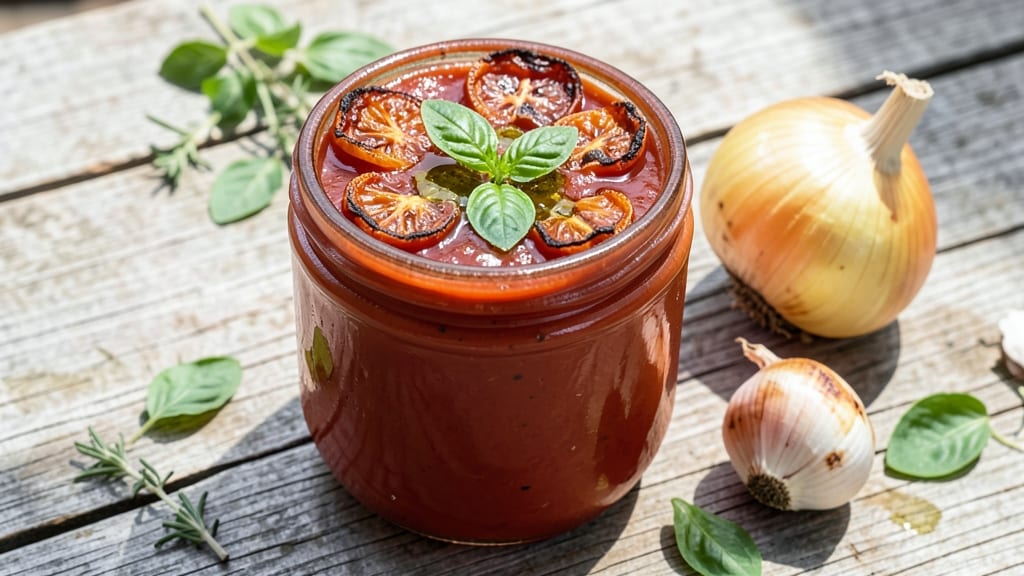
This authentic Italian tomato sauce recipe for canning transforms fresh garden tomatoes into pantry-ready umami perfection—just like Nonna used to make. The secret lies in slow-cooked San Marzano tomatoes, aromatic olive oil, and fresh basil that preserve beautifully through canning.
I developed this method after years of perfecting the balance between rich flavor and safe preservation techniques that actually work.
The process begins with carefully selecting ripe tomatoes and building layers of flavor through gentle cooking with garlic, onion, and herbs. Sterilizing jars properly and processing them in a boiling water bath ensures your sauce stays safe for months while maintaining that authentic Italian taste.
This isn't just any tomato sauce—it's the kind that makes homemade pasta taste like you're dining in a Roman trattoria.
What you'll end up with is a smooth, velvety sauce with deep caramelized notes that develops even better over time. The canning process locks in all that rich tomato flavor while preserving the natural sweetness and acidity balance.
Each jar becomes a flavor bomb ready to elevate any Italian dish from simple to extraordinary.
Perfect for stocking your pantry for winter meals, holiday gatherings, or whenever you crave that restaurant-quality tomato sauce without the restaurant price. The key is patience—both in the cooking and in the canning process—and the reward is sauce that tastes like it came straight from Italy.
Ingredients for authentic italian tomato sauce recipe canning
Fresh tomatoes, aromatic olive oil, and Italian herbs—everything you need for Nonna-style canned sauce.
| Ingredient | Amount | Notes |
|---|---|---|
| San Marzano Tomatoes 🍅 | 4 lb | Whole, unpeeled, ripe |
| Extra-Virgin Olive Oil 🫒 | ½ cup | High quality, fruity |
| Yellow Onion 🧅 | 1 whole | Medium size, chopped |
| Garlic Cloves 🧄 | 6 cloves | Fresh, peeled, minced |
| Fresh Basil Leaves 🌿 | 1 cup | Packed, stems removed |
| Dried Oregano 🌿 | 1 tsp | Italian preferred |
| Salt 🧂 | 1 ½ tsp | Diamond Crystal kosher |
| Black Pepper 🌶️ | ½ tsp | Freshly ground |
| Lemon Juice 🍋 | 2 tbsp | Freshly squeezed |
| Canning Salt 🧂 | 1 tsp | For processing jars |
| Pint-Sized Canning Jars 🥫 | 8 jars | With lids and rings |
San Marzano tomatoes are the gold standard for canning—find them at Italian markets or specialty stores like Whole Foods. If you can't get them, regular Roma tomatoes work in a pinch, but they won't have that same sweet, meaty texture. The olive oil should be extra-virgin—none of that cheap stuff. I grab mine from Trader Joe's or Costco for the best balance of quality and price. Fresh basil is ideal, but if you're canning a big batch, dried oregano will save you time. Just make sure it's labeled Italian oregano—it's got a completely different flavor profile.
No San Marzano tomatoes? Roma tomatoes are your next best bet, but you'll need to add an extra tablespoon of lemon juice per jar to boost acidity. Fresh basil wilt fast, so dried basil at one-third the amount works if you're prepping ahead. The garlic can be roasted for a sweeter flavor—just wrap whole cloves in foil with a drizzle of olive oil and roast at 400°F for 15 minutes. For the canning process, Ball or Kerr jars are the gold standard—don't skimp on quality here. And always sterilize your jars properly—boiling water bath for 10 minutes does the trick.
Once canned, your sauce will keep for 12-18 months in a cool, dark pantry. The flavor actually improves over time—open a jar every few months to taste the progression. I always label mine with the date and what they're for (pasta, pizza, etc.). For reheating, simmer gently on low heat—never microwave directly from the jar. This sauce is your pantry's secret weapon, so make extra. Trust me, you'll thank yourself when winter rolls around and you've got restaurant-quality sauce at your fingertips.
Why You'll Love This Recipe
- This sauce is my weeknight MVP: toss it with pasta, dollop it on grilled cheese, or freeze jars for lazy Mondays. Honestly, I’ve even used it to deglaze a pan when I forgot to make dinner. Versatile enough to handle anything.
- No-Fuss Simmering: I swear by this method—just dice the onion, crush the garlic, and let the San Marzanos do the work while you sip your coffee. No peeling, no seedless stress, just pure, hands-off Italian magic.
- Sun-Dried Flavor Bomb: That first spoonful of sauce, rich with caramelized onions and garlic kissed by olive oil? It’s the kind of taste that makes you pause mid-bite. The basil finishes it like a perfect crescendo—bright, fragrant, and impossible to resist.
- Pantry Powerhouse: This sauce is my weeknight MVP: toss it with pasta, dollop it on grilled cheese, or freeze jars for lazy Mondays. Honestly, I’ve even used it to deglaze a pan when I forgot to make dinner. Versatile enough to handle anything.
Step-by-step instructions for authentic Italian tomato sauce canning
Here's how to transform fresh tomatoes into rich, umami-packed sauce that'll last all year.
Prepare and Blanch the Tomatoes
Preheat your oven to 450°F and line a baking sheet with parchment paper. Cut the 4 lb San Marzano Tomatoes in half crosswise, removing the cores. Place them cut-side down on the prepared sheet. Roast for 25-30 minutes until the skins blister and collapse slightly—this makes peeling effortless.
While they roast, prepare an ice bath in a large bowl. When the tomatoes are done, transfer them immediately to the ice bath for 5 minutes. The temperature shock loosens the skins so they slide off easily. Peel each tomato by slipping a paring knife between the skin and flesh, then squeeze out the seeds and pulp into a large bowl. You should yield about 6-7 cups of tomato pulp.
Build the Flavor Base
Heat 0.5 cup Extra-Virgin Olive Oil in a large, heavy-bottomed pot over medium heat. Add the chopped 1 whole Yellow Onion and cook for 5-6 minutes until softened and translucent. Stir in the 6 cloves Garlic Cloves and cook for 30 seconds until fragrant—don't let it brown or it'll turn bitter.
Add the tomato pulp to the pot, along with the 1 tsp Dried Oregano, 1.5 tsp Salt, and 0.5 tsp Black Pepper. Stir well to combine, then bring to a gentle simmer. Partially cover and cook for 45-50 minutes, stirring occasionally, until the sauce thickens and reduces by about ¼. The sauce should coat the back of a spoon with a glossy sheen.
Finish and Acidify the Sauce
Remove the pot from heat and stir in the 1 cup Fresh Basil Leaves and 2 tbsp Lemon Juice. The lemon juice is crucial—it acts as a natural preservative and brightens the deep umami flavors. Let the sauce steep for 10 minutes off the heat, then give it one final taste adjustment. Add more salt if needed, but don't overdo it—the canning salt will add additional seasoning.
Here's the thing—this sauce needs to be smooth. Use an immersion blender to purée it directly in the pot until completely silky. If you don't have one, carefully transfer the sauce to a blender in batches, then return it to the pot. The texture should be velvety, with no visible pulp.
Prepare and Fill the Jars
Clean the 8 jars Pint-Sized Canning Jars with hot, soapy water, then rinse thoroughly. Keep them hot until ready to use. Ladle the hot sauce into the jars, leaving ½-inch headspace at the top—this prevents the jars from sealing properly if overfilled. Use a clean spoon or spatula to remove any air bubbles trapped in the sauce.
Wipe the rims of the jars with a damp cloth to ensure a perfect seal. Place the lids on the jars and screw on the rings until fingertip-tight. Don't overtighten—they need room to seal properly. Place the jars in a canning pot or large stockpot filled with 2-3 inches of water, ensuring they're upright and covered by water.
Process and Store the Sauce
Bring the water to a full rolling boil over medium-high heat, then adjust the heat to maintain a steady boil. Process the pint jars for 45 minutes for altitudes below 1,000 feet. If you're at a higher altitude, add 5 minutes to the processing time. The sauce is done when the jars have sealed—you'll hear a distinct popping sound as the lids seal.
Remove the jars from the canning pot and let them cool on a towel for 12 hours. Check the seals by pressing down on the center of each lid—if it doesn't pop back up, the jar is sealed. Store the sealed jars in a cool, dark place for up to 18 months. The sauce will only get better with age, developing deeper, more complex flavors over time.
Pro Tips For Making Authentic Italian Tomato Sauce Recipe Canning
- Simmer Slow and Steady: I learned this the hard way—rushing the sauce on high heat turns it into mush instead of a rich, velvety canning base. Keep it at a gentle bubble (around 180°F/82°C) for at least 2 hours, stirring occasionally, so the flavors meld without breaking down the texture.
- Peel and Crush Tomatoes: San Marzano tomatoes are sweet but can get watery when canned. Peel them first (blanch 30 seconds, shock in ice), then crush by hand—this keeps seeds and skins out, which can make your jars cloudy. No food mill? A wooden spoon works just fine.
- Salt Late, Salt Light: Add salt only after the sauce has simmered 1.5 hours. Too early, and you’ll end up with a salty first jar and bland last ones. Use 1 tsp per quart, then taste—canned food loses saltiness, so err on the side of caution.
- Freeze Basil First: Fresh basil wilts into oblivion when canned. Freeze it whole for 24 hours, then add it to hot jars right before sealing. The cold shock preserves color and flavor—no sad, mushy leaves in your sauce. (Yes, even if you’re impatient like me.)
Storing and reheating your leftovers
Refrigerator Storage
If you're not canning right away, store your fresh sauce in the fridge for up to 5 days in an airtight container. I use glass containers with tight-sealing lids—I love the Le Parfait 16-Cup Glass Container for this. The sauce actually tastes better after a day or two in the fridge as the flavors meld together. Just
Freezer Prep Tips
For longer-term storage, freeze your sauce in 1-cup portions using silicone ice cube trays or small freezer-safe containers. Once frozen solid, transfer to a labeled freezer bag with all the air squeezed out. This method works perfectly for portion control when cooking pasta or pizza later. The sauce keeps its quality for up to 6 months in the freezer. I always label mine with the date and "tomato sauce" so I don't forget what's inside. ❄️
Reheating Techniques
When it's time to use your canned sauce, I recommend reheating it gently on the stovetop. Pour the sauce into a saucepan and heat over low-medium heat for 10-15 minutes, stirring occasionally. This method preserves the texture and flavor better than microwaving.
If the sauce seems too thick after reheating, add a splash of water or pasta water to reach your desired consistency. Never microwave directly from the jar—it can cause temperature shocks that affect the seal.
Reviving Thickened Sauce
Sometimes canned sauce can thicken after opening. If this happens, simply add 1-2 tablespoons of water or broth per pint and heat gently. Stir constantly until the sauce reaches the desired consistency.
For extra richness, I sometimes add a small pat of butter or a drizzle of olive oil while reheating. The sauce should be smooth and velvety—if it's still too thick, add more liquid gradually until you reach the perfect texture. This is where having small portions comes in handy! 💫
Long-Term Flavor Development
The magic of canned tomato sauce is that it gets better with age. After opening, store any leftovers in the fridge for up to 1 week in an airtight container.
I always make a point to taste my canned sauce at different stages—sometimes the flavor peaks after 3-6 months of storage. The acidity balances out, and the umami deepens. This is why I always can extra jars—you never know when you'll want that perfect sauce for your next Italian feast.
Safety Reminders
Always check the seal on your jars before opening. Press down on the center of the lid—if it doesn't pop back up, the jar is properly sealed and safe to eat. Once opened, consume within 1 week or transfer to the fridge.
If you notice any mold, off odors, or unusual textures, discard the sauce immediately. And remember, always process your jars according to the recommended times for your altitude—this ensures both safety and quality. When in doubt, it's better to be safe than sorry with home canning. 🔥
Nutrition facts
Frequently asked questions
Can I use regular tomatoes instead of San Marzano?
You can, but the flavor won't be as authentic. San Marzano tomatoes are sweeter and meatier, perfect for canning. If using regular tomatoes, add an extra 2 tablespoons of lemon juice per pint jar to boost acidity and prevent spoilage. Roma tomatoes are your next best option—they're firmer and hold up better during canning.
How do I know if my canned sauce is properly sealed?
After cooling for 12 hours, press the center of each lid. If it doesn't pop back up, the jar is sealed. You'll also hear a distinct "ping" sound when the lids seal during processing. If a jar doesn't seal, refrigerate it and use within 1 week. Never eat from a jar with a loose lid—it's a safety risk.
What's the best way to reheat canned tomato sauce?
Always reheat gently on the stovetop over low-medium heat for 10-15 minutes, stirring occasionally. Microwaving can cause texture issues and uneven heating. If the sauce thickens too much, add a splash of water or pasta water while reheating. For extra richness, stir in a small pat of butter or olive oil at the end.
Can I adjust the seasoning after canning?
No—once sealed, the sauce is preserved and shouldn't be reopened. Always taste and adjust seasoning before filling jars. For future batches, keep notes on what worked. If you're unsure about flavor balance, make a small test batch first. The canning process locks in flavors, so no second chances!
How long does opened canned sauce last?
Once opened, consume within 1 week or transfer to the fridge. Store in an airtight container with a tight lid. The sauce will thicken slightly after opening—simply reheat with a splash of water if needed. Never leave opened sauce at room temperature longer than 2 hours for safety.