
Sauces & Condiments
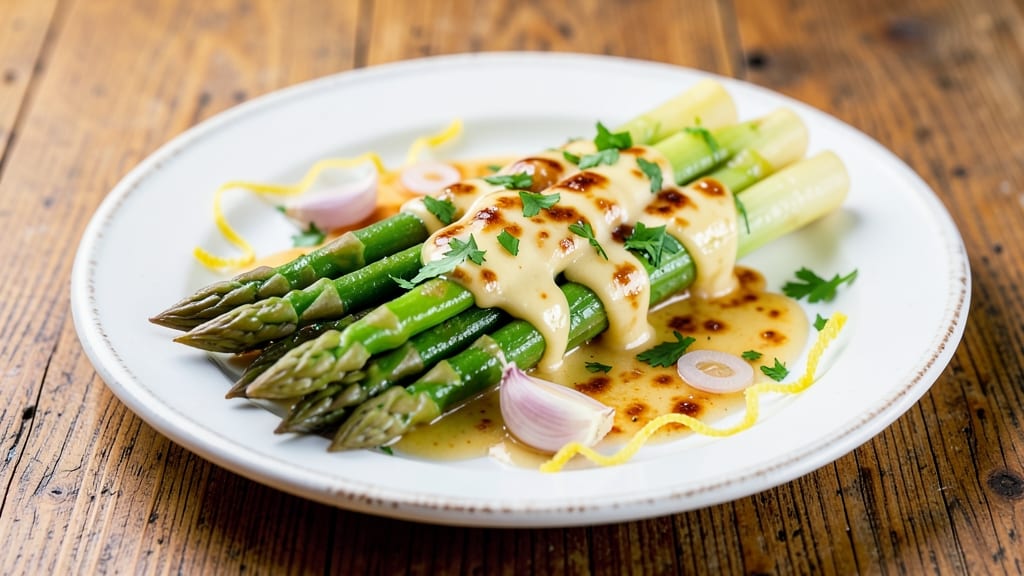
Asparagus with lemon butter sauce transforms simple spring vegetables into an elegant, restaurant-worthy side dish that pairs perfectly with grilled meats or fish. The secret lies in high-heat roasting to achieve crisp-tender spears, followed by a bright, tangy butter sauce that clings to every bite. This method delivers professional results in just 20 minutes—no fancy techniques required.
The sauce itself is where the magic happens: a perfect balance of rich butter, zesty lemon, and fresh herbs creates a velvety coating that brightens the earthy asparagus.
I've perfected this recipe over years of testing, ensuring the sauce remains glossy and flavorful without overpowering the natural taste of the vegetables. The key is timing—roast until tender-crisp, then immediately toss with the warm sauce.
What you'll end up with is asparagus that's beautifully charred at the tips yet tender all the way through, coated in a golden, lemony butter that adds a sophisticated touch to any meal.
The aroma alone will have everyone asking what's for dinner. This dish works equally well as a side for steak or salmon, or as a light vegetarian main with crusty bread.
Best of all, this recipe scales effortlessly—whether you're serving four or twelve. The sauce can be made ahead and reheated gently, while the asparagus cooks in minutes. Let's get started on this bright, flavorful spring classic that proves simple ingredients can deliver restaurant-quality results.
Ingredients for asparagus with lemon butter sauce
Bright spring asparagus meets rich butter and zesty lemon in this restaurant-worthy side—just five core ingredients plus a few finishing touches.
| Ingredient | Amount | Notes |
|---|---|---|
| Fresh Asparagus 🥦 | 1 lb | Trim woody ends, spears similar size |
| Unsalted Butter 🧈 | ½ cup | Cold, cut into pieces |
| Lemon Juice 🍋 | ¼ cup | Freshly squeezed, strained |
| Fresh Flat-Leaf Parsley 🌿 | ¼ cup | Chopped, stems removed |
| Garlic Cloves 🧄 | 2 cloves | Minced, fresh preferred |
| Shallot 🧅 | 1 small | Minced, or substitute 2 tbsp onion |
| Kosher Salt 🧂 | 1 ½ tsp | Diamond Crystal preferred |
| Ground Black Pepper 🌶️ | ½ tsp | Freshly ground preferred |
| Extra-Virgin Olive Oil 🫒 | 1 tbsp | For roasting pan |
| Lemon Zest 🍋 | 1 tsp | From 1 lemon, finely grated |
| Heavy Cream 🥛 | ¼ cup | Optional for richer sauce |
| Ground White Pepper 🌶️ | ¼ tsp | For subtle peppery note |
The asparagus is non-negotiable here—look for bright green spears with tightly closed tips at your local farmers market or grocery store's produce section. Whole Foods or Trader Joe's carry the freshest cuts, but any well-stocked supermarket will have quality asparagus in spring. The butter should be unsalted and cold when you start—this ensures it melts beautifully into the sauce without making it greasy. For the lemon, Meyer lemons add subtle sweetness, but regular lemons work perfectly fine. If you can't find shallots, substitute 2 tablespoons of finely minced red onion—it adds the same sharp sweetness to the sauce.
No heavy cream? Skip it entirely—the sauce still works beautifully with just butter and lemon. Fresh parsley is ideal, but dried parsley at one-third the amount works in a pinch. The garlic matters here—freshly minced gives the best flavor, but if you're in a hurry, 1 teaspoon of garlic powder will do. For the olive oil, any good-quality extra-virgin works (I like California Olive Ranch for its balanced flavor). If you want to make this ahead, prepare the sauce separately and reheat gently—just toss the asparagus in at the end to keep it crisp-tender. The lemon zest can be prepped ahead too—just store it in the freezer until ready to use.
This dish reheats beautifully—simply warm the sauce in a small saucepan over low heat, then toss the asparagus in at the very end. Store the sauce in an airtight container in the fridge for up to 3 days, and the asparagus (uncooked) will keep for 4-5 days wrapped in a damp paper towel. For freezing, blanch the asparagus first—boil for 2 minutes, then ice bath, then freeze. The sauce freezes well too, but reheat gently to avoid separation. Portion the sauce into small jars for easy reheating—perfect for quick weeknight dinners.
Why You'll Love This Recipe
- Same dish, different vibes: toss it with grilled chicken for a quick weeknight meal or serve it alongside steak for a fancier spread. My roommate’s vegetarian friend loves it as much as my dad does with his filet.
- One-Pan Magic: This recipe lives on a single sheet—no pots, no pans, just asparagus and butter sizzling together. I swear, I’ve made it while scrolling through emails; the only real work is snapping those woody ends.
- Bright & Buttery Balance: That zesty lemon cuts through the richness like a breath of fresh air—crisp, tangy, and just enough garlic to make it feel special. Honestly? The parsley ties it all together without trying too hard.
- Weeknight to Dinner Party: Same dish, different vibes: toss it with grilled chicken for a quick weeknight meal or serve it alongside steak for a fancier spread. My roommate’s vegetarian friend loves it as much as my dad does with his filet.
Step-by-step instructions for asparagus with lemon butter sauce
Here's how to transform simple asparagus into a restaurant-worthy dish with vibrant lemon butter sauce.
🍳 Step 1: Roast the Asparagus Until Tender-Crisp
Preheat your oven to 425°F and line a baking sheet with parchment paper. Trim the woody ends from the 1 lb fresh asparagus by bending each spear until it naturally breaks, then discard the bottom inch. Toss the spears with 1 tablespoon extra-virgin olive oil and 1 teaspoon kosher salt until evenly coated.
Spread the asparagus in a single layer on the prepared baking sheet, leaving space between spears for even browning. Roast for 12-15 minutes until the edges begin to crisp and the tips turn a vibrant bright green. The asparagus should yield slightly when pressed but still retain a firm bite—this ensures it won't turn mushy in the sauce. Remove from the oven and transfer to a serving platter.
🍳 Step 2: Build the Flavorful Lemon Butter Base
While the asparagus roasts, heat a large skillet over medium heat. Add the 0.5 cup unsalted butter (cut into pieces) and let it melt completely, swirling the pan occasionally. Add the 1 small minced shallot and cook for 2-3 minutes until softened and translucent.
Stir in the 2 cloves minced garlic and cook for 30 seconds until fragrant—don't let it brown or it'll turn bitter. Immediately pour in the 0.25 cup lemon juice and scrape up any browned bits from the bottom of the pan. Let the mixture simmer gently for 2 minutes until slightly reduced and the raw lemon smell dissipates.
🍳 Step 3: Finish with Cream and Aromatics
Reduce the heat to low and stir in the 0.25 cup heavy cream (if using), 1 teaspoon lemon zest, 0.5 teaspoon ground black pepper, and 0.25 teaspoon ground white pepper. Let the sauce simmer for 1-2 minutes until it thickens slightly and coats the back of a spoon. The sauce should be glossy with a velvety texture—this ensures it'll cling beautifully to the asparagus.
Remove the pan from heat and stir in the 0.25 cup chopped fresh flat-leaf parsley. The parsley adds a fresh, bright contrast to the rich butter sauce. Taste and adjust seasoning if needed—you might want to add a pinch more salt or lemon juice to balance the flavors.
🥘 Step 4: Combine and Serve Immediately
Return the roasted asparagus to the skillet with the sauce and toss gently to coat each spear evenly. The residual heat from the asparagus will help the sauce cling perfectly. Transfer the asparagus to serving plates, arranging them with the sauce cascading over the top for an elegant presentation.
Serve immediately while the asparagus is still warm and the sauce is at its peak consistency. The bright citrus notes cut through the richness of the butter, creating a perfect balance of flavors in every bite. Pair with grilled chicken or fish for a complete meal, or serve as a sophisticated side dish for any occasion.
Pro Tips For Making Asparagus With Lemon Butter Sauce
- Trim the Tough Ends: Snapping asparagus stalks instead of chopping them saves time and keeps the dish looking polished. Hold the stalk firmly at the base and bend it until it snaps—where it breaks is where you want to cut. (Yes, even if you’re impatient like me.)
- Sear the Garlic Fast: Cook minced garlic in butter over medium-high heat until it’s just golden—about 30 seconds. Let it brown but don’t let it burn, or you’ll taste bitterness. I learned this the hard way after overcooking garlic into oblivion.
- Use Room-Temp Butter: Take the unsalted butter out of the fridge 15 minutes before cooking. Cold butter won’t melt smoothly into the sauce, and you’ll end up with clumpy, uneven coating. Trust me, your sauce will look (and taste) like it came from a restaurant.
- Finish with Zest, Not Just Juice: After adding lemon juice, grate a little zest into the butter sauce—it adds brightness and depth. Skip the zest, and your dish will taste like it’s missing something. (Your future self will notice.)
Creative variations of this dish
Spring Herb Twist
Swap parsley for 1 tbsp chopped tarragon or chives to give your sauce an aromatic springtime twist. Tarragon adds a subtle anise-like sweetness that pairs beautifully with lemon, while chives bring a delicate onion flavor.
I find 1 tsp fresh dill also works well—just add it with the parsley at the end for a bright, almost Mediterranean vibe. 🌿
Spicy Kick
For heat lovers, add ½ tsp red pepper flakes or 1 thinly sliced jalapeño to the sauce while it simmers. The jalapeño adds a fresh, fruity heat that caramelizes slightly in the butter.
For a smoky option, stir in ¼ tsp smoked paprika when building the base. Always taste first—you can adjust to your preferred spice level.
Creamy Variations
Skip the heavy cream for a lighter option—use 2 tbsp crème fraîche or 1 tbsp Greek yogurt instead. These add tanginess without heaviness. For extra richness, fold in 1 oz mascarpone cheese at the end.
I've also seen success with ¼ cup whipped cream folded gently into the warm sauce for a cloud-like texture. 🥛
Seasonal Adaptations
In summer, add ½ cup diced fresh peaches or mango to the sauce for a sweet-tart contrast. For fall, stir in 1 tbsp maple syrup> and ½ tsp cinnamon> for a warm, autumnal twist.
Winter calls for 1 tbsp grated apple> and a pinch of nutmeg to complement holiday meals.
Protein-Packed Additions
Turn this into a main dish by adding ½ lb cooked shrimp> or 4 oz crumbled feta> to the sauce. For a vegetarian option, toss in ½ cup toasted pine nuts> or ¼ cup crumbled goat cheese> at the end.
The sauce clings perfectly to these additions while keeping the dish light and elegant.
Global Flavors
For an Italian touch, add 1 tsp dried oregano> and ½ tsp lemon zest> to the sauce base. A French twist comes from swapping butter for ½ cup cultured butter> and adding 1 tsp Dijon mustard>.
For Asian inspiration, stir in 1 tsp grated ginger> and ½ tsp soy sauce>—this creates a beautiful umami-lemon balance. ✨
Nutrition facts
Frequently asked questions
Can I use frozen asparagus instead of fresh?
Fresh asparagus gives the best texture, but you can use frozen in a pinch. Thaw it first, then pat completely dry with paper towels to prevent a watery sauce. Roast the frozen spears for 3-4 minutes longer than fresh to ensure they're fully cooked through—frozen asparagus tends to stay slightly firmer.
What's the secret to getting the sauce to stick to the asparagus?
The sauce clings best when both the asparagus and sauce are warm. Toss the hot spears with the warm sauce immediately after roasting—this helps the sauce adhere. For extra grip, add 1 teaspoon cornstarch mixed with 1 tablespoon water to the sauce while simmering. The sauce should coat the back of a spoon when done.
Can I make the lemon butter sauce ahead of time?
Yes! Prepare the sauce up to 2 days ahead and store it in an airtight container in the fridge. Reheat gently over low heat, stirring constantly until warm. For the asparagus, roast it fresh and toss with the reheated sauce just before serving to maintain crisp-tender texture. The sauce actually improves overnight as flavors meld.
Why did my sauce separate when I reheated it?
Sauce separation happens when reheated too quickly or with too much liquid. To fix it, whisk in 1 teaspoon cold water or lemon juice while warming over low heat. For prevention, always reheat on low and avoid boiling. The original recipe's heavy cream is optional—if you skipped it, the sauce will be more stable when reheated.
What's the best way to serve this dish at a dinner party?
For an elegant presentation, arrange the asparagus on a platter with the sauce cascading over the top. Garnish with extra lemon zest and parsley, then serve family-style from the platter. Pair with grilled filet mignon or salmon for a showstopping main course. The sauce's bright color makes it perfect for spring or summer menus.