
Sauces & Condiments
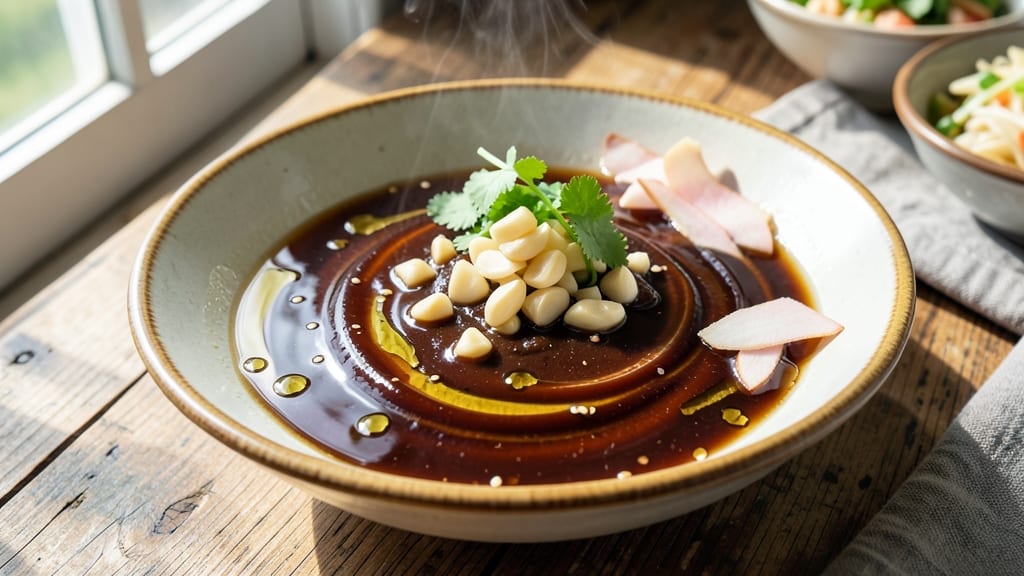
This Asian lo mein sauce recipe transforms ordinary stir-fries into restaurant-quality masterpieces with its velvety texture and hidden vinegar zing. The secret lies in balancing sweet soy, aromatic garlic, and a touch of rice vinegar for that signature tang—no shortcuts, just layered flavor that clings perfectly to noodles.
I developed this version after years of testing, ensuring it works equally well for traditional lo mein or quick weeknight stir-fries.
The foundation starts with a simple sauce base—soy sauce, sesame oil, and a splash of vinegar—that builds depth through garlic, ginger, and a hint of brown sugar. What sets this apart is the reduction technique: simmering until thickened creates that signature glossy, clingy glaze without overpowering the dish.
The sauce keeps well in the fridge for up to 2 weeks, making it perfect for meal prep or batch cooking.
What you’ll achieve is a sauce that’s rich yet bright, with just enough umami to elevate any stir-fry. The vinegar adds a subtle sharpness that cuts through the richness, while sesame oil contributes nutty warmth.
This isn’t just a sauce—it’s the backbone of your dish, turning simple ingredients into something extraordinary.
Use it as-is for classic lo mein or adapt it for beef, chicken, or vegetable stir-fries. The possibilities are endless, but the technique remains the same: balance, reduction, and a confident finish. Let’s get started—your noodles are waiting.
Ingredients for asian lo mein sauce
Nine ingredients create this restaurant-quality sauce—simple but transformative for any noodle dish.
| Ingredient | Amount | Notes |
|---|---|---|
| Light Soy Sauce 🍶 | ½ cup | High-quality, low-sodium preferred |
| Dark Soy Sauce 🍶 | ¼ cup | For deeper umami color |
| Rice Vinegar 🍶 | ¼ cup | White or seasoned variety |
| Sesame Oil 🫒 | 2 tbsp | Toasted sesame oil for aroma |
| Garlic Cloves 🧄 | 6 cloves | Minced finely for depth |
| Fresh Ginger 🌿 | 1 ½ tbsp | Grated, not powdered |
| Brown Sugar 🍯 | 2 tbsp | Light or dark variety |
| Cornstarch 🌾 | 1 tbsp | For thickening slurry |
| Water 💧 | 2 tbsp | For cornstarch slurry |
| Green Onion 🧅 | 2 whole | Thinly sliced for garnish |
The soy sauces form the sauce's foundation, so Kikkoman or Lee Kum Kee are reliable choices—avoid heavily salted varieties to control seasoning. Rice vinegar should be white or seasoned, not apple cider, to maintain authentic flavor. Garlic and ginger need to be freshly minced—pre-minced jars lack the aromatic punch. For sesame oil, toasted varieties from Trader Joe's or Whole Foods provide the best nutty depth. Brown sugar adds subtle sweetness without overpowering; light brown works best for delicate balance.
No rice vinegar? White wine vinegar or apple cider vinegar in equal measure works, though flavor will differ slightly. Substitute honey or maple syrup for brown sugar if needed, but reduce by 10% due to higher sweetness. Fresh garlic or ginger unavailable? Powdered forms at half the amount suffice in a pinch, though texture will vary. For extra umami depth, add 1 tsp fish sauce (omit if vegetarian) or 1 tsp mushroom powder. The cornstarch slurry must be smooth—whisk vigorously to avoid lumps, which can ruin the sauce's velvety texture.
This sauce thickens as it cools, so adjust consistency with water during reduction rather than over-thickening. Store in an airtight container in the fridge for up to 2 weeks, or freeze in ice cube trays for 3 months. For meal prep, double the batch—it's perfect over stir-fried veggies, beef, or shrimp. The green onions are purely decorative; add them last to preserve freshness and vibrant color.
Why You'll Love This Recipe
- Five-Ingredient Magic: I swear, this sauce comes together with stuff you already have—no specialty jars or confusing ratios. Just balance light and dark soy, a splash of vinegar for brightness, and a hit of garlic that makes everything sing.
- Umami Bomb: That dark soy sauce? It’s the secret weapon—deep, caramelized richness that turns simple noodles into something irresistible. Honestly, I’ll take this over store-bought sauce any day.
- Meal Prep MVP: Make a double batch and store it for weeks. Drizzle it over cold noodles, toss with stir-fry veggies, or even use it as a marinade. (Yes, even on a Tuesday night.)
- Budget Flex: Sesame oil and garlic cloves cost pennies, and a little goes a long way. You’re getting restaurant-quality flavor without breaking the bank—or the grocery budget.
Step-by-step instructions for Asian lo mein sauce
A velvety glaze with layered umami and subtle acidity—this sauce transforms simple noodles into a restaurant-worthy dish.
Bloom the Aromatics in Toasted Sesame Oil
Heat a small saucepan over medium-low heat and add the 2 tablespoons sesame oil. Let it warm for 30 seconds until fragrant—you should detect nutty aromas rising. This is the foundation of your sauce's complexity.
Add the 6 cloves minced garlic and 1.5 tablespoons grated fresh ginger, stirring constantly for 1 minute until the garlic turns golden and the ginger softens. Don't walk away—ginger burns quickly, and you want it to mellow rather than dominate. The oil should shimmer but not smoke.
Build the Umami Base with Soy Sauces
Pour in the 0.5 cup light soy sauce and 0.25 cup dark soy sauce, stirring vigorously to dissolve any sugar crystals. Bring the mixture to a gentle simmer over medium heat—this should take about 2 minutes. The dark soy sauce will deepen the color immediately, creating that signature mahogany hue.
Add the 2 tablespoons brown sugar and 0.25 cup rice vinegar, stirring to combine. The vinegar introduces bright acidity that cuts through the richness of the soy sauces. Let the mixture simmer uncovered for 3-4 minutes until it reduces slightly and the aromatics meld completely. You're looking for a syrupy consistency at this stage.
Thicken with Cornstarch Slurry
In a small bowl, whisk together the 1 tablespoon cornstarch and 2 tablespoons water until completely dissolved—this creates your thickening agent. The slurry should be smooth with no lumps.
Return the saucepan to medium heat and slowly pour in the cornstarch mixture while stirring continuously. The sauce will thicken dramatically within 1-2 minutes. Keep stirring until it reaches a glossy, velvety consistency that coats the back of a spoon. If it thickens too much, add 1 teaspoon water at a time until you achieve the perfect cling.
Finish and Garnish
Remove the sauce from heat and let it cool for 2 minutes. Taste and adjust seasoning—you may need to add a touch more light soy sauce for saltiness or rice vinegar for acidity. The sauce should balance sweet, salty, umami, and tangy notes.
Stir in the 2 whole green onions, sliced thinly, just before serving. These add freshness and contrast against the rich sauce. For best results, use the sauce immediately over hot noodles to maintain its glossy sheen and vibrant color.
Pro Tips For Making Asian Lo Mein Sauce
- Minimize the Garlic Burn: I learned this the hard way—crushing garlic cloves whole and tossing them raw into the sauce makes it bitter. Instead, finely mince them (or use a garlic press) and sauté in sesame oil for 30 seconds until fragrant but not browned. That’s where the magic happens—just enough to wake up the oil without turning it acrid.
- Balance the Soy Sauces First: Dark soy sauce is thick and intense; light is salty and thin. Mix them before adding anything else, then taste. If it’s too salty, splash in a little rice vinegar (start with ½ teaspoon) to cut through it. No guessing—your sauce should taste like harmony, not a salty punch to the face.
- Heat the Sesame Oil Slow: Sesame oil smells amazing, but it burns faster than you’d think. Warm it over low heat until it’s just shimmering—about 1 minute. Then turn off the heat completely before adding the garlic and soy mixture. The oil should coat the sauce like silk, not turn into a bitter, smoky mess.
- Use Vinegar Last, Sparingly: Rice vinegar brightens the sauce, but add it after everything else is off the heat. Too early, and the acid will cook off, leaving you with a flat, salty sludge. Start with 1 teaspoon, taste, then add more in ¼-teaspoon increments—you’re aiming for a hint of tang, not a vinegar bomb.
Perfect pairings for asian lo mein sauce
Noodle Pairings
This sauce is designed to cling beautifully to fresh egg noodles or rice noodles, but I’ve tested it with success on udon, ramen, and even spaghetti for a fusion twist. For traditional lo mein, use wheat egg noodles—they absorb the sauce’s richness without becoming mushy.
If you’re prepping ahead, cook noodles al dente and toss with a splash of water to prevent sticking before adding the sauce. 🥢
Protein Pairings
Beef and chicken are classic choices, but this sauce elevates shrimp, pork, or tofu just as well. For beef, I recommend thinly sliced flank steak or sirloin marinated in a mix of 1 tbsp soy sauce and 1 tsp cornstarch for 30 minutes before stir-frying.
For shrimp, pat them dry and toss with ½ tsp black pepper right before cooking to keep them tender. The sauce’s glossy finish works especially well with seared scallops or crispy tofu for a vegetarian option.
Vegetable Additions
Load up your stir-fry with bell peppers, broccoli, carrots, and snap peas for color and crunch. I love adding shredded cabbage or bok choy for texture contrast. For extra depth, stir-fry mushrooms (shiitake or oyster) in the wok first—they absorb the sauce’s flavors like a sponge.
A handful of bean sprouts adds freshness and a satisfying bite. Pro tip: Toss veggies in 1 tsp oil and stir-fry for 2-3 minutes before adding protein to keep them crisp.
Drink Pairings
A crisp jasmine tea or green tea cleanses the palate between bites, while a light lager like Asahi or Sapporo complements the sauce’s umami notes. For a non-alcoholic option, try yuzu soda—its citrusy brightness mirrors the rice vinegar’s tang.
If you prefer wine, a dry Riesling or Pinot Noir balances the dish’s richness without overpowering it. I often reach for sparkling water with lime when I’m cooking for myself—it’s refreshing and lets the sauce shine. 🍶
Sauce Variations
Craving heat? Add 1 tsp chili crisp or ½ tsp red pepper flakes to the sauce before serving. For a sweet and sour twist, replace the brown sugar with 1 tbsp honey and add 1 tbsp apple cider vinegar. Need a nutty depth?
Swap the sesame oil for 1 tbsp peanut butter (stirred in at the end) and top with crushed peanuts. For a coconut-lo mein, stir in 1 tbsp coconut milk and garnish with toasted coconut flakes. Each variation keeps the sauce’s velvety texture while introducing new layers of flavor.
Nutrition facts
Frequently asked questions
Can I make this sauce without cornstarch?
Yes, but the texture will be thinner. For a natural thickener, use 1 tablespoon arrowroot powder or 1 teaspoon xanthan gum mixed with 2 tablespoons water. Simmer for an extra 2-3 minutes to achieve a glossy finish. The sauce will still cling to noodles but may not be as velvety.
How do I fix a sauce that's too salty?
Add 1-2 teaspoons rice vinegar or 1 teaspoon honey to balance the saltiness. If the sauce is still too strong, thin it with 1 tablespoon warm water and adjust seasoning again. Never add more sauce—it'll compound the saltiness. Taste as you go!
Can I use this sauce for cold noodle salads?
Let the sauce cool completely, then thin it with 1-2 tablespoons water to achieve a drizzling consistency. Toss with chilled noodles, sliced cucumbers, and sesame seeds. The vinegar's tang works beautifully in cold dishes—just avoid adding fresh ginger as it can turn bitter.
What's the best way to store leftover sauce?
Transfer to an airtight container and refrigerate for up to 2 weeks. For longer storage, freeze in ice cube trays—thaw overnight in the fridge. The sauce thickens when chilled, so stir with 1 teaspoon water before reheating. Never refreeze thawed sauce to maintain quality.
Why does my sauce look too thin?
This likely happened during the cornstarch step. Simmer uncovered for an extra 1-2 minutes to reduce it further. If still too thin, mix ½ teaspoon cornstarch with 1 teaspoon water, stir into the sauce, and cook for 30 seconds. The sauce should coat the back of a spoon when cool.