
Sauces & Condiments
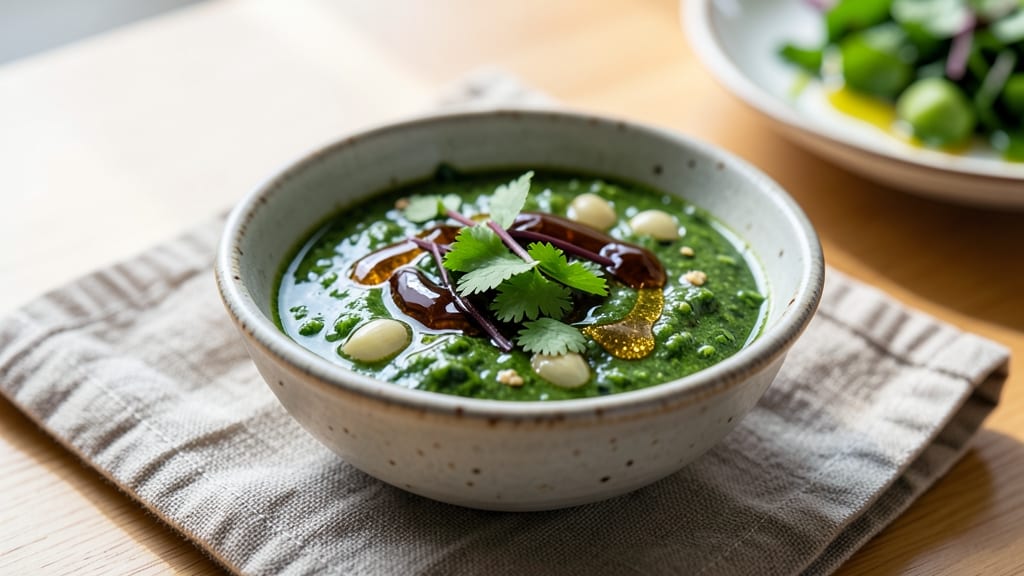
This Asian chimichurri sauce recipe transforms traditional chimichurri into a vibrant, umami-packed condiment that bridges Latin and Asian flavors effortlessly. The secret lies in blending fresh cilantro, Thai basil, and garlic with soy sauce, sesame oil, and a touch of chili for depth—no heavy cream or butter needed.
It’s bright, aromatic, and ready in 10 minutes, making it the perfect partner for grilled meats, noodles, or even tofu.
The sauce’s complexity comes from balancing sweet, salty, and spicy notes—soy sauce adds umami, sesame oil brings nutty warmth, and fresh herbs keep it bright.
Unlike traditional chimichurri, this version swaps parsley for cilantro and Thai basil, while a splash of lime and a pinch of chili flakes elevate it to a whole new level. The texture is silky yet clingy, clinging to every bite like a flavorful embrace.
What makes this sauce truly versatile is its adaptability. Use it as a dipping sauce for spring rolls, a marinade for skewers, or a finishing touch on ramen. It stays fresh in the fridge for up to 5 days, though the herbs will mellow slightly over time.
For extra heat, add sambal or a dash of sriracha—just don’t skip the fresh herbs, as they’re the heart of this recipe.
This isn’t just a sauce; it’s a flavor multiplier that turns simple dishes into standout meals. Whether you’re grilling, stir-frying, or just craving something bold, this Asian chimichurri will become your go-to condiment. Let’s make it—your taste buds will thank you.
Ingredients for asian chimichurri sauce
Ten simple ingredients blend into this vibrant sauce that bridges bold Asian flavors with Latin freshness.
| Ingredient | Amount | Notes |
|---|---|---|
| Fresh Cilantro Leaves 🌿 | 1 cup | Stems removed, loosely packed |
| Thai Basil Leaves 🌿 | ½ cup | Stems removed, loosely packed |
| Garlic Cloves 🧄 | 4 cloves | Peeled, roughly chopped |
| Lime Juice 🍋 | ¼ cup | Freshly squeezed, strained |
| Soy Sauce 🍜 | ¼ cup | Light or all-purpose |
| Sesame Oil 🌰 | 1 tbsp | Toasted, not flavored |
| Red Chili Flakes 🌶️ | 1 tsp | Adjust for heat preference |
| Extra-Virgin Olive Oil 🫒 | ½ cup | High quality, fruity |
| Honey 🍯 | 1 tbsp | For subtle sweetness balance |
| Salt 🧂 | ½ tsp | Kosher or sea salt |
The herbs are non-negotiable here—fresh cilantro and Thai basil from the grocery store’s produce section (not the wilting plastic containers) make all the difference. I always grab organic cilantro from Whole Foods or the local Asian market if available—they’ve got the brightest, most aromatic leaves. For Thai basil, look for the deep purple stems; it’s worth seeking out at specialty stores. The garlic should be plump and firm, not sprouting. If you’re short on time, pre-minced garlic from a jar works in a pinch, but fresh is always better. Lime juice? Mexican limes are ideal, but regular key limes or even lemon juice in a bind.
No soy sauce? Coconut aminos work in a 1:1 ratio for a slightly sweeter profile. Short on sesame oil? Toasted peanut oil adds a similar nutty depth, though it’ll taste different. The chili flakes can be swapped for fresh red chili or sambal—just adjust the amount since fresh is hotter. For the olive oil, avoid light or refined oils—they lack the fruity notes that complement the herbs. The honey is optional but balances the sauce beautifully; maple syrup works too if you’re avoiding honey. If you’re making this ahead, store the herbs separate until ready to blend—they’ll keep their brightness longer.
This sauce keeps for up to 5 days in the fridge, though the herbs will lose some punch after 2-3 days. To extend freshness, store the herbs in a separate container and blend them in just before using. For longer storage, freeze the sauce in ice cube trays—perfect for single servings. The texture will thicken slightly when refrigerated, so give it a quick whisk before using. If it gets too thick, a splash of water or lime juice brings it back to perfection. This sauce is magic on grilled meats, noodles, or even as a marinade—just don’t overthink it, let the flavors shine.
Why You'll Love This Recipe
- I swear by this trick: just pulse the cilantro and Thai basil in the food processor with the garlic—no mincing, no mess. The lime and soy sauce do all the work while you’re still washing your hands.
- No-Chop Required: I swear by this trick: just pulse the cilantro and Thai basil in the food processor with the garlic—no mincing, no mess. The lime and soy sauce do all the work while you’re still washing your hands.
- Umami-Packed Punch: That little splash of soy sauce? It’s the secret weapon—deepens the garlic’s bite while the Thai basil adds a floral kick. Honestly, it’s the kind of flavor that makes you pause mid-bite, like, “Wait, why haven’t I done this sooner?”
- Pantry-to-Table Magic: Stays fresh for days in the fridge, so I make a double batch and toss it on grilled fish, noodles, or even scrambled eggs. (Yes, even on a Tuesday night.) The lime keeps it bright, so it doesn’t turn sad like some sauces do.
Step-by-step instructions for Asian chimichurri sauce
This vibrant sauce comes together faster than you can say "umami bomb."
Pulse the Herbs and Garlic
In a food processor, combine the 1 cup fresh cilantro leaves and 0.5 cup Thai basil leaves. Pulse until finely chopped but not pasty—you want visible texture, not a smooth puree. Add the 4 cloves garlic cloves and pulse again until everything is uniformly minced. Stop before it turns into a green slurry; you're aiming for a chunky, herby base that still delivers bite.
Here's the thing—if you don't have a food processor, a sharp knife works just fine. Stack the herbs, roll them tightly, and chop in a rhythmic motion. The goal is small, even pieces that won't overpower the other flavors. Taste at this stage—you should get a bright, grassy punch with a garlicky kick. If it's too mild, don't worry; the other ingredients will balance it out.
Whisk in Wet Ingredients
Transfer the herb mixture to a medium bowl and add the 0.25 cup lime juice, 0.25 cup soy sauce, 1 tbsp sesame oil, and 1 tbsp honey. Using a whisk, combine everything until fully integrated. The lime juice will immediately brighten the herbs, cutting through their grassiness while adding zing. The soy sauce adds depth, and the honey mellows the acidity slightly—this is where the sauce starts to come together.
I like to whisk vigorously for about 30 seconds to ensure the honey dissolves completely and the lime juice emulsifies with the oils. If you see any separated liquid, that's normal—it'll blend as you add the olive oil. Taste again now; you should notice the balance shifting toward something more complex, with sweet, salty, and tangy notes all working together.
Slowly Incorporate Olive Oil
With the motor running on low speed, very slowly drizzle in the 0.5 cup extra-virgin olive oil. This is the most critical step—adding it too quickly will cause the sauce to split. Let the whisk do the work, allowing the oil to emulsify gradually. You're looking for a sauce that's thick but pourable, with a glossy sheen that indicates proper emulsification.
If the sauce starts to look curdled or oily, don't panic. Simply add 1 teaspoon of lime juice or 1 teaspoon of soy sauce and whisk again. The acidity or saltiness will help re-emulsify the mixture. The final texture should be like a thick, vibrant vinaigrette—coating the back of a spoon but still flowing freely. This is the moment that matters: the sauce should cling to proteins without being gluey.
Season and Adjust
Sprinkle in the 1 teaspoon red chili flakes and 0.5 teaspoon salt, then whisk until fully distributed. Taste and make final adjustments: need more heat? Add another pinch of chili flakes. Too sharp? A touch more honey will smooth it out. The sauce should be bright, herby, with a lingering warmth from the chili and a subtle sweetness from the honey.
Let the sauce rest for 5 minutes before serving. This gives the flavors time to meld and the texture to stabilize. If you're using it immediately, give it a quick stir before drizzling over grilled meats, noodles, or fresh spring rolls. The sauce keeps well in the fridge for up to 5 days, though I find it's best used within 2-3 days for maximum freshness and vibrancy.
Pro Tips For Making Asian Chimichurri Sauce
- STACK THE GARLIC: Use three cloves, but smash them flat with the side of your knife first—no chopping. This releases more flavor without turning the sauce bitter. (I learned this the hard way after a batch tasted like garlic powder.)
- PULSE DON’T PUREE: Run the cilantro and Thai basil through the food processor in short bursts—stop when it’s just chopped, not gloppy. Over-processing turns the sauce into a sad, watery paste. (Yes, even if you’re impatient like me.)
- SALT THE SOY: Add the soy sauce last and taste—this sauce needs balance. If it’s too sharp, a pinch of sugar (or honey) cuts the acidity. (I used to dump it all in and wonder why it tasted flat.)
- WAIT FOR LIME: Let the lime juice sit for 10 minutes before mixing. The acid mellows out, and the flavors marry better. (Skipping this step makes the sauce taste like a sad margarita.)
Best sauces and condiments for this recipe
Traditional Chimichurri
This Asian twist builds on the classic Argentinian chimichurri, which traditionally features parsley, garlic, vinegar, and olive oil. The key difference is swapping parsley for cilantro and Thai basil, plus adding soy sauce and sesame oil for that signature umami depth.
Traditional chimichurri is more acidic and herb-forward, while this version balances sweet, salty, and spicy notes. I love how the lime juice in this recipe replaces the vinegar, keeping it bright without being harsh. 🌿
Umami Boosters
The soy sauce and sesame oil are the secret weapons here, creating layers of flavor that traditional chimichurri lacks. For extra umami, add 1 teaspoon fish sauce or 1 tablespoon miso paste—just a splash goes a long way.
If you want to lean into the Asian influence further, swap the olive oil for avocado oil or even toasted sesame oil (though use sparingly, as it can overpower). The honey also plays a crucial role, balancing the acidity and adding subtle sweetness that rounds out the sauce. 🍜
Heat Level Control
Adjust the chili flakes to your preference—start with ½ teaspoon for mild heat, or go up to 2 teaspoons for a spicy kick. For a smoky depth, add ½ teaspoon smoked paprika or a pinch of gochugaru (Korean chili flakes).
If you love fresh heat, finely mince 1 small Thai chili or ½ jalapeño and blend it right into the herbs. The lime juice will help mellow the heat, so don’t be shy with the chili if you crave it! 🌶️
Texture Variations
For a smoother sauce, blend everything until silky—just pulse the herbs and garlic a few extra times before adding the wet ingredients. If you prefer a chunkier texture (my favorite!), keep the herbs slightly coarse.
To thicken the sauce, add 1 teaspoon cornstarch mixed with 1 tablespoon water and whisk it in. For a thinner, drizzle-friendly version, stir in 1 tablespoon water or lime juice. The texture should cling to food without being gluey—this is the sweet spot! ✨
Flavor Pairings
This sauce shines on grilled meats like pork belly, chicken, or shrimp, but it’s also amazing with tofu, ramen noodles, or even spring rolls. For a fusion twist, toss it with cold soba noodles or drizzle over seared scallops.
The soy sauce and sesame oil make it a perfect match for Asian-inspired dishes, while the herbs keep it fresh and bright. Pro tip: Let the sauce sit for 10 minutes before using—it tastes even better after resting! 🍱
Nutrition facts
Frequently asked questions
Can I make this sauce without a food processor?
While a food processor makes it easier, you can achieve the same texture with a sharp knife. Stack the herbs, roll them tightly, and chop rhythmically until finely minced. For garlic, smash the cloves with the side of your knife before mincing. The key is even, small pieces—just don't over-chop into a paste.
How do I adjust the heat level?
Start with ½ teaspoon chili flakes for mild heat, or go up to 2 teaspoons for a spicy kick. For smoky depth, add ½ teaspoon smoked paprika. If you prefer fresh heat, blend in 1 minced Thai chili or ½ jalapeño with the herbs. The lime juice helps balance the heat—don't be afraid to experiment!
Can I use this sauce as a marinade?
Yes! This sauce works beautifully as a marinade for 2-4 hours before grilling or searing. The soy sauce and lime juice tenderize proteins like chicken or tofu, while the herbs infuse flavor. For extra marinating power, add 1 tablespoon fish sauce or 1 teaspoon miso paste. Always reserve some sauce for serving after cooking.
What's the best way to store leftovers?
Store in an airtight container in the fridge for up to 5 days. For longer storage, freeze in ice cube trays—perfect for single servings! The herbs will mellow slightly over time, so use within 2-3 days for maximum freshness. If the sauce thickens when refrigerated, whisk in 1 teaspoon lime juice or water to restore consistency.
What can I substitute if I don't have Thai basil?
Use regular basil or cilantro only if needed, but Thai basil's anise-like flavor is key. For a different Asian twist, try Vietnamese mint or shiso leaves. If you're out of options, increase the garlic to 5 cloves to compensate for lost depth. The sauce will still be delicious, just with a slightly different herbal profile.