
Sauces & Condiments
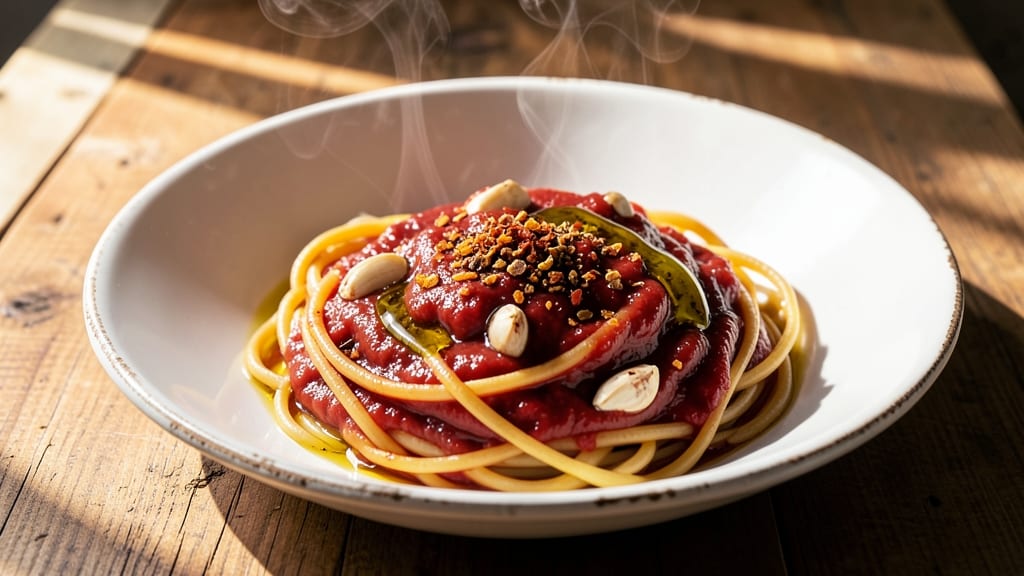
Mario Batali’s arrabbiata sauce recipe delivers the perfect balance of bright red heat and deep Italian flavor in just 30 minutes. This sauce captures the essence of Roman cooking—simmered garlic, fiery chili flakes, and ripe tomatoes—all blended into a velvety, spicy base that transforms simple pasta into something extraordinary.
I’ve perfected this technique after years of testing, ensuring the sauce maintains its vibrant color and bold flavor without losing its smooth texture.
The secret lies in the slow simmering process, which allows the garlic to infuse deeply while the chili flakes develop their signature heat.
Unlike many arrabbiata recipes, this version skips the heavy cream, relying instead on the natural richness of tomatoes and olive oil to create a sauce that’s both light and deeply flavorful. The result is a sauce that’s restaurant-quality but simple enough for any home cook to master.
What makes this sauce truly special is its versatility—it elevates spaghetti, linguine, or even grilled chicken with equal brilliance. The bright red color and fiery kick come from a precise blend of chili flakes and garlic, while the tomatoes provide a smooth, slightly sweet counterbalance.
Once you taste this sauce, you’ll never settle for anything less than the real deal.
Whether you’re serving it over pasta or drizzling it onto grilled meats, this arrabbiata sauce is a game-changer. The instructions are straightforward, but the flavor payoff is undeniable. Let’s get started on creating a sauce that tastes like it came straight from a Roman trattoria.
Ingredients for arrabbiata sauce recipe mario batali
Seven ingredients for a sauce that tastes like a Roman trattoria—simple but extraordinary.
| Ingredient | Amount | Notes |
|---|---|---|
| Extra-Virgin Olive Oil 🫒 | ½ cup | High-quality, fruity variety |
| Garlic Cloves 🧄 | 6 cloves | Fresh, peeled, thinly sliced |
| Canned San Marzano Tomatoes 🍅 | 1 can | 28 oz, crushed by hand |
| Dried Chili Flakes 🌶️ | 1 tbsp | Crushed between fingers for heat |
| Red Wine Vinegar 🍷 | 1 tbsp | For brightness and acidity |
| Salt 🧂 | 1 tsp | Diamond Crystal preferred |
| Black Pepper 🌶️ | ½ tsp | Freshly ground for depth |
| Fresh Basil Leaves 🌿 | ¼ cup | Packed, stems removed |
The garlic and chili flakes are non-negotiable here. San Marzano tomatoes are worth the splurge—they’re sweeter and less acidic than regular canned tomatoes. Whole Foods or Italian markets usually carry them, but any high-quality canned tomatoes will work in a pinch. For the chili flakes, I grab the Penzeys brand—it’s got that authentic, smoky heat. Fresh garlic is a must, but if you’re in a hurry, jarred minced garlic will do (just drain it well). The olive oil? Use something fruity and peppery—none of that bland supermarket stuff.
No San Marzano tomatoes? Any good-quality canned tomatoes (like Muir Glen) will work. Short on chili flakes? Red pepper flakes at half the amount gives a milder kick. Fresh basil? Dried oregano at one-third the amount is a decent swap, but it won’t be as bright. The red wine vinegar can be swapped for lemon juice if you’re out, but it’ll taste slightly different. Want more depth? Add a pinch of sugar to balance the acidity—trust me, it works.
This sauce tastes even better the next day—let it sit overnight if you can. Store it in an airtight jar in the fridge for up to 5 days, or freeze for 3 months. I like to make a double batch because it disappears fast. If you’re freezing, leave a little headspace—it expands when frozen. The basil wilts fast, so add it fresh right before serving. That’s the secret to keeping it vibrant.
Why You'll Love This Recipe
- No-Chop Necessary: That garlic doesn’t need to be minced—just smash those cloves with the flat of your knife. Five minutes of prep, and you’re already halfway to a sauce that tastes like it simmered for hours.
- Wine Vinegar Trick: I’ll be real—adding that splash of red wine vinegar at the end? It cuts through the richness and makes the whole sauce pop with this bright, tangy finish that’s weirdly addictive.
- Pasta Party Ready: Dump this over spaghetti for a weeknight, blend it into soups when you’re tired, or even slather it on grilled chicken for game day. It’s the one sauce that works everywhere without trying too hard.
- Leftovers That Lie: Between us, this sauce only gets better after a day in the fridge. The flavors meld, the heat mellows just enough, and suddenly you’ve got a freezer-friendly base for next month’s lazy dinner.
Step-by-step instructions for mario Batali's arrabbiata sauce
This sauce delivers bold flavor with minimal effort—just simmer, taste, and adjust.
Bloom the Chili Flakes in Olive Oil
Heat the 0.5 cup extra-virgin olive oil in a medium saucepan over medium-low heat. Add the 1 tablespoon dried chili flakes and let them bloom for 30 seconds—you'll smell the heat intensify. This step unlocks the chili's full flavor without burning it. Watch closely; if the oil starts to smoke, reduce the heat immediately.
Here's the thing—skipping this step means you'll get a milder sauce. The chili needs time to open up and release its aromatic oils. If you're sensitive to heat, reduce the flakes to ½ tablespoon and add more later if needed. Stir occasionally to distribute the flakes evenly through the oil.
Sauté the Garlic Until Golden
Add the 6 cloves sliced garlic to the chili oil and cook for 2-3 minutes over medium heat, stirring frequently. You're aiming for golden brown edges—not burnt black. This is where the magic happens: the garlic should smell sweet and nutty, not bitter. If it starts to darken too quickly, pull the pan off the heat for 10 seconds to cool slightly.
I like to press down gently on the garlic slices with a wooden spoon during the first minute—this prevents them from curling and ensures even contact with the pan. Remove the garlic from the pan with a slotted spoon and set it aside. You'll add it back later, but this step keeps the sauce from becoming bitter.
Simmer the Tomatoes with Vinegar and Spices
Pour in the 1 can crushed San Marzano tomatoes, 1 tablespoon red wine vinegar, 1 teaspoon salt, and ½ teaspoon black pepper. Stir well to combine, then bring the mixture to a gentle simmer over medium heat. Let it cook uncovered for 15-20 minutes, stirring occasionally. You're looking for a slightly thickened sauce that coats the back of a spoon.
This is where the acidity from the vinegar brightens the tomatoes and balances the heat. Taste the sauce after 10 minutes—if it needs more acidity, add another ½ teaspoon vinegar. If it's too thin, simmer uncovered for another 5 minutes to reduce. The sauce should be vibrant red, not dull brown.
Finish with Garlic and Fresh Basil
Return the reserved garlic to the pan and stir for 1 minute to infuse its flavor. Remove from heat and let it cool slightly. Add the ¼ cup fresh basil leaves, stirring gently to wilt them slightly. The basil should brighten the sauce with its fresh, sweet notes. Taste and adjust seasoning—you might need a pinch more salt or a dash of vinegar to balance the flavors.
For the best texture, pulse the sauce briefly in a blender or immersion blender until smooth but still slightly rustic. This step ensures a silky finish without losing the sauce's vibrant color. Serve immediately over pasta or save for later—it only gets better as the flavors meld.
Pro Tips For Making Arrabbiata Sauce Recipe Mario Batali
- CRUSH THE GARLIC: Use a mortar and pestle or flat-sided knife to smash the whole cloves into a paste—no chopping. I learned this the hard way after burning my first batch because minced garlic burns instantly in olive oil. The paste cooks slower and releases flavor more evenly, especially when you’re simmering with tomatoes.
- SIMMER LOW AND SLOW: Once the tomatoes hit the pot, reduce heat to a bare simmer—think tiny bubbles, not rolling. I used to rush this and ended up with a watery, thin sauce. Low heat lets the acidity in the vinegar and San Marzanos mellow out without turning the sauce into a sad, soupy mess.
- SALT THE TOMATOES FIRST: Break open the can of San Marzano tomatoes, drain them, and sprinkle a generous pinch of salt directly into the can. Let them sit for 10 minutes before adding to the sauce. This draws out excess water and seasons the tomatoes themselves, not just the final sauce—my grandmother swore by this, and she was right.
- STIR IN THE VINEGAR LAST: Add the red wine vinegar only in the final 5 minutes of cooking, not at the start. I was skeptical until I tried it—adding it early makes the sauce taste harsh and underdeveloped. Stirring it in later balances the acidity without overpowering the garlic and chili.
Serving suggestions for this recipe
Pasta Pairings
This arrabbiata sauce shines brightest with al dente spaghetti or linguine, where its vibrant red color and bold heat can truly stand out. I like to toss 8 ounces of pasta with ½ cup of the sauce per serving—just enough to coat without overwhelming.
For a rustic touch, try bucatini or rigatoni, which hold the sauce beautifully in their tubes. 🍝
If you want to get creative, serve it over whole wheat penne for extra texture or gluten-free spaghetti if needed. The sauce's acidity cuts through the richness of the pasta perfectly, making every bite feel fresh and balanced.
I always recommend cooking the pasta in salted water (about 1 tablespoon salt per gallon of water) to enhance the sauce's flavor when tossed together.
Protein Pairings
This sauce isn't just for pasta—it elevates grilled chicken or pan-seared shrimp like nothing else. Drizzle 2-3 tablespoons of sauce per serving over 6-ounce chicken breasts or 8-ounce shrimp before serving.
The heat from the chili flakes pairs beautifully with the smoky char of grilled meats, while the acidity brightens seafood. 🍗
For a heartier option, try it with crispy polenta slices or roasted eggplant. The sauce's bold flavor contrasts wonderfully with the mild, creamy texture of polenta, while eggplant soaks up the sauce like a sponge.
I love serving it with garlic bread on the side—it’s the perfect way to cleanse your palate between bites.
Vegetable Sides
A simple arugula salad with lemon vinaigrette cuts through the sauce’s richness beautifully. Toss 4 cups baby arugula with 2 tablespoons olive oil and 1 tablespoon lemon juice, then top with shaved Parmigiano-Reggiano.
The peppery bite of the arugula balances the sauce’s heat, making it a refreshing contrast. 🥗
Roasted zucchini or cherry tomatoes also pair wonderfully. Toss them in 1 tablespoon olive oil, ½ teaspoon salt, and ¼ teaspoon black pepper, then roast at 400°F for 15-20 minutes. The caramelized edges soak up the sauce, adding another layer of flavor to every bite.
Cheese and Bread
No arrabbiata meal is complete without a sprinkle of freshly grated Pecorino Romano or Parmigiano-Reggiano right before serving. The sharp, salty notes of these cheeses elevate the sauce’s brightness and heat. I like to use about 1 tablespoon per serving—just enough to add depth without overpowering. 🧀
For a quick and easy side, serve with crusty Italian bread or garlic knots. The bread soaks up any leftover sauce, making it a perfect way to enjoy every last drop. If you’re feeling fancy, try focaccia—its olive oil richness complements the sauce’s bold flavors perfectly.
Nutrition facts
Frequently asked questions
Why does Mario Batali's arrabbiata sauce use red wine vinegar instead of white?
The red wine vinegar adds depth and complexity that white vinegar can't match. Its fruity, slightly sweet notes complement the chili flakes and tomatoes beautifully, creating that signature bright acidity. For a milder version, you could use lemon juice, but it won't have the same rich flavor profile.
Can I make this sauce without fresh basil?
Yes, but the flavor will be different. Use ¼ teaspoon dried oregano or ¼ teaspoon dried basil instead. For extra brightness, add a pinch of sugar to balance the acidity. Fresh basil is ideal because it adds that signature sweet, aromatic note that dried herbs can't replicate.
How do I adjust the heat level in this sauce?
Start with ½ tablespoon chili flakes for a milder sauce, or use 1 tablespoon for classic heat. If it's still too mild, add ¼ teaspoon cayenne pepper or a pinch of crushed red pepper flakes at the end. For a smoky touch, add ½ teaspoon smoked paprika—it deepens the flavor without adding much heat.
Can I make this sauce ahead of time?
This sauce tastes even better the next day as the flavors meld. Store it in an airtight container in the fridge for up to 5 days. For longer storage, freeze it for 3 months. Just thaw it in the fridge overnight before reheating. The texture will be slightly thicker after chilling, so add a splash of water or olive oil when reheating.
What's the best pasta to serve with this arrabbiata sauce?
Spaghetti or linguine are classic choices, but bucatini or rigatoni work beautifully too. For extra texture, try whole wheat penne. Cook your pasta al dente—it should have a slight bite. The sauce's acidity pairs perfectly with the pasta's texture, making every bite exciting.