
Sauces & Condiments
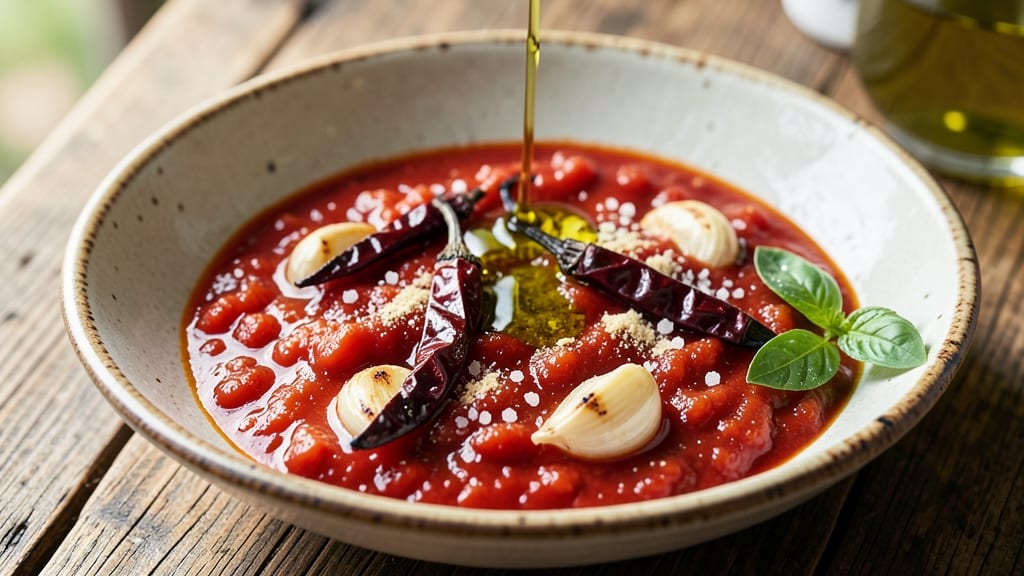
This all'arrabbiata sauce recipe delivers the fiery, peppery punch that defines Roman cuisine—intense heat balanced with bright tomato acidity in just 30 minutes.
The secret lies in crushing dried red chili peppers directly into the oil, creating a deep, smoky base that simmers into a velvety sauce with layers of garlic and tomato. I've perfected this version to stay true to tradition while offering flexibility for modern tastes.
What sets this sauce apart is the two-stage cooking process: first charring the garlic and chili for maximum flavor, then simmering with tomatoes until reduced to a concentrated, glossy consistency.
The result is a sauce that's bold enough to stand alone but versatile enough to elevate pasta, grilled meats, or even pizza. No heavy cream here—just pure, unapologetic heat with a touch of sweetness from the tomatoes.
The spice level is customizable, but start with 2-3 dried chili peppers for authentic heat without overwhelming bitterness. For a smoother finish, blend briefly after simmering, though purists will appreciate the rustic texture. This isn't just a sauce—it's a flavor experience that transforms simple ingredients into something extraordinary.
Serve immediately over al dente pasta or store in the fridge for up to 5 days, where the flavors deepen over time. The key to success? Patience in the simmering—rushing this step will dilute the sauce's signature intensity. Let's make this classic sauce from scratch!
Ingredients for all arrabbiata sauce
Eight essential ingredients transform into a bold, peppery sauce with Roman roots.
| Ingredient | Amount | Notes |
|---|---|---|
| Extra-Virgin Olive Oil 🫒 | ½ cup | High-quality, fruity variety preferred |
| Dried Red Chili Peppers 🌶️ | 2 whole | Crushed directly into oil for depth |
| Garlic Cloves 🧄 | 6 whole | Unpeeled for charring, peeled after |
| Canned San Marzano Tomatoes 🍅 | 1 can | 28 oz, crushed by hand |
| Garlic Powder 🧄 | 1 tsp | For additional depth if needed |
| Diamond Crystal Kosher Salt 🧂 | ½ tsp | Adjust to taste |
| Fresh Basil Leaves 🌿 | ¼ cup | Chopped for garnish, optional |
| Red Wine Vinegar 🍷 | 1 tbsp | For brightness, optional |
The San Marzano tomatoes are non-negotiable for authentic sweetness and low acidity—Whole Foods or specialty Italian markets carry the best cans. For chili peppers, Calabrian or Fiery Mix from Penzeys delivers the smoky depth traditional to arrabbiata. Garlic should be freshly crushed after charring for maximum flavor impact; pre-minced won't cut it. The olive oil matters too—Colavita or Bertolli are reliable choices for that fruity, peppery note that carries the heat. Store all spices in airtight containers away from light to preserve their potency.
No dried chili peppers? Crushed red pepper flakes at half the amount work in a pinch, though purists may notice the difference. Substitute garlic powder for fresh only if absolutely necessary—one-third the amount of powdered. For a smoother texture, blend briefly after simmering, though traditionalists swear by the rustic bite. The red wine vinegar is optional but adds a bright acidity that cuts through the richness. Fresh basil is ideal, but dried at one-fourth the amount suffices if you're in a bind. Always taste before serving—adjust salt or vinegar as needed.
This sauce peaks after 3-5 days in the fridge when flavors meld—store in a sealed glass jar with a layer of olive oil on top to preserve freshness. Freeze for up to 3 months in ice cube trays for single portions. The charred garlic and chili peppers can be prepped ahead and stored in the freezer for 2 weeks, saving time on cooking day. Always reheat gently to maintain the sauce's velvety texture and prevent bitterness from overcooking.
Why You'll Love This Recipe
- Five-Ingredient Magic: I swear by this recipe—just oil, dried chilies, garlic, tomatoes, and a pinch of powder. No measuring cups, no stress. Honestly, it’s the kind of sauce that makes me feel like I’ve actually cooked when I haven’t.
- Heat Without Hassle: That first sizzle of dried chilies in olive oil? Pure satisfaction. The San Marzano tomatoes soften into a velvety base while the garlic—fresh and powdered—builds layers of warmth. Here’s what sold me: the slow simmer turns it from spicy to deeply spicy, like a hug for your taste buds.
- Pasta Party Starter: Between us, this sauce is my go-to for game nights and lazy Sundays. Toss it with spaghetti, dollop on grilled chicken, or even stir into scrambled eggs. I’ll be real: my roommates now ask for it by name, and I’ve never had to explain why.
- Budget-Friendly Pantry Hero: A jar of San Marzano tomatoes and a bag of dried chilies last me weeks. No fancy ingredients, no last-minute grocery runs. Freeze what you don’t use—it’s my secret weapon for when I’m too tired to cook. (Yes, even on a Tuesday night.)
Step-by-step instructions for all arrabbiata sauce
This method delivers a restaurant-quality arrabbiata with deep chili heat and bright tomato acidity—every step matters.
Infuse the Oil with Chili and Garlic
Heat the 0.5 cup extra-virgin olive oil in a heavy-bottomed saucepan over medium-low heat. Add the 2 whole dried red chili peppers, crushing them lightly with the back of a spoon to release their seeds and oils. Let the oil infuse for 5 minutes, stirring occasionally, until the peppers darken and the oil takes on a subtle red hue.
Remove the chilis with tongs and discard them. Add the 6 whole garlic cloves (unpeeled) to the oil and cook for 3-4 minutes until the garlic turns golden brown and fragrant. Watch closely—the garlic should not burn, just develop a nutty aroma. Remove the garlic cloves and set them aside, reserving the infused oil for the sauce.
Build the Tomato Base
Increase the heat to medium and add the 1 can crushed San Marzano tomatoes to the pan. Stir to combine with the infused oil, then add the 1 tsp garlic powder and 0.5 tsp Diamond Crystal kosher salt. Bring the mixture to a gentle simmer, then reduce the heat to low and let it cook uncovered for 15 minutes, stirring occasionally.
This slow simmer allows the flavors to meld and the sauce to thicken naturally. You'll notice the sauce deepening in color and developing a rich, tangy aroma. If the sauce reduces too quickly, add 1-2 tablespoons of water to maintain consistency.
Peeled Garlic and Final Seasoning
Peel the 6 garlic cloves you reserved earlier and add them to the simmering sauce. Let them cook for 2-3 minutes until fragrant but not browned. Remove the garlic cloves and discard them. Stir in the 1 tbsp red wine vinegar and simmer for an additional 5 minutes to brighten the sauce and balance the flavors.
Taste the sauce and adjust the seasoning if needed. The arrabbiata should have a bold, peppery kick with a bright acidity. If it needs more heat, add a pinch of red pepper flakes or a splash more vinegar. If it needs more depth, add a pinch of sugar or a splash of water to loosen the sauce.
Finish and Garnish
Remove the sauce from heat and stir in the 0.25 cup chopped fresh basil leaves. Let the sauce sit for 5 minutes to allow the basil to infuse and release its aroma. The sauce should be vibrant, with a glossy sheen and a thick, velvety consistency.
Serve the arrabbiata immediately over your choice of pasta, drizzled with a little more extra-virgin olive oil if desired. The sauce will continue to develop in flavor as it sits, so enjoy it fresh for the best experience. If storing, refrigerate in an airtight container for up to 3 days—reheat gently over low heat, stirring occasionally to prevent scorching.
Pro Tips For Making All Arrabbiata Sauce
- Bloom the Peppers First: Toss those dried chilies in a splash of hot water for 10 minutes before adding them to the oil—this softens their fibers and prevents a bitter, grainy texture. I used to just toss them dry, and the sauce always had a weird, chalky aftertaste afterward.
- Cook Garlic Low and Slow: Once the chilies hit the oil, turn the heat down to medium-low after 30 seconds—garlic burns faster than you think. Let it sizzle gently until it’s golden, not brown, or you’ll end up with a bitter, acrid flavor instead of sweet depth.
- Crush the Tomatoes: Drain the San Marzano tomatoes but give them a quick hand-crush before adding them to the pot—this breaks down the skins and releases more juice, giving you a smoother, richer sauce. I skipped this once and got a watery, uneven consistency that took forever to thicken.
- Simmer Uncovered: Let the sauce bubble away uncovered for the last 15 minutes—this evaporates excess water and intensifies the flavors without risking a skin forming. Covering too early turns your bright red sauce into a dull, gloppy mess.
Essential equipment for this recipe
Heavy-Bottomed Saucepan
This is your most important tool—3-4 quart capacity with thick, stainless steel or enameled construction. I swear by the All-Clad Stainless Steel Saucepan (or Le Creuset Signature for enamel) because they distribute heat evenly and prevent scorching.
A thin, aluminum pan will burn your sauce before it develops proper depth. 🔥
Immersion Blender
For a smoother finish, an immersion blender (like the Cuisinart Stick Blender) is a game-changer. It lets you blend directly in the pot without transferring hot sauce to a food processor.
I use mine for 10-15 seconds to break up tomatoes slightly while keeping some texture. If you prefer rustic texture, skip blending entirely.
Tongs for Chili Handling
Long-handled kitchen tongs (I use OXO Good Grips) are essential for safely removing whole chili peppers and garlic cloves from hot oil. Regular utensils risk splattering oil, which can cause burns. Keep them nearby when working with the chili-infused oil to avoid accidents.
Fine-Mesh Strainer
A fine-mesh strainer (like the OXO Good Grips Strainer) helps remove any chili seeds or garlic bits that might make the sauce grainy. I strain the sauce through it after simmering if I want extra-smooth consistency.
For traditional texture, skip this step—just skim out any obvious debris with a spoon.
Glass Storage Jars
For storage, amber glass jars (like Ball Mason Jars) preserve the sauce's vibrant color and prevent light from degrading the chili oils. I store my sauce in 16-ounce jars with tight-sealing lids. The dark glass blocks light that would otherwise make the sauce taste bitter over time. ✨
Nutrition facts
Frequently asked questions
Why does this arrabbiata sauce need dried chili peppers instead of fresh?
Dried chilis create a deeper, smokier base that infuses the oil perfectly—fresh peppers would burn too quickly and lose their complexity. The slow infusion process (5 minutes) extracts all the heat and aromatic oils, while fresh peppers would just add moisture and dilute the sauce's intensity.
Can I make this sauce without San Marzano tomatoes?
Yes, but expect less sweetness and more acidity. Use high-quality crushed tomatoes (like Muir Glen) and add ½ tsp sugar to balance flavors. For best results, choose tomatoes labeled "low-acid" or "plum." The sauce will still work—just less authentic.
How do I adjust the spice level if my family can't handle heat?
Start with 1 chili pepper instead of 2, or use ½ tsp crushed red pepper flakes>. For milder heat, remove the seeds and membranes from the chilis before crushing. Always taste before serving—you can add a splash of red wine vinegar to mellow the burn without losing flavor.
What's the best pasta to pair with arrabbiata sauce?
Traditional choices are spaghetti or linguine for maximum sauce cling, but tonnarelli or bucatini work beautifully too. For a rustic touch, try orecchiette—the ridges catch the sauce perfectly. Avoid thick pastas like fettuccine, which can overwhelm the sauce's intensity.
Can I make this sauce in a slow cooker?
Not ideal—arrabbiata needs precise heat control to develop its depth. However, you can simmer it on low for 1.5 hours after the initial oil infusion. Monitor closely to prevent scorching, and finish with a quick stovetop reduction to concentrate flavors. The texture will be slightly different but still delicious.