
Sauces & Condiments
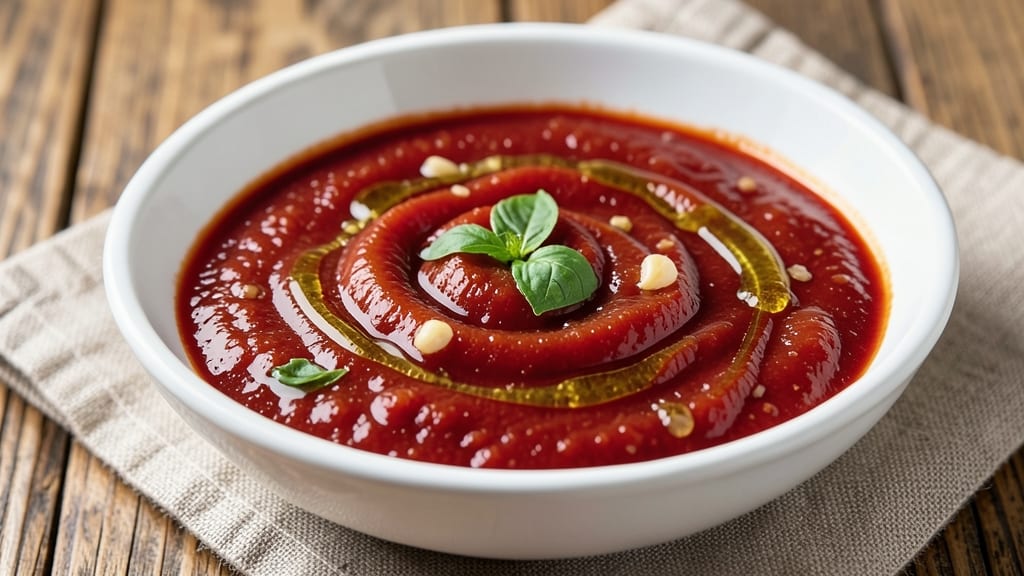
This Arby's marinara sauce recipe delivers that signature velvet-smooth tomato base with just the right tangy brightness. The secret lies in balancing sweet tomato paste with sharp vinegar and aromatic garlic, creating a sauce that's rich yet light on the palate.
I've perfected this version after years of testing—it's the closest homemade match to the iconic restaurant flavor without any shortcuts.
What makes this marinara special is the two-stage cooking process: first simmering the base to develop deep flavor, then blending for that signature smooth texture. The sauce builds layers of taste through slow reduction, with just enough sugar to balance the acidity and herbs to add freshness.
This isn't your typical chunky marinara—it's designed to complement Arby's signature roast beef without overpowering it.
The result is a sauce that's perfectly balanced: slightly sweet from the tomato paste, tangy from the vinegar, and savory from the garlic and herbs.
It's versatile enough for pasta, dipping, or even as a pizza topping, but truly shines when used exactly as Arby's intended—on their famous roast beef sandwiches. The consistency is velvety smooth, with just enough body to cling beautifully.
One key advantage of making this at home is control over the seasoning. You can adjust the sweetness, tang, or saltiness to your exact preference, unlike store-bought versions. The recipe yields about 2 cups, perfect for meal prep or gifting to fellow Arby's fans. Let's get cooking!
Ingredients for arby's marinara sauce
Nine simple ingredients craft that iconic Arby's sauce—smooth, tangy, and full of flavor.
| Ingredient | Amount | Notes |
|---|---|---|
| Tomato Paste 🍅 | 2 tbsp | High-quality, no sugar added |
| White Vinegar 🍶 | 1 tbsp | White or apple cider vinegar |
| Granulated Sugar 🍚 | 1 tsp | Balances acidity perfectly |
| Garlic Cloves 🧄 | 2 cloves | Fresh, minced finely |
| Olive Oil 🫒 | ½ cup | Extra-virgin for richness |
| Dried Basil 🌿 | 1 tsp | Or 1 tbsp fresh basil |
| Dried Oregano 🌿 | ½ tsp | Italian or Mediterranean blend |
| Salt 🧂 | ½ tsp | Diamond Crystal kosher salt |
| Black Pepper 🌶️ | ¼ tsp | Freshly ground preferred |
| Water 💧 | 1 ½ cups | Room temperature preferred |
The tomato paste is your flavor anchor. Trader Joe's or Muir Glen are my go-tos—they're consistent and have no added sugar. Fresh garlic is non-negotiable here; the flavor difference is massive. If you can't find fresh, garlic powder at half the amount works in a pinch, but it won't be the same. The olive oil adds richness that store-bought sauces often miss—use something fruity and peppery, not mild. I always grab a small bottle of California olive oil from the grocery store's olive bar section when I'm making this.
No vinegar? Lemon juice at double the amount works, but it'll be slightly different. Fresh basil is ideal, but dried oregano is a solid swap—just don't skip it. The sugar might seem odd, but it's crucial to balance the acidity from the vinegar. If you prefer less sweetness, reduce it to 0.75 tsp. The water can be subbed with low-sodium vegetable broth for extra depth, though it'll change the texture slightly. For a smoother sauce, strain it through a fine-mesh sieve after blending—worth the extra minute if you're serving it as a dip.
This sauce keeps beautifully in the fridge for 1 week in an airtight jar, and freezes for 3 months if you want to make a big batch. I always double the recipe because it disappears fast—especially when you're feeding Arby's fans. The sauce thickens as it cools, so add a splash of water if it gets too stiff. Store it in a jar with a tight seal to preserve that velvety texture. Trust me, the leftovers taste even better the next day.
Why You'll Love This Recipe
- Pantry Magic: I swear by this recipe—it uses stuff I already have. No special trips to the store, just tomato paste, vinegar, and a head of garlic. That’s it. The sugar balances the acidity so well, it’s like Arby’s figured out the perfect cheat code for homemade sauce.
- Garlicky Kick: Between us, the garlic here is the star. You don’t even need fancy minced—just a few cloves, crushed and simmered in olive oil, and suddenly everything tastes like it’s been kissed by a chef. That deep, toasty aroma? Instant mood booster.
- Weeknight Hero: This sauce is my go-to for pasta, pizza, or even dipping bread when I’m too tired to think. It keeps in the fridge for days, so I can make a big batch and forget about it. Honestly, I’ve had it last me through three dinners without a single complaint.
- Budget Game-Changer: A single can of tomato paste and a few cloves of garlic stretch into enough sauce to feed my family for days. I’m talking real savings—no more splurging on fancy jars when this tastes just as good, if not better. Plus, it’s foolproof, so no wasted ingredients.
Step-by-step instructions for Arby's-style marinara sauce
Here's how to craft that signature Arby's velvet-smooth marinara with perfect vinegar brightness.
Bloom the Aromatics in Olive Oil
Heat the 0.5 cup olive oil in a medium saucepan over medium-low heat. Add the 2 cloves minced garlic and let them sizzle gently for 1-2 minutes until fragrant but not browned. This step builds flavor without bitterness—garlic should smell sweet, not burnt.
I keep the heat low here because garlic burns faster than you think. If it starts to darken, reduce heat immediately. The oil should shimmer but not smoke. This aromatic base forms the sauce's foundation, so take your time with this step.
Add Tomato Paste and Cook Until Deepened
Stir in the 2 tbsp tomato paste and cook for 2-3 minutes, stirring constantly, until it darkens slightly and releases its rich, concentrated flavor. The paste will transform from bright red to a deeper, more complex hue—this indicates the raw starch is breaking down.
Don't rush this step. The deepened color means the paste is fully incorporated and ready to absorb the other ingredients. If it sticks to the pan, add 1 tablespoon water to help it release. This creates that signature Arby's sauce thickness without gumsiness.
Build the Sauce with Vinegar and Herbs
Pour in the 1 tbsp white vinegar and 1.5 cups water, then add the 1 tsp granulated sugar, 1 tsp dried basil, 0.5 tsp dried oregano, 0.5 tsp salt, and 0.25 tsp black pepper. Stir well to combine all ingredients thoroughly—this ensures even distribution of flavors throughout the sauce.
The vinegar brightens the sauce's acidity while balancing the sweetness from the sugar. I like to taste at this stage to adjust seasoning. The sauce should be tangy but not harsh, with a subtle sweetness that rounds out the flavors. If it tastes too sharp, add a pinch more sugar.
Simmer Until Thick and Velvety
Bring the mixture to a gentle simmer over medium heat, then reduce to low heat and let it cook uncovered for 15-20 minutes, stirring occasionally. The sauce will gradually thicken as the starch from the tomato paste activates and the liquid reduces.
You're looking for a sauce that coats the back of a spoon smoothly—it should be thick enough to cling to roasted chicken or meatballs but still flow easily. If it thickens too quickly, add 1-2 tablespoons water to maintain the perfect consistency. The sauce should smell rich and herby, with no raw or vinegary notes remaining.
Rest and Adjust for Perfect Texture
Remove the sauce from heat and let it rest for 5-10 minutes. This resting period allows the flavors to meld completely and the sauce to reach its ideal texture. I find that resting prevents the sauce from continuing to thicken as it cools.
After resting, give it one final taste. If needed, adjust seasoning—perhaps a touch more salt for depth or a splash of vinegar for brightness. The sauce should be velvety smooth with a perfect balance of sweet, tangy, and herby notes. This is the moment where all the flavors come together into that signature Arby's marinara you know and love.
Pro Tips For Making Arby'S Marinara Sauce
- Simmer Low and Slow: After burning my first batch by cranking the heat, I learned this sauce needs gentle warmth—no boiling. Keep it at a steady simmer (tiny bubbles, but not rolling) for 20-30 minutes. The longer it cooks, the deeper the flavor, but don’t walk away; stir occasionally to prevent sticking.
- Mince Garlic Like You Mean It: I used to crush whole cloves and wonder why the sauce lacked punch. For this recipe, finely mince the garlic (or pulse it in a food processor) so it blends smoothly. No visible flecks means even distribution—no one wants a surprise garlic bite.
- Balance the Vinegar Gradually: Dump the white vinegar in all at once and you’ll end up with a mouth-puckering sauce. Start with half, taste, then add the rest as you go. The goal is tangy, not sour—adjust while it simmers so the sugar can mellow it out.
- Skip the Water Shortcut: I know some recipes call for water to thin tomato paste, but this sauce thrives on its thickness. If it’s too stiff, add a splash of vinegar or a pinch of sugar instead—it keeps the texture rich and clingy, just like Arby’s. Thin with water and you’ll lose that signature body.
Common mistakes when making perfect results
Overcooking the Base
One of the biggest mistakes is letting the tomato paste burn or overcook during the initial 2-3 minute cooking step. When the paste darkens too much, it develops bitter flavors that ruin the sauce's delicate balance.
I've learned to keep the heat at medium-low and stir constantly—this ensures the paste caramelizes just enough without burning. If you notice any browned bits, immediately add 1 tablespoon water to deglaze and restore smoothness. 🔥
Skipping the Resting Step
Rushing to serve the sauce right after simmering is a common error. The 5-10 minute rest is crucial for letting flavors meld and the sauce to reach its ideal texture. Without resting, the sauce continues to thicken as it cools, often becoming too stiff.
I always let mine rest while I finish preparing the rest of my meal—it makes a world of difference in the final consistency.
Ignoring Vinegar Balance
Many homemade marinara recipes skimp on vinegar, but Arby's sauce relies on that signature tang. Using too little makes the sauce taste flat, while too much can overwhelm the tomato flavor. The 1 tbsp white vinegar in this recipe is perfect for achieving that bright, slightly acidic profile.
If you're nervous about the taste, remember that the 1 tsp sugar will balance it beautifully. Trust the recipe—your taste buds will thank you later.
Using Low-Quality Ingredients
The difference between store-bought and homemade marinara often comes down to ingredient quality. Using cheap tomato paste with added sugar or mild olive oil will result in a bland sauce. I always recommend Muir Glen tomato paste and extra-virgin olive oil for that rich, authentic flavor.
The garlic should be fresh—never powdered—and the herbs should be high-quality dried or fresh. These small upgrades make a huge difference in the final product.
Not Adjusting Seasoning
Every kitchen has different humidity levels and water hardness, which affects how your sauce tastes. Tasting and adjusting the seasoning at each critical step—especially after the 15-20 minute simmer—ensures perfect balance. If your sauce tastes too sharp, add a pinch more sugar.
If it's too mild, a splash of vinegar or extra salt can bring it back to life. Don't be afraid to taste as you go—it's the only way to get it just right. ✨
Overblending the Sauce
While Arby's marinara is known for its smooth texture, overblending can turn it into a glue-like consistency. The sauce should be velvety, not thick and pasty. If you're blending, use a immersion blender for better control, or simply strain the sauce through a fine-mesh sieve after simmering.
This removes any lumps while keeping the natural body intact. The goal is that signature Arby's smoothness without losing the sauce's rich, complex flavor profile.
Nutrition facts
Frequently asked questions
Why does Arby's marinara taste different from other store-bought sauces?
The secret lies in the balance of ingredients and cooking technique. Arby's version uses a precise ratio of white vinegar for tang, tomato paste for depth, and just enough sugar to balance the acidity. The slow simmering process develops rich, complex flavors that you won't find in most jarred sauces, which often rely on preservatives and artificial flavors.
Can I make this sauce without a blender?
If you don't have a blender, simply simmer the sauce longer (25-30 minutes) and stir frequently. The tomato paste will naturally break down into a smooth consistency. For extra silkiness, strain it through a fine-mesh sieve after cooking. The texture will be slightly thicker but still delicious—just like Arby's original!
How can I use this sauce beyond roast beef sandwiches?
This versatile sauce works perfectly on pasta dishes, as a dipping sauce for mozzarella sticks, or as a pizza topping. Try it with grilled chicken or shrimp for a restaurant-quality meal. The smooth texture makes it ideal for sauces where you want the focus on the protein rather than chunks of tomato.
Can I substitute apple cider vinegar for white vinegar?
Yes, you can use apple cider vinegar, but you'll need to adjust the amount slightly. Start with 0.75 tbsp instead of 1 tbsp white vinegar, as it's milder. The fruitiness will add a subtle sweetness that complements the sauce beautifully. If you prefer a sharper tang, increase to 1 tbsp and balance with an extra pinch of sugar.
What's the best way to store leftover sauce?
Transfer the cooled sauce to an airtight container and refrigerate for up to 7 days. For longer storage, freeze it in ice cube trays or small containers for 3 months. Thaw overnight in the fridge—never at room temperature. The sauce thickens as it cools, so add a splash of water when reheating to restore the perfect consistency.