
Sauces & Condiments
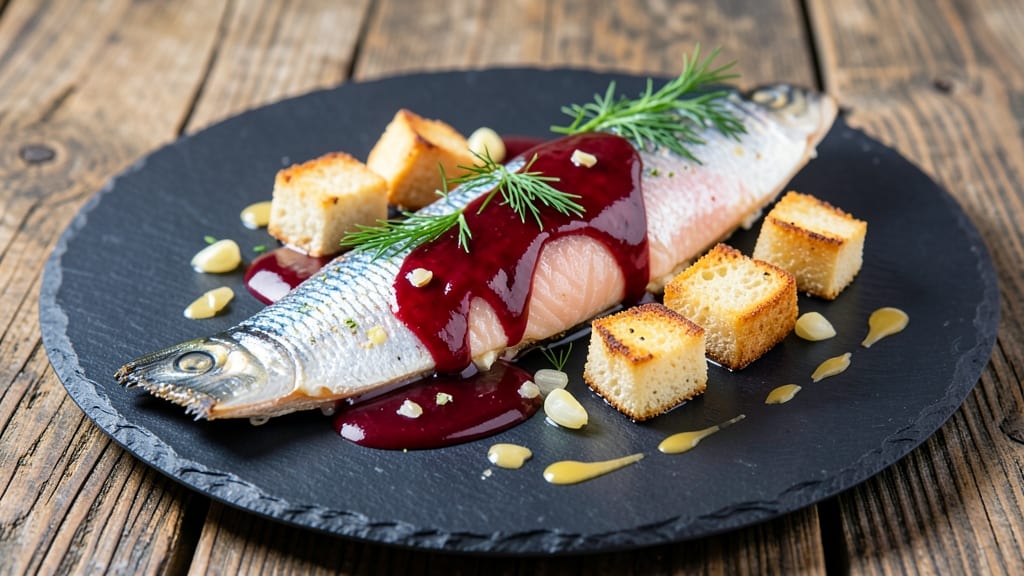
This herring in wine sauce recipe transforms humble fish into a restaurant-worthy dish with just six ingredients and a 30-minute simmer. The marriage of briny herring and rich red wine creates a sauce that's both elegant and deeply satisfying—perfect for elevating simple weeknight meals into something special.
I developed this version after years of experimenting with Scandinavian techniques, where herring plays a starring role in countless traditional dishes.
The secret lies in the sauce: reducing red wine with shallots and cream until it coats the back of a spoon, then gently folding in tender herring fillets. This method preserves the fish's delicate texture while infusing it with layers of wine's velvety depth and subtle acidity.
The result is a dish that's equally at home on a rustic wooden board or elegant dinner table.
What you'll achieve is herring that's perfectly tender, swimming in a glossy wine sauce with just the right balance of richness and brightness. The sauce clings to every bite, creating a harmony of flavors that's both comforting and sophisticated.
Serve with crusty bread to soak up every last drop or alongside roasted potatoes for a complete meal.
This recipe works equally well with fresh or pickled herring, making it versatile for different pantries. The wine sauce also freezes beautifully, so you can prepare it ahead for those spontaneous dinner invitations. Let's create this dish that bridges tradition and modern simplicity.
Ingredients for herring in wine sauce
Six ingredients transform simple herring into an elegant wine sauce masterpiece.
| Ingredient | Amount | Notes |
|---|---|---|
| Fresh or Pickled Herring Fillets 🐟 | 12 oz | Skin-on preferred for texture |
| Dry Red Wine 🍷 | 1 cup | Bold variety like Cabernet Sauvignon |
| Heavy Cream 🥛 | ½ cup | Full-fat for richness |
| Shallots 🧅 | 3 whole | Minced for fine texture |
| Unsalted Butter 🧈 | 2 tbsp | European-style preferred |
| Fresh Dill 🌿 | ¼ cup | Chopped for freshness |
| Lemon Juice 🍋 | 1 tbsp | Freshly squeezed |
| Salt 🧂 | ½ tsp | Kosher or sea salt |
| Black Pepper 🌶️ | ¼ tsp | Freshly ground |
The herring is the star—fresh fillets have delicate texture, but high-quality pickled herring works beautifully too. For fresh, look for fillets with vibrant color and minimal fishy odor at Whole Foods or your local seafood market. The red wine matters just as much: Cabernet Sauvignon or Merlot add depth, while Pinot Noir offers lighter elegance. Shallots should be firm with no green shoots, and fresh dill is non-negotiable—dried simply won't cut it here. Butter quality elevates everything, so skip the margarine substitutes.
No fresh herring? High-quality pickled herring (like those from Scandinavian markets) brings briny depth without extra work. Running short on red wine? Dry white wine or vermouth can substitute, though the flavor profile shifts slightly. The cream can be swapped for half-and-half or coconut cream for a lighter option. Fresh dill unavailable? Dried dill at one-third amount works in a pinch, though texture suffers. For extra richness, add 1 tbsp crème fraîche at the end—trust me, it's worth it.
This sauce freezes beautifully—portion into ice cube trays for single servings. Keeps for 3 months in the freezer or 5 days in the fridge. For best results, reheat gently on low heat, adding a splash of water if it thickens too much. The herring reheats best at room temperature for 10 minutes before serving. Leftovers make fantastic sandwiches the next day—just add some creamy horseradish for kick.
Why You'll Love This Recipe
- One-Pan Magic: I swear by this—just melt butter, toss in shallots until they’re golden, pour in the wine, and let it simmer. No chopping, no fuss, and the sauce practically makes itself while you slice the herring.
- Wine & Cream Dream: That first sip of the sauce—rich, tangy, with the wine cutting through the cream’s silkiness—is chef’s kiss. The herring soaks up the flavor like a sponge, giving every bite a luxurious bite.
- Weeknight to Dinner Party: Make it for Tuesday supper or impress guests—same effort, different vibes. Serve it over toasted rye with dill for a quick lunch, or plate it with crusty bread and a side salad for a restaurant-worthy meal.
- Budget Luxury Leftovers: Herring’s affordable, but the wine sauce makes it feel special. Double the batch; the leftovers reheat beautifully for sandwiches or pasta the next day. Honestly, it’s my go-to for stretching groceries without sacrificing flavor.
Step-by-step instructions for herring in wine sauce
This method transforms simple herring into a luxurious dish with rich, balanced flavors.
🍳 Step 1: Prepare the Herring and Shallots
Rinse the 12 oz fresh or pickled herring fillets under cold water if using fresh, then pat completely dry with paper towels. Remove any remaining skin or bones, then cut each fillet into ½-inch thick pieces. This size ensures even cooking and proper sauce absorption.
Peel and finely mince the 3 whole shallots using a sharp knife or food processor for a smooth texture. Set aside in a small bowl. The minced shallots will form the aromatic base of your sauce, so take your time to achieve an even, fine chop. If using pickled herring, drain well and pat dry before cutting.
🔥 Step 2: Sauté Shallots Until Transparent
Heat a large skillet over medium heat and melt the 2 tbsp unsalted butter until it foams. Add the minced shallots and cook for 3-4 minutes, stirring frequently, until they become soft and transparent. This step develops their sweetness and removes any raw bite.
Watch closely as they cook—they should never brown. If they start to color, reduce the heat slightly. The butter will create a delicate foundation for the wine sauce, so don't rush this process. You'll know they're ready when they look like fine confetti in the pan.
🍷 Step 3: Deglaze with Wine and Simmer
Pour in the 1 cup dry red wine and increase heat to medium-high. Scrape up any browned bits from the bottom of the pan with a wooden spoon—these contain concentrated flavor. Let the wine simmer for 5-6 minutes until reduced by about half, or until it coats the back of a spoon.
This reduction step intensifies the wine's flavor and forms the sauce's base. If you notice the sauce thickening too quickly, add 1-2 tablespoons of water to maintain a smooth consistency. The wine should smell rich and aromatic, not sharp or alcoholic.
🥘 Step 4: Add Herring and Finish the Sauce
Add the herring pieces to the skillet and cook for 2-3 minutes until they begin to flake slightly. Stir gently to avoid breaking them apart completely. Then reduce heat to low and stir in the 0.5 cup heavy cream, 1 tbsp lemon juice, 0.5 tsp salt, and 0.25 tsp black pepper. Let the sauce simmer gently for 3-4 minutes until it thickens slightly.
Here's the thing—don't let the sauce boil. You're looking for a gentle simmer that coats the herring pieces without curdling the cream. The lemon juice brightens the dish, cutting through the richness of the wine and cream. Taste and adjust seasoning if needed.
🌿 Step 5: Incorporate Dill and Serve
Remove the skillet from heat and stir in the 0.25 cup chopped fresh dill. The dill adds a bright, herbal note that complements the wine and herring beautifully. Let the dish sit off heat for 2-3 minutes to allow the flavors to meld.
Serve immediately over buttered egg noodles, crusty bread, or steamed potatoes. The sauce should coat the herring pieces and spoon easily over the accompaniment. If the sauce thickens too much while serving, simply whisk in a splash of warm water or reserved pasta water to reach your desired consistency.
Pro Tips For Making Herring In Wine Sauce
- Sweat Shallots Slow: I used to rush this and end up with bitter, raw shallots in the sauce. Instead, cook them on medium-low with the butter until they’re translucent and just starting to caramelize—about 8-10 minutes. That’s when the wine will actually deglaze properly, not just steam off.
- Rinse Pickled Herring: If using pickled herring, give those fillets a quick rinse under cold water before adding them to the sauce—especially if they’re briny. You don’t want the wine sauce to turn into a salt bomb. Pat them dry afterward so they don’t dilute the sauce.
- Reduce Wine First: Don’t just dump the wine in and hope for the best. Reduce it by half first—simmer it down until it’s syrupy and the alcohol burns off. This concentrates the flavor and keeps the sauce from tasting thin or boozy. (Yes, even if you’re impatient like me.)
- Whisk in Cream Last: Heavy cream added too early will curdle when the wine reduces. Instead, stir it in off the heat at the very end, letting the sauce cool slightly first. If it thickens too much, a splash of warm water thins it out—no lumps, no stress.
Make-ahead tips for herring in wine sauce
Sauce Prep Ahead
Make the wine sauce up to 2 days in advance for maximum flavor development. After Step 3 (wine reduction), transfer the sauce to an airtight container and refrigerate. When ready to serve, simply reheat over low heat with the herring added at the end.
The flavors deepen as the wine and cream meld together, creating a more complex sauce. 🥣
Herring Prep Strategy
Prep the herring separately and store it in the fridge for up to 12 hours before cooking. Cut the fillets into ½-inch pieces and place them in a sealed container with a sprinkle of ½ tsp salt and ¼ tsp black pepper.
This keeps them fresh and ready to go when you're ready to cook. The key is to keep them dry—pat them thoroughly before adding to the sauce. 🐟
Freezer-Friendly Sauce
Freeze the completed sauce (without herring) in ice cube trays for easy portion control. Once frozen, transfer cubes to a labeled freezer bag. Thaw overnight in the fridge, then reheat gently.
To use, simply add fresh herring pieces to the reheated sauce and finish with dill. This method works perfectly for meal prep—just grab a cube and go! ❄️
Make-Ahead Serving Ideas
Prepare herring and sauce separately, then assemble just before serving. Serve over pre-cooked egg noodles or roasted potatoes that you've made ahead. For a complete meal, reheat the noodles or potatoes separately and spoon the herring sauce over them. This keeps everything hot and fresh-tasting when served. 🍽️
Leftovers Reinvented
Transform leftovers into herring sandwiches by spreading the sauce on rye bread with a layer of cream cheese. Add a handful of arugula or watercress for freshness.
The wine sauce adds a sophisticated touch to a simple lunch. Store leftovers in the fridge for up to 3 days or freeze for 1 month. 🥪
Timing Tips for Stress-Free Cooking
Start with the sauce reduction first—it takes the longest and can simmer while you prep other components. If serving with potatoes, roast them 30 minutes ahead and keep warm in a 200°F oven.
For noodles, cook them al dente, drain, and toss with a little butter to prevent sticking. This way, everything comes together in minutes when you're ready to serve. ⏰
Nutrition facts
Frequently asked questions
Can I use white wine instead of red?
The recipe calls for red wine to complement the herring's richness, but you can substitute with dry white wine or vermouth if needed. The flavor will be lighter and more delicate, so consider adding ½ tsp extra lemon juice to balance the acidity. For best results, choose a white wine with good body like Chardonnay or Sauvignon Blanc.
How do I know when the herring is cooked properly?
The herring should flake easily with a fork and reach an internal temperature of 140°F when done. For fresh herring, look for opaque flesh that separates cleanly from the skin. If using pickled herring, it will cook faster—watch closely to avoid overcooking. The sauce should coat the pieces without making them soggy.
What if my sauce gets too thick?
Simply whisk in 1-2 tablespoons of warm water or reserved pasta water to loosen the sauce. If it's still too thick, add a splash more while reheating. The sauce should coat the back of a spoon but remain smooth and silky. For extra richness, you can also stir in 1 teaspoon of butter at the end.
Can I make this dish ahead of time?
Yes! Prepare the wine sauce up to 2 days ahead and store it in an airtight container in the fridge. Reheat gently before adding the herring pieces. For best results, assemble the dish just before serving to maintain the herring's texture. The sauce actually tastes better the next day as flavors meld together.
What are the best sides to serve with this?
This dish pairs beautifully with buttered egg noodles, crusty sourdough bread, or creamy mashed potatoes. For a lighter option, try a simple mixed greens salad with lemon vinaigrette. The wine sauce also works wonderfully over roasted root vegetables like carrots and parsnips for a hearty meal.