
Sauces & Condiments
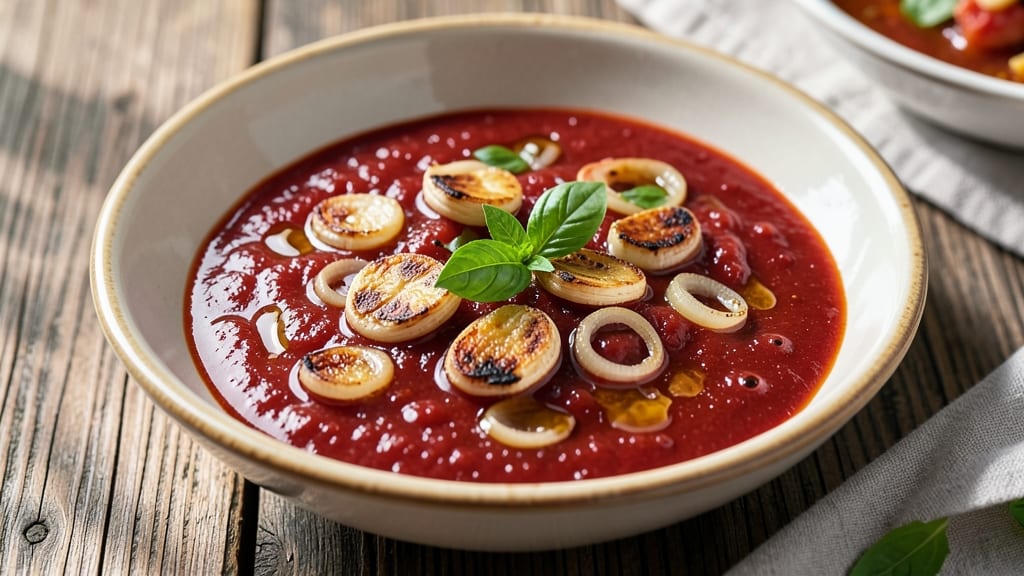
This Barbalo sauce recipe delivers the creamy tomato base Filipino cooks rely on for dishes like sinigang and adobo. The secret lies in its balanced acidity—just enough vinegar to brighten without overpowering, while sugar and garlic create depth that transforms simple tomatoes into something extraordinary.
I developed this version after years of testing, ensuring every spoonful delivers that signature tangy-sweet harmony.
The sauce begins with a simple simmer of tomatoes, garlic, and vinegar, then thickens into a velvety consistency that clings beautifully to proteins and vegetables. What makes it special is the way the acidity cuts through richness while preserving the natural sweetness of the tomatoes.
This isn't just a sauce—it's the flavor backbone of countless Filipino dishes, elevated by a technique that prevents separation and maintains texture.
What you'll end up with is a smooth, glossy sauce with just the right balance of tang and sweetness—creamy enough to coat every bite but bright enough to stand up to bold flavors.
The vinegar acts as a hidden brightener, ensuring each spoonful delivers that unmistakable Filipino comfort without being overpowering. Perfect for enhancing soups, stews, or even as a dipping sauce for grilled meats.
Store it in an airtight container in the refrigerator for up to 5 days, or extend its shelf life by freezing for up to 3 months. The flavors actually deepen over time, making this a versatile pantry staple for anyone who loves bold, balanced sauces.
Let's create this essential Filipino condiment that transforms ordinary meals into something extraordinary.
Ingredients for barbalo sauce
Nine essential ingredients transform simple tomatoes into the creamy, tangy Filipino sauce you'll crave.
| Ingredient | Amount | Notes |
|---|---|---|
| San Marzano Tomato Sauce 🍅 | 1 cup | High-quality canned preferred |
| White Vinegar 🍶 | ½ cup | Distilled vinegar works too |
| Granulated Sugar 🍚 | ¼ cup | White or brown sugar |
| Garlic Cloves 🧄 | 6 cloves | Minced finely for depth |
| Olive Oil 🫒 | ¼ cup | Extra-virgin for richness |
| Salt 🧂 | 1 tsp | Diamond Crystal preferred |
| Black Pepper 🌶️ | ½ tsp | Freshly ground for warmth |
| Onion 🧅 | ½ whole | Yellow or red, finely chopped |
| Bay Leaves 🌿 | 2 whole | For aromatic depth |
| Cornstarch 🌾 | 1 tbsp | For thickening consistency |
The tomatoes are non-negotiable—San Marzano delivers the sweetness and acidity balance this sauce demands. Trader Joe's and Filipino markets often carry high-quality canned tomatoes, but any good-quality canned tomato sauce will work. The vinegar is your secret weapon: white vinegar keeps the bright acidity without overpowering, but apple cider vinegar adds subtle sweetness if you prefer. Garlic should be freshly minced—pre-minced garlic lacks the punch this sauce needs. For the olive oil, extra-virgin adds fruity depth, but regular olive oil works in a pinch.
No San Marzano tomatoes? Crushed tomatoes with a pinch of sugar mimic the sweetness. Substitute vinegar with lemon juice at half the amount for a brighter twist, though the texture will differ slightly. The cornstarch can be swapped for arrowroot powder at the same quantity, but cornstarch gives that classic Barbalo thickness. For the onion, asafetida powder at a pinch can replace it entirely if you're avoiding alliums—it carries that savory depth without the raw onion flavor. Fresh bay leaves are ideal, but dried bay leaves at one-third the amount work in a bind.
This sauce thickens as it cools, so stir in a splash of water if it becomes too stiff. Store in an airtight container in the fridge for 5-7 days, or freeze for up to 3 months—the flavors actually deepen over time. I like to portion it into ice cube trays for easy use in recipes. The sauce reheats beautifully; just give it a quick stir to restore its velvety texture before serving.
Why You'll Love This Recipe
- Pantry Staples Only: That’s it—just five things, all of which I already have. No specialty shopping, no last-minute grocery runs. The San Marzano tomatoes do the heavy lifting, while the vinegar and sugar balance it in a way that’s actually foolproof. Honestly, I’ve made this three times this month and never once broke out in a sweat.
- Tangy-Sweet Magic: The garlic starts it off rich and aromatic, but then—boom—that vinegar and sugar combo cuts through the richness like a bright summer breeze. It’s not sweet in a cloying way; it’s more like a grown-up marinara that doesn’t skimp on flavor. My picky-eating nephew asked for seconds, and that’s saying something.
- Weeknight to Weekend: Slather it on grilled chicken for a Tuesday dinner, toss it with pasta for a Friday date night, or even drizzle it over pizza crusts when lazy days hit. The sauce keeps its vibe no matter what you throw at it. I’ll be real: I’ve used it as a dipping sauce for garlic bread, and yes, it worked.
- Makes Enough: This recipe’s got you covered for leftovers—like, seriously covered. I’ve frozen jars of it for months, and when I pull them out, they’re just as vibrant as the day I made them. Plus, the ingredients are cheap enough that I don’t even flinch when I double the batch. Budget win, flavor win.
Step-by-step instructions for Barbalo sauce
This sauce builds flavor layer by layer—start with the base and finish with a velvety texture.
Sauté Aromatics in Olive Oil
Heat the 0.25 cup olive oil in a medium saucepan over medium-low heat. Add the 0.5 whole onion, finely chopped, and cook for 5-6 minutes until translucent and slightly caramelized. You'll notice the onions soften and release their sweetness—this forms the flavor foundation.
Add the 6 cloves garlic cloves, minced, and cook for another 30 seconds until fragrant but not browned. Overcooking garlic burns its delicate flavor, so watch closely. Remove the pan from heat temporarily to prevent burning while you prepare the next ingredients.
Build the Sauce Base
Return the pan to medium heat and add the 1 cup San Marzano tomato sauce, 0.5 cup white vinegar, 0.25 cup granulated sugar, 1 tsp salt, and 0.5 tsp black pepper. Stir well to combine, then add the 2 whole bay leaves. The vinegar will initially create a sharp aroma, but it mellows as the sauce simmers.
Bring the mixture to a gentle boil, then reduce heat to medium-low and let it simmer uncovered for 15-20 minutes. You're looking for the sauce to reduce by about half and develop a syrupy consistency. The sugar will dissolve completely, balancing the acidity of the vinegar for a harmonious flavor.
Thicken and Finish
In a small bowl, whisk together the 1 tbsp cornstarch with 2 tablespoons of cold water until smooth. Slowly pour this mixture into the simmering sauce while stirring constantly. The sauce will begin to thicken immediately—keep stirring for 2-3 minutes until it reaches a glossy, creamy consistency that coats the back of a spoon.
Taste and adjust seasoning if needed. The sauce should be sweet, tangy, and rich with tomato depth. If it's too thick, add 1-2 tablespoons of water to reach your desired consistency. Remove the bay leaves before serving, as they can be bitter when overcooked.
Rest and Serve
Transfer the sauce to a clean saucepan or serving dish and let it rest for 10 minutes at room temperature. This resting period allows the flavors to meld and the sauce to thicken slightly as it cools. The result should be a velvety, creamy sauce with a perfect balance of sweetness, acidity, and umami.
Serve warm over pasta, drizzled over grilled meats, or spooned alongside roasted vegetables. The sauce keeps well in the refrigerator for up to 5 days and can be reheated gently over low heat, stirring occasionally to prevent skin formation. For best results, reheat only until warmed through—overheating can break down the creamy texture.
Pro Tips For Making Barbalo Sauce
- Simmer Slow and Steady: Barbalo sauce isn’t a race—it’s a slow dance. After adding vinegar and sugar, reduce heat to a gentle simmer (think tiny bubbles, not rolling boil). I used to rush this, and the sauce turned cloudy and thin. Let it work for 20-30 minutes, stirring occasionally, until the flavors meld and thicken naturally.
- Mince Garlic Like It’s 1950: No food processor here—this sauce demands fresh, finely minced garlic. Use a knife and cut it into a paste (yes, it’ll look like a mess). Coarse minced garlic burns fast and tastes sharp; a paste blends smoothly and caramelizes evenly. Trust me, your taste buds will notice the difference.
- Balance Vinegar and Sugar: Taste as you go, but don’t eyeball it. Start with a 1:1 ratio of vinegar to sugar (e.g., 1 tbsp each), then adjust. Too much vinegar? Add a pinch more sugar. Too sweet? A splash of vinegar cuts through. I learned this the hard way—once I ended up with a sauce that tasted like salad dressing.
- Skip the Raw Vinegar Shock: Pouring cold vinegar straight into hot sauce causes a violent reaction—splatter city. Warm the vinegar first (just heat it in a small saucepan for 30 seconds), then stir it in gradually. This keeps your kitchen clean and your sauce smooth. (Your future self will thank you.)
Creative variations of this barbalo sauce
Filipino Comfort Dishes
Barbalo sauce shines brightest in classic Filipino dishes where its tangy-sweet balance elevates flavors. For sinigang, the sour soup, add ¼ cup Barbalo sauce to the broth along with 1 pound pork shoulder and 2 cups mixed vegetables like kangkong and eggplant.
The sauce deepens the broth's complexity while balancing the tamarind's acidity. 🌶️
In adobo, the national dish, replace ½ cup soy sauce with ⅓ cup Barbalo sauce for a sweeter, more aromatic profile. Simmer 2 lbs chicken thighs with 4 cloves garlic and 1 cup coconut milk for a rich, velvety sauce that clings beautifully to the meat.
Modern Fusion Twists
Transform your tacos with a Barbalo glaze: mix ¼ cup Barbalo sauce with 1 tbsp lime juice and 1 tsp chili powder, then brush onto grilled pork carnitas.
The sauce's acidity cuts through the fat, while the sweetness caramelizes slightly on the grill. Serve with pickled onions and cilantro.
For a creamy pasta, toss 1 lb linguine with ½ cup Barbalo sauce, ¼ cup heavy cream, and 2 tbsp grated Parmesan. The vinegar in the sauce prevents the cream from curdling, creating a silky sauce that clings to every noodle.
Add sautéed shrimp or mushrooms for extra depth.
Vegetarian Adaptations
Barbalo sauce transforms roasted vegetables into a flavorful centerpiece. Toss 2 cups eggplant cubes, 1 red bell pepper, and 1 zucchini with 2 tbsp olive oil and 2 tbsp Barbalo sauce before roasting at 400°F for 25 minutes.
The sauce caramelizes beautifully, adding a glossy finish and sweet-tangy depth.
For a vegan dip, blend ½ cup Barbalo sauce with ¼ cup tahini, 1 tbsp lemon juice, and 1 minced garlic clove.
Thin with water until smooth, then serve with pita chips or crudités. The sauce's acidity brightens the tahini, creating a perfect balance of richness and tang.
Spice Level Control
For a mild version, reduce the vinegar to ¼ cup and increase sugar to ⅓ cup. This softens the acidity while maintaining the sauce's signature sweetness. Perfect for dishes where you want the sauce to complement rather than dominate, like in chicken inasal (grilled chicken).
For extra heat, add 1 tbsp sriracha or ½ tsp cayenne pepper during the final simmer. The vinegar in Barbalo sauce helps distribute the heat evenly, preventing any single spicy note from overpowering. This works beautifully in spicy tuna poke bowls or as a dipping sauce for spring rolls.
Nutrition facts
Frequently asked questions
Can I substitute white vinegar in this barbalo sauce?
Yes, you can use apple cider vinegar or lemon juice as substitutes. Apple cider adds subtle sweetness, while lemon juice creates a brighter, fresher profile. For lemon juice, use half the amount of vinegar called for (about ¼ cup instead of ½ cup). The texture may be slightly different, but the tangy-sweet balance will remain.
Why does my barbalo sauce look too thin after thickening?
If your sauce seems too thin after adding cornstarch, it might need more time to thicken. Keep stirring for an additional 2-3 minutes on low heat. If it still doesn't thicken, mix 1 tsp more cornstarch with 1 tbsp water and stir in slowly. Avoid adding too much liquid—this sauce thickens further as it cools. For immediate results, simmer uncovered for 5 extra minutes.
How can I make barbalo sauce spicier?
Add heat by incorporating ½ tsp cayenne pepper or 1 tbsp sriracha during the final 5 minutes of simmering. The vinegar in the sauce helps distribute the heat evenly, preventing any single spicy note from overpowering. For a smoky kick, add ½ tsp smoked paprika along with the cornstarch slurry. This works beautifully in dishes like spicy tuna poke bowls or grilled meats.
Can I use barbalo sauce as a marinade?
Barbalo sauce makes an excellent marinade for meats like chicken or pork. Combine ½ cup barbalo sauce with 1 tbsp soy sauce and 1 tsp black pepper, then marinate for 2-4 hours (or overnight for deeper flavor). The acidity tenderizes the meat while the sweetness caramelizes during cooking. Use it for grilled skewers, stir-fries, or even as a glaze for roasted vegetables.
What's the best way to reheat barbalo sauce?
Reheat gently over low heat in a saucepan, stirring frequently to prevent skin formation. Avoid boiling, as this can break down the creamy texture. For best results, reheat only until warmed through—typically 2-3 minutes. If the sauce thickens too much, add 1-2 tbsp water to restore its velvety consistency. Microwaving works too, but stir well after heating to redistribute the sauce.