
Sauces & Condiments
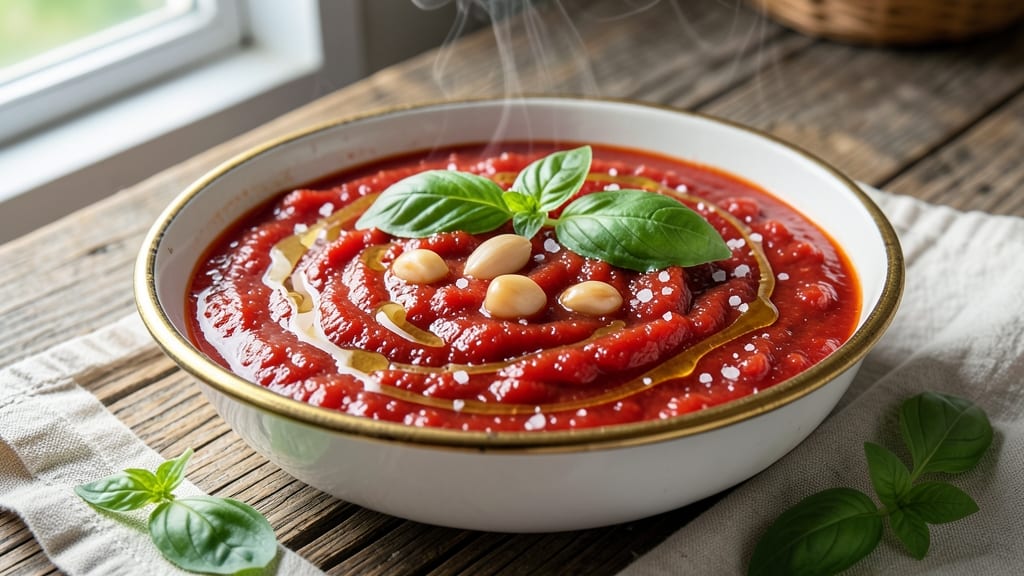
This Ball canning tomato sauce recipe transforms summer tomatoes into a rich, vinegar-balanced Italian sauce that preserves perfectly in jars. The key lies in balancing acidity with traditional flavors—garlic, basil, and olive oil—to create depth that lasts for months.
I’ve refined this method over years of canning, ensuring each jar delivers restaurant-quality flavor straight from your pantry.
What sets this sauce apart is the precise acidification using vinegar, a critical step for safe, long-term preservation. The slow simmer reduces the sauce to a thick, velvety consistency while concentrating flavors, and the sterilization process guarantees jars stay safe for up to a year.
No shortcuts here—just the time-tested techniques that make Italian tomato sauce a pantry staple.
The result is a versatile sauce that elevates pasta, pizza, or dips with its balanced acidity and rich tomato base. Each jar delivers the same depth as a freshly made batch, thanks to careful canning and storage.
This isn’t just a sauce—it’s a flavor investment that pays off with every use.
Whether you’re stocking your pantry for winter or gifting jars to friends, this method ensures every spoonful tastes like summer. The instructions walk you through sterilization, filling, and sealing—no guesswork, just foolproof preservation. Let’s get started on your pantry-perfect sauce.
Ingredients for ball canning tomato sauce recipe italian
Rich tomato base meets vinegar-balanced precision for pantry-perfect Italian sauce in jars.
| Ingredient | Amount | Notes |
|---|---|---|
| San Marzano Tomato Crushed 🍅 | 28 oz | Canned, whole peeled preferred |
| Extra-Virgin Olive Oil 🫒 | ¼ cup | High-quality, fruity variety |
| White Wine Vinegar 🍶 | 2 tbsp | For precise acidification |
| Garlic Cloves 🧄 | 6 cloves | Peeled, finely minced |
| Fresh Basil Leaves 🌿 | ½ cup | Packed, stems removed |
| Diamond Crystal Kosher Salt 🧂 | 1 ½ tsp | Adjust to taste |
| Granulated Sugar 🍚 | 1 tbsp | Balances acidity |
| Onion Powder 🧅 | 1 tsp | For depth without fresh onion |
| Dried Oregano 🌿 | ½ tsp | Italian variety preferred |
| Freshly Ground Black Pepper 🌶️ | ½ tsp | Cracked peppercorns preferred |
San Marzano tomatoes are non-negotiable here—their sweetness and consistency make all the difference. Ball canning supplies from Walmart or Amazon are your best bet for jars and lids, but any brand works if they're tested for canning. For vinegar, white wine vinegar adds subtle complexity, but apple cider vinegar works in a pinch. The garlic should be fresh—no jarred minced garlic. Fresh basil is ideal, but if you're canning a big batch, dried oregano at half the amount stretches your supply. I always buy extra basil because half gets torn over the sauce during cooking.
No San Marzano? Crushed tomatoes from a reputable brand like Muir Glen will do, but you'll lose that signature sweetness. Short on vinegar? Lemon juice at 1.5 tbsp works, but the flavor profile shifts slightly. Fresh basil wilt fast—blanch and shock it if prepping ahead. For the sugar, honey or maple syrup can substitute at the same amount, though sugar's neutral flavor keeps things classic. The onion powder and oregano are flexible—dried thyme at half the amount adds earthiness if you're out of oregano. Always taste before canning—adjust salt and sugar to balance acidity.
This sauce keeps beautifully—sterilized jars last up to a year in a cool, dark pantry. Label each jar with the date to track freshness. For gifting, wrap jars in twine and add a handwritten tag—everyone loves homemade sauce. The sauce thickens as it sits, so leave a little headspace when filling. If you're short on time, process jars in a water bath for 75 minutes to ensure safety. The first jar out of storage? It's always the best—rich, balanced, and full of summer's essence.
Why You'll Love This Recipe
- No-Fuss Preservation: I swear by this method—just crush those San Marzano tomatoes, toss in garlic and basil, then let the canning jar do the work. No blenders, no straining, no messier methods. Honestly, the only thing I measure is the olive oil, and even that’s generous.
- Sunshine in a Jar: That bright acidity from the white wine vinegar cuts through the sweetness of the tomatoes like a summer breeze. The basil? It’s not just garnish—it infuses the whole thing with that fresh, herby punch that makes you want to eat it straight from the jar.
- Pantry Magic: This sauce is my secret weapon for lazy nights—dump it on pasta, stir into risotto, or slather it on grilled cheese. I’ve even used it to deglaze pans when I forgot to save the drippings. Between us, it’s the only sauce I keep stocked year-round.
- Long-Lasting Value: A single batch lasts me months, and the flavor only deepens over time. No sad, watery leftovers here—the vinegar and olive oil keep it rich, and the sealed jars mean I’m not scrambling for last-minute grocery runs. My wallet (and my taste buds) thank me every time.
Step-by-step instructions for Italian tomato sauce preservation
Here's how to create a balanced, shelf-stable Italian sauce that tastes fresh from the jar.
Sauté Garlic in Olive Oil Until Fragrant
Heat the 0.25 cup extra-virgin olive oil in a large, heavy-bottomed pot over medium-low heat. Add the 6 cloves minced garlic and cook for 2-3 minutes until the aroma fills your kitchen and the garlic turns golden—not brown. This gentle cooking prevents bitterness while developing flavor. Stir constantly to avoid burning, as garlic can go from perfect to bitter in seconds.
Here's the thing—using medium-low heat is critical. Too high, and you'll get a harsh, acrid taste. Too low, and you won't extract enough flavor. You'll know it's ready when the garlic releases its sweet, pungent scent and the oil shimmers around the edges. Remove the pot from heat immediately after to preserve that fresh aroma.
Combine Tomatoes, Vinegar, and Seasonings
Return the pot to the stove and add the 28 oz crushed San Marzano tomatoes, 2 tbsp white wine vinegar, 1.5 tsp Diamond Crystal kosher salt, 1 tbsp granulated sugar, 1 tsp onion powder, 0.5 tsp dried oregano, and 0.5 tsp freshly ground black pepper. Stir well to incorporate all ingredients, scraping up any browned bits from the bottom of the pot—those contain concentrated flavor.
The vinegar might seem like a small amount, but it's essential for both acidification and preservation. It balances the tomatoes' natural acidity while ensuring the sauce has the proper pH for safe canning. Bring the mixture to a gentle simmer over medium heat, then reduce to low heat and let it cook uncovered for 20 minutes, stirring occasionally. This allows the flavors to meld and the sauce to thicken slightly.
Add Basil and Simmer for Depth of Flavor
After 20 minutes, stir in the 0.5 cup fresh basil leaves. Simmer the sauce for another 10 minutes on low heat, stirring frequently. The basil should soften and infuse the sauce with its bright, herbal notes. Taste the sauce and adjust the seasoning if needed—add a pinch more salt or sugar if the tomatoes were particularly tart or sweet.
This is where the sauce develops its signature depth. The basil not only adds freshness but also helps create a vibrant color. If you notice the sauce is too thin, simmer it uncovered for an additional 5-10 minutes to reduce it to your desired consistency. The goal is a sauce that coats the back of a spoon but isn't gluey. Once you're satisfied with the flavor and texture, remove the pot from heat.
Prepare and Fill Canning Jars
While the sauce cools slightly, prepare your canning jars by washing them in hot, soapy water and rinsing thoroughly. Place the jars in a large pot of water and bring to a boil for 10 minutes to sterilize. Meanwhile, prepare the lids by simmering them in hot (not boiling) water for 5 minutes. Keep both the jars and lids hot until you're ready to fill them.
Using a ladle or funnel, carefully fill each jar with the hot tomato sauce, leaving ½-inch headspace at the top. This space allows for expansion during processing. Wipe the rims of the jars with a clean, damp cloth to remove any sauce residue, then place the lids on the jars and screw on the bands until they're fingertip-tight.
Process Jars for Safe Preservation
Place the filled jars into a canner filled with hot water, ensuring they're covered by at least 1 inch of water. Bring the water to a rolling boil and process the jars for 85 minutes for pint-sized jars or 90 minutes for quart-sized jars. This extended processing time ensures the sauce is properly sterilized and safe for long-term storage.
Once processing is complete, carefully remove the jars from the canner using tongs and place them on a clean towel. Let them cool undisturbed for 12-24 hours—you'll hear the lids pop as they seal. After cooling, check the seals by pressing down on the center of each lid. If the lid doesn't pop back up, it's properly sealed. Store the jars in a cool, dark place for up to 18 months, and you'll have a pantry staple that tastes like it was just made.
Pro Tips For Making Ball Canning Tomato Sauce Recipe Italian
- Simmer Slow and Steady: I learned this the hard way—rushing the reduction on crushed San Marzano tomatoes turns your sauce into mush. Keep it at a gentle boil (not rolling) for at least 45 minutes, stirring occasionally, until it thickens enough to coat the back of a spoon. The longer it simmers, the deeper the flavor, and that’s non-negotiable for canning.
- Peel and Slice Garlic Properly: Whole garlic cloves burn before they release their sweetness, and minced garlic turns bitter. Instead, peel and slice each clove thinly (like a coin) before adding to the oil. This guarantees even cooking and prevents that acrid bite that ruins a perfect sauce.
- Acidify Before Canning: Skipping the white wine vinegar here is a rookie mistake—especially with low-acid tomatoes. Add 2 tablespoons per quart before processing to hit the safe pH level. If you’re paranoid (like I was after my first botched batch), toss in an extra teaspoon. Better safe than sorry when it comes to shelf-stable sauces.
- Blanch Basil in Ice Water: Fresh basil wilts into oblivion when simmered directly. Instead, blanch the leaves in boiling water for 10 seconds, then plunge into ice water to shock them. Drain, pat dry, and stir into the sauce just before canning—this keeps their bright color and aroma intact. (Yes, it’s extra work, but your sauce will taste like you spent a summer in Italy.)
Pro cooking tips for perfect results
Acidity Balance
The 2 tbsp white wine vinegar is non-negotiable for safe canning—it ensures proper acidification while adding subtle brightness. Too little vinegar risks spoilage; too much overpowers the tomatoes. I measure vinegar first, then taste the sauce before canning to confirm the balance.
If your tomatoes are extra tart, reduce vinegar to 1.5 tbsp and add ½ tsp sugar to compensate. 🍶
Low-and-Slow Simmer
Simmering uncovered on low heat for 30 minutes total concentrates flavors without burning. I use a heavy-bottomed Dutch oven to prevent scorching. Skim any foam that rises—it’s protein from the tomatoes that can make sauce bitter.
The goal is a thick, velvety consistency that coats a spoon but remains pourable. If it’s too thin, simmer 5 more minutes uncovered.
Basil Timing Matters
Adding basil in the final 10 minutes preserves its bright flavor. If using dried basil, reduce to ¼ tsp and add it with the other seasonings. For extra vibrancy, I blend ¼ cup fresh basil into the finished sauce before canning—just pulse in a food processor for 10 seconds.
This creates a chunky texture that’s perfect for pasta. 🌿
Headspace Precision
Leave exactly ½-inch headspace when filling jars—too little risks leaks, too much leaves empty space. Use a jar-filling funnel to avoid spills, and tap jars gently on the counter to remove air bubbles.
Wipe rims with a damp cloth to ensure a clean seal. I mark the ½-inch level on my funnel with tape for consistency.
Processing Time
Pint jars need 85 minutes of boiling-water bath processing; quarts require 90 minutes. Use a timer and never interrupt the process—even to check seals. After processing, let jars cool 12+ hours before testing seals.
If a jar fails, refrigerate and use within 1 week. I label jars with the date and recipe name to track freshness.
Storage Secrets
Store jars in a cool, dark pantry (ideal temp: 50–70°F). Heat and light degrade quality, so avoid basement storage if humidity is high. Once opened, refrigerate and use within 1 month.
For gifting, wrap jars in kraft paper with twine and a handwritten tag—it’s a hit every time. The sauce thickens over time, so shake before using. ✨
Nutrition facts
Frequently asked questions
Why does this Italian tomato sauce recipe use vinegar for canning?
Vinegar is essential for safe preservation—it creates the proper acidity to prevent botulism and other bacteria. The 2 tbsp white wine vinegar balances the tomatoes' natural acidity while adding subtle brightness. Without it, even homemade sauces can spoil over time. Always measure vinegar carefully to avoid overpowering the flavor.
Can I substitute lemon juice for the white wine vinegar?
Yes, but adjust carefully! Use 1.5 tbsp lemon juice instead of vinegar, as it's more acidic. The flavor will be slightly different—lemon adds citrus notes while vinegar brings a tangy depth. For best results, stick with white wine vinegar for that classic Italian taste. Always taste before canning to confirm balance.
How do I know when the sauce is thick enough for canning?
The sauce should coat the back of a spoon but remain pourable—like heavy cream. Simmer uncovered on low heat for 30 minutes total, stirring occasionally. If too thin, simmer 5 more minutes uncovered. Avoid over-reducing, or the sauce may become gluey. The goal is a velvety texture that thickens further during storage.
What if my jars don't seal after processing?
First, check for proper headspace (½-inch) and clean rims. If a jar fails, refrigerate and use within 1 week. Common causes include dirty rims, insufficient processing time, or using old lids. Never reuse lids—always use new ones from your canning kit. Most failures happen with first-time canners, so don't be discouraged!
How long will my homemade Italian tomato sauce last?
Properly canned jars stay fresh for up to 18 months in a cool, dark pantry. Once opened, refrigerate and use within 1 month. The sauce actually improves with age—flavors meld beautifully over time. Always store jars upright to prevent leaks, and avoid temperature fluctuations that can cause spoilage. Label each jar with the date for easy tracking.