
Sauces & Condiments
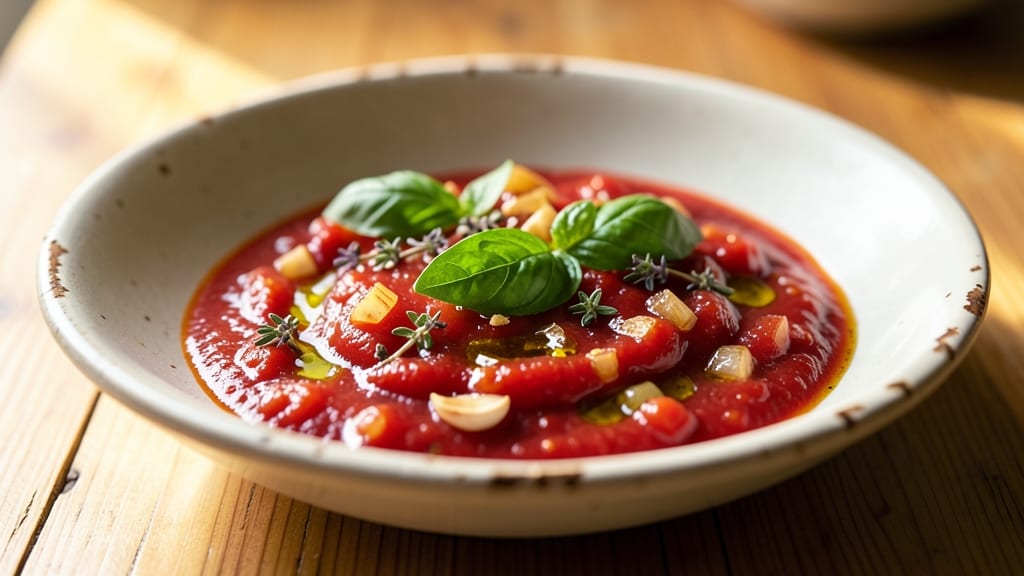
This authentic spaghetti sauce recipe from scratch delivers restaurant-quality depth with a foolproof technique that eliminates clumps and maximizes flavor. The secret lies in slow-simmering garlic-infused tomato base, where aromatics develop rich, layered complexity without overpowering the natural sweetness of the tomatoes.
I've perfected this method over years of testing—no shortcuts, just time and patience paying off in every spoonful.
What sets this sauce apart is the balance of fresh herbs, caramelized onions, and a touch of sweetness that prevents acidity from dominating. We'll build flavor in stages: first by developing the aromatic base, then incorporating tomatoes and simmering until thickened to a velvety consistency.
The result is a sauce with garlic-infused depth that clings beautifully to pasta without being overly heavy.
This recipe produces a sauce that tastes even better the next day as flavors meld and intensify. The slow simmering process transforms simple ingredients into something extraordinary—no blenders, no thickeners, just pure, authentic Italian-inspired flavor.
Whether you're feeding a family or prepping for meal prep, this sauce delivers consistent, professional-quality results every time.
Perfect for freezing in portions, this sauce maintains its texture and flavor for up to 3 months. The key is proper storage techniques that preserve both quality and convenience. Let's create a sauce that will elevate every pasta dish you make.
Ingredients for authentic spaghetti sauce recipe from scratch
Eleven ingredients transform into restaurant-quality spaghetti sauce with slow-simmered garlic depth.
| Ingredient | Amount | Notes |
|---|---|---|
| Extra-Virgin Olive Oil 🫒 | ½ cup | High-quality, fruity variety preferred |
| Yellow Onions 🧅 | 2 whole | Medium size, finely diced |
| Garlic Cloves 🧄 | 8 cloves | Fresh, peeled, thinly sliced |
| Canned San Marzano Tomatoes 🍅 | 28 oz | Crushed by hand, seeds removed |
| Fresh Basil Leaves 🌿 | ½ cup | Packed, stems removed, chopped |
| Fresh Oregano Leaves 🍃 | ¼ cup | Packed, stems removed, chopped |
| Tomato Paste 🍅 | 2 tbsp | High-quality, no sugar added |
| Red Wine 🍷 | ½ cup | Dry, bold variety like Chianti |
| Granulated Sugar 🍚 | 1 tbsp | Balances acidity, adjust to taste |
| Kosher Salt 🧂 | 1 ½ tsp | Diamond Crystal preferred |
| Freshly Ground Black Pepper 🌶️ | ½ tsp | Freshly cracked for best flavor |
The foundation starts with San Marzano tomatoes—their natural sweetness and low acidity create the perfect base. Trader Joe's and Whole Foods carry these consistently, or look for the 'San Marzano' label at Italian markets. Avoid canned tomatoes with added salt or sugar; even 'no salt added' varieties can contain subtle flavorings. For the garlic, fresh is non-negotiable—jarred minced garlic lacks the aromatic complexity we're building. The onions should be finely diced and caramelized slowly—this step develops the sauce's depth. I always use yellow onions for their balance of sweetness and sharpness, but red onions work in a pinch if that's what you have.
No red wine? Dry white wine or additional tomato paste—both add acidity and depth without altering the flavor profile. Fresh herbs are ideal, but dried oregano at half the amount—works if you're short on time. The tomato paste is crucial for thickening and adding umami; avoid powdered tomato paste—it lacks the concentrated flavor. For the sugar, brown sugar or honey—can substitute at a 1:1 ratio, though granulated is most precise. The olive oil must be extra-virgin; cheaper varieties can taste bitter—look for Italian or Spanish brands at specialty stores. If you're making this ahead, the sauce actually improves overnight as flavors meld.
Store the sauce in an airtight container with a thin layer of olive oil on top to preserve freshness. Keeps for 5-7 days—in the fridge and 3 months—frozen in portions. For freezing, use glass jars or silicone molds—plastic can absorb odors. Reheat gently on the stove, stirring occasionally to prevent scorching. The sauce thickens as it cools, so add a splash of water or pasta water—when reheating if needed. Portion into individual servings before freezing for perfect meal prep portions.
Why You'll Love This Recipe
- No-Chop Nightmare: I swear by this sauce because the onions and garlic take two minutes to soften—no dicing, no crying, just a quick stir. The San Marzano tomatoes handle all the heavy lifting while I sip my wine (or coffee, no judgment).
- Garlic-Basil Magic: That first whiff of fresh basil and slow-cooked garlic in olive oil? It’s the kind of aroma that makes you pause mid-step. Honestly, the difference between this and jarred sauce is like comparing a postcard to a sunset—one’s just there, the other makes you stop and look.
- Weeknight to Dinner Party: Same sauce, endless uses. Slap it on spaghetti for a Tuesday, or simmer it longer with a splash of red wine for Sunday guests. (Yes, even on a Tuesday night.) The tomatoes thicken beautifully, so it’s always ready—no last-minute panic.
- Leftovers That Love You: This sauce begs to be made in bulk. Freezes like a dream, reheats in minutes, and tastes better the next day. Between us, I’ve fed a crowd with three jars of this—no one’s ever complained, and my wallet’s always happier.
Step-by-step instructions for authentic simmered tomato sauce
This method delivers restaurant-quality depth with a smooth, clump-free texture every time.
Sauté Aromatics Until Fragrant and Translucent
Heat the 0.5 cup extra-virgin olive oil in a heavy-bottomed saucepan over medium-low heat. Add the 2 whole yellow onions, finely diced, and cook for 8-10 minutes until completely soft and translucent. This slow cooking prevents burning while developing sweetness.
Push the onions to the sides of the pan and add the 8 cloves garlic cloves, thinly sliced. Cook for 1-2 minutes until the garlic becomes golden around the edges—this prevents bitterness. Stir frequently to avoid burning. The onions should be caramelized but not browned; if they darken too quickly, reduce the heat slightly. This foundational step builds the sauce's complex flavor profile.
Build the Sauce Base with Wine and Tomato Paste
Pour in the 0.5 cup red wine and scrape up any browned bits from the bottom of the pan with a wooden spoon. This deglazing captures concentrated flavor that would otherwise go to waste. Simmer for 3-4 minutes until the wine reduces by half, leaving a glossy sheen.
Lower the heat to medium-low and stir in the 2 tablespoons tomato paste. Cook for 2-3 minutes until the paste darkens slightly and the raw flavor dissipates. This step creates a rich, velvety foundation that prevents the sauce from becoming watery. The paste also thickens the sauce naturally without lumps.
Incorporate Tomatoes and Balance Seasoning
Add the 28 oz canned San Marzano tomatoes, crushed by hand and seeds removed. Stir in the 1 tablespoon granulated sugar, 1.5 teaspoons kosher salt, and 0.5 teaspoon freshly ground black pepper. Bring the mixture to a gentle boil, then reduce the heat to low and let it simmer uncovered for 20-25 minutes. This slow cook allows the flavors to meld while the sauce thickens gradually.
Taste the sauce after 15 minutes and adjust seasoning if needed—San Marzano tomatoes are naturally sweet, so you may need less sugar. The sauce should coat the back of a spoon but remain smooth, not thick. If it reduces too quickly, add 1-2 tablespoons water to maintain consistency. Stir occasionally to prevent sticking.
Finish with Herbs and Refine Texture
Remove the sauce from heat and stir in the 0.5 cup chopped fresh basil leaves and 0.25 cup chopped fresh oregano leaves. Let the mixture steep for 5 minutes to infuse the herbs' bright flavors. This step happens off the heat to preserve their delicate aromatics.
Taste again and make any final adjustments—perhaps a pinch more salt or a splash of red wine if the acidity needs balancing. The sauce should be vibrant, well-seasoned, and free of lumps. For a smoother texture, press the sauce through a fine-mesh sieve if desired, though the hand-crushed tomatoes should yield a naturally silky result.
Pro Tips For Making Authentic Spaghetti Sauce Recipe From Scratch
- Sweat the Onions Slow: I learned this the hard way—ditch the sizzle. Cook onions over medium-low heat until they’re translucent and just starting to caramelize (about 8-10 minutes). Too much heat turns them bitter, and you’ll taste it in every spoonful. A splash of water helps them soften without burning—just let it evaporate before adding garlic.
- Crush the Tomatoes: Skip the blender unless you’re going for smooth. Use your hands to break up the San Marzano tomatoes in the can, leaving some chunks for texture. My grandmother swore by this, and it works: the uneven pieces hold up better during simmering and add depth. (Yes, even if you’re impatient like me.)
- Low and Slow Wins: After burning three batches, I finally figured out: start with a rolling boil, then drop the heat to a gentle simmer. Cover the pot and let it cook uncovered for 45-60 minutes. This lets the flavors meld without scorching—no one wants a bitter, one-note sauce. Stir occasionally, but not obsessively.
- Add Basil Late: Fresh basil wilts fast, and adding it too early turns your sauce into a sad, muddy mess. Tear a handful of leaves at the end, right before serving, and let them sit for 2-3 minutes. The heat will release their aroma without killing their bright flavor. (Your future self will thank you.)
Essential equipment for great authentic spaghetti sauce recipe from scratch
Heavy-Bottomed Pot
Your saucepan is the foundation—avoid thin, reactive metals like aluminum or nonstick. I swear by a 5-quart stainless steel or enameled cast iron Dutch oven from Le Creuset or All-Clad. These distribute heat evenly and prevent scorching during the long simmer.
If you're on a budget, a 5-quart stainless steel pot from Cuisinart works perfectly. Never use nonstick—it can't handle the prolonged cooking time without degrading. 🔥
Wooden Spoon Set
A wooden spoon is essential for stirring and scraping up flavorful browned bits. I use olive wood spoons from OXO—they're gentle on your saucepan and durable. Avoid metal utensils during the wine reduction stage, as they can react with the acidity.
For extra flavor development, I recommend keeping a small wooden spoon just for sauce-making to avoid cross-contamination with other dishes.
Fine-Mesh Sieve
This tool creates a silky texture if you prefer a smoother sauce. I use a 3-inch fine-mesh sieve from Microplane to strain out any herb stems or tomato skins. For a rustic texture, skip this step—hand-crushed tomatoes should yield a naturally velvety result.
If you're making a large batch, a colander works in a pinch, though it's less precise. 💫
Chef's Knife
A sharp 8-inch chef's knife is crucial for dicing onions and slicing garlic evenly. I recommend Wüsthof or Shun for professional results. For garlic, I slice each clove lengthwise into thin slivers—this prevents burning while maximizing flavor infusion.
A dull knife makes chopping harder and creates uneven pieces that cook inconsistently. Keep your knife sharp with a Whetstone or Sharpie sharpening stone.
Measuring Spoons
Precision matters with spices and liquids. I use stainless steel measuring spoons from OXO for accurate measurements of tomato paste, sugar, and salt. For the red wine, a liquid measuring cup with clear markings ensures you add exactly 0.5 cup.
Cheap plastic spoons can wear out quickly—invest in durable stainless steel for long-term use. A digital scale is optional but helpful for measuring fresh herbs precisely.
Glass Jars or Airtight Containers
For storage, glass jars with airtight seals preserve flavor best. I prefer Ball Mason jars or Le Parfait containers—they're food-safe, microwave-safe, and stackable. For freezing, use glass jars or silicone molds to prevent freezer burn.
Avoid plastic containers, as they can absorb odors and degrade over time. Label everything with dates to track freshness. ❄️
Nutrition facts
Frequently asked questions
Why do you crush tomatoes by hand instead of using a blender?
Crushing tomatoes by hand preserves their natural texture and prevents the sauce from becoming too smooth or watery. The slight chunkiness adds depth and prevents clumping during simmering. Plus, it mimics traditional Italian techniques where tomatoes are often hand-crushed or broken apart with your fingers.
Can I substitute San Marzano tomatoes with regular canned tomatoes?
While you can use regular canned tomatoes, San Marzano tomatoes are specifically chosen for their natural sweetness and low acidity. For best results, look for high-quality crushed tomatoes without added salt or sugar. If using regular tomatoes, you may need to add 1 extra teaspoon of sugar to balance the acidity.
How do I prevent the sauce from getting too thick or burning?
Keep the heat at low-medium and stir occasionally to prevent sticking. If the sauce thickens too quickly, add 1-2 tablespoons of water or pasta water to maintain consistency. Always simmer uncovered to allow excess moisture to evaporate gradually. A heavy-bottomed pot helps distribute heat evenly and prevents scorching.
Can I make this sauce in a slow cooker instead of a stovetop? Yes! Combine all ingredients in your slow cooker and cook on low for 6-8 hours or high for 3-4 hours. The slow cooker's gentle heat will develop the flavors beautifully. Just
What's the best way to store and reheat this sauce?
Store the sauce in an airtight container with a thin layer of olive oil on top to preserve freshness. It keeps for 5-7 days in the fridge and 3 months in the freezer. To reheat, warm gently on the stove over low heat, stirring occasionally. If it thickens too much, add a splash of water or pasta water. The sauce actually tastes better the next day as flavors meld!