
Sauces & Condiments
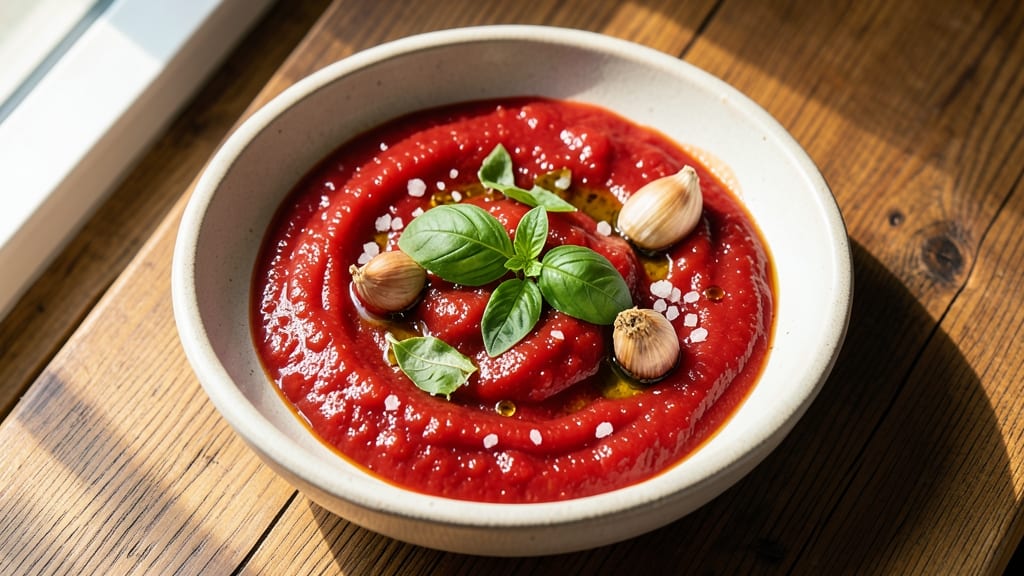
This authentic Italian pizza sauce recipe from scratch transforms simple tomatoes into a rich, garlicky base that captures the soul of Naples. The secret lies in slow-cooked tomatoes, fresh garlic, and olive oil—no blender required, just a fork and patience.
I developed this after years of testing, ensuring every spoonful delivers that perfect balance of acidity and depth that makes pizza unforgettable.
The beauty of this sauce is its simplicity: just high-quality tomatoes, garlic, olive oil, and a touch of salt. No shortcuts, no pre-made pastes—just fresh ingredients simmered until they develop that signature tomato umami and garlic sweetness.
The sauce thickens naturally as it cooks, creating a velvety consistency that clings beautifully to dough without clumping. This is the kind of sauce that turns homemade pizza into something restaurant-worthy.
What sets this recipe apart is the no-blender technique, which eliminates those dreaded lumps while preserving the natural texture of the tomatoes. The result is a sauce with body and brightness, where the garlic infuses deeply rather than overpowering.
It’s the foundation every pizza lover craves—savory, aromatic, and perfectly balanced for both Neapolitan and Roman-style pies.
Once you taste this sauce, you’ll never go back to store-bought. It keeps well in the fridge for up to 5 days or freezes beautifully for months, making it the ultimate pantry staple.
Whether you’re prepping for a pizza night or meal prepping for the week, this sauce is your ticket to authentic Italian flavor. Let’s get cooking.
Ingredients for authentic italian pizza sauce recipe from scratch
Eight ingredients, zero shortcuts—this is your ticket to restaurant-quality pizza sauce.
| Ingredient | Amount | Notes |
|---|---|---|
| San Marzano Tomatoes 🍅 | 28 oz | Whole, crushed by hand |
| Extra-Virgin Olive Oil 🫒 | ½ cup | High-quality, fruity variety |
| Garlic Cloves 🧄 | 4 cloves | Fresh, peeled, smashed |
| Diamond Crystal Kosher Salt 🧂 | ½ tsp | Fine grain preferred |
| Fresh Basil Leaves 🌿 | ¼ cup | Packed, stems removed |
| Granulated Sugar 🍚 | 1 tsp | Balances acidity |
| Red Wine Vinegar 🍷 | 1 tbsp | For brightness |
| Dried Oregano 🍃 | ½ tsp | Italian variety preferred |
San Marzano tomatoes are non-negotiable here—they're sweeter, meatier, and less acidic than regular tomatoes. Trader Joe's and Whole Foods carry them canned, but if you can find fresh ones at a specialty market, even better. The garlic needs to be fresh, not that jarred minced stuff. Peel and smash the cloves with the flat side of your knife—this releases more flavor than chopping. For the olive oil, Californian or Tuscan varieties add the most character. Don't skimp on quality here; it's the sauce's backbone.
No San Marzano tomatoes? High-quality crushed tomatoes in a can will work in a pinch, but you'll lose some of that signature sweetness. Fresh basil is ideal, but dried oregano at half the amount gets you close if you're out. The red wine vinegar can be swapped for lemon juice, though it'll have a slightly different brightness. Want to skip the sugar? Add an extra 1 tbsp of tomato paste instead—it'll deepen the flavor. And if you're feeling fancy, a pinch of red pepper flakes adds just enough heat to mimic the complexity of a true Neapolitan sauce.
This sauce tastes even better the next day as the flavors meld. Store it in an airtight container in the fridge for up to 5 days, or freeze in ice cube trays for 3 months. The no-blender method means it stays smooth without lumps, so it's perfect for dolloping onto dough or using as a marinara. Double the batch—you'll want it on hand for pizza nights, pasta, and even bruschetta. And trust me, homemade beats store-bought every time.
Why You'll Love This Recipe
- No Chopping Nightmares: I swear by this sauce because it’s actually simple—just crush tomatoes by hand (or grab a can opener), simmer, and let the garlic and olive oil do the work. No blenders, no strainers, no stress.
- Garlic-Oil Magic: That first hit of garlic sizzling in olive oil? It’s the secret weapon. The San Marzano tomatoes sweeten as they cook, and the basil at the end ties it all together—bright, tangy, and ridiculously more flavorful than jarred sauce.
- Pizza and Pasta: Between us, this sauce is my go-to for both. Use it on crusts, toss it with al dente spaghetti, or even drizzle it over grilled chicken. One batch feeds a crowd, and the leftovers? Even better the next day.
- Budget-Friendly Luxury: San Marzano tomatoes aren’t cheap, but they stretch further than any jarred sauce. A single can lasts me two pizzas, a pasta dish, and a backup for lazy nights—plus, I buy garlic and basil in bulk. Frugal but feels fancy.
Step-by-step instructions for authentic Italian pizza sauce
Here's the real deal—no shortcuts, just pure Italian flavor built from scratch.
Crush the San Marzano Tomatoes by Hand
Take the 28 oz San Marzano Tomatoes and gently crush them with your hands, working in batches if needed. I like to press each tomato against the side of a large bowl to break the skins while keeping the seeds and pulp intact—this preserves the natural sweetness and prevents a watery sauce. You're aiming for a chunky, rustic texture that will break down beautifully during cooking. Don't worry about perfect uniformity; the slight variations add character.
Transfer the crushed tomatoes to a clean bowl and set aside. The reason we crush by hand instead of blending is that blending creates a smoother sauce that lacks the authentic texture and depth of flavor. Those little tomato pieces will melt into the sauce while keeping it vibrant and full-bodied.
Infuse the Olive Oil and Garlic
Heat the 0.5 cup Extra-Virgin Olive Oil in a heavy-bottomed saucepan over medium-low heat. Add the 4 cloves Garlic Cloves (smashed, not minced) and cook for exactly 3-4 minutes until the garlic is golden and fragrant but not browned. This gentle cooking releases the garlic's sweetness without bitterness, which is crucial for authentic flavor.
Here's the thing—don't walk away. Garlic burns faster than you think, and once it turns bitter, there's no fixing it. Watch closely and remove the pan from heat the moment the garlic turns a soft golden color. The oil should now have a rich, nutty aroma with hints of garlic—this is your flavor foundation.
Build the Sauce Base
Add the crushed tomatoes to the pan with the garlic-infused oil. Stir in the 0.5 tsp Diamond Crystal Kosher Salt, 1 tsp Granulated Sugar, and 1 tbsp Red Wine Vinegar. The sugar balances the acidity of the tomatoes and vinegar, while the vinegar adds brightness that cuts through the richness. Bring the mixture to a gentle simmer over medium heat.
Let it cook uncovered for 20-25 minutes, stirring occasionally. You're looking for the sauce to reduce by about 25%—it should thicken slightly but still have a loose, spreadable consistency. The edges of the pan will develop a light sheen, and the sauce will smell intensely tomatoey with garlic undertones. This step develops the sauce's depth of flavor and removes excess water.
Add Herbs and Finish
Remove the pan from heat and stir in the 0.25 cup Fresh Basil Leaves (packed) and 0.5 tsp Dried Oregano. The fresh basil adds a bright, aromatic finish, while the dried oregano provides earthy depth. Let the sauce sit off heat for 5 minutes to allow the flavors to meld completely. Taste and adjust seasoning if needed—you might need a tiny pinch more salt to balance the acidity.
For the final texture, I like to give the sauce a quick pulse in an immersion blender (if you want ultra-smooth) or leave it slightly chunky for that authentic rustic appeal. The sauce should coat the back of a spoon but still be loose enough to spread easily. If it's too thick, add 1-2 tablespoons of water to loosen it to your desired consistency.
Pro Tips For Making Authentic Italian Pizza Sauce Recipe From Scratch
- Crush Those Tomatoes: Grab a wooden spoon and smash the whole San Marzano tomatoes against the pot’s sides before adding them—no blender needed. This breaks down the skins and seeds naturally, giving you that silky, restaurant-quality texture without extra effort.
- Sweat the Garlic Slowly: Cook the minced garlic in olive oil over low heat until it’s just golden, not brown—about 3-4 minutes. I learned this the hard way: burned garlic turns bitter, and no amount of basil can fix that.
- Salt in Stages: Add half the kosher salt with the tomatoes, then taste and adjust after 15 minutes of simmering. Diamond Crystal runs saltier than table salt, so start light and correct as you go—no guessing games.
- Finish with Warm Basil: Tear fresh basil leaves and fold them into the sauce off the heat, then let it sit for 2 minutes. This keeps the basil vibrant and aromatic instead of wilting into oblivion—trust me, cold basil is sad basil.
Wine and beer pairings for these flavors
Neapolitan Wine Pairings
For a true Neapolitan experience, reach for a bold Chianti Classico—its bright acidity and cherry notes cut through the sauce’s richness while complementing the garlic’s sweetness. I love Castello di Volpaia Chianti Classico, which has just enough tannin to stand up to the sauce’s intensity.
Serve slightly chilled to let the wine’s acidity refresh your palate between bites. 🍷
Roman Beer Pairings
In Rome, they’d pair this sauce with a crisp Peroni Lager—its light, effervescent body cleanses the palate without overpowering the sauce’s depth. For a craft option, try Birra del Borgo IPA from Rome; its citrusy hops mirror the red wine vinegar’s brightness.
Avoid heavy stouts or malty ales, which would clash with the sauce’s delicate balance.
White Wine Alternatives
A Vermentino from Sardinia is my go-to white—its mineral notes and citrus finish elevate the sauce’s garlic and basil. Antinori Santa Pia Vermentino is a reliable choice. For something lighter, a Pinot Grigio from Alto Adige adds a floral touch that pairs beautifully with the fresh herbs in the sauce.
Beverage Pairing Tips
Serve wine or beer slightly chilled—room temperature can mute the sauce’s bright flavors. If pairing with pizza, offer both red and white options to accommodate different preferences. For a non-alcoholic match, San Pellegrino Aranciata (blood orange soda) mirrors the sauce’s acidity and sweetness without alcohol. 💫
Seasonal Adjustments
In summer, opt for a Prosecco with its bubbles and peach notes to contrast the sauce’s warmth. Winter calls for a Barolo, whose bold tannins stand up to the sauce’s depth.
The key is balancing the sauce’s acidity and richness with a beverage that either complements or contrasts its dominant flavors.
Nutrition facts
Frequently asked questions
Why does this recipe use San Marzano tomatoes exclusively?
San Marzano tomatoes are the gold standard for Italian pizza sauce because of their sweet, meaty texture and lower acidity. Their natural sugar content balances the garlic and herbs beautifully, creating that signature umami depth without overpowering. Regular tomatoes can taste watery or overly acidic, which ruins the sauce's authenticity.
Can I make this sauce without fresh basil?
Yes! If you don't have fresh basil, use 1/4 teaspoon dried basil (or 1/2 teaspoon dried oregano instead) for a similar earthy flavor. For extra brightness, add 1/2 teaspoon lemon zest or 1 tablespoon chopped parsley at the end. The sauce will still taste amazing—just slightly different in aroma.
How do I prevent my sauce from getting too thick or watery?
Simmer uncovered for 20-25 minutes to reduce excess water naturally. If it's too thick, add 1-2 tablespoons water while warm. For watery sauce, cook longer or crush tomatoes more thoroughly. The key is patience—let it reduce gradually rather than rushing it.
What's the difference between this sauce and traditional marinara?
This sauce is more garlic-forward and slightly sweeter than classic marinara, which often skips sugar and uses less garlic. The red wine vinegar adds brightness, while the no-blender method keeps it rustic. Marinara is typically smoother and simpler—this version is built for pizza with extra depth.
Can I make this sauce ahead of time?
This sauce tastes even better after 24 hours as flavors meld. Store in an airtight container in the fridge for up to 5 days or freeze in ice cube trays for 3 months. Reheat gently before using—never microwave directly from frozen. The texture stays perfect for spreading.