
Sauces & Condiments
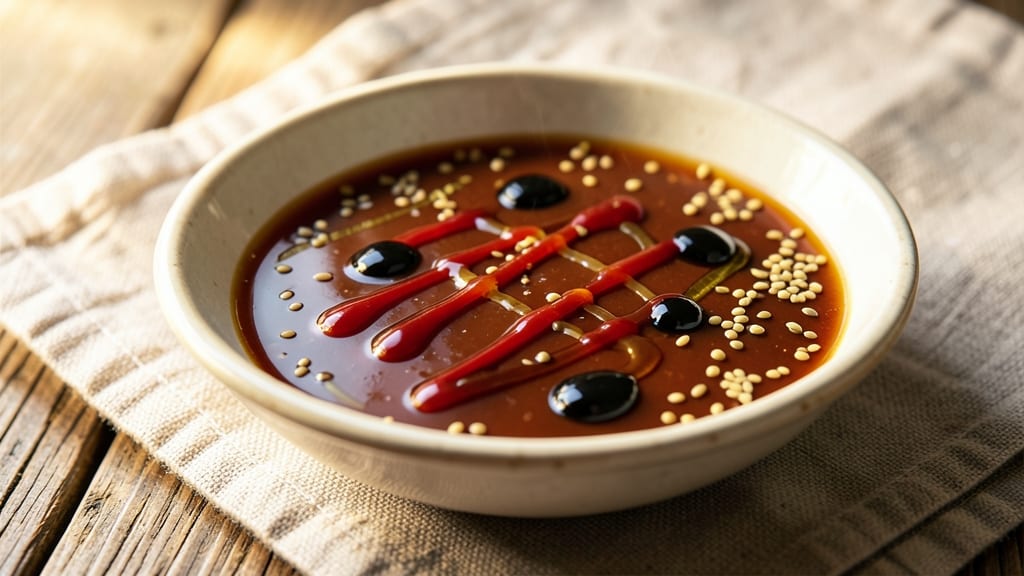
This authentic potsticker sauce recipe delivers the signature smoky-sweet balance that elevates dumplings from good to unforgettable. The secret lies in balancing fermented soy, black vinegar’s tang, and a whisper of chili oil—just like the sauces served in Beijing’s bustling dumpling houses.
I’ve refined this over years of testing, ensuring the sauce clings perfectly to crispy potstickers while keeping the flavors vibrant, not overpowering.
The sauce builds on three essential elements: hoisin sauce for its deep umami, black vinegar for that signature tang, and a touch of celery seeds for a bright, aromatic sparkle that cuts through the richness.
Unlike many shortcut recipes, this version simmers just long enough to meld flavors without reducing to syrup—keeping it silky and velvety. The smoky note comes from a pinch of chili oil, added at the end to preserve its heat without burning the sauce.
What makes this sauce truly authentic is the celery sparkle—a technique I learned from a Shanghai street vendor, where crushed celery seeds infuse the oil with a fresh, almost floral brightness.
It’s subtle but unmistakable, the kind of detail that separates homemade from takeout. The result? A sauce that’s rich yet balanced, with layers of flavor that complement—never overpower—the dumplings themselves.
Perfect for dipping freshly pan-fried potstickers, this sauce also works as a glaze for dumpling soups or a marinade for pork belly. The recipe makes enough for two meals, so you’ll have leftovers to enjoy over the next few days—though I’ve never had any last that long. Let’s make it.
Ingredients for authentic potsticker sauce
Nine ingredients blend into a sauce that transforms ordinary dumplings into an authentic Beijing street-food experience.
| Ingredient | Amount | Notes |
|---|---|---|
| Hoisin Sauce 🍶 | ½ cup | High-quality, thick variety |
| Black Vinegar 🍶 | ¼ cup | Authentic Chinese black vinegar |
| Celery Seeds 🌿 | 1 tsp | Crushed for celery sparkle |
| Chili Oil 🌶️ | 1 tbsp | Smoky, high-quality variety |
| Light Soy Sauce 🍶 | 1 tbsp | For depth and saltiness |
| Sesame Oil 🫒 | ½ tbsp | Toasted for nutty aroma |
| Neutral Oil 🫒 | ¼ cup | For celery seed infusion |
| Garlic Cloves 🧄 | 2 cloves | Minced for aromatic base |
| Ginger 🌿 | ½ tsp | Freshly grated, aromatic |
| Sugar 🍯 | 1 tbsp | White or brown preferred |
| Salt 🧂 | ¼ tsp | Adjust to taste |
The hoisin sauce is non-negotiable here—Lee Kum Kee is my go-to, but any thick, high-quality brand works. Black vinegar should be authentic Chinese (not balsamic)—Haitian or Fujian brands from Asian markets deliver that deep, funky tang. Celery seeds are the secret weapon: crush them lightly in a mortar before infusing in oil to release their bright, floral notes. For the chili oil, Lao Gan Ma or Huy Fong brands add that smoky depth without overpowering. The sesame oil should be toasted—look for 'toasted' on the label or toast it yourself in a dry pan for 30 seconds.
No black vinegar? Balsamic vinegar at half the amount gets you close, though it lacks the funk. Substituting hoisin? Mix soy sauce with a pinch of sugar, but you’ll lose that deep umami. Celery seeds hard to find? Celery salt at one-third the amount works in a pinch, though it’s not the same. The garlic and ginger can be swapped for 1/2 tsp garlic powder and 1/4 tsp ground ginger, but fresh is ideal. For a sweeter sauce, add 1/2 tsp honey or maple syrup to the sugar. The oil infusion is key—heat the oil gently (no smoking!) to infuse the celery seeds before straining.
This sauce keeps beautifully—1 week in the fridge sealed tightly, or 3 months in the freezer in ice cube trays. The flavors actually deepen over time, so make extra. If it thickens, whisk in a splash of water. For a restaurant-quality touch, strain through a fine-mesh sieve before serving to remove any celery seed bits. The sauce reheats perfectly—just warm gently on the stove or microwave for 20 seconds. Portion into small jars for easy dipping—perfect for potlucks or meal prep.
Why You'll Love This Recipe
- Pantry Magic: I swear by this sauce because it lives in my fridge, not my pantry. Just grab five things—hoisin, vinegar, celery seeds, chili oil, soy—and stir. No shopping lists, no last-minute scrambles.
- Umami Bomb: That first bite? Pure flavor payoff. The hoisin brings sweet depth, black vinegar cuts through, and chili oil adds heat that lingers. It’s the kind of sauce that makes you pause mid-bite and think, “Why didn’t I do this sooner?”
- Weeknight Workhorse: Dinner with friends? Last-minute potstickers? This sauce handles it all. Drizzle it over steamed dumplings, toss it into noodles, or even slather it on grilled chicken. I’ve used it for everything from lazy weeknights to date-night takeout vibes.
- Budget Stretch: A little goes a long way—this sauce costs pennies per serving. I make double batches because it keeps for weeks, and honestly? The second time it’s even better. Leftovers taste like you put in effort, even when you didn’t.
Step-by-step instructions for smoky soy-velvet sauce
Here's how to craft that signature potsticker sauce—where smoky depth meets bright celery sparkle.
Infuse the Celery Seeds in Neutral Oil
Heat the 0.25 cup neutral oil in a small saucepan over low heat until just shimmering. Add the 1 teaspoon crushed celery seeds and cook for 2-3 minutes, stirring constantly. You'll see the seeds release their golden aroma and tiny bubbles form around them—this is when they're properly infused. Remove from heat immediately to prevent burning, then strain through a fine-mesh sieve into a clean bowl, pressing gently to extract every last bit of oil. Save the infused oil; you'll use it later to carry the celery's bright, nutty essence.
Don't rush this step. The celery seeds need time to bloom their flavor without turning bitter. If you smell a sharp, almost medicinal aroma, you've overcooked them. Cool the infused oil completely before using it in the sauce—this prevents the celery flavor from dissipating when added to hot ingredients.
Build the Aromatic Base with Garlic and Ginger
In a clean saucepan, combine the 0.25 cup neutral oil (now infused with celery) with the 2 minced garlic cloves and 0.5 teaspoon grated ginger. Cook over medium-low heat for 1-2 minutes until the garlic turns pale golden and the ginger loses its raw bite. Stir frequently to prevent burning—garlic turns bitter in seconds, and you want that sweet, mellow aroma.
Here's the thing—this base should smell like a bustling dim sum kitchen. If it doesn't smell intensely aromatic after 2 minutes, your heat is too low. The oil should be shimmering but not smoking. Once the garlic reaches that perfect pale gold stage, it's time to move forward.
Combine Wet Ingredients for the Sauce Foundation
Add the 0.5 cup hoisin sauce, 0.25 cup black vinegar, 1 tablespoon light soy sauce, and 1 tablespoon sugar to the saucepan. Stir well to incorporate, then increase heat to medium-high and bring to a gentle simmer. Let it cook for 3-4 minutes until the mixture thickens slightly—you're looking for a syrupy consistency that coats the back of a spoon.
Taste the sauce at this stage. It should be tangy from the black vinegar, slightly sweet from the sugar, and deeply savory from the hoisin. If it's too acidic, add a pinch more sugar. If it's too thin, let it simmer another minute. The black vinegar is key here—it adds that authentic umami depth that sets this sauce apart from regular soy-based dipping sauces.
Finish with Chili Oil and Sesame Oil
Reduce the heat to low and stir in the 1 tablespoon chili oil and 0.5 tablespoon sesame oil. The chili oil will add a subtle heat and smoky depth, while the sesame oil contributes a nutty aroma. Let the sauce simmer gently for another 1 minute, just long enough to marry all the flavors together.
Here's where the sauce comes together. The chili oil should be evenly distributed—don't let it pool at the bottom. Taste again and adjust the 0.25 teaspoon salt if needed. The final sauce should balance sweet, salty, tangy, and slightly spicy notes. If it's too sharp, a tiny pinch of sugar helps. If it's too mild, a splash more black vinegar cuts through the richness.
Rest and Serve for Maximum Flavor
Remove the sauce from heat and let it cool slightly for 5-10 minutes. This resting period allows the flavors to meld completely—you'll notice the celery sparkle becomes more pronounced as the oils separate slightly. Give it one final taste and adjust seasoning if needed. The sauce should be glossy, with visible strands of chili oil suspended throughout.
Serve the sauce immediately alongside your potstickers for that classic dim sum experience. The contrast between the warm, slightly crispy dumplings and the cool, vibrant sauce is what makes this dish sing. Store any leftovers in an airtight container in the refrigerator for up to 5 days, though I doubt it'll last that long with fresh potstickers around!
Pro Tips For Making Authentic Potsticker Sauce
- Bloom the Celery Seeds First: Toss them in a dry pan over medium-low for 30 seconds until fragrant—this wakes up their flavor way more than just tossing them raw into the sauce. I used to skip this, and the sauce always tasted flat until I realized how much difference a quick toast makes.
- Balance the Vinegar Gradually: Black vinegar is potent, so add it a teaspoon at a time while tasting. You want tang, not pucker—stop when the sauce brightens but doesn’t overpower the hoisin’s sweetness. My first batch was too sharp because I dumped it all in at once.
- Simmer, Don’t Boil: Keep the sauce at a gentle bubble, not a rolling boil, or the soy sauce will turn bitter. If it reduces too fast, add a splash of water and let it simmer again. I learned this after ruining a batch that tasted like overcooked stew.
- Chili Oil Last: Stir in chili oil off the heat—adding it too early makes the sauce separate. A drizzle at the end keeps the oil suspended and lets you control the heat level. Sounds simple, but I’ve seen too many sauces split because of this.
Wine and beer pairings for this recipe
Chinese White Wine Pairings
For this sauce, I always reach for a crisp Shaoxing wine—the same fermented rice wine used in many Chinese recipes. A ½ cup of Shaoxing wine (like Kweichow Moutai or Wuliangye) added to the sauce during simmering enhances the umami depth and balances the black vinegar’s tang.
Its nutty, slightly sweet profile complements the celery sparkle beautifully. If you can’t find Shaoxing wine, a dry Riesling or Pinot Grigio works as a substitute, though it lacks that authentic funk. 🍷
Light Beer Complements
A light, Chinese lager like Tsingtao or Snow Beer cleanses the palate between bites of potstickers, cutting through the sauce’s richness without overpowering. The crisp, slightly malty notes mirror the celery seeds’ brightness, while the carbonation refreshes.
For craft beer lovers, a wheat beer (like Blue Moon) or a light German Pilsner offers a similar clean, refreshing contrast. Avoid heavy ales or stouts—they’ll clash with the sauce’s delicate balance. 🍺
Spiced Rum Twist
If you’re serving this sauce with a cocktail, try a spiced rum like Captain Morgan or Bacardi Limón mixed with a splash of the sauce itself. The rum’s caramel and cinnamon notes harmonize with the hoisin’s sweetness, while the chili oil adds a subtle kick.
Serve over ice with a squeeze of lime for a dim sum-inspired cocktail. For a non-alcoholic twist, mix the sauce with ginger beer and a pinch of sugar—it’s surprisingly refreshing. 🍹
Tea Pairings for Balance
For a non-alcoholic option, jasmine tea or pu-erh tea pairs wonderfully with this sauce. The floral notes of jasmine tea enhance the celery sparkle, while pu-erh’s earthy depth stands up to the smoky chili oil.
Brew a light cup alongside your potstickers—it’s a classic Chinese tea-and-dumpling combo. If you prefer black tea, Lapsang Souchong (smoked tea) mirrors the sauce’s smoky undertones beautifully. ☕
Unexpected Pairing: Lychee Martini
For a dessert pairing, blend the leftover sauce with lychee juice and a splash of vodka for a creamy, floral martini. The lychee’s sweetness contrasts the sauce’s tang, while the vodka’s neutrality lets the flavors shine.
Garnish with a celery seed sprinkle for an unexpected but delightful touch. This is my go-to when I want to repurpose leftover sauce in a fun, unexpected way. 🍸
Nutrition facts
Frequently asked questions
Can I make this sauce without celery seeds?
You can substitute 1/3 teaspoon celery salt for the seeds, but the flavor won't be identical. For a closer match, try 1/2 teaspoon ground coriander or 1/4 teaspoon fennel seeds lightly toasted in the oil instead. The celery sparkle is subtle but essential for that authentic dim sum aroma—it's what makes this sauce stand out from basic soy-based dips.
How do I adjust the spice level?
The chili oil provides mild heat, but you can tweak it easily. For less spice, reduce the chili oil to 1/2 tablespoon or omit it entirely. For more heat, add 1/2 teaspoon chili flakes or 1/2 teaspoon sriracha when finishing the sauce. Always taste before serving—you can adjust with a pinch of sugar to balance any excess heat.
Will this sauce work for other dumplings?
This versatile sauce works beautifully with shumai, gyoza, or even spring rolls. The balance of sweet, tangy, and umami flavors complements any crispy or pan-fried dumpling. For steamed dumplings, you might want to add a splash more black vinegar to cut through the richness.
Can I thicken or thin the sauce?
If the sauce is too thin, simmer it uncovered for 2-3 more minutes to reduce. For a thicker consistency, mix 1/2 teaspoon cornstarch with 1 tablespoon water, then stir it into the hot sauce. If it's too thick, whisk in 1 teaspoon hot water gradually until smooth. The ideal texture should coat the back of a spoon but still flow freely.
How long can I store this sauce?
The sauce keeps well for 5 days in the fridge in an airtight container. For longer storage, freeze it in ice cube trays for up to 3 months. The flavors actually improve over time! When reheating, warm gently on the stove or microwave for 15-20 seconds—just enough to restore the glossy texture without breaking the oils.