
Sauces & Condiments
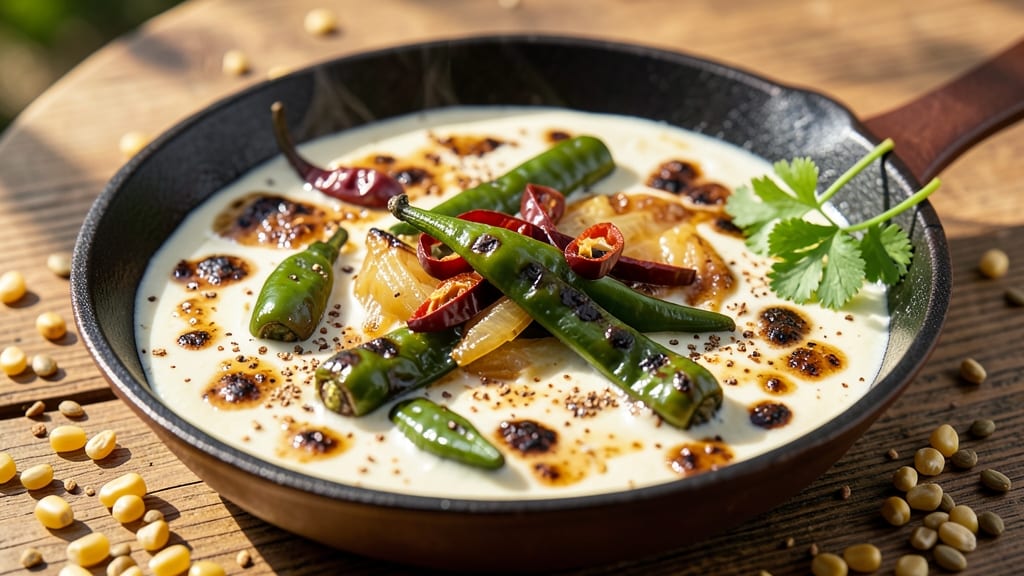
This authentic chile verde sauce transforms simple ingredients into a smoky, vibrant sauce that captures the essence of New Mexican cuisine. The secret lies in charring the chiles and tomatoes over an open flame, unlocking deep, caramelized flavors that blend seamlessly with chipotle and garlic.
What sets this recipe apart is the balance—creamy yet bright, with just enough heat to linger without overpowering.
The process begins with roasting green chiles and tomatoes until blistered and aromatic, then simmering them with onions, garlic, and broth to create a rich, velvety base. A touch of cream adds luxurious texture, while a celery crown topping provides the signature crunch that elevates every spoonful.
This isn’t just a sauce; it’s a flavor experience that turns ordinary dishes into something extraordinary.
Perfect for drizzling over grilled meats, tacos, or even as a dip, this chile verde delivers restaurant-quality results with minimal effort. The smoky depth and bright acidity make it versatile enough for weeknight dinners or special occasions.
Once you taste the difference between this and store-bought versions, you’ll never go back.
Adjust the heat to your preference by adding more chipotle in adobo or a pinch of cayenne, but the technique remains the same: char, blend, and simmer for a sauce that’s as authentic as it is delicious. Let’s get started on creating this flavorful staple.
Ingredients for authentic chile verde sauce
Nine simple ingredients transform into a restaurant-worthy sauce with smoky depth and bright acidity.
| Ingredient | Amount | Notes |
|---|---|---|
| Anaheim Green Chiles 🌶️ | 4 whole | Fresh, stems and seeds removed |
| Roma Tomatoes 🍅 | 4 whole | Large, halved lengthwise |
| Yellow Onion 🧅 | 1 whole | Medium, chopped |
| Garlic Cloves 🧄 | 4 cloves | Peeled, rough chopped |
| Chipotle Peppers in Adobo 🌶️ | 2 tbsp | Adobo sauce included, minced |
| Heavy Cream 🥛 | ½ cup | Full-fat for richness |
| Chicken Broth 💧 | 2 cups | Low-sodium preferred |
| Celery Stalks 🥬 | 2 whole | For crunchy crown topping |
| Salt 🧂 | 1 tsp | Diamond Crystal preferred |
| Black Pepper 🌶️ | ½ tsp | Freshly ground |
The chiles and tomatoes are the heart of this sauce—fresh Anaheims (not canned) give the best flavor, but jalapeños or poblano work in a pinch. Roast them over an open flame or under a broiler until charred in spots; that smoky flavor can't be replicated. Whole Foods or Latin markets usually carry fresh Anaheims, but regular grocery stores often have them too. For tomatoes, Roma or vine-ripened work best—they hold up better to charring. Skip the pre-chopped stuff; whole tomatoes char more evenly. The chipotle in adobo is key for that signature smoky heat, but if you can't find it, smoked paprika at half the amount adds a similar depth.
No fresh chiles? Canned green chiles in adobo (drained) work, but they lack the charred depth. The heavy cream adds luxurious texture—half-and-half at half the amount works if you're watching calories. For extra smokiness, add 1/4 tsp liquid smoke (trust me, it blends right in). The celery crown topping is non-negotiable for that signature crunch—thinly sliced celery ribbons (use a mandoline for precision) make all the difference. If you're short on time, crushed tortilla chips add a similar texture. The broth should be low-sodium; if yours isn't, reduce the added salt accordingly. Freshly ground black pepper is a must—pre-ground loses its punch fast.
This sauce tastes even better the next day as flavors meld. Store in an airtight container in the fridge for up to 5 days, or freeze for 3 months in ice cube trays for single-serving portions. The celery crown topping stays crisp for about 2 days in the fridge—make it fresh if you're serving it immediately. For a restaurant-style presentation, garnish with extra celery ribbons and a drizzle of cream. Leftovers reheat beautifully—just warm gently on the stove, stirring occasionally to prevent curdling.
Why You'll Love This Recipe
- No Chopping Chaos: I swear by this recipe because the Anaheim chiles and Roma tomatoes only need a quick blanch and peel—no dice, no fuss. That chipotle in adobo? Just tear it open, scrape out what you need, and toss it in. Honestly, I’ve made this sauce while chatting on the phone.
- Smoky Zing Balance: Between us, the smoky heat from the chipotle and the bright acidity of the tomatoes is chef’s kiss. The garlic and onion caramelize just enough to give it depth, but the green chiles keep it fresh—not heavy, not overpowering. It’s the kind of sauce that makes you go, “Why didn’t I make this sooner?”
- Weeknight to Weekend: This sauce is my secret weapon for tacos, eggs, or even grilled chicken—no matter the occasion. I’ll batch it on Sundays for easy weeknight dinners, or drizzle it over enchiladas when company’s over. (Yes, even on a Tuesday night.)
- Pantry Goldmine: The ingredients are affordable and last forever—dried chipotles in adobo stay fresh for months, and green chiles freeze like a dream. I make a big pot, freeze half, and still have leftovers for days. Between us, it’s the kind of recipe that makes grocery day feel like a win.
Step-by-step instructions for authentic chile verde sauce
Here's how to make this smoky, creamy chile verde with that perfect balance of heat and freshness.
Char and Blend the Base Vegetables
Start by charring the 4 whole Anaheim green chiles and 4 whole Roma tomatoes over an open flame or under a broiler until the skins blister and blacken in spots. This step develops deep, smoky flavors that can't be replicated with raw ingredients. I like to use a gas stove flame for even charring—rotate the vegetables frequently until you see dark patches all over.
Transfer the charred vegetables to a bowl, cover with plastic wrap, and let them steam for 5 minutes. This makes them easier to peel. Remove the skins, then transfer everything to a blender. Add the chopped 1 whole yellow onion and rough chopped 4 cloves garlic. Pulse until you get a smooth, chunky purée—this forms the flavor foundation of your sauce.
Build the Smoky Base
In a large saucepan, combine the vegetable purée with the minced 2 tbsp chipotle peppers in adobo and their included adobo sauce. Cook over medium heat for 8-10 minutes, stirring occasionally, until the mixture begins to soften and the raw taste disappears. You're looking for that moment when the flavors meld together—it'll smell rich and earthy.
Add the 2 cups chicken broth and bring to a gentle simmer. Let it cook uncovered for 15 minutes, stirring occasionally, until the sauce reduces slightly and develops a thicker consistency. This step concentrates the flavors and removes any remaining bitterness from the charred vegetables.
Finish with Cream and Season
Reduce the heat to low and carefully stir in the 0.5 cup heavy cream. The sauce will thicken immediately—this is what gives chile verde its signature velvety texture. Add the 1 tsp salt and 0.5 tsp black pepper, then taste. You want a balance of smoky, slightly sweet tomato flavor with just enough heat from the chipotle.
Let the sauce simmer gently for another 5 minutes, stirring occasionally. The cream should be fully incorporated, and the sauce should coat the back of a spoon. If it's too thick, add a splash of water or broth to reach your desired consistency. Remove from heat and let it sit for 5 minutes to settle.
Create the Celery Crown Topping
While the sauce rests, prepare the celery crown topping by thinly slicing the 2 whole celery stalks on the diagonal. This creates delicate, crisp strands that add fresh crunch to each bite. I like to use a sharp chef's knife and cut the celery as thinly as possible—almost like shaving it.
Arrange the celery slices in a circular crown pattern on top of each serving. The contrast between the creamy, smoky sauce and the crisp, fresh celery is what makes this dish truly authentic. Serve immediately while the celery is still crisp and the sauce is warm.
Pro Tips For Making Authentic Chile Verde Sauce
- CHAR THE ONIONS LOW: Anaheim chiles and tomatoes need time to release their flavor, so don’t rush the onion. Cook it on medium-low with 1-2 tablespoons of oil until deeply golden—almost caramelized—before adding anything else. I used to burn them trying to speed things up, and it made the whole sauce taste bitter.
- ROAST THE CHILES FIRST: Skip the raw chiles in the pot—they’ll make the sauce watery and thin. Char the Anaheims (whole or halved) directly over a gas flame or under a broiler until blackened in spots. The smoky depth from roasting is what separates homemade verde from jarred.
- MASH THE TOMATOES: Dump raw Roma tomatoes into the sauce and they’ll just float, leaving you with a chunky, uneven texture. Instead, blitz them with a fork or potato masher before adding them to the pot. This ensures a smooth, velvety base that clings to meat or rice.
- USE 2 CHIPOTLES MAX: One adobo pepper is usually enough, but I’ve learned the hard way—two is the sweet spot. Any more and the sauce turns bitter, not smoky. Remove the stems and seeds first, then finely chop the peppers so they distribute heat evenly without overpowering.
Wine and beer pairings for authentic chile verde sauce
New Mexican Red Wine
For an authentic pairing, reach for a New Mexican Syrah or Tempranillo—both grapes thrive in the region’s high-altitude vineyards. The bold, earthy notes of Syrah complement the sauce’s smoky depth, while Tempranillo’s subtle spice mirrors the chipotle’s heat.
I love Black Box Vineyards Syrah from New Mexico—its dark fruit and peppery finish cut through the creaminess beautifully. 🍷
Crisp White Wine
A dry Riesling or Albariño offers refreshing acidity to balance the sauce’s richness. The citrusy brightness of Riesling (like Dr. Loosen Blue Slate) or the saline minerality of Albariño cleanses your palate between bites. Avoid oaky Chardonnays—they’ll clash with the sauce’s delicate smokiness.
Mexican Lager Pairing
For a casual match, Modelo Especial or Pacifico Clara** provide crisp, clean carbonation that contrasts the sauce’s velvety texture. The light malt sweetness enhances the chipotle’s smokiness without overpowering it. Serve chilled to highlight the sauce’s bright tomato notes. 🍺
Spiced Beer Option
For adventurous drinkers, try a Mexican amber ale with cinnamon notes, like Deschutes Mirror Pond. The warm spices echo the sauce’s subtle sweetness, while the beer’s malty backbone stands up to the cream. This pairing works especially well with grilled meats drizzled with chile verde.
Non-Alcoholic Choice
>
For a refreshing non-alcoholic option, serve with sparkling limeade (mix ½ cup lime juice, 2 tbsp agave, and soda water) or hibiscus iced tea. The tartness enhances the sauce’s smoky-sweet balance while keeping it light. Add fresh mint for a restaurant-worthy touch. 💧
Nutrition facts
Frequently asked questions
Can I use canned green chiles instead of fresh?
Yes, but fresh chiles give the best authentic flavor. For a quick version, use 1 (15 oz) can of green chiles in adobo (drained), but reduce the broth to 1.5 cups to maintain balance. The sauce will be slightly less smoky since canned chiles aren't charred, but it still works in a pinch.
How do I adjust the heat level?
Start with the 2 tbsp chipotle in adobo as written for mild heat. For medium, add 1 extra tbsp chipotle. For spicy, increase to 3 tbsp total or add ½ tsp cayenne pepper. Always taste before serving—you can reduce heat with more cream or broth if needed.
Why did my sauce separate?
This usually happens when the cream and broth aren't properly incorporated or if the sauce boils too vigorously. To fix it, whisk in 1 tbsp cornstarch mixed with 2 tbsp water and simmer for 2 minutes until smooth. For prevention, stir constantly when adding cream and keep heat at low.
Can I make this sauce without dairy?
Replace the ½ cup heavy cream with ½ cup coconut milk (full-fat for best texture) or ½ cup cashew cream (blend ½ cup soaked cashews with ½ cup water). The sauce will be slightly lighter but still delicious. For extra richness, add 1 tbsp nutritional yeast.
What's the best way to store leftovers?
Store in an airtight container in the fridge for up to 5 days—the flavors actually improve overnight! For freezing, portion into ice cube trays (great for single servings) or a sealed container. Thaw in the fridge and reheat gently on the stove, stirring frequently to prevent separation. The celery topping should be added fresh when serving.