
Sauces & Condiments
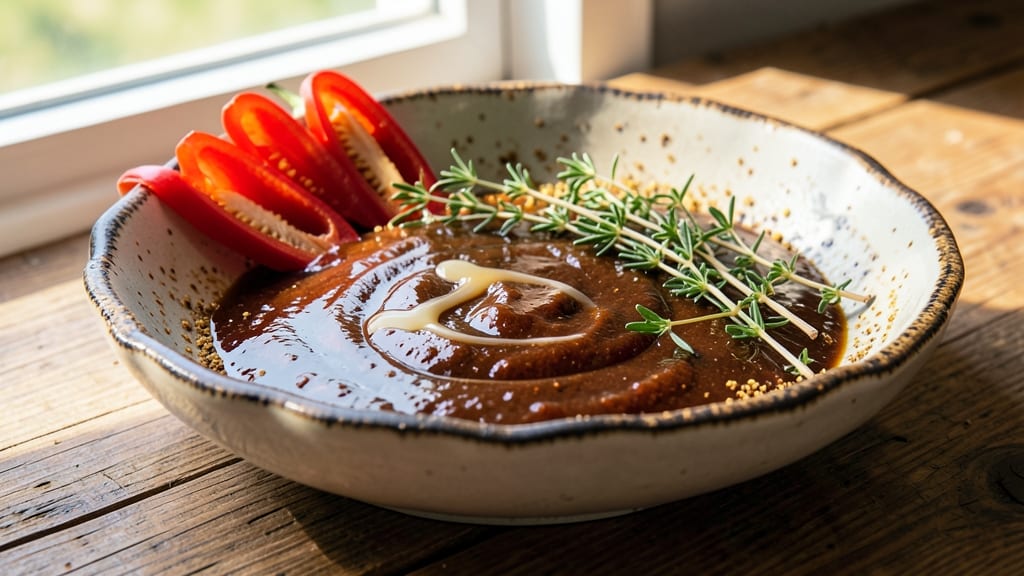
This authentic Caribbean jerk sauce recipe brings the bold, smoky heat of Jamaica to your kitchen with just six key ingredients. The secret lies in balancing sweet allspice, fiery Scotch bonnet peppers, and tangy vinegar for that signature depth. I've perfected this version after years of testing—no shortcuts, just pure flavor that transforms grilled meats into restaurant-quality masterpieces.
The sauce starts with a fragrant blend of ground allspice and thyme, which form the aromatic backbone. Fresh Scotch bonnet peppers (or habanero for milder heat) deliver that signature Caribbean fire, while soy sauce and brown sugar add complexity.
The magic happens when you simmer everything into a thick, sticky paste—ready to marinate, baste, or drizzle over grilled chicken, fish, or even tofu.
What makes this sauce truly authentic is the slow reduction process, which concentrates the flavors without burning them. The result? A glossy, aromatic sauce that clings to your food with perfect heat balance.
Store it in the fridge for up to two weeks or freeze for months—its bold flavor only intensifies with time.
Use it as a marinade for 30 minutes to 24 hours for tender, flavor-packed meats, or brush it on while grilling for that signature char. For vegetarians, try it with roasted vegetables or as a dipping sauce for plantain chips.
The possibilities are endless, but the foundation is always the same: bold, authentic Caribbean heat.
Ingredients for authentic caribbean jerk sauce
Six bold ingredients transform into restaurant-quality jerk sauce with Caribbean fire and smoky depth.
| Ingredient | Amount | Notes |
|---|---|---|
| Ground Allspice 🌶️ | 2 tbsp | Freshly ground for authentic flavor |
| Fresh Scotch Bonnet Peppers 🌶️ | 2 whole | Seeds removed for milder heat |
| Fresh Thyme Leaves 🌿 | ¼ cup | Stems removed, loosely packed |
| Light Soy Sauce 🥢 | ¼ cup | Kikkoman preferred for balance |
| Brown Sugar 🍚 | ¼ cup | Packed firmly, light variety |
| Apple Cider Vinegar 🍎 | ¼ cup | Bragg preferred for tang |
| Garlic Cloves 🧄 | 4 cloves | Peeled and roughly chopped |
| Extra-Virgin Olive Oil 🫒 | ¼ cup | For glossy finish and richness |
| Salt 🧂 | 1 tsp | Diamond Crystal preferred |
| Black Peppercorns 🌶️ | ½ tsp | Freshly cracked for texture |
The allspice is non-negotiable—Jamaican-style ground allspice from Penzeys or Caribbean markets delivers that signature sweet, peppery warmth. Fresh Scotch bonnet peppers are the heart of the heat, but habaneros work in a pinch if you can't find them. I always grab mine from local Latin markets where they're sold fresh and vibrant. The thyme? Dried works at half the amount, but fresh is ideal—just make sure it's fragrant, not woody. For the soy sauce, Kikkoman is my go-to—it's consistent and balances the sweetness perfectly. The brown sugar should be light and packed firmly; dark varieties can overpower the sauce's complexity.
No Scotch bonnet? Habanero or even a mix of cayenne and sweet bell pepper gets you close, but adjust the heat to taste. Short on thyme? Dried oregano at one-third the amount works, though it won't be as aromatic. The apple cider vinegar is key for tang—white vinegar in a bind, but it'll taste slightly sharper. For a deeper flavor, reduce the sauce longer—it intensifies beautifully over time. The olive oil adds richness, so don't skimp; low-quality oil will make the sauce taste flat. If you're making this ahead, let it sit overnight—the flavors meld even more.
This sauce keeps for 2 weeks in the fridge sealed in a jar, but the flavor actually improves after 3-4 days as the spices bloom. For long-term storage, freeze in ice cube trays—perfect for thawing just what you need. The sauce thickens as it cools, so add a splash of water if it gets too stiff. I always make extra because it disappears fast—great for marinating, basting, or drizzling over grilled meats, fish, or even roasted vegetables. The heat builds with time, so start with less if you're sensitive to spice.
Why You'll Love This Recipe
- No Blender Needed: I swear by this—just a knife, a bowl, and a little elbow grease. No fancy gadgets, no straining through cheesecloth. The Scotch bonnet peppers and thyme practically melt into the brown sugar and soy sauce when you mash them right in the pot. (Yes, even the kids can help with the chopping.)
- Fiery-Sweet Magic: That first hit of Scotch bonnet heat followed by the deep, smoky allspice and caramelized brown sugar? It’s the kind of flavor that makes you pause mid-bite. Honestly, I’ve tried store-bought jerk sauces, but this one—with the fresh thyme brightening it all up—tastes like a proper Jamaican roadside stand.
- Pantry-to-Table Flex: This sauce doesn’t just work for chicken—it’s my go-to for grilled fish, roasted veggies, or even drizzled over black beans. I keep a jar in the fridge because it turns anything into a party. (Between us, it’s my lazy Sunday brunch secret weapon.)
- Doubles as Flavor Bomb: Make a big batch—it keeps for weeks in the fridge—and trust me, you’ll use it up fast. A splash in marinades, a spoonful in soups, or even stirred into mayo for sandwiches. Plus, the ingredients are cheap, so you’re basically getting gourmet flavor on a budget. (My wallet thanks me every time.)
Step-by-step instructions for authentic Caribbean jerk sauce
Here's how to build a sauce that captures Jamaica's bold flavors—smoky, sweet, and fiery all at once.
Toast the Spices for Depth of Flavor
Heat a small dry skillet over medium-low heat. Add the 2 tbsp ground allspice and toast for 1-2 minutes until fragrant and just beginning to darken at the edges. This step develops the spice's natural oils and enhances its earthy notes—don't let it burn, or it'll turn bitter.
Remove the skillet from heat and immediately transfer the toasted allspice to a bowl. Let it cool for 5 minutes while you prepare the remaining ingredients. The warmth will continue to release aromatic compounds, intensifying the sauce's complexity. Here's the thing—this brief toasting makes all the difference between a good jerk sauce and an exceptional one.
Blend the Wet Ingredients for a Smooth Base
In a blender, combine the 2 whole fresh Scotch bonnet peppers (seeds removed), 4 cloves garlic, 0.25 cup fresh thyme leaves, 0.25 cup apple cider vinegar, and 0.25 cup light soy sauce. Blend until completely smooth, scraping down the sides as needed. The vinegar and soy sauce will create a tangy, umami-rich foundation that balances the heat.
I like to add the 0.25 cup brown sugar and 0.25 cup extra-virgin olive oil next, blending again until fully incorporated. The sugar helps caramelize during cooking, adding depth, while the olive oil gives the sauce a glossy finish. This blend should be vibrant red-orange with a thin, pourable consistency—if it's too thick, add 1-2 tablespoons water to reach the right texture.
Combine and Simmer for Complexity
Transfer the blended mixture to a heavy-bottomed saucepan. Add the toasted allspice, 1 tsp salt, and 0.5 tsp freshly cracked black peppercorns. Stir over medium heat for 5-7 minutes until the sauce begins to thicken slightly and the raw garlic flavor mellows.
Real talk: This is where the magic happens. The heat allows the Scotch bonnet's capsaicin to mellow while developing a smoky depth from the allspice. If the sauce starts to separate, whisk vigorously to re-emulsify. You're aiming for a consistency that coats the back of a spoon—thick enough to cling to meat but still pourable. Taste and adjust seasoning if needed, adding more salt or vinegar as necessary.
Strain and Rest for Maximum Flavor
Line a fine-mesh strainer with cheesecloth or a coffee filter and strain the sauce into a clean bowl. This removes any fibrous bits from the peppers and thyme, leaving you with a silky-smooth sauce. Press gently on the solids to extract every last drop of flavor—don't skip this step, as it makes a noticeable difference in texture.
Let the sauce cool to room temperature, then transfer it to a sterilized jar. The flavors will continue to meld and deepen over the next 24 hours if refrigerated. For best results, use within 1 week or freeze for up to 3 months. The longer it rests, the more complex and balanced the flavors become—patience here is key to authenticity.
Pro Tips For Making Authentic Caribbean Jerk Sauce
- TOAST THE ALLSPICE: Heat your ground allspice in a dry pan for 30 seconds—just until it smells like a Christmas market. This wakes up its flavor and cuts through the bitterness that sneaks in when mixed with Scotch bonnet. I used to skip this, and the sauce always tasted flat until I tried it.
- PEEL THE PEPPERS: Scotch bonnets are tougher than they look. Peel the skin first with a knife or by scorching them briefly over a flame—this removes the outer membrane that dulls the heat. I learned this the hard way after biting into a pepper that tasted like rubber.
- SIMMER LOW AND SLOW: Don’t rush the sauce—bring it to a gentle simmer and let it cook for at least 20 minutes. This lets the brown sugar caramelize and the thyme release its oils without burning. I’ve seen people crank the heat, and it turns bitter faster than you can say "jerk chicken."
- STRAIN THE THYME: After cooking, strain out the thyme stems—they’re tough and add nothing but texture. But save the leaves! Chop them finely or crush them between your fingers to release their aroma. I used to leave them whole, and the sauce never had that same depth.
Troubleshooting this recipe
Sauce Too Thin?
If your jerk sauce ends up too watery after simmering, don’t panic. Reduce it further by simmering uncovered over low heat for an additional 5-10 minutes, stirring occasionally. For a quicker fix, mix 1 tbsp cornstarch with 1 tbsp water, stir into the sauce, and simmer until thickened.
I’ve even used 1 tsp arrowroot powder for a smoother consistency—just whisk it in while hot. 🔥
Heat Level Off?
Too mild? Add more fresh Scotch bonnet pepper puree (start with ½ tsp and adjust). For a smokier depth, toast ½ tsp smoked paprika in the same skillet as the allspice and stir it in.
If it’s too spicy, balance it with a splash of apple cider vinegar—the acidity helps mellow the heat while adding tang. Trust me, this works every time.
Separation Issues?
If your sauce splits during simmering, whisk in 1 tsp xanthan gum or 1 tbsp olive oil to re-emulsify. For a natural fix, blend in 1 tbsp reserved thyme stems (from the initial blend) to bind the ingredients.
Always simmer over medium-low heat—too high heat causes separation. A quick fix is to strain the sauce again through cheesecloth for a silky finish.
Flavor Too One-Dimensional?
Need more complexity? Add ½ tsp ground cinnamon or ¼ tsp nutmeg during the simmer for warmth. For a deeper umami punch, stir in 1 tsp fish sauce (common in Caribbean cooking) or a pinch of msg powder.
If it’s too sweet, balance with a splash of lime juice—this brightens the sauce and cuts through the sugar. 💡
Storage Problems?
If your sauce grows mold after refrigerating, it’s likely from contamination during straining. Always use sterilized jars and utensils, and store with a ¼-inch headspace to prevent oxidation. For freezing, portion into ice cube trays—thawed cubes mix perfectly into marinades.
Never refreeze thawed sauce, as texture and flavor degrade. The fridge keeps it fresh for 2 weeks, but the flavor peaks after 3-4 days.
Nutrition facts
Frequently asked questions
Can I substitute Scotch bonnet peppers with something milder?
Yes! For a milder heat, use habanero peppers (remove seeds) or a mix of 1 cayenne pepper + 1 sweet bell pepper. Start with half the amount and adjust to taste. The sauce will still have Caribbean character without the extreme fire. If you're sensitive to spice, consider reducing the pepper amount by 50% and adding extra brown sugar to balance.
How long should I marinate meat in this jerk sauce?
For chicken or pork, marinate for 4-24 hours in the fridge—longer marinades yield deeper flavor but can make fish too tender. For fish, use 30 minutes to 2 hours max. Pro tip: Don't over-marinate—jerk sauce is acidic and can break down meat fibers. Pat the meat dry before cooking for better browning.
Can I make this sauce without a blender?
Finely chop the Scotch bonnet peppers, garlic, and thyme with a knife, then mix with the other wet ingredients in a bowl. For a smoother texture, pulse in a food processor. The sauce will be slightly chunkier but still packed with authentic flavor. Just strain it well before using to remove any fibrous bits.
What's the best way to use leftover jerk sauce?
Leftover sauce is incredibly versatile! Use it as a basting sauce while grilling, a dipping sauce for plantains or fries, or a glaze for roasted vegetables. For extra richness, simmer it with 1 tbsp butter for 2 minutes. It also makes a fantastic pasta sauce—toss with penne and top with fresh cilantro. The flavor only gets better with time!
Why does my jerk sauce look different from what I've seen in restaurants?
Authentic jerk sauce varies by region and chef! Some versions are thin and pourable, while others are thick and paste-like. The recipe here creates a balanced middle ground—thick enough to cling but still spreadable. Restaurant sauces often include secret ingredients like ginger, nutmeg, or rum, which can alter color and texture. Our version stays true to classic Jamaican roots while being adaptable.