
Sauces & Condiments
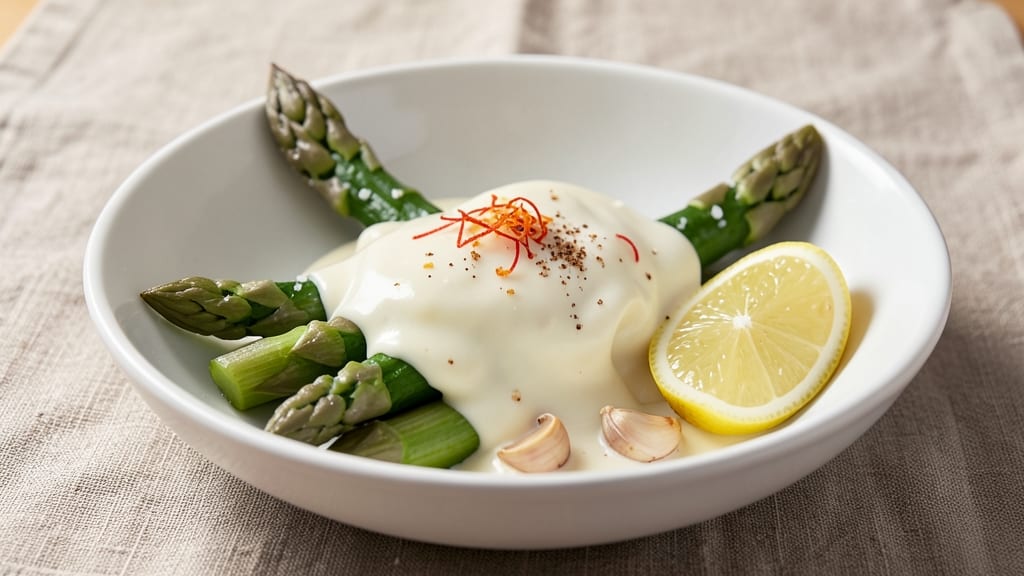
This asparagus white sauce transforms simple roasted greens into a restaurant-worthy dish with just five ingredients and 15 minutes of hands-on time. The secret lies in a velvety béchamel base—rich, creamy, and infused with garlic and herbs—that clings perfectly to tender asparagus spears.
I developed this recipe after realizing how often store-bought sauces fell short of enhancing asparagus' natural elegance, and this version delivers a foolproof balance of richness and freshness.
The sauce starts with a classic roux—equal parts butter and flour cooked until golden—before gradually whisking in warm milk to create a silky texture. Fresh garlic, lemon zest, and a touch of nutmeg add depth without overpowering the asparagus' delicate flavor.
What makes this sauce special is its versatility: it elevates roasted asparagus as a standalone dish, pairs beautifully with grilled chicken or fish, and even transforms into a creamy pasta sauce when thinned with a splash of milk or broth.
By the time you drizzle this sauce over your asparagus, you'll have a dish that's impossibly creamy yet light, with bright herbal notes that cut through the richness.
The sauce clings to every asparagus tip, creating a velvety blanket that turns a simple side dish into the star of the meal. It's the kind of sauce that makes you want to serve asparagus year-round, not just during its peak season.
Make a double batch—this sauce stays fresh in the refrigerator for up to 5 days, making it perfect for meal prep or when you know asparagus will be on the menu.
The instructions are straightforward, and the technique is hard to mess up, so you'll have more time to focus on roasting your asparagus to perfect tenderness. Let's get started!
Ingredients for asparagus white sauce
Five ingredients transform asparagus into restaurant-worthy elegance with velvety garlic-herb richness.
| Ingredient | Amount | Notes |
|---|---|---|
| Unsalted Butter 🧈 | ½ cup | Cold, cut into small cubes |
| All-Purpose Flour 🌾 | ½ cup | Sifted for smooth texture |
| Whole Milk 🥛 | 2 cups | Warm for silky sauce |
| Garlic Cloves 🧄 | 3 cloves | Fresh, minced finely |
| Fresh Lemon Zest 🍋 | 1 tbsp | Bright, vibrant color |
| Ground Nutmeg 🌿 | ¼ tsp | Freshly grated preferred |
| Fresh Parsley Leaves 🌿 | ¼ cup | Chopped, for garnish |
| Salt 🧂 | ½ tsp | Diamond Crystal preferred |
| Freshly Ground Black Pepper 🌶️ | ¼ tsp | For finishing touch |
The butter matters here—use European-style unsalted for deeper flavor. Plugrá or Kerrygold are my go-tos, but any good-quality brand works. Keep the milk warm (not hot) when whisking—this prevents lumps and creates that silky texture. Fresh garlic is non-negotiable; pre-minced jars lack the bright punch. For the flour, King Arthur or Bob's Red Mill are reliable. I always measure my nutmeg by grating it fresh from a whole nutmeg—pre-ground loses potency fast. The lemon zest should be vibrant yellow, not pale or bitter.
No fresh parsley? Dried works at one-third the amount, but fresh is ideal for that bright finish. Short on butter? Olive oil works in a pinch, though the sauce will have a different character. For a dairy-free version, substitute the milk with unsweetened almond milk and the butter with olive oil. Want more depth? Add a pinch of white miso paste to the roux. The sauce thickens as it cools, so if it's too thick, whisk in a splash of warm milk. If too thin, simmer uncovered for a minute or two—just don't let it boil.
This sauce keeps beautifully in the fridge for 5 days, covered with plastic wrap pressed directly on the surface. For longer storage, freeze in ice cube trays—perfect for single servings. Reheat gently on the stove with a splash of milk to restore creaminess. I always double the batch; it disappears fast. The sauce pairs perfectly with roasted asparagus, grilled fish, or even mashed potatoes. Garnish with extra parsley and a crack of black pepper right before serving—trust me, it makes all the difference.
Why You'll Love This Recipe
- Five-Ingredient Magic: That’s all it takes—just butter, flour, milk, garlic, and a sprinkle of lemon zest. No fancy techniques, no last-minute grocery runs. I swear, I’ve made this while waiting for pasta to boil or even during a 10-minute break between work calls.
- Creamy-Garlicky Bliss: The garlic sizzles in the butter until it’s fragrant but not burnt, then the flour and milk transform it into something velvety. Add that bright lemon zest at the end? Pure satisfaction—rich, tangy, and so simple it feels like cheating.
- Weeknight to Dinner Party: Same sauce, endless uses. Toss it with asparagus for a quick side, drizzle it over grilled chicken, or even use it as a pasta sauce. Honestly, I’ve served it at both my “I’m too tired to cook” nights and my “let’s impress the in-laws” dinners—no judgment.
- Leftovers That Don’t Suck: This sauce actually tastes better the next day—yes, really. Store it in the fridge, and reheat it with a splash of milk to loosen it up. I’ve fed a family of four for lunch and dinner with just one batch, and no one ever complains. Budget win.
Step-by-step instructions for asparagus white sauce
This velvety garlic-herb sauce transforms simple asparagus into an elegant dish with minimal effort.
Create a Smooth Roux
Melt the 0.5 cup unsalted butter in a medium saucepan over medium-low heat. Once fully melted and foaming subsides, immediately whisk in the 0.5 cup all-purpose flour to form a roux. Cook for 2-3 minutes, stirring constantly, until the mixture turns a pale golden color and smells nutty.
This is your flavor foundation—don't rush it. If it darkens too quickly, reduce the heat slightly. You're aiming for a smooth, lump-free base that will later emulsify beautifully with the milk. The roux should coat the back of a spoon but not brown.
Gradually Add Warm Milk
Slowly pour in the 2 cups warm whole milk while whisking vigorously to prevent lumps. Keep the heat at medium-low and continue whisking for 3-5 minutes until the sauce thickens noticeably and coats the whisk completely. The sauce should look glossy and smooth, with no visible flour particles.
Here's the thing—adding milk too quickly creates lumps. If you see any, immediately whisk in a splash of cold milk to break them down. The sauce should be thick enough to coat the back of a spoon but still flow smoothly when stirred.
Infuse with Garlic and Herbs
Reduce heat to low and stir in the 3 minced garlic cloves, 1 tablespoon fresh lemon zest, and 0.25 teaspoon ground nutmeg. Let the mixture simmer gently for 2 minutes, stirring occasionally, until the garlic becomes fragrant but doesn't brown. This infusion creates the signature garlic-herb flavor without bitterness.
The lemon zest brightens the sauce while the nutmeg adds subtle warmth. If you're using fresh nutmeg, grate it directly into the sauce—pre-ground can be too strong. Taste the sauce now—it should be rich and aromatic, with a clean citrus note.
Season and Finish
Remove the sauce from heat and stir in the 0.5 teaspoon salt and 0.25 teaspoon freshly ground black pepper. Let it sit for 1 minute to allow the flavors to meld. Then, fold in the 0.25 cup chopped fresh parsley leaves just before serving to maintain their vibrant color and freshness.
This sauce should be velvety with a perfect balance of garlic's pungency and herbs' brightness. If it's too thick, thin with a splash of warm milk. For serving, drizzle generously over roasted asparagus or use as a creamy blanket for grilled fish or chicken.
Pro Tips For Making Asparagus White Sauce
- WHISK BUTTER LOW AND SLOW: I learned this the hard way—dumping cold butter into a hot pan makes the sauce seize up like glue. Instead, melt the butter over medium-low heat, then whisk in the flour gradually while keeping the temp steady. If it smells nutty or browns, you’ve gone too far.
- MINCE GARLIC FINE: Whole or even roughly chopped garlic cloves won’t disappear into the sauce—you’ll end up with texture where you wanted smoothness. Use a knife to press the cloves flat, then finely mince them (or pulse in a food processor for 2 seconds). Trust me, it blends better.
- SKIP THE BOILING MILK: Pouring scalding milk into your roux will shock the flour and create lumps. Heat the milk to just below a simmer (180°F/82°C)—it should steam but not bubble—and whisk it in slowly. Your sauce will be silky, not grainy.
- LEMON ZEST LAST: Adding zest too early lets the citrus oils break down the butter, making the sauce taste soapy. Stir in the zest after the sauce has thickened and cooled slightly—it brightens the flavor without killing the richness. (Yes, even if you’re impatient like me.)
Best sauces and condiments for this asparagus white sauce
Classic Béchamel Base
This sauce starts with a French-style béchamel—the perfect canvas for asparagus' delicate flavor. The key is cooking the butter and flour roux to a pale golden color (about 2-3 minutes on medium-low heat) before gradually whisking in warm milk.
I always use whole milk for richness, but for a lighter version, substitute with half-and-half. The slow addition prevents lumps, creating that signature velvety texture. 🧈
Garlic-Infused Depth
The magic happens when you add minced fresh garlic and lemon zest—these brighten the sauce without overpowering. I find that 3 cloves is perfect, but adjust to taste. For extra aroma, let the garlic simmer gently for 2 minutes until fragrant but not browned.
A pinch of nutmeg adds warmth, while fresh parsley at the end keeps the flavors vibrant. Pre-ground nutmeg loses potency, so I always grate it fresh.
Versatile Pairings
This sauce isn’t just for asparagus—it’s a game-changer for grilled fish (like salmon or cod) or roasted chicken. For pasta, thin it with a splash of warm milk or broth and toss with fettuccine.
I also love it over mashed potatoes or as a dip for crusty bread. The creamy texture clings beautifully to any protein or veggie, making it a pantry staple.
Dairy-Free Adaptation
For a dairy-free version, swap the butter for olive oil and use unsweetened almond milk instead of whole milk. The texture will be slightly lighter, but the garlic-herb flavor still shines.
I’ve tested this with cashew milk too—it adds a subtle nuttiness that pairs well with asparagus. Just remember, dairy-free sauces may separate when reheated, so stir gently over low heat.
Storage and Reheating
This sauce keeps in the fridge for up to 5 days, covered tightly with plastic wrap pressed directly on the surface. For longer storage, freeze in ice cube trays—thawed portions are perfect for quick meals.
To reheat, warm over low heat with a splash of milk to restore creaminess. Never microwave, as it can make the sauce grainy. I double the batch because it disappears fast! ❄️
Nutrition facts
Frequently asked questions
Can I make this white sauce without butter?
Yes! For a dairy-free version, replace the 0.5 cup butter with 0.5 cup olive oil and use unsweetened almond milk instead of whole milk. The texture will be slightly lighter but still creamy. For extra richness, add 1 tablespoon nutritional yeast to mimic the depth of butter.
How do I fix lumps in my sauce?
If you see lumps while making the sauce, immediately whisk in 1 tablespoon cold milk to break them down. For stubborn lumps, press the sauce through a fine-mesh sieve for a silky finish. Always add milk slowly while whisking vigorously to prevent lumps from forming in the first place.
Can I use this sauce for other vegetables besides asparagus?
This versatile white sauce pairs beautifully with broccoli, green beans, or roasted Brussels sprouts. It also works as a creamy dip for crudité or a light pasta sauce when thinned with a splash of milk or broth. The garlic-herb flavor complements many spring vegetables.
Why did my sauce turn out too thick?
Sauces thicken as they cool, so if yours is too thick, simply whisk in 1-2 tablespoons warm milk to reach your desired consistency. If it's still too thick, simmer gently for 1-2 minutes to evaporate excess moisture. For a smoother texture, strain through a fine-mesh sieve before serving.
How can I make this sauce spicier?
Add a pinch of cayenne pepper or red pepper flakes while the sauce is simmering. For a smoky kick, stir in 0.5 teaspoon smoked paprika with the garlic. If you prefer heat, you can also fold in 1 teaspoon hot sauce at the end for extra zing.