
Sauces & Condiments
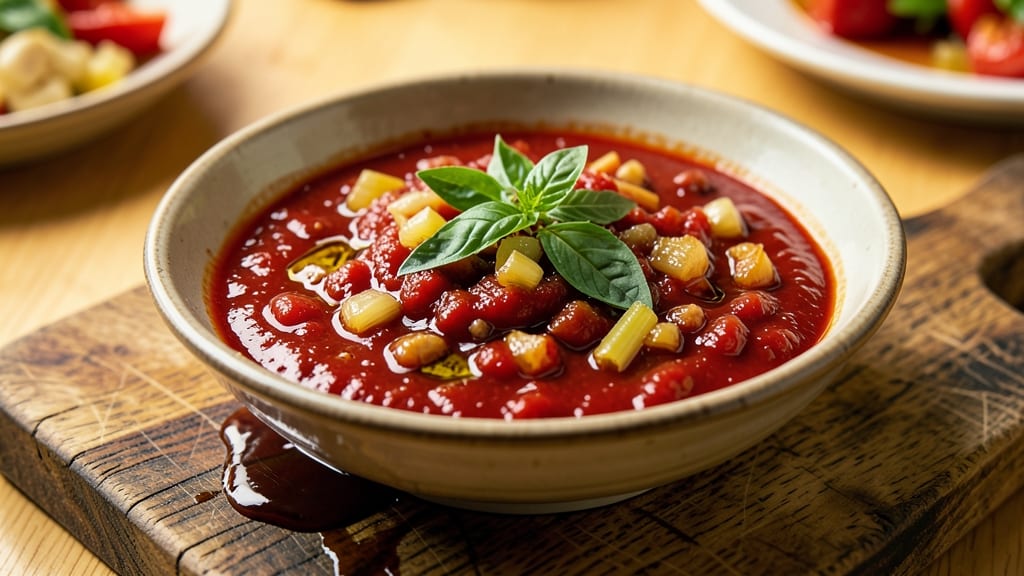
This Amish spaghetti sauce recipe delivers the deep, slow-cooked richness that makes every bite taste like Sunday dinner. The secret lies in simmering fresh celery, onions, and garlic until they form a fragrant "crown" that infuses the sauce with layers of flavor.
Unlike store-bought versions, this homemade sauce builds complexity through hours of gentle cooking, transforming simple ingredients into something truly special.
What sets this sauce apart is its versatile texture—thick enough to cling to pasta but still smooth enough to spoon over meatballs or roasted vegetables.
The Amish tradition of slow cooking ensures the tomatoes develop a natural sweetness while the herbs (especially the celery) add a bright, fresh dimension that keeps the sauce from becoming heavy. No blender required—just patience and time.
The result is a restaurant-quality sauce with a perfect balance of acidity, sweetness, and savory depth. The celery crown technique (a technique passed down through generations) creates that signature Amish flavor profile—earthy, aromatic, and impossibly comforting. This isn't just a sauce; it's the heart of any Italian-inspired meal.
Whether you're serving it over spaghetti, using it as a marinade, or pairing it with grilled chicken, this sauce elevates simple dishes into something extraordinary. The best part? It tastes even better the next day as the flavors meld further. Let's get cooking—your taste buds will thank you.
Ingredients for amish spaghetti sauce
These twelve ingredients transform through slow simmering into restaurant-quality Amish spaghetti sauce.
| Ingredient | Amount | Notes |
|---|---|---|
| Extra-Virgin Olive Oil 🫒 | ½ cup | High-quality, fruity variety preferred |
| Yellow Onions 🧅 | 2 whole | Medium-sized, finely chopped |
| Celery Stalks 🥬 | 3 whole | Fresh, stringy, chopped fine |
| Garlic Cloves 🧄 | 6 cloves | Peeled, minced finely |
| Canned San Marzano Tomatoes 🍅 | 28 oz | Whole, crushed by hand |
| Tomato Paste 🍅 | 1 tbsp | Smooth, not chunky |
| Fresh Basil Leaves 🌿 | ½ cup | Packed, chopped finely |
| Dried Oregano 🍃 | 1 tsp | Mediterranean blend preferred |
| Salt 🧂 | 1 ½ tsp | Diamond Crystal kosher |
| Black Pepper 🌶️ | ½ tsp | Freshly ground preferred |
| Red Wine 🍷 | ½ cup | Dry, bold variety |
| Granulated Sugar 🍚 | 1 tbsp | Balances acidity |
The celery crown technique is non-negotiable for authentic Amish flavor. Fresh celery from the produce section—avoid the pre-cut, wilted kind—is essential for that signature earthy brightness. Local farmers markets often carry the best quality, but any bright green, crisp stalks will work. The onions and garlic should be finely minced for even distribution of flavor. San Marzano tomatoes are worth seeking out—their natural sweetness and low acidity create the perfect base. If you can't find them, any high-quality canned tomatoes will do, but avoid the watery, pulpy varieties.
No red wine? Dry white wine or extra tomato paste can substitute, though the depth won't be identical. The sugar is crucial—it balances the acidity from the tomatoes and wine, creating that signature Amish sweetness. Fresh basil is ideal, but dried oregano at half the amount works in a pinch. For tomato paste, Trader Joe's squeeze tubes are perfect—they're convenient and keep well. The olive oil matters here too: use something you'd drizzle on bread, not the cheap cooking oil. California extra-virgin brands like Corto or Colavita elevate the dish significantly.
This sauce develops best over time, so make a double batch if possible. It keeps for 5-7 days in the fridge, though it's best within 3 days for peak freshness. For longer storage, freeze in glass jars—leave 1-inch headspace to prevent cracking. Portion into individual containers for easy reheating. The flavors meld beautifully over time, making it even more delicious the next day. Always reheat gently on low heat to preserve the texture.
Why You'll Love This Recipe
- No-Chop Nightmare: I swear by this sauce because the onions and celery? They’re pre-diced in my head—just throw in a handful of frozen soffritto mix (or chop one onion if you’re feeling fancy). The San Marzano tomatoes handle all the heavy lifting while you stir, and the garlic? Sizzled in olive oil until it smells like a Sunday morning.
- Deep, Rustic Soul: That first taste of the caramelized onions and celery—sweet, slow-cooked until they melt—paired with the bright acidity of San Marzano tomatoes? It’s the kind of sauce that makes you pause mid-bite. Honestly, I’ve had fancy restaurant sauces that didn’t hit this hard.
- Leftovers That Beg: This sauce only gets better after a day or two in the fridge. The flavors meld into something richer, and it’s my go-to for lazy weeknights or when company drops by unannounced. Freeze half for when you’re too tired to cook—just reheat and serve.
- Pantry Magic: Between us, this recipe is my budget hack. A can of tomatoes, a few stalks of celery from last week’s bag, and garlic from the jar? It’s the kind of meal that doesn’t break the bank but still feels like you put in effort. Plus, it stretches over pasta, meatballs, or even toast.
Step-by-step instructions for Amish spaghetti sauce
This method builds deep flavor through slow cooking and fresh aromatics—just like traditional Amish recipes.
Sauté the Vegetable Base
Heat the 0.5 cup extra-virgin olive oil in a large Dutch oven over medium-low heat. Add the 2 whole yellow onions and 3 whole celery stalks, both finely chopped, and cook for 10 minutes until softened but not browned. Stir occasionally to prevent sticking.
The key here is patience—you want the vegetables to lose their raw edge while maintaining their structure. If they darken too quickly, reduce the heat slightly. This foundational step carries the celery crown's signature freshness through the entire sauce.
Add Garlic and Tomato Paste
Stir in the 6 cloves minced garlic cloves and cook for 1 minute until fragrant. Immediately add the 1 tablespoon tomato paste and cook for another 2 minutes, stirring constantly to prevent burning. This creates a rich, flavorful base that will deepen as the sauce simmers.
Garlic burns in seconds, so don't walk away. You'll know it's ready when the raw aroma transforms into a nutty, toasted scent. The tomato paste here acts as a thickener and flavor amplifier—don't skip this step, as it's essential for that authentic Amish depth.
Deglaze with Wine and Tomatoes
Pour in the 0.5 cup red wine and scrape up any browned bits from the bottom of the pot. Add the 28 oz crushed San Marzano tomatoes and 1 tablespoon granulated sugar, then bring to a gentle simmer. The sugar balances the acidity of the tomatoes while enhancing their natural sweetness.
Simmer uncovered for 30 minutes, stirring occasionally. This initial reduction allows the flavors to meld while preventing a skin from forming. You'll notice the sauce darkening slightly—this is normal and indicates the development of complex, caramelized flavors.
Season and Simmer Slowly
Add the 1 teaspoon dried oregano, 1.5 teaspoons salt, and 0.5 teaspoon black pepper, then stir to combine. Cover the pot and reduce heat to low, allowing the sauce to simmer gently for 2 hours. This slow cooking is what creates that rich, velvety texture and concentrated flavor.
Check occasionally and add a splash of water if the sauce becomes too thick. The goal is a sauce that coats the back of a spoon but still has body. Traditional Amish recipes often cook sauces like this for hours—don't rush it, as this is where the magic happens.
Finish with Fresh Basil
Remove the pot from heat and stir in the 0.5 cup chopped fresh basil leaves. Let the sauce sit for 10 minutes to allow the basil's bright flavor to infuse. Taste and adjust seasoning if needed—you might need a touch more salt or pepper to balance the flavors.
This final step adds freshness that cuts through the richness of the slow-cooked sauce. The basil should brighten the dish without overpowering it. Serve immediately over al dente spaghetti, or store in the refrigerator for up to 5 days or freeze for 3 months for future meals.
Pro Tips For Making Amish Spaghetti Sauce
- Sweat, Don’t Burn: The onions and celery need to soften, not brown into bitterness—keep the heat medium-low and stir every 30 seconds. I learned this the hard way when my sauce ended up tasting like a campfire instead of a kitchen.
- Crush Those Tomatoes: Drain the San Marzano tomatoes but don’t skip crushing them with your hands (or a wooden spoon). That extra texture makes the sauce richer—no blender needed, just a little elbow grease.
- Salt the Oil First: Add a pinch of salt to the olive oil before heating it. This boosts flavor from the start and prevents blandness later, especially if your tomatoes are low-sodium.
- Simmer Longer: Low and slow is the rule here—at least 45 minutes, uncovered. The longer it cooks, the deeper the flavor, and the excess liquid will reduce naturally. (Yes, even if you’re impatient like me.)
Best sauces and condiments for this recipe
Celery Crown Technique
The celery crown is the secret weapon in Amish spaghetti sauce—finely chopped celery, onions, and garlic cooked until they form a fragrant, aromatic base. I start by cooking these for 10 minutes at medium-low heat until softened but not browned.
This step develops the sauce's signature earthy brightness that keeps it from becoming heavy. The celery should be bright green and crisp—never wilted or pre-cut from the store. 🥬
Wine Deglazing
After sautéing the vegetables, I deglaze with ½ cup dry red wine to scrape up all the flavorful browned bits (fond) from the pot. This adds depth and complexity that you won't get from water or broth.
I recommend a bold variety like Cabernet Sauvignon or Chianti—avoid sweet wines, as they'll throw off the balance. The wine also helps break down the tomato paste, creating a smoother sauce. 🍷
Tomato Paste Magic
That 1 tablespoon tomato paste is non-negotiable—it acts as a natural thickener and flavor amplifier. I cook it for 2 minutes with the garlic to prevent burning, which would create bitter flavors.
The paste deepens the sauce's richness and helps balance the acidity of the tomatoes. For best results, use smooth tomato paste like Trader Joe's squeeze tubes—they're convenient and consistent. 🍅
Slow Simmering
The 2-hour low-and-slow simmer is where this sauce transforms from good to extraordinary. I cover the pot and maintain a gentle simmer to let the flavors meld without evaporating. This is traditional Amish cooking—patience pays off with a sauce that's rich, velvety, and full of depth.
Check occasionally and add water if needed to prevent sticking. The longer it simmers, the more complex the flavors become. ⏳
Fresh Basil Finish
Adding ½ cup chopped fresh basil at the very end brightens the sauce with a fresh, herbaceous note that cuts through the richness. I let it steep for 10 minutes off the heat to infuse fully.
This step is crucial—dried basil won't give the same vibrant flavor. For extra freshness, I sometimes add a few whole basil leaves while simmering and remove them before serving. 🌿
Versatile Pairings
This sauce isn't just for spaghetti—it's a multi-purpose condiment. I love using it as a marinade for chicken or pork, a topping for grilled vegetables, or even a dip for crusty bread. The celery crown technique ensures it stays fresh-tasting even when used in unexpected ways.
For a hearty meal, pair it with meatballs or sausage, and for something lighter, try it with grilled shrimp or roasted zucchini. The possibilities are endless! 🍽️
Nutrition facts
Frequently asked questions
Why does this recipe use celery in spaghetti sauce?
The celery crown technique is the heart of Amish spaghetti sauce. The finely chopped celery, onions, and garlic create a fragrant aromatic base that adds earthy brightness without overpowering the tomatoes. This traditional method keeps the sauce from becoming too heavy while building complex layers of flavor through slow cooking.
Can I make this sauce without red wine?
Yes! Substitute with ½ cup dry white wine or ¼ cup extra tomato paste plus ½ cup water. The wine adds depth that's hard to replicate, but these alternatives still create a flavorful sauce. If using white wine, choose a crisp variety like Sauvignon Blanc to maintain balance.
How do I know when the sauce is done simmering?
The sauce is ready when it coats the back of a spoon with a velvety consistency. After 2 hours of simmering, it should have reduced slightly but still maintain body. Look for a deep red color and rich aroma—this indicates the flavors have melded perfectly. Taste test occasionally to monitor seasoning.
Can I add meat to this sauce?
Brown ½ pound Italian sausage or ground beef before adding the vegetables, then proceed with the recipe. For extra richness, add meat during the 30-minute uncovered simmer after the wine and tomatoes. Drain excess fat if needed, as it can make the sauce too greasy.
Why does the recipe call for fresh basil at the end?
Fresh basil adds vibrant brightness that cuts through the sauce's richness. Adding it at the end preserves its fresh flavor rather than letting it cook down. If you can't find fresh basil, use ¼ teaspoon dried basil plus a pinch of lemon zest for a similar effect, though the flavor won't be identical.