
Sauces & Condiments
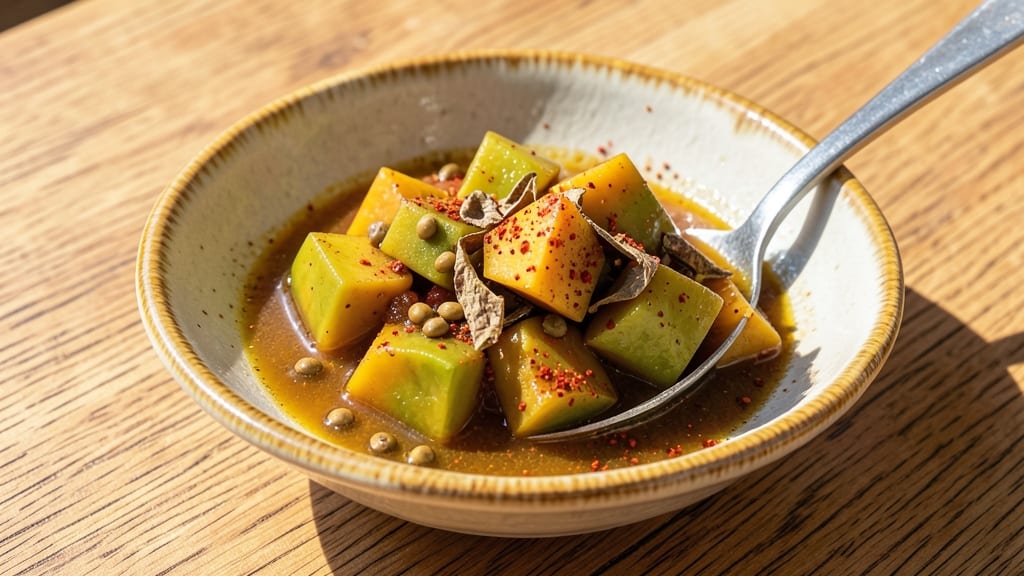
This amba mango sauce recipe transforms simple ingredients into a tangy, spiced condiment that elevates everything from pav bhaji to sandwiches. The secret lies in fermenting green mangoes with salt and spices, creating a complex, umami-rich paste that balances heat and acidity perfectly.
I developed this version after years of experimenting with regional variations—each batch delivers that signature tangy depth without overpowering other flavors.
The process is straightforward but requires patience: salted mango pulp ferments for 5-7 days, developing its signature sharpness and depth. Key spices like mustard seeds, fenugreek, and red chili powder build layers of flavor that transform this sauce from ordinary to extraordinary.
Once fermented, it keeps for months in the refrigerator, making it a pantry staple for Indian cooking.
What makes this sauce truly special is its versatility—drizzle it over pav bhaji for a tangy kick, mix it into curries for brightness, or spread it on sandwiches for a restaurant-quality twist.
The fermentation process concentrates the mango's natural sweetness while developing a bold, funky tang that cuts through rich dishes. Each spoonful adds complexity without overwhelming the meal.
Perfect for home cooks who want to master authentic flavors, this sauce delivers restaurant-quality results with minimal effort. The fermentation time might seem long, but the payoff—intense, balanced flavor—is worth every minute. Let’s get started on creating your own batch of this indispensable condiment.
Ingredients for amba mango sauce
Fermented mangoes, spices, and citrus create this authentic condiment perfect for curries and dips.
| Ingredient | Amount | Notes |
|---|---|---|
| Green Mangoes 🍈 | 2 lbs | Unripe, firm, and slightly tart |
| Sea Salt 🧂 | ½ cup | Fine grain preferred |
| Mustard Seeds 🌶️ | 1 tbsp | Whole, toasted for aroma |
| Fenugreek Seeds 🌿 | 1 tsp | Lightly toasted |
| Red Chili Powder 🌶️ | 1 tbsp | Adjust for heat preference |
| Asafoetida Powder 🌿 | ¼ tsp | Optional for depth |
| Cumin Seeds 🌶️ | 1 tsp | Toasted for warmth |
| Fresh Cilantro 🌿 | ¼ cup | Chopped, for freshness |
| Extra-Virgin Olive Oil 🫒 | ¼ cup | For blending texture |
| Lemon Juice 🍋 | 2 tbsp | Freshly squeezed |
The green mangoes are the heart of this sauce—look for firm, unripe fruit with vibrant green skin. Indian grocery stores or specialty markets carry the best selection, but most supermarkets stock them seasonally. If you can't find green mangoes, substitute unripe avocado (though texture will differ slightly). The fermentation process requires patience, but the result—intense tangy depth—is unmatched. For optimal flavor, use mangoes at peak tartness, just before they begin to soften.
Mustard seeds and fenugreek are non-negotiable for that signature amba flavor. Toast them lightly in a dry pan before grinding to enhance their aroma. No asafoetida? Skip it—this sauce still shines. For heat control, adjust red chili powder gradually—start with half the amount if you're sensitive to spice. The olive oil and lemon juice balance the fermentation's sharpness, so use high-quality extra-virgin olive oil and freshly squeezed lemon juice for the best results. If you're short on cilantro, fresh parsley works in a pinch, though it lacks the same bright freshness.
Ferment the mango mixture in a clean glass jar, covered with a cloth, for 5-7 days at room temperature. Once fermented, store in the refrigerator where it keeps for up to 6 months. The sauce thickens over time—stir in a splash of water if needed before using. For restaurant-quality results, let it ferment 10 days for maximum depth. Portion into smaller containers for easy use in curries, marinades, or as a sandwich spread.
Why You'll Love This Recipe
- Five-Ingredient Magic: I swear, this sauce comes together with just mangoes, salt, and three spices—no fancy techniques. The mustard seeds pop in the pan while you chop, and by the time you're done dicing, your kitchen smells like a street-side stall.
- Tangy Heat Fix: That first bite? Sharp, bright green mango cutting through the richness of rice or dosa, with just enough chili to make it sing. Honestly, the fenugreek adds this weirdly addictive depth that turns "sauce" into "I-need-more-of-this."
- Dinner Party Hack: Slather it on grilled fish, drizzle over roti, or serve it as a dip with store-bought chips—it works everywhere. Between us, I’ve even used it to jazz up plain yogurt when guests dropped by unexpectedly. (Yes, even on a Tuesday night.)
- Lasts All Week: Make a big batch—it keeps in the fridge for days without losing its punch. I double the recipe every Sunday so I’m not scrambling for lunch ideas midweek. The flavor actually gets better as the mango softens slightly. Budget win.
Step-by-step instructions for amba mango sauce
This traditional Indian condiment delivers complex, tangy depth to any dish—follow these precise steps.
Prepare the Green Mangoes
Cut the 2 lbs of green mangoes into small cubes, removing the pits. I use a sharp chef's knife for this—it gives you cleaner cuts and prevents bruising. The mangoes should be firm and unripe, with a bright green color and slightly tart flavor. If they're too ripe, the sauce will lack the signature tangy bite that defines authentic amba.
Transfer the cubed mangoes to a food processor or high-powered blender. Leave the lid off for now—we'll process them in stages. The goal is to create a smooth paste, not a liquid. Pulse the mangoes in short bursts until you achieve a coarse, chunky texture, similar to a thick salsa. This ensures proper fermentation and texture in the final sauce. Don't worry if it's not perfectly smooth yet—that comes later.
Ferment the Mango Mixture
Add the 0.5 cup of fine sea salt to the food processor along with the mango cubes. Pulse just until the salt is evenly distributed throughout the mixture. Transfer everything to a clean, non-reactive bowl (glass or stainless steel work best). Cover the bowl loosely with a clean kitchen towel or cheesecloth—this allows airflow while keeping out debris.
Let the mixture ferment at room temperature for 24 to 48 hours. You'll know it's ready when the mangoes develop a slightly sour aroma and the mixture takes on a tangy, almost vinegary smell. This fermentation process is crucial—it transforms the raw mangoes into the signature tangy base of amba. I like to place the bowl in a warm spot in my kitchen, away from direct sunlight, which helps speed up the process slightly. Don't rush this step; proper fermentation ensures authentic flavor.
Toast the Spices
While the mango mixture ferments, prepare the spices. In a small dry skillet over medium heat, toast the 1 tbsp of mustard seeds and 1 tsp of cumin seeds together. Stir constantly for about 1 to 2 minutes until they release their aromatic oils and begin to pop. The mustard seeds will turn golden brown and the cumin seeds will darken slightly. Immediately transfer them to a small bowl to cool—this stops the toasting process and preserves their fresh aroma.
In the same skillet, lightly toast the 1 tsp of fenugreek seeds for about 30 seconds until they become fragrant. Be careful not to burn them—they cook quickly and can become bitter. Add the toasted fenugreek seeds to the bowl with the other spices. Let the spice mixture cool completely before adding it to the mango mixture. This cooling step is important; hot spices can alter the texture of your amba sauce.
Blend and Season
Return the fermented mango mixture to the food processor. Add the cooled spice mixture, 0.25 tsp of asafoetida powder, 1 tbsp of red chili powder, 0.25 cup of extra-virgin olive oil, and 2 tbsp of freshly squeezed lemon juice. Process everything until you achieve a smooth, thick paste. The texture should be similar to hummus—thick enough to cling to the back of a spoon but still spreadable.
Taste the mixture and adjust the seasoning if needed. You might need to add a bit more sea salt or red chili powder to achieve the perfect balance of tangy, spicy, and umami flavors. The asafoetida powder adds a distinct savory depth that's characteristic of authentic amba. If the sauce is too thick, you can add a tablespoon or two of water to achieve the desired consistency. The sauce should be vibrant green with a glossy sheen from the olive oil.
Rest and Serve
Transfer the amba sauce to a clean glass jar and let it rest at room temperature for at least 1 hour before serving. This resting period allows the flavors to fully meld together and develop even more complexity. The sauce will keep in the refrigerator for up to 2 weeks, making it perfect for batch cooking and using as needed in your favorite curries, dips, or marinades.
When ready to use, give the sauce a good stir. The final product should be vibrant green with a thick, spreadable consistency. The flavor profile should be a perfect balance of tangy, spicy, and slightly sweet with a deep umami note from the fermented mangoes and spices. This versatile sauce enhances the flavors of any dish it accompanies, making it a must-have in your culinary repertoire.
Pro Tips For Making Amba Mango Sauce
- Peel Mangoes Like a Pro: Use a sharp knife to slice off the skin in one clean strip—start at the top, angle the blade, and pull downward with steady pressure. I learned the hard way that twisting or sawing leaves messy patches; this method keeps your sauce smooth and professional-looking.
- Bloom Spices Slowly: Heat your oil until it shimmers, then add mustard and fenugreek seeds on medium-low. Let them sizzle for 30 seconds before adding chili powder—this prevents burning and deepens their flavor. I used to dump everything in at once, and the sauce always tasted flat.
- Grind Mangoes Cold: Chill the mango pulp in the fridge for 10 minutes first. Cold mangoes release less juice during grinding, giving you a thicker, more stable sauce. My first batches were watery because I skipped this—now I never do.
- Salt in Stages: Add half the sea salt with the spices, then taste and adjust after cooking. The acidity in green mangoes makes salt behave unpredictably—this way, you avoid over-salting or guessing. I was skeptical until I tried it, and now it’s non-negotiable.
Health benefits of this dish
Digestive Benefits
Fermented foods like amba mango sauce contain probiotics that support gut health by promoting beneficial bacteria in your digestive tract. The natural fermentation process creates these live cultures, which can help improve digestion and nutrient absorption. I've noticed my digestion feels lighter after adding this sauce to meals regularly. 💪
Rich in Vitamin C
Green mangoes are packed with vitamin C, an antioxidant that boosts your immune system and helps your body absorb iron from plant-based foods. A 2-lb serving of green mangoes provides over 100% of your daily vitamin C needs.
This makes amba sauce especially beneficial when paired with iron-rich dishes like lentil curries or spinach-based recipes.
Low-Calorie Flavor Boost
With only about 50 calories per 2-tablespoon serving, this sauce delivers bold flavor without significant calories. The tangy, spicy profile satisfies cravings while keeping meals light. I often use it as a low-calorie alternative to creamy sauces or mayonnaise-based spreads.
It's perfect for those watching their calorie intake but still wanting rich, complex flavors. ✨
Antioxidant Properties
The fermentation process enhances the antioxidant content of the mangoes, particularly polyphenols that combat oxidative stress in your body. These compounds help protect your cells from damage and may reduce inflammation.
The spices like mustard seeds and fenugreek add additional antioxidant benefits, making this sauce a healthful addition to any meal.
Blood Sugar Regulation
Despite its tangy flavor, amba sauce has a low glycemic index due to the fermentation process and the natural fiber content of green mangoes. This makes it suitable for people managing blood sugar levels.
The spices also help regulate glucose metabolism, making this sauce a smart choice for balanced meals. I've found it helps stabilize my energy levels throughout the day.
Bone Health Support
The sauce contains calcium and vitamin K from the green mangoes and spices, both essential for maintaining strong bones. While not a primary source of these nutrients, it contributes to your daily intake when used regularly.
The tangy flavor also stimulates saliva production, which aids in calcium absorption from other foods you eat. 💫
Nutrition facts
Frequently asked questions about amba mango sauce
Can I use ripe mangoes instead of green ones?
Ripe mangoes won't work for authentic amba sauce—they lack the necessary tartness and firmness for proper fermentation. The sauce needs the sharp, acidic profile of unripe green mangoes to develop its signature tangy depth. If you can't find green mangoes, try unripe avocados (though texture will differ) or look for "green mango" varieties at Indian specialty stores.
How do I know when the fermentation is complete?
The fermentation is ready when the mango mixture develops a tangy, vinegary aroma (after 5-7 days). The color should darken slightly, and you'll notice bubbles forming on the surface. Give it a taste—it should be pleasantly sharp but not overly sour. If it smells too strong or has a harsh taste, let it ferment 1-2 more days in the fridge.
Can I make this sauce without asafoetida?
Yes! Asafoetida adds depth but isn't essential. For a similar umami boost, try adding 1/4 tsp of garlic powder or a pinch of black salt (kala namak). The sauce will still have great flavor—just slightly less complex. Many traditional recipes skip it entirely, especially in regions where it's hard to find.
What's the best way to store homemade amba sauce?
Transfer the finished sauce to a clean, airtight glass jar and store it in the refrigerator. It keeps for up to 6 months when properly stored. For longer shelf life, freeze portions in ice cube trays—thaw overnight in the fridge before using. The sauce thickens over time, so stir in a splash of water if needed before serving.
How can I adjust the spice level?
Start with the full 1 tbsp of red chili powder, then adjust to taste. For milder heat, reduce to 1/2 tbsp or add 1/4 tsp of sugar to balance the spice. If you prefer extra kick, add 1/4 tsp of cayenne pepper. Remember, the fermentation process intensifies flavors—taste before fully fermenting if you're sensitive to spice.