
Sauces & Condiments
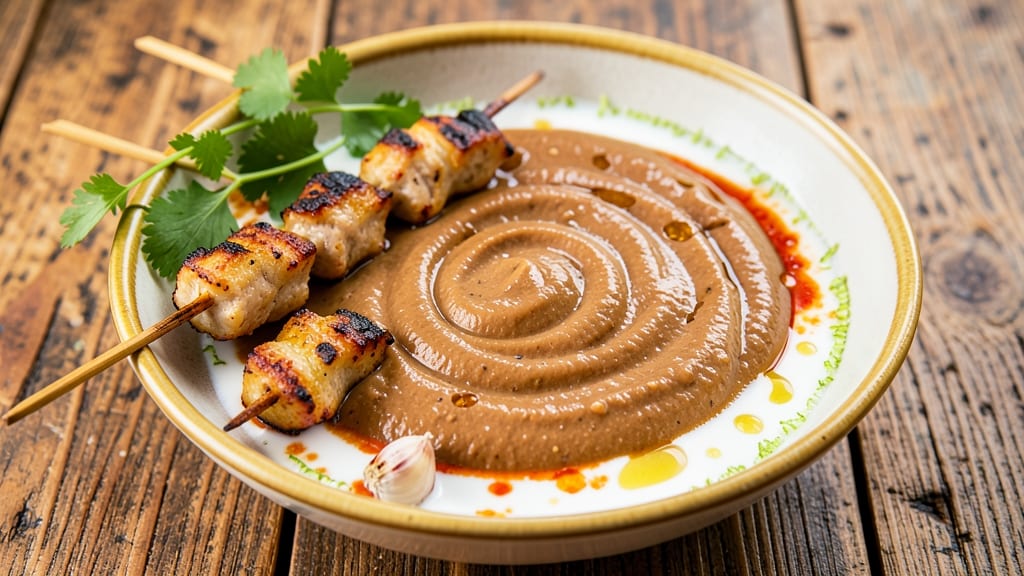
This vegan almond butter satay sauce delivers restaurant-quality depth with just six simple ingredients—creamy, nutty, and perfectly balanced between sweet and tangy. The secret lies in a touch of rice vinegar, which cuts through the richness while enhancing the almond butter's natural sweetness.
I developed this recipe after craving that signature satay flavor without dairy or meat, and it's become my go-to for everything from grilled tofu to crispy veggie skewers.
The sauce builds on a velvety base of almond butter and coconut milk, where garlic and soy sauce add savory complexity. A splash of lime brightens the flavors, while a pinch of chili brings just enough heat to keep things interesting.
What makes this version special is how the vinegar—often overlooked—transforms the sauce from ordinary to extraordinary, creating that signature tang that defines authentic satay.
Once blended, this sauce is incredibly versatile—drizzle it over grilled vegetables, toss with noodles, or use as a dipping sauce for spring rolls. The texture remains luscious even after chilling, making it perfect for meal prep.
With just 15 minutes of active time and ingredients you likely already have, you'll have a sauce that rivals any takeout spot.
Store it in an airtight container in the fridge for up to 5 days, or freeze for 3 months without compromising flavor. The best part? Every batch tastes better the next day as the flavors meld. Let's make this sauce—the one that turns simple meals into something extraordinary.
Ingredients for almond butter satay sauce
Six ingredients transform into velvety satay sauce that's nutty, tangy, and packed with depth.
| Ingredient | Amount | Notes |
|---|---|---|
| Creamy Almond Butter 🥜 | ½ cup | Natural, unsweetened preferred |
| Full-Fat Coconut Milk 🥥 | ½ cup | Canned, shaken well |
| Rice Vinegar 🍶 | 1 tbsp | White or seasoned variety |
| Lime Juice 🍋 | 1 tbsp | Freshly squeezed |
| Garlic Cloves 🧄 | 2 cloves | Minced for smooth texture |
| Red Curry Paste 🌶️ | 1 tbsp | Mild or medium heat |
| Soy Sauce 🍶 | 1 tbsp | Tamari for gluten-free |
| Cayenne Pepper 🔥 | ¼ tsp | Adjust for heat preference |
| Maple Syrup 🍯 | 1 tsp | Pure, grade A |
| Extra-Virgin Olive Oil 🫒 | 1 tbsp | For smooth finish |
Almond butter is the star—creamy, unsweetened gives the richest texture. Trader Joe's or Whole Foods carry excellent brands like 365 or Anthony's. The coconut milk? Always shake the can first—those little bits of coconut at the bottom make a difference. Garlic cloves should be fresh, not powdered—minced finely for a smooth sauce. Red curry paste? Maesri or Simply Organic are my go-tos, but any good-quality brand works. The secret weapon is rice vinegar—it's what gives this sauce that signature satay tang without overpowering.
No almond butter? Cashew butter or tahini works in a pinch, though the flavor will shift slightly. Swap coconut milk for cashew cream if you're avoiding coconut. The maple syrup can be swapped for agave or date syrup, but maple gives that perfect caramel note. Running low on soy sauce? Coconut aminos are a great gluten-free alternative. The cayenne is totally optional—skip it if you prefer a mild sauce, but trust me, that tiny pinch elevates everything. For extra richness, add 1 tsp of coconut oil to the blend.
This sauce keeps beautifully—store in an airtight container in the fridge for up to 5 days, or freeze for 3 months in ice cube trays for single-use portions. The flavors actually deepen overnight, so making a batch ahead is a great idea. If it thickens too much, just stir in a splash of water or coconut milk. Thin it out with a little water if it's too rich for your taste. Perfect for drizzling, dipping, or tossing—whatever you're craving.
Why You'll Love This Recipe
- Five-Ingredient Magic: I swear by this recipe because it turns pantry staples into something special—no fancy gadgets or last-minute grocery runs. That jar of almond butter and can of coconut milk? Already in my cupboard. Honestly, the only prep is mincing garlic and squeezing lime, then blending while I wait for the rice to cook.
- Nutty Tangy Bomb: Between us, this sauce is ridiculously good. The almond butter gives it this rich, velvety depth, while the lime and rice vinegar cut through it like a bright, citrusy hug. That first bite of satay—crispy, sticky, with sauce clinging just right—makes me want to make it every week.
- Weeknight to Dinner Party: I use this for stir-fries on Tuesdays and drizzle it over grilled chicken for date night. The coconut milk keeps it luscious even when reheated, and the acidity from the lime means it doesn’t curdle like some other sauces. (Yes, even on a Tuesday night.)
- Leftovers That Don’t Suck: Most sauces turn sad after a day, but this one? Still spot-on in the fridge for up to five days. I freeze half the batch in ice cube trays—perfect for quick marinades or last-minute drizzles. Between us, that’s my secret weapon for lazy Sundays.
Step-by-step instructions for almond butter satay sauce
This sauce comes together faster than you'd expect—smooth, nutty, and perfectly balanced with that vinegar kick.
Bloom the Curry Paste and Garlic
Heat the 1 tablespoon extra-virgin olive oil in a small saucepan over medium-low heat. Add the 1 tablespoon red curry paste and stir constantly for 30 seconds until fragrant—you'll smell those toasty, earthy spices. This is called "blooming," and it releases the curry's full flavor potential.
Next, add the 2 minced garlic cloves and cook for another 30 seconds until they're golden around the edges but not browned. Watch closely—garlic burns faster than you think, and you want aromatic, not bitter. Keep the heat gentle; we're building flavor, not frying.
Combine Wet Ingredients
Pour in the 0.5 cup creamy almond butter and the 0.5 cup full-fat coconut milk, stirring vigorously with a whisk or silicone spatula. The mixture will thicken immediately as the almond butter emulsifies with the coconut milk. If you see any lumps, press them against the pan with the back of your spoon—they'll dissolve in seconds.
Add the 1 tablespoon rice vinegar and 1 tablespoon lime juice next. Stir well and let the sauce simmer gently for 2 minutes. You'll notice it starts to bubble softly—this is when the acidity begins to brighten the nutty richness. The vinegar might seem like too much at first, but trust me, it balances everything perfectly.
Build Depth with Soy and Sweetness
Now stir in the 1 tablespoon soy sauce and 1 teaspoon maple syrup. The soy sauce adds umami depth while the maple syrup rounds out the acidity. Let the sauce simmer for another 2-3 minutes on medium-low heat, stirring occasionally. You're looking for a smooth, velvety consistency—thick enough to coat the back of a spoon but still pourable.
Taste and adjust the seasoning. If it needs more heat, add the 0.25 teaspoon cayenne pepper now. If you prefer it sweeter, add another ½ teaspoon maple syrup. The sauce should be rich but not overpowering, with a perfect balance of nutty, tangy, and slightly spicy notes.
Finish and Rest
Remove the saucepan from heat and let the sauce rest for 5 minutes. This resting period allows all the flavors to meld together. Give it one final taste—it should be smooth, balanced, and ready to elevate any dish. If it's too thick for your liking, thin it with a splash of warm water or coconut milk, 1 teaspoon at a time, until it reaches your desired consistency.
For best results, use the sauce immediately over grilled meats, roasted vegetables, or noodles. It keeps well in the refrigerator for up to 5 days in an airtight container, but I promise you won't have leftovers—this sauce disappears fast!
Pro Tips For Making Almond Butter Satay Sauce
- WARM THE ALMOND BUTTER: I learned this the hard way—cold almond butter clumps like cement when mixed with coconut milk. Warm it in a small saucepan over low heat with a splash of coconut milk first, stirring until it’s smooth and liquid. This keeps your sauce creamy from the start, not lumpy.
- USE GARLIC PASTE, NOT MINCED: Fresh garlic burns faster than you’d think, especially when simmering. Swap minced cloves for a teaspoon of garlic paste—it blends seamlessly, infuses flavor without risking bitterness, and saves you from peeling and chopping. (Yes, even if you’re impatient like me.)
- STRAIN THE COCONUT MILK: Full-fat coconut milk has a weird texture—thick and stringy—that can make your sauce grainy. Pour it through a fine-mesh sieve or cheesecloth before mixing. It’s a little extra work, but the result is silky smooth, like restaurant-quality satay.
- BALANCE THE ACID LAST: Add lime juice and rice vinegar after the sauce has simmered for 3-4 minutes. This lets the flavors meld first, so the tang doesn’t overwhelm. Taste as you go—you can always add more acid, but you can’t take it out. (I’ve tried.)
Health benefits of this almond butter satay sauce
Plant-Based Protein Boost
This almond butter satay sauce is a complete plant-based protein powerhouse when paired with tofu, tempeh, or chickpeas. A ½ cup serving of sauce provides about 5 grams of protein from the almond butter alone, while coconut milk adds healthy fats.
The sauce's creamy texture makes it perfect for marinating or glazing plant proteins, ensuring they stay moist and flavorful. 💪
Heart-Healthy Fats
The combination of almond butter and coconut milk delivers heart-healthy monounsaturated and polyunsaturated fats, which help lower bad cholesterol levels. Almonds are particularly rich in vitamin E, an antioxidant that supports skin health and immune function.
Using unsweetened almond butter keeps added sugars to a minimum, making this sauce a guilt-free indulgence.
Digestive Benefits
The sauce's key ingredients—rice vinegar, lime juice, and garlic—support digestive health. Garlic contains allicin, a compound known for its gut-friendly properties, while lime juice aids in digestion and nutrient absorption.
The probiotic potential of coconut milk (when using canned, full-fat varieties) adds an extra layer of gut-friendly benefits, especially when paired with fermented foods like kimchi or sauerkraut. 🌱
Blood Sugar Balance
Thanks to the maple syrup and natural sweetness of almond butter, this sauce has a lower glycemic impact than traditional satay sauces with refined sugar. The fiber in almond butter helps slow sugar absorption, preventing blood sugar spikes.
For an even better balance, pair it with low-glycemic foods like grilled vegetables or quinoa-based dishes.
Anti-Inflammatory Properties
The turmeric and ginger in red curry paste (even in small amounts) provide powerful anti-inflammatory benefits. Combined with the antioxidants from almond butter and lime juice, this sauce helps reduce inflammation in the body.
Regular consumption may support joint health and overall well-being, making it a great addition to anti-inflammatory diets. ✨
Versatile Nutrient Pairing
This sauce isn't just delicious—it's a nutrient-dense condiment that enhances the nutritional value of any meal. When drizzled over roasted vegetables, it boosts their vitamin content while adding healthy fats.
For a protein-packed bowl, toss it with edamame or lentils to create a complete amino acid profile. The sauce's tangy-sweet balance makes healthy eating effortless and enjoyable.
Nutrition facts
Frequently asked questions
Can I make this sauce without almond butter?
Yes! You can substitute with cashew butter (for a milder flavor) or tahini (for a sesame note). For best results, use equal amounts and add 1 extra tablespoon of coconut milk to maintain creaminess. The sauce will still taste delicious but with a slightly different texture.
How spicy should this sauce be?
The recipe includes just ¼ teaspoon cayenne—a tiny pinch that adds warmth without heat. For more spice, add ½ teaspoon cayenne or a dash of chili flakes. If you prefer mild, simply omit it entirely. The sauce's natural tanginess from rice vinegar balances any heat beautifully.
What's the best way to store leftovers?
Transfer to an airtight container and refrigerate for up to 5 days. For longer storage, freeze in ice cube trays (thaw in the fridge overnight). The sauce actually tastes better after chilling as flavors meld! Stir before using to restore smooth consistency.
Can I use this sauce in cooking or just as a dip?
This versatile sauce works for both! Use it as a dip for veggie sticks or spring rolls, a glaze for tofu or tempeh skewers, or a marinade for grilled chicken or fish. The nutty richness enhances roasted vegetables too—try drizzling over sweet potatoes or Brussels sprouts.
Why does my sauce look grainy?
Graininess usually means the almond butter wasn't fully incorporated. Stir vigorously with a whisk or immersion blender for 1-2 minutes to emulsify. If using powdered almond butter, add 1 extra tablespoon coconut milk to help blend. For a smoother texture, strain through a fine-mesh sieve if needed.