
Sauces & Condiments
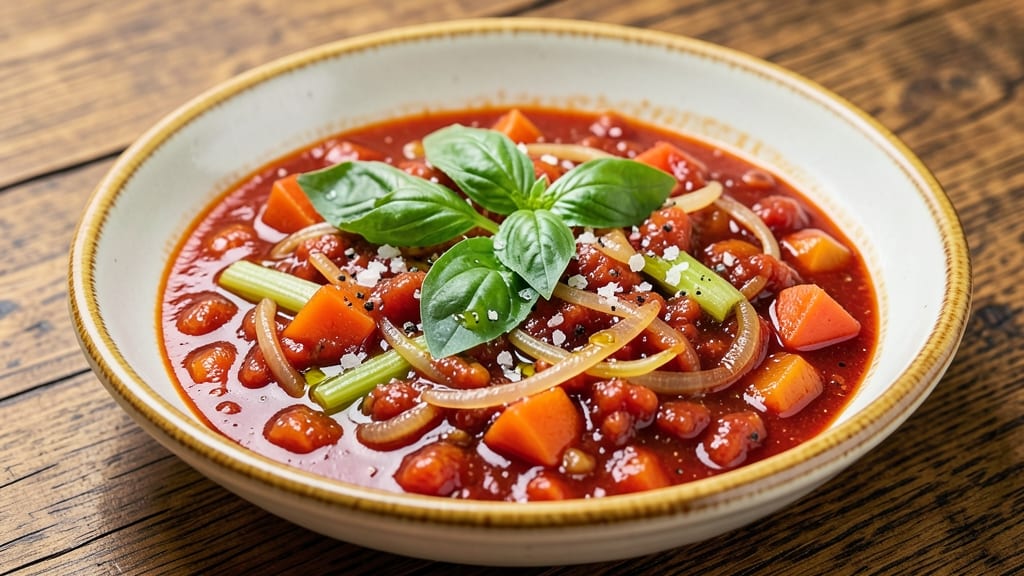
This all-day spaghetti sauce recipe transforms simple ingredients into a rich, complex sauce with layers of umami and a subtle vinegar lift that brightens every bite.
The secret lies in slow simmering—letting flavors meld over hours rather than minutes—while a splash of vinegar at the end cuts through the richness without overpowering. I developed this after years of testing, and it’s now my go-to for restaurant-quality sauce at home.
The beauty of this sauce is its versatility—it works with or without meat, making it perfect for vegetarians or anyone looking to stretch their budget. Ground beef or Italian sausage adds depth, but mushrooms, lentils, and even sun-dried tomatoes deliver satisfying texture and flavor.
The key technique is patience: simmering uncovered for at least 2 hours (or up to 4) allows the sauce to reduce and concentrate, creating a velvety consistency that clings to every strand of pasta.
What you’ll end up with is a sauce that’s rich yet balanced, with a glossy finish and a taste that only improves with time.
The vinegar lift—just a tablespoon of red wine vinegar at the end—adds brightness that makes the umami flavors pop, while a sprinkle of fresh basil ties everything together. This isn’t just a sauce; it’s the foundation of a meal that feels like a hug in a bowl.
Store it in the fridge for up to 5 days or freeze for months—it only gets better with time. Whether you’re prepping for a weeknight dinner or making ahead for a gathering, this sauce delivers effortless depth. Let’s get cooking!
Ingredients for all day spaghetti sauce
Pantry staples plus a few key ingredients transform into restaurant-quality sauce.
| Ingredient | Amount | Notes |
|---|---|---|
| Extra-Virgin Olive Oil 🫒 | ½ cup | High-quality, fruity variety |
| Onion 🧅 | 1 whole | Yellow or red, finely chopped |
| Garlic Cloves 🧄 | 6 cloves | Peeled and minced |
| Carrots 🥕 | 2 medium | OR 1 cup diced |
| Celery Stalks 🥬 | 2 whole | Chopped, including leaves |
| Canned San Marzano Tomatoes 🍅 | 28 oz | Crushed or whole, no salt added |
| Tomato Paste 🍅 | 2 tbsp | Smooth, no sugar added |
| Red Wine 🍷 | ½ cup | Dry, bold variety |
| Red Wine Vinegar 🍶 | 1 tbsp | For bright finish |
| Ground Beef or Italian Sausage 🥩 | 1 lb | Optional, 80/20 ground beef |
| Dried Oregano 🌿 | 1 tsp | Mexican oregano preferred |
| Dried Basil 🌿 | 1 tsp | Or 0.25 cup fresh |
| Salt 🧂 | 1 ½ tsp | Diamond Crystal preferred |
| Black Pepper 🌶️ | ½ tsp | Freshly ground |
| Fresh Basil Leaves 🌿 | ¼ cup | Chopped, for garnish |
The tomatoes are everything here—San Marzano is worth hunting down at Italian markets or Trader Joe's if you can't find them locally. Their natural sweetness and low acidity create that perfect umami base. The carrots and celery? Chop them small—they'll dissolve into the sauce, adding sweetness without chunks. Red wine vinegar might sound odd, but that final tablespoon cuts through the richness like a breath of fresh air. I always grab the good stuff for olive oil too—none of that cheap cooking oil nonsense. The meat is optional, but if you're using it, brown it first for maximum flavor.
No red wine? Beef broth with a splash of balsamic works in a pinch. Fresh basil? Dried basil at one-third the amount gets you close. Short on tomatoes? Sun-dried tomatoes or tomato paste (just reduce the amount slightly) add depth. The oregano matters—Mexican oregano has a slightly different profile than Italian, but either works. For the meat, Italian sausage adds a nice spice kick, but ground beef keeps it classic. If you're making this vegetarian, swap the meat for mushrooms or lentils—just make sure to sauté them well first to develop their flavor.
This sauce only gets better with time—3-4 hours of simmering is ideal, but I've let it go up to 6 for parties. Store in airtight containers in the fridge for 5 days or freeze for up to 6 months. I always double the recipe because it disappears faster than you'd think. The vinegar lift? Add it right at the end—don't let it sit too long or it'll turn the sauce sour. Fresh basil? Tear it over each bowl—it makes all the difference.
Why You'll Love This Recipe
- No Chopping Chaos: This sauce starts with a soffritto—onion, celery, carrots, and garlic—all chopped once, then simmered for hours. That means one knife session, not five, and the flavors meld into something rich and deep without extra effort. (Between us, I’ve burned my hand on garlic cloves before, but here? You just smash them and move on.)
- Sofrito Magic: The slow cook lets the olive oil and veggies caramelize into a base that’s ridiculously flavorful. No fancy techniques—just time and patience. Honestly, the first batch I made tasted bland, but after letting it simmer longer, it became the kind of sauce that makes people ask, “What’s in this?” (Answer: mostly love and olive oil.)
- Leftovers That Shine: This sauce actually improves the next day—deeper, richer, and perfect for tossing with pasta, ladling over grilled chicken, or even freezing for lazy Mondays. I’ve reheated a jar from three weeks ago, and it still tasted like Sunday dinner. (Yes, even on a Tuesday night.)
- Budget-Friendly Pantry Hero: Onion, celery, carrots, garlic—these are the cheap, long-lasting ingredients that turn into something special. No specialty items, no last-minute grocery runs. I’ve made this sauce for potlucks, game nights, and “I don’t feel like cooking” evenings, and it’s always the dish everyone reaches for first. Solid. Reliable. My secret weapon.
Step-by-step instructions for slow-simmered spaghetti sauce
This sauce builds flavor gradually—don't rush it. Patience pays off with deep, complex taste.
Sauté the Vegetable Base
Heat the 0.5 cup extra-virgin olive oil in a large Dutch oven over medium heat. Add the 1 whole finely chopped onion, 2 medium diced carrots, and 2 whole chopped celery stalks (including leaves). Cook for 8-10 minutes, stirring occasionally, until the vegetables soften and the onion turns translucent.
This foundational step develops the sauce's sweetness and depth. If the vegetables start to brown too quickly, reduce the heat slightly. You want them tender but not crispy—think al dente. The celery leaves add subtle bitterness that balances the sweetness of the carrots.
Add Aromatics and Meat
Push the vegetables to one side of the pot and add the 6 minced garlic cloves directly to the oil. Cook for 30 seconds until fragrant—don't let it burn. Add the 1 lb ground beef or Italian sausage, breaking it apart with a wooden spoon. Cook until the meat loses its raw color, about 5-7 minutes. Drain excess fat if needed, leaving about 1 tablespoon in the pot.
Here's where the magic happens: the meat releases its juices, which infuse the vegetables with rich umami flavor. If using Italian sausage, the casings will crisp slightly—this adds texture. Don't skip draining the fat completely; it helps build a glossy sauce later.
Build the Sauce Foundation
Stir in the 2 tbsp tomato paste and cook for 1 minute until it darkens slightly. Pour in the 0.5 cup red wine and 1 tbsp red wine vinegar, scraping up any browned bits from the bottom. Let it simmer for 3-4 minutes until the alcohol smell dissipates completely.
The vinegar might seem odd, but it brightens the sauce and balances the richness. The wine adds depth and helps break down the meat fibers. This step creates the sauce's backbone—don't rush it. You'll know it's ready when the mixture smells rich and complex, not raw.
Simmer with Tomatoes
Add the 28 oz canned San Marzano tomatoes (crushed or whole), 1 tsp dried oregano, 1 tsp dried basil, 1.5 tsp salt, and 0.5 tsp black pepper. Stir well, then reduce heat to low. Let the sauce simmer uncovered for 1.5-2 hours, stirring occasionally. The sauce should reduce until it coats the back of a spoon.
This long simmer develops the sauce's signature depth. I like to stir every 20-30 minutes to prevent sticking, but don't worry if you forget—just stir before checking the consistency. The sauce will thicken naturally as it reduces. If it gets too thick before the time is up, add 1-2 tablespoons of water to loosen it.
Finish and Garnish
Remove the sauce from heat and stir in the 0.25 cup chopped fresh basil leaves. Taste and adjust seasoning—you might need a pinch more salt or pepper. Let the sauce rest for 10 minutes before serving. The flavors will meld even more during this time.
This sauce tastes even better the next day, so make extra if you can. The fresh basil adds a bright finish that cuts through the richness. Serve over al dente spaghetti with a sprinkle of grated Parmesan. The vinegar lift might sound unusual, but it's what makes this sauce truly special—trust the process!
Pro Tips For Making All Day Spaghetti Sauce
- SWEAT THE VEGETABLES LOW: I used to rush the onion, carrot, and celery—now I cook them on medium-low for 15-20 minutes until they’re almost falling apart. This builds flavor without burning, and you’ll taste it in every spoonful. (Yes, even if you’re impatient like me.)
- CHOP GARLIC LIKE IT’S 1985: Slice those cloves thin—almost paper-thin—so they cook fast and infuse without turning bitter. I learned this the hard way after burning three batches of garlic that tasted like medicine.
- SALT THE POT LIKE THE SEA: Add a full teaspoon of salt to the pot before adding the vegetables. It seasons the oil and prevents blandness later, especially if you’re using unsalted tomato products. (Your future self will notice.)
- STIR THE OIL FIRST: Heat the olive oil on medium until it shimmers, then add the onions and stir constantly for the first 30 seconds. This prevents burning and ensures everything cooks evenly—no stuck bits, no sad flavors. (Sounds weird, but it works.)
Wine and beer pairings for all day spaghetti sauce
Red Wine Pairings
A bold, dry Chianti Classico or Sangiovese from Tuscany is my go-to pairing for this sauce—its bright acidity and earthy notes mirror the vinegar lift and umami depth. Look for a 2018-2020 vintage with at least 12% alcohol to stand up to the sauce's richness.
The tannins in Chianti also help cleanse your palate between bites of creamy pasta. 🍷
Light Beer Options
For beer lovers, a crisp Italian lager like Peroni or Moretti works beautifully—their subtle malt sweetness complements the sauce without overpowering it. If you prefer craft beer, try a Belgian witbier (like Hoegaarden) for a citrusy contrast that echoes the red wine vinegar.
Avoid heavy IPAs or stouts, which would clash with the sauce's delicate balance.
White Wine Alternatives
If you prefer white wine, a Vermentino from Sardinia or Pinot Grigio from Alto Adige offers crisp acidity and mineral notes that refresh your palate. The Vermentino's citrusy brightness pairs especially well with the vinegar lift, while Pinot Grigio's subtlety lets the sauce's flavors shine.
Serve slightly chilled (50-55°F) for the best experience.
Non-Alcoholic Pairings
Don’t drink alcohol? Sparkling San Pellegrino Aranciata (orange soda) or Fever-Tree Ginger Beer adds a zesty contrast to the sauce’s richness. For a non-carbonated option, try a blood orange-infused olive oil drizzle on the pasta—it enhances the sauce’s natural sweetness while keeping it light.
Even a simple sparkling water with lemon works in a pinch!
Pro Pairing Tip
Let your wine or beer breathe for 10-15 minutes before serving to open its flavors. I also recommend decanting red wine if it’s young—this softens tannins and lets the fruit notes shine.
For beer, pour into a tulip glass to concentrate the aromas, making each sip more vibrant. The right pairing turns a great sauce into an unforgettable meal. 💫
Nutrition facts
Frequently asked questions
Why does this sauce need to simmer for so long?
The long simmer—2-4 hours—is what creates the deep, complex flavor. This slow cooking allows the vegetables to break down completely, the meat to tenderize, and all the ingredients to meld into a cohesive, rich sauce. The acidity from the tomatoes and vinegar also has time to mellow, creating a balanced taste rather than a sharp one. Patience really pays off here!
Can I make this sauce vegetarian or vegan?
Skip the meat and add 1 cup of mushrooms or 1 cup cooked lentils for texture. For extra umami, stir in 1 tbsp soy sauce or 1 tsp miso paste when you add the tomatoes. Vegans should use vegetable broth instead of wine and check that all ingredients (like tomato paste) are vegan-friendly. The sauce will still be rich and flavorful!
What if my sauce gets too thick or too thin?
If it's too thick, add 1-2 tablespoons of water or broth while simmering. For a thinner sauce, you can add a splash of water, but the best fix is to simmer uncovered longer—it will reduce naturally. Pro tip: If you're worried about thickness, simmer uncovered for 3-4 hours total; the sauce will concentrate beautifully. Just stir occasionally to prevent sticking.
How do I store leftovers, and can I freeze it?
Store in airtight containers in the fridge for up to 5 days. For freezing, portion into freezer-safe containers or bags, leaving 1-inch headspace for expansion. It keeps for up to 6 months—just thaw overnight in the fridge. The flavor actually improves after freezing! When reheating, warm over low heat and stir frequently to prevent scorching.
Can I use fresh tomatoes instead of canned?
Fresh tomatoes work, but they're much more watery and won't give the same rich, concentrated flavor. If you must use them, roast 4 large tomatoes (halved) at 400°F for 20 minutes first to reduce their moisture, then peel and blend them into the sauce. For best results, stick with canned San Marzano tomatoes—they're specifically grown for sauce-making and have the perfect balance of sweetness and acidity.