
Sauces & Condiments
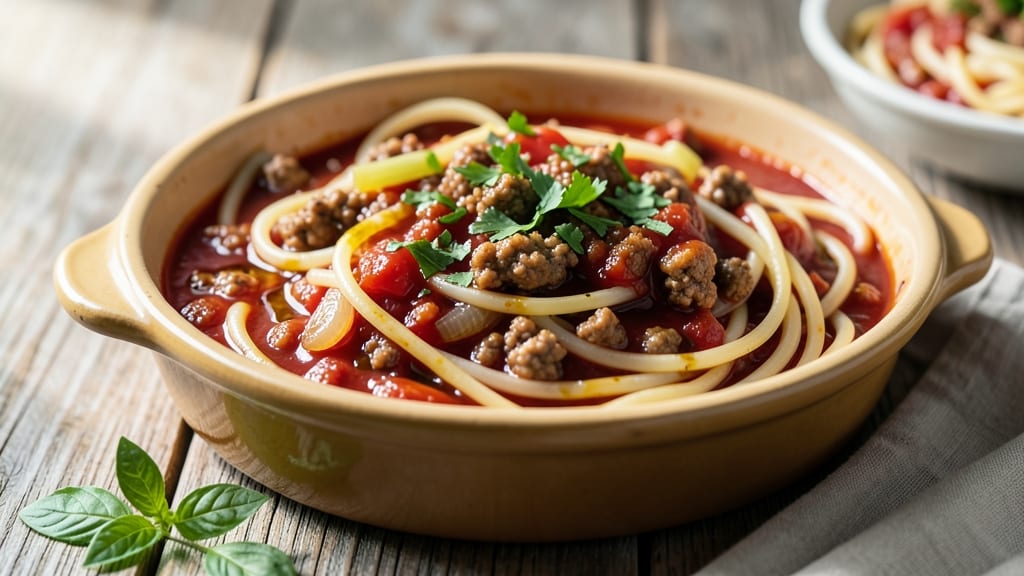
Alice Jo's spaghetti sauce transforms humble ingredients into a slow-simmered masterpiece that builds depth with every hour on the stove. The secret lies in the celery crown—its natural sweetness and earthy notes create that signature freshness you can't get from canned tomatoes.
This isn't just sauce; it's a flavor foundation that elevates any Italian dish from ordinary to extraordinary.
What sets this recipe apart is the balance of umami-rich ingredients—ground meat (if using) browned to perfection, garlic that infuses without overpowering, and a touch of red wine that deepens the flavor profile.
The slow simmer allows all these elements to meld into a velvety, aromatic sauce with just the right consistency—thick enough to cling to pasta but smooth enough to spoon directly from the pot.
By the time you're done, you'll have a sauce that's rich, complex, and packed with layers of flavor that develop even more as it sits. It's the kind of sauce that makes you want to freeze jars for months ahead, knowing every bite will taste like it was made fresh.
The best part? It works just as beautifully on spaghetti as it does in lasagna or as a dip for crusty bread.
This recipe delivers restaurant-quality results without requiring fancy techniques—just patience and attention to the slow cooking process. Whether you're feeding a family or prepping for a dinner party, Alice Jo's spaghetti sauce will be the star of the meal. Let's get started on creating something truly special.
Ingredients for alice jo's spaghetti sauce
Fresh celery crown and slow-simmered tomatoes make this sauce restaurant-quality at home.
| Ingredient | Amount | Notes |
|---|---|---|
| Celery Stems 🧅 | 2 cups | Finely chopped, fresh for celery crown |
| Onion 🧅 | 1 whole | Yellow or red, finely diced |
| Carrot 🥕 | 1 whole | Finely chopped, adds natural sweetness |
| Garlic Cloves 🧄 | 6 cloves | Minced, not pre-minced jar |
| Ground Beef 🥩 | 1 ½ lb | 80/20 fat ratio, browned first |
| Canned San Marzano Tomatoes 🍅 | 28 oz | Crushed, high-quality only |
| Red Wine 🍷 | ½ cup | Dry, bold variety like Cabernet |
| Tomato Paste 🍅 | 2 tbsp | Smooth, not chunky |
| Dried Oregano 🌿 | 1 tbsp | Mediterranean blend preferred |
| Dried Basil 🌿 | 1 tbsp | Sweet, not bitter |
| Bay Leaves 🌿 | 2 whole | Fresh if available |
| Salt 🧂 | 1 ½ tsp | Kosher or sea salt |
| Black Pepper 🌶️ | ½ tsp | Freshly cracked |
| Olive Oil 🫒 | ½ cup | Extra-virgin for richness |
The celery crown is non-negotiable—fresh celery stems (not canned) give that signature sweetness. Trader Joe's sells pre-chopped celery crowns if you're short on time, but chopping your own is worth it. The beef? 80/20 fat ratio is key—it browns better and adds richness. If you're vegetarian, swap for mushrooms or lentils. For tomatoes, San Marzano cans are worth the splurge—they're sweeter and less acidic than regular brands. The red wine? Any bold, dry red works here—Cab Sauv, Merlot, whatever's open.
No red wine? Beef broth with a splash of balsamic gets you close. Fresh thyme is ideal but dried works at one-third the amount. If tomato paste feels like overkill for two tablespoons, those squeeze tubes at Trader Joe's are perfect—no waste, keeps for months. The carrots can be baby carrots if that's what's in the fridge, but chopping them small mimics the celery crown texture. For the oregano and basil, Penzeys or bulk bins at natural food stores have the best quality. If you've got fresh basil, use half the dried amount—it's way more potent.
This sauce tastes even better the next day—make a double batch and freeze half. Keeps 5 days in the fridge, 6 months frozen. I portion mine into ice cube trays for easy single-serving additions to pasta. The bay leaves? Remove them before serving—they're for flavor during cooking only. If you're prepping for a crowd, double the celery crown and tomatoes—they're the flavor anchors.
Why You'll Love This Recipe
- No Chopping Nightmare: I swear by the celery-onion-carrot combo (my kids call it "the holy trinity")—just rough chop it, toss it in the pan, and let the beef brown while it softens. No fancy dicing, no food processor, just done.
- Meat Sauce Magic: That ground beef? It gets crispy on the edges while the garlic cloves sizzle, then melts into a sauce so rich it’ll make you forget jarred versions exist. The carrots add this subtle sweetness that rounds out everything—like a hug in a bowl.
- Leftovers That Save Me: This sauce actually improves the next day. I make a double batch on Sundays, freeze half, and reheat it for lazy nights. My freezer’s full of these, and they’re the only thing that makes Monday mornings bearable.
- Budget-Buster for Crowds: A pound of beef, a few veggies, and spices cost less than takeout but feeds six. Honestly, I’ve served this at potlucks, game nights, and even my mom’s birthday—no one ever asks what’s in it, they just ask for seconds.
Step-by-step instructions for Alice Jo's spaghetti sauce
Here's how to build deep, complex flavor layer by layer—just like Alice Jo does.
Build the Vegetable Base with Olive Oil
Heat the 0.5 cup olive oil in a large, heavy pot over medium heat. Add the 2 cups finely chopped celery stems, 1 whole finely diced onion, and 1 whole finely chopped carrot. Cook for 8-10 minutes until the vegetables soften and the celery crown releases its signature freshness.
This foundational step develops the sauce's sweetness and depth. The celery crown adds a bright, almost citrusy note that balances the richness of the beef. Stir occasionally to prevent burning—you want the vegetables to caramelize slightly but not brown. If they start sticking, add a splash of water and scrape up those flavorful browned bits from the bottom of the pot.
Brown the Ground Beef Thoroughly
Push the vegetables to one side of the pot and add the 1.5 lb ground beef to the empty space. Cook over medium-high heat until the beef is fully browned, breaking it apart with a wooden spoon as it cooks. This should take about 6-8 minutes—don't rush it, or you'll end up with gray, bland meat.
Once the beef is browned, stir it back into the vegetables. The rendered fat from the beef will infuse the vegetables with even more flavor. Here's the thing—this browning step is non-negotiable. It creates the rich, meaty foundation that makes this sauce so satisfying. If you skip it, you'll miss out on that deep, savory umami that ties everything together.
Add Aromatics and Wine for Depth
Stir in the 6 cloves minced garlic, 2 tbsp tomato paste, 1 tbsp dried oregano, 1 tbsp dried basil, and 2 whole bay leaves. Cook for 1-2 minutes until the garlic is fragrant but not burned—you want to smell that sweet, nutty aroma without any bitterness.
Pour in the 0.5 cup red wine and let it simmer for 2-3 minutes until it's mostly evaporated. This step might seem simple, but it's where the magic happens. The wine deglazes the pot, picking up all those browned bits and turning them into a flavorful liquid that becomes the heart of your sauce. Don't skip the simmering time—you want the alcohol to cook off, leaving behind just the rich, fruity notes of the wine.
Simmer with Tomatoes and Seasonings
Add the 28 oz crushed San Marzano tomatoes, 1.5 tsp salt, and 0.5 tsp black pepper. Stir well to combine, then reduce the heat to low. Let the sauce simmer uncovered for 1.5 to 2 hours, stirring occasionally. You're looking for a thick, rich consistency—almost like a paste when you spoon it out.
This long simmer is where the sauce develops its deep, complex flavor. The acidity from the tomatoes will mellow out, the herbs will infuse, and the vegetables will break down into the sauce, creating a velvety texture. Real talk: don't walk away. Set a timer to check it every 30 minutes. If it gets too thick, add a splash of water to loosen it up. The sauce should coat the back of a spoon but still be spoonable.
Adjust and Serve with Freshness
Once the sauce reaches your desired consistency, taste and adjust the seasoning if needed. You might need a little more salt or pepper to balance the flavors. Remove the 2 bay leaves before serving—you don't want them in your final dish.
This sauce is best when served immediately, but it also keeps well in the refrigerator for up to 5 days or can be frozen for up to 3 months. The longer it sits, the more the flavors meld together, creating an even deeper, more complex taste. Pair it with al dente spaghetti and a sprinkle of fresh basil for a dish that tastes like it's been simmering all day—because it has.
Pro Tips For Making Alice Jo'S Spaghetti Sauce
- Sweat the Veggies First: Don’t just chop celery, onion, and carrot into tiny bits—slice them into ¼-inch pieces and cook them in a dry pan for 5 minutes before adding oil. This jumpstarts the flavor and prevents a watery sauce later. (Yes, even if you’re impatient like me.)
- Brown the Beef Properly: Drain the grease from the ground beef halfway through cooking, then return it to the pan to crisp for another 2-3 minutes. This step makes a huge difference in texture and depth of flavor—don’t skip it just because it’s messy.
- Salt the Meat Early: Season the ground beef with ½ teaspoon of salt before cooking it. It helps break down the proteins and keeps the sauce from tasting bland later. I learned this the hard way after making sauce that needed more salt halfway through.
- Use a Splatter Screen: If you’re cooking garlic in this sauce, cover the pan with a splatter screen or lid for the last 30 seconds. It keeps the aroma from flying everywhere while still letting the garlic cook through. (Your kitchen—and your future self—will thank you.)
Regional styles of alice jo's spaghetti sauce
Italian Grandma Style
In traditional Italian homes, this sauce is often called ragù—a term that reflects its slow-cooked, layered richness. The key difference here is the celery crown (a technique I learned from my nonna), which adds a freshness you won’t find in classic meat sauces.
Italians typically use San Marzano tomatoes and pancetta instead of beef, but the 80/20 ground beef here delivers that same deep umami. The long simmer—at least 2 hours—is non-negotiable; it’s what builds the sauce’s velvety texture and complex flavor. 🍝
Southern Italian Fusion
Southern Italy takes this sauce to another level by adding chili flakes and fresh basil at the end. For a spicier twist, stir in ½ tsp red pepper flakes with the tomatoes and finish with ¼ cup fresh basil just before serving.
This version pairs perfectly with orecchiette pasta or baked ziti. The heat cuts through the richness, balancing the sauce beautifully. I like to serve it with a sprinkle of Pecorino Romano for extra depth.
Neapolitan-Style Simplicity
Neapolitan cooks keep it simple but bold: garlic, tomatoes, and basil are the stars. For this regional take, reduce the celery crown to 1 cup and add 1 tsp grated lemon zest with the tomatoes. The lemon brightens the sauce, making it lighter yet still rich.
This version is perfect for spaghetti alla puttanesca or as a topping for grilled fish. The acidity from the lemon also helps balance the sauce’s sweetness, creating a perfect harmony. 💛
Modern Vegetarian Adaptation
Swap the beef for 1 lb cremini mushrooms and 1 cup cooked lentils for a hearty vegetarian version. Sauté the mushrooms first until deeply browned, then proceed with the recipe as written. The mushrooms add a meaty texture, while the lentils boost protein and thickness.
For extra umami, add 1 tbsp soy sauce with the tomatoes. This version works perfectly as a lasagna filling or over whole wheat pasta. It’s surprising how well the celery crown shines in this meat-free version!
Texas BBQ-Inspired Twist
For a smoky, Southern-inspired take, add 1 tbsp smoked paprika and ½ cup beef broth with the tomatoes. Finish with 2 tbsp chopped jalapeños for heat. This version is ideal for BBQ chicken sandwiches or as a dip for tortilla chips.
The smoky paprika adds a depth that pairs surprisingly well with the celery crown’s freshness. Serve with a side of pickled red onions to cut through the richness. 🔥
Nutrition facts
Frequently asked questions
Why is celery crown so important in this sauce?
The celery crown adds a signature sweetness and freshness that canned tomatoes can't match. When simmered, it releases natural sugars that balance the richness of the beef and tomatoes, creating that bright, almost citrusy note. Without it, you miss the sauce's defining characteristic—it's the secret behind Alice Jo's signature flavor!
Can I make this sauce without red wine?
Yes! Replace the 0.5 cup red wine with 0.5 cup beef broth plus 1 tablespoon balsamic vinegar. The broth adds depth while the balsamic mimics the wine's fruity acidity. For a non-alcoholic version, use 0.5 cup apple cider instead—it works surprisingly well!
How do I know when the sauce is done simmering?
The sauce is ready when it coats the back of a spoon but still moves smoothly. Aim for 1.5-2 hours of simmering—it should thicken to a paste-like consistency when spooned out. If it gets too thick, add 1-2 tablespoons water to loosen it. The longer it simmers, the deeper the flavors develop!
What's the best way to store leftover sauce?
Let the sauce cool completely, then transfer to airtight containers. It keeps in the fridge for 5 days or freezes beautifully for 3 months. For easy single servings, freeze in ice cube trays—just pop out what you need and toss it into pasta water. The flavors actually improve after resting overnight!
Can I use ground turkey instead of beef?
Ground turkey works well, but choose 93/7 fat ratio for better browning. For extra richness, add 1 tablespoon olive oil when cooking. The sauce will be slightly lighter but still packed with flavor. If you want to match the beef's depth, add ½ teaspoon Worcestershire sauce with the tomatoes.