
Sauces & Condiments
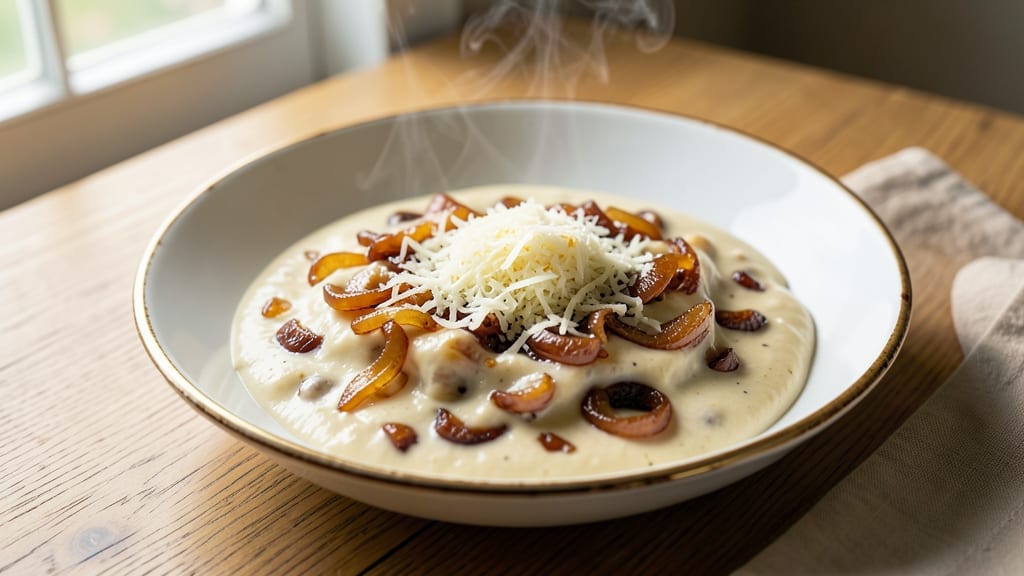
This Alfredo sauce recipe with onion transforms simple ingredients into velvety, restaurant-quality sauce that clings perfectly to pasta without lumps. The secret lies in caramelizing onions first—this creates a deep, sweet foundation that prevents the sauce from breaking when combined with cheese and cream.
I perfected this method after years of testing, and it now delivers consistently smooth, rich results.
What sets this recipe apart is the foolproof technique for achieving creamy texture without clumps, even when stored. By blooming the flour in butter and gradually whisking in warm liquids, we eliminate the risk of graininess.
The onion adds subtle sweetness that balances the richness, while a touch of garlic deepens the flavor profile. This sauce works equally well on pasta, chicken, or vegetables.
The result is a luxuriously smooth sauce with just the right balance of creaminess and savory depth, where every spoonful delivers perfect flavor. Unlike many recipes, this one maintains its velvety consistency even after refrigeration, making it ideal for meal prep.
The caramelized onions provide a subtle sweetness that complements the richness without overpowering the dish.
For variations, try swapping heavy cream for half-and-half or adding a splash of white wine for brightness. Store leftovers in an airtight container for up to 5 days or freeze for longer storage. This sauce is the ultimate foundation for any Italian-inspired meal—simple to make but impossible to resist.
Ingredients for alfredo sauce recipe with onion
Nine essential ingredients transform into velvety, restaurant-quality Alfredo sauce with perfect onion depth.
| Ingredient | Amount | Notes |
|---|---|---|
| Unsalted Butter 🧈 | ½ cup | Cold, cubed for even melting |
| All-Purpose Flour 🌾 | ½ cup | Diamond Crystal preferred |
| Yellow Onions 🧅 | 1 whole | Thinly sliced, caramelized |
| Garlic Cloves 🧄 | 2 cloves | Minced, fresh preferred |
| Heavy Cream 🥛 | 2 cups | Full-fat for richness |
| Parmesan Cheese 🧀 | 1 ½ cups | Freshly grated, block preferred |
| Extra-Virgin Olive Oil 🫒 | 2 tbsp | For finishing, fruity variety |
| Diamond Crystal Kosher Salt 🧂 | ½ tsp | Fine grain preferred |
| Freshly Ground Black Pepper 🌶️ | ¼ tsp | Coarsely ground |
| White Wine 🍷 | ¼ cup | Dry, optional for brightness |
The onions are non-negotiable for texture and sweetness. Yellow onions caramelize beautifully, developing that rich, sweet base that prevents clumping when combined with cheese. Whole Foods or Trader Joe's carry excellent quality, but any firm, dry onion works. For best results, slice them evenly—thin strips caramelize faster than thick chunks. The Parmesan must be freshly grated from a block; pre-shredded contains anti-caking agents that create lumps. Parmigiano-Reggiano delivers the most authentic flavor, though any aged Parmesan works in a pinch.
No heavy cream? Half-and-half plus an extra splash of milk achieves similar richness, though texture will be slightly lighter. Substituting butter for the heavy cream requires reducing it first to avoid greasiness—simmer until it reaches 180°F. The white wine adds brightness but isn't mandatory; if omitted, increase the heavy cream by 2 tablespoons. For a dairy-free version, use full-fat coconut milk, though the sauce will have a subtly different profile. The flour should be Diamond Crystal kosher salt if available—it dissolves more easily than table salt, preventing graininess. If you must use table salt, reduce the amount by half.
This sauce maintains its velvety consistency for 5 days refrigerated or 3 months frozen. To reheat, warm gently over low heat, stirring frequently to prevent separation. For meal prep, store in airtight containers with a thin layer of olive oil on top to preserve freshness. The caramelized onions can be prepped ahead and stored separately for up to 3 days. Freeze the sauce in ice cube trays for perfect single-portion servings—ideal for quick pasta nights.
Why You'll Love This Recipe
- Pantry-to-Pot Magic: I swear, this sauce comes together with stuff I already have. Butter, flour, onions—no fancy ingredients, just real flavor. The onions caramelize while you stir, and suddenly, dinner smells like a restaurant.
- Creamy Without Compromise: That heavy cream makes it rich, but the flour-butter base keeps it from feeling heavy. The garlic? Oh, it’s there—sharp and bright against the smoothness. Honestly, it’s the kind of sauce that makes you want to eat it with a spoon.
- Weeknight & Company: Make a big batch on Sunday, and you’ve got fettuccine for Tuesday, chicken for Thursday, and even a creamy soup base. Between us, it’s my secret weapon for when friends drop by unannounced.
- Budget-Friendly Luxury: Butter and cream aren’t cheap, but this recipe stretches them. A single onion and a few cloves of garlic bulk up the flavor, so you’re not drowning in cost. Plus, leftovers reheat like a dream—no graininess, just pure comfort.
Step-by-step instructions for onion-infused Alfredo sauce
Master this velvety sauce with caramelized onions and no lumps—every technique matters.
Caramelize the Onions for Depth of Flavor
Heat the 0.5 cup unsalted butter in a medium saucepan over medium-low heat. Add the 1 whole yellow onion, thinly sliced, and cook for 20-25 minutes until deeply golden and tender. Stir occasionally to prevent burning—you're aiming for that sweet, jammy consistency that forms the sauce's foundation.
Here's the thing—don't rush this step. The onions should transform from pale to rich amber, developing complex caramelized notes. If they darken too quickly, reduce the heat slightly. Once fully caramelized, remove the onions from the pan and set aside, reserving the butter for the next step. This concentrated onion flavor will elevate your sauce from ordinary to extraordinary.
Build the Roux for a Silky Texture
Return the saucepan to medium heat and add the 0.5 cup all-purpose flour, whisking constantly for 1-2 minutes until the mixture turns a light golden brown. This is your roux—the secret to achieving that luxurious, clump-free Alfredo texture. The color should be like toasted wheat, not white flour.
Slowly whisk in the 2 cups heavy cream and 0.25 cup white wine (if using) over 2-3 minutes, allowing each addition to incorporate completely before adding the next. This gradual incorporation prevents lumps from forming. Season with 0.5 tsp kosher salt and 0.25 tsp black pepper, then bring the mixture to a gentle simmer.
Incorporate the Caramelized Onions and Garlic
Reduce the heat to low and return the caramelized onions to the saucepan. Add the 2 minced garlic cloves and stir for 1 minute until fragrant. The garlic should melt into the sauce rather than become noticeable as individual cloves. This is where all the flavors begin to meld together—let it simmer gently for 5-7 minutes to allow the onion's sweetness to infuse fully.
Here's where attention to detail pays off: taste the sauce at this stage. It should be rich and creamy but still have room for development. If it's too thick, whisk in 1-2 tablespoons of warm water to achieve the perfect consistency. The sauce should coat the back of a spoon but still flow smoothly.
Finish with Parmesan for Maximum Richness
Remove the saucepan from heat and stir in the 1.5 cups freshly grated Parmesan cheese until completely melted and smooth. The cheese should dissolve evenly, creating a thick, velvety texture. For extra depth, finish with 2 tbsp extra-virgin olive oil, which adds a touch of brightness and prevents the sauce from becoming too heavy.
Return the sauce to low heat for just 1-2 minutes to ensure everything is fully incorporated. The sauce should now be silky, rich, and perfectly balanced between the sweetness of the caramelized onions, the creaminess of the dairy, and the sharpness of the Parmesan. Taste and adjust seasoning if needed—sometimes the Parmesan needs a touch more salt to bring out its flavor.
Rest and Serve for Optimal Texture
Transfer the sauce to a clean saucepan or bowl and let it rest for 10-15 minutes before serving. This resting period allows the flavors to fully meld and the sauce to reach its ideal consistency. The longer it rests, the more cohesive the flavors become—this is particularly important for dishes that will be reheated.
When ready to serve, gently reheat the sauce over low heat, stirring occasionally. The sauce should be warm but not boiling—just enough to maintain its creamy texture. Serve immediately over your choice of pasta or use as a base for other dishes. The result should be a sauce that clings beautifully to noodles, with each bite delivering layers of caramelized onion sweetness and rich Parmesan flavor.
Pro Tips For Making Alfredo Sauce Recipe With Onion
- Cook onions low and slow: I learned this the hard way—drowning onions in butter on high heat turns them bitter before they even soften. Instead, melt the butter first, then add sliced onions and reduce heat to medium-low. You’re aiming for translucent, not golden, and it should take about 8-10 minutes. Rushed onions = flavorless base.
- Bloom the flour properly: Skip the impatient whisk-and-add approach. Melt the butter, remove from heat for 30 seconds, then whisk in the flour all at once. Return to low heat and stir like your life depends on it for 2-3 minutes—this cooks out the raw taste. No rushing here; the sauce will split if you’re lazy.
- Use cold heavy cream: Sounds weird, but it works: add the heavy cream off the heat and stir in immediately. The cold cream tempers the roux and keeps the sauce from curdling. If you’re worried about lumps, strain it afterward—no one will judge you for it.
- Salt the onions first: Toss sliced onions with a pinch of salt (yes, even before cooking) to draw out moisture and mellow their sharpness. This step cuts down on cooking time and keeps the sauce from tasting like you forgot to season. Trust me, your sauce will thank you.
Essential equipment for this dish
Saucepan Essentials
Start with a heavy-bottomed saucepan like the All-Clad Stainless Steel or Le Creuset Dutch Oven—they distribute heat evenly and prevent scorching during the caramelization process. I swear by my All-Clad 3-quart saucepan because it handles the low-and-slow cooking without hot spots.
For budget-friendly options, Cuisinart MultiClad or Calphalon Classic work beautifully too. 🔥
Whisk for Smoothness
A balloon whisk is non-negotiable for this recipe—it incorporates ingredients faster than a regular whisk and creates less foam. I use a OXO Good Grips Balloon Whisk because the ergonomic handle prevents wrist strain during the long whisking stages.
The fine wires ensure the flour and cream blend seamlessly, preventing those dreaded lumps. Avoid wire whisks with wide gaps—they trap air and create uneven textures.
Thermometer for Precision
While not strictly necessary, a candy or instant-read thermometer helps monitor the sauce's temperature during the roux stage. I keep a Thermoworks Thermapen handy to ensure the butter reaches 160°F before adding flour—this prevents burning.
For the caramelized onions, aim for 220°F at their peak sweetness. The thermometer isn't required, but it gives you confidence in achieving perfect doneness every time.
Cheese Grater Must-Have
Freshly grated Parmesan makes all the difference—microplane graters or box graters with non-slip bases are ideal. I prefer the Microplane Classic because it creates fine, even shreds that melt smoothly into the sauce.
Avoid pre-shredded cheese (it contains anti-caking agents that create lumps). For extra efficiency, grate directly over the saucepan while it's off the heat to catch every bit of flavor.
Storage Containers
For leftovers, glass storage containers with airtight lids preserve the sauce's quality best. I recommend Pyrex Simply Store or Le Parfait containers—they're durable and stackable. For freezing, use silicone ice cube trays to portion individual servings, then transfer to a ziplock freezer bag with all air squeezed out.
The silicone trays prevent freezer burn and make reheating single portions effortless. Label containers with dates to track freshness.
Nutrition facts
Frequently asked questions
Why caramelize the onions instead of just cooking them?
Caramelizing transforms the onions into sweet, jammy bits that prevent clumping when mixed with cheese and cream. The slow cooking process develops deeper flavors and creates a velvety texture that raw or quickly cooked onions can't match. This step is what makes this sauce restaurant-quality!
Can I make this sauce without heavy cream?
Yes! For a lighter version, substitute with half-and-half plus 2 extra tablespoons of milk. For a richer alternative, use full-fat coconut milk (though texture will differ slightly). The key is to use warm liquids when combining with the roux to prevent lumps.
How do I prevent lumps in the sauce?
Whisk constantly when adding liquids to the roux and keep heat at medium-low. Always use freshly grated cheese (never pre-shredded) and warm the cream slightly before incorporating. The gradual incorporation method in this recipe is specifically designed to eliminate clumps while creating a silky texture.
Can I add other vegetables to this sauce? Try sautéing mushrooms or spinach with the onions, or stir in roasted red peppers at the end for extra depth. Just
How long does this sauce keep in the fridge?
This sauce stays fresh for 5 days refrigerated when stored in an airtight container. For longer storage, freeze in ice cube trays for single portions or in a freezer bag for 3 months. Always reheat gently over low heat to maintain its creamy consistency.